
In the realm of personal and business finance, the percentage is the universal language of growth, risk, and value. Whether you are assessing the annual return on a diversified stock portfolio, calculating the interest due on a high-yield savings account, or determining the impact of inflation on your purchasing power, the ability to accurately manipulate percentages is an indispensable skill. While modern software often automates these tasks, understanding how to calculate percentage by calculator remains a foundational pillar of financial literacy.
This guide explores the mechanics of percentage calculations through the lens of money management, providing you with the tools to make more informed financial decisions with precision and speed.
The Fundamentals of Financial Percentages
At its core, a percentage is a ratio that represents a fraction of 100. In the world of finance, this “fraction” often represents the heartbeat of an economy—the cost of borrowing, the reward for lending, or the rate of market appreciation. Using a calculator to derive these figures ensures that human error is minimized when navigating complex financial data.
The Psychology of Percentages in Consumer Finance
Percentages can often be deceptive in a retail environment. A “20% discount” sounds substantial, but its true value depends entirely on the base price. Conversely, a “high” interest rate on a credit card can lead to a debt spiral if the consumer does not understand how that percentage compounds over time. By using a calculator to convert these abstract percentages into real dollar amounts, individuals can strip away the marketing “noise” and see the actual impact on their net worth.
Basic Operations: Turning Ratios into Financial Insights
To calculate a basic percentage on a standard calculator, the process is straightforward but requires a clear understanding of the “part” versus the “whole.”
To find a specific percentage of a number (e.g., 15% of a $1,200 investment), the formula is:
[Amount] × [Percentage Rate] / 100 = [Result]
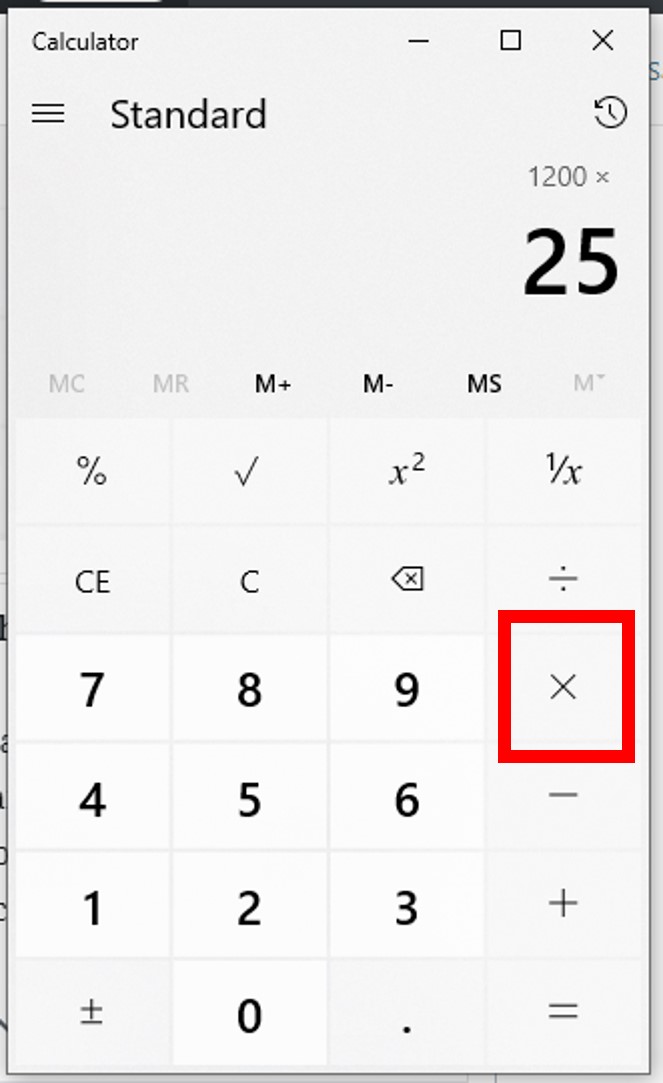
On most modern calculators, the “%” button acts as a shortcut that automatically divides the rate by 100. Therefore, typing 1200 × 15 % will immediately yield $180. Understanding this basic logic is the first step toward mastering more complex financial tools like amortized loans or capital gains tax estimates.
Essential Calculations for Personal Finance and Budgeting
Effective budgeting is not just about tracking where your money goes; it is about analyzing the efficiency of your spending and saving habits. Percentages allow you to benchmark your financial health against industry standards, such as the 50/30/20 rule (50% for needs, 30% for wants, and 20% for savings).
Calculating Sales Tax and Gratuity Instantly
For the everyday consumer, the most frequent use of a calculator for percentages occurs at the point of sale. To calculate a total including tax or tip, you can use a multiplier method.
If a restaurant bill is $85 and you wish to leave an 18% tip, instead of calculating the tip and adding it separately, you can multiply the total by 1.18.
$85 × 1.18 = $100.30
This “1 + decimal” shortcut is a powerful tool for quick mental math or rapid calculator use, allowing you to bypass the two-step process of finding the percentage and then adding it back to the principal.
Tracking Savings Rates and Expense Ratios
Financial independence is often determined by your savings rate—the percentage of your disposable income that you keep. To calculate this on your calculator:
[Monthly Savings] / [Monthly Take-Home Pay] = [Decimal]
Then, multiply by 100 to get the percentage.
For example, if you save $1,500 out of a $5,000 paycheck:
1500 / 5000 = 0.3
0.3 × 100 = 30%
Monitoring this percentage monthly allows you to see if your lifestyle is inflating or if your wealth-building efforts are accelerating. Similarly, tracking the percentage of your income spent on housing or transport can highlight areas where you are over-leveraged.
Advanced Applications in Investing and Wealth Building
As one moves from basic budgeting to active investing, the stakes of percentage calculations increase. In this arena, percentages represent the “yield” or “return” that determines the velocity of your wealth accumulation.
Determining Return on Investment (ROI)
ROI is the ultimate metric for any investor. It tells you how efficiently your capital is working for you. The formula for ROI, which should be practiced on a calculator regularly, is:
[(Current Value – Original Cost) / Original Cost] × 100

Consider a scenario where you purchased a stock for $2,500 and sold it for $3,200.
3200 - 2500 = 700(Your profit)700 / 2500 = 0.280.28 × 100 = 28%
A 28% return is an objective measure that allows you to compare this investment’s performance against other assets, such as real estate or bonds, regardless of the dollar amount involved.
Calculating Portfolio Allocation and Diversification
Modern Portfolio Theory emphasizes the importance of asset allocation. If you want to maintain a “60/40” split between stocks and bonds, you must use a calculator to rebalance your holdings.
If your total portfolio is $100,000 and your stock holdings have grown to $70,000, your stock percentage is 70% (70,000 / 100,000). To bring it back to 60%, you must calculate 60% of the total:
100,000 × 0.60 = 60,000
This tells you that you need to sell $10,000 worth of stocks and redistribute those funds to other assets to maintain your desired risk profile.
Business Finance: Percentages in Revenue and Profitability
For entrepreneurs and business owners, percentage calculations are the pulse of the enterprise. They dictate pricing strategies, indicate the health of the supply chain, and signal to investors whether the company is scaling effectively.
Margin vs. Markup: The Calculator’s Role in Pricing
One of the most common errors in business finance is confusing “markup” with “margin.”
- Markup is the percentage added to the cost to get the selling price.
- Margin is the percentage of the selling price that is profit.
If an item costs $100 and you want a 25% profit margin, you cannot simply add 25% to the cost.
To calculate a 25% margin:
Cost / (1 - Desired Margin)
100 / 0.75 = $133.33
Using a calculator to distinguish between these two prevents “under-pricing,” which can be fatal for small businesses. A 25% markup on $100 is $125, but that only yields a 20% margin. That 5% difference could represent the entire net profit after overhead expenses.
Year-over-Year (YoY) Growth Calculations
To understand if a business is growing, stakeholders look at YoY growth. This is calculated by comparing the current period’s revenue to the same period in the previous year.
[(Current Year Revenue – Previous Year Revenue) / Previous Year Revenue] × 100
If a side hustle earned $12,000 in 2022 and $15,500 in 2023:
15500 - 12000 = 35003500 / 12000 = 0.29160.2916 × 100 = 29.17%
This percentage provides a clear growth trajectory that is far more descriptive than the raw dollar increase alone.
Maximizing Financial Tools for Precision
While a basic smartphone calculator is sufficient for most, certain financial tasks require more specialized equipment or a deeper understanding of how calculators process financial logic.
Leveraging Scientific and Financial Calculators
For complex money matters like loan amortization or the time value of money (TVM), a standard calculator can be cumbersome. Financial calculators (like the HP 12c or TI BA II Plus) have dedicated buttons for n (periods), i/y (interest rate), PV (present value), and FV (future value).
When calculating compound interest on these devices, the percentage is often entered as a whole number rather than a decimal, because the internal software is pre-programmed to handle the “divide by 100” step. Understanding the specific UI of your tool is critical for avoiding massive errors in long-term financial planning.
Avoiding Common Mathematical Pitfalls in Finance
The most frequent mistake when using a calculator for financial percentages is the “order of operations.” Many people enter strings of calculations without realizing their calculator follows PEMDAS (Parentheses, Exponents, Multiplication/Division, Addition/Subtraction).
For example, when calculating a percentage increase:
If you type 100 + 10 % into some calculators, it will correctly give you 110. However, on others, it might interpret it as 100 + 0.1, resulting in 100.1. Always verify your calculator’s logic by running a simple test (like 100 + 10%) before moving on to high-stakes calculations involving your life savings or business revenue.

Conclusion: The Percentage as a Tool for Empowerment
Mastering how to calculate percentage by calculator is more than just a mathematical exercise; it is a fundamental component of strategic money management. By moving beyond simple “how-to” steps and integrating these calculations into your daily financial life—from checking the “unit price” at the grocery store to auditing the “expense ratio” of your 401(k)—you gain a level of control that few possess.
In an era where financial data is abundant but often confusing, the calculator remains the ultimate arbiter of truth. By understanding the percentages that drive your income, expenses, and investments, you transition from a passive participant in the economy to an active, informed manager of your financial destiny. Whether you are calculating a 2% inflation adjustment or a 20% business margin, the precision of your calculator ensures that your financial roadmap is built on facts, not guesswork.
aViewFromTheCave is a participant in the Amazon Services LLC Associates Program, an affiliate advertising program designed to provide a means for sites to earn advertising fees by advertising and linking to Amazon.com. Amazon, the Amazon logo, AmazonSupply, and the AmazonSupply logo are trademarks of Amazon.com, Inc. or its affiliates. As an Amazon Associate we earn affiliate commissions from qualifying purchases.