
In the world of traditional finance, the supply of money is a fluid, often unpredictable variable controlled by central banks and government policy. However, in the digital age, a new form of “sound money” has emerged with a protocol-defined scarcity that challenges our fundamental understanding of value. At the heart of the Bitcoin network lies a mathematical certainty: there will only ever be 21 million coins. As of late 2024, approximately 19.75 million bitcoins have already been mined, leaving a dwindling remainder for the next century of participants.
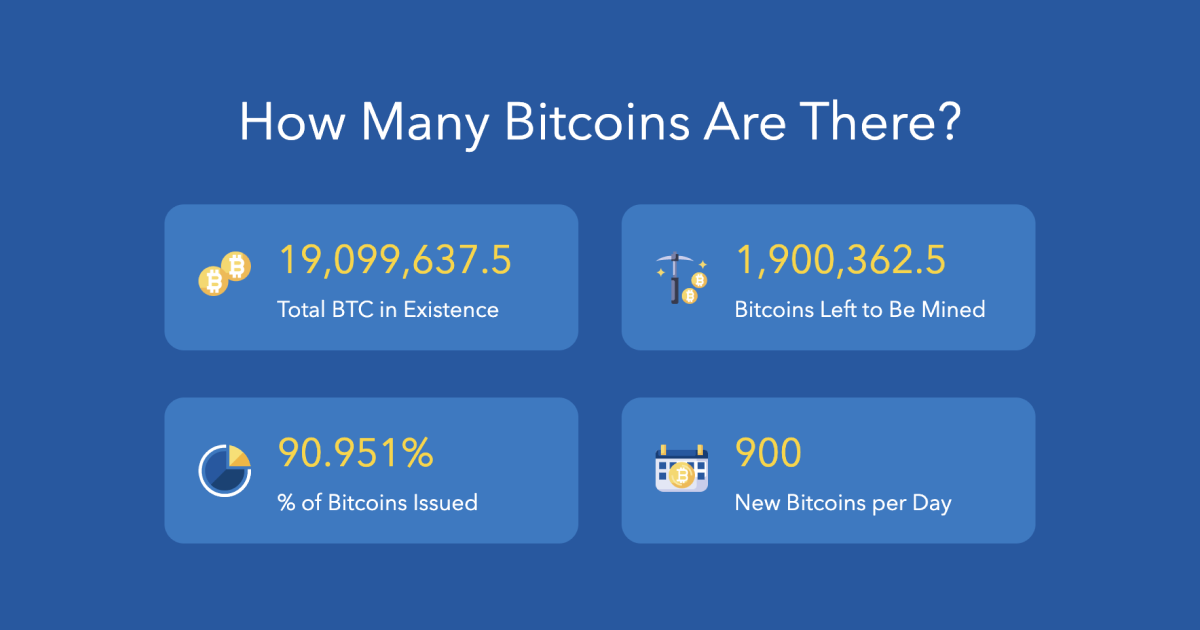
For investors, financial planners, and students of macroeconomics, the question of “how many bitcoins have been mined” is more than a technical tally; it is a window into the most transparent monetary system ever devised. Understanding the distribution, the issuance schedule, and the eventual end of the mining era is crucial for anyone looking to navigate the complexities of digital asset investing.
The Economics of Scarcity: Understanding the 21 Million Cap
The brilliance of Bitcoin lies in its programmed scarcity. Unlike fiat currencies—such as the US Dollar or the Euro—which can be printed at the discretion of policy-makers, Bitcoin’s supply is hard-capped by its source code. This creates a deflationary pressure that contrasts sharply with the inflationary nature of modern global economies.
Sound Money vs. Fiat Inflation
In traditional finance, “inflation” is the gradual erosion of purchasing power. When a central bank increases the money supply to stimulate growth or pay off debt, each existing unit of currency becomes less scarce and, consequently, less valuable. Bitcoin was designed as an antidote to this cycle. By fixing the total supply at 21 million, the creator, Satoshi Nakamoto, introduced a digital version of the “Gold Standard.” Because the supply cannot be manipulated, Bitcoin acts as a store of value that is resistant to the whims of political and economic instability.
The Role of the Genesis Block and Satoshi’s Vision
The journey of the 19.75 million coins currently in circulation began on January 3, 2009, with the “Genesis Block.” In this first block, 50 BTC were created. Since then, new coins have been issued at a steady, predictable rate. This transparency allows investors to calculate the exact inflation rate of the asset at any given moment. For the first time in history, market participants do not have to guess what the total supply of a global reserve asset will be ten, twenty, or fifty years from now.
The Mining Mechanism: How New Bitcoins Enter Circulation
To understand why only a certain number of bitcoins exist, one must understand the process of mining. Mining is not just the way new coins are created; it is the mechanism that secures the network and validates every transaction that occurs on the blockchain.
Proof of Work and Network Security
Bitcoin uses a “Proof of Work” (PoW) consensus mechanism. Miners around the world compete to solve complex mathematical puzzles using specialized hardware. The first miner to solve the puzzle earns the right to add a new “block” of transactions to the blockchain. In exchange for this computational labor and the electricity consumed, the miner is rewarded with newly minted bitcoins. This process ensures that no single entity can control the network, as the cost of “attacking” the blockchain would require more energy and hardware than any organization possesses.
Block Rewards and the Role of Miners
The “Block Reward” is the primary incentive for miners. When the network first launched, the reward was 50 BTC per block. However, the system was designed to reduce this reward over time to control the supply. Currently, a new block is added to the chain approximately every ten minutes. This means that every ten minutes, a specific amount of Bitcoin is released into the world. Miners then sell a portion of these coins to cover their operational costs—electricity, cooling, and hardware—effectively distributing the new supply into the broader market.
The Halving Phenomenon: Managing Inflation Through Code
If the issuance of Bitcoin remained constant, the 21 million limit would have been reached years ago. To ensure a long and steady distribution, the Bitcoin protocol includes a feature known as the “Halving.” Approximately every four years (or every 210,000 blocks), the reward given to miners is cut in half.

Historical Context of Halving Events
There have been four halving events in Bitcoin’s history:
- 2012: The reward dropped from 50 to 25 BTC.
- 2016: The reward dropped from 25 to 12.5 BTC.
- 2020: The reward dropped from 12.5 to 6.25 BTC.
- 2024: The reward dropped from 6.25 to 3.125 BTC.
Each of these events marks a significant milestone in the Bitcoin economy. By reducing the rate at which new supply enters the market, the halving serves as a “supply shock.” If demand for Bitcoin remains the same or increases while the new supply is cut by 50%, the fundamental laws of economics suggest an upward pressure on the asset’s price.
Impact on Price and Market Sentiment
Historically, halving years have been precursors to significant bull markets. Investors watch the “circulating supply” closely as a halving approaches. Because the market knows exactly when the next reduction in supply will occur, it allows for long-term financial modeling that is impossible with other assets. The halving is the ultimate reminder that Bitcoin is a finite resource, increasingly difficult to obtain as time goes on.
The Final Frontier: What Happens When All 21 Million Are Mined?
At the current rate of issuance and accounting for future halvings, the final bitcoin is expected to be mined around the year 2140. This raises a common question for investors: if miners are incentivized by new coins, why would they continue to secure the network once the rewards run out?
The Shift from Block Rewards to Transaction Fees
The Bitcoin protocol has a built-in transition plan. As the block reward diminishes, miners will become increasingly dependent on transaction fees. Every time a user sends Bitcoin, they pay a small fee to have their transaction processed. Currently, these fees are a secondary income stream for miners. However, as the circulating supply nears 21 million, these fees will become the primary incentive. The theory is that by 2140, the Bitcoin network will be so widely used that the volume of transaction fees will be sufficient to compensate miners for maintaining the hardware and security of the system.
Long-term Sustainability of the Network
Critics often worry about the security of the network in a post-mining world. However, the economic design of Bitcoin suggests that the value of the network and the cost of security will scale together. As Bitcoin becomes more valuable as a global settlement layer, the fees generated by high-value transactions—such as those between banks, corporations, or governments—will provide a robust economic foundation for the miners of the 22nd century.
Investment Implications for the Modern Portfolio
Understanding that over 94% of all bitcoins have already been mined is a critical data point for any modern investor. The “easy” phase of Bitcoin accumulation is largely over; we have entered the era of institutional adoption and extreme scarcity.
Bitcoin as “Digital Gold”
In the world of finance, gold is valued because it is difficult to find and expensive to extract. Bitcoin shares these properties but adds the benefits of digital portability, divisibility, and transparency. Because we know exactly how many bitcoins have been mined and exactly how many are left, Bitcoin serves as a superior “hard asset” for a diversified portfolio. It provides a hedge against the devaluation of fiat currency and a speculative opportunity for growth as the world moves toward digital finance.
Lost Coins and the “Actual” Circulating Supply
While the protocol shows that 19.75 million coins have been mined, the effective supply is actually much lower. It is estimated that between 3 and 4 million bitcoins are lost forever. These are coins held in wallets where the owners have lost their private keys, or coins belonging to Satoshi Nakamoto that have not moved in over a decade. From an investment perspective, this “accidental burning” of coins only increases the scarcity. If 19.75 million are mined but 4 million are lost, the actual circulating supply is closer to 15.75 million. This makes the competition for the remaining 1.25 million coins even more intense.

Conclusion: The Road to 2140
The question of “how many bitcoins have been mined” is a pulse check on the most ambitious economic experiment of the 21st century. With 19.75 million coins already in existence, the world is beginning to realize that the window for acquiring a significant stake in this digital territory is closing.
For the individual investor, the fixed supply represents a rare opportunity to own an asset that cannot be diluted by debt or policy. As we move closer to the 21 million limit, the focus will shift from the act of mining to the act of preservation and utility. Whether Bitcoin eventually replaces gold or becomes the backbone of a new global financial system, its strictly enforced supply ensures that its value will always be defined by the simple, unwavering reality of math. In an uncertain financial world, that certainty is perhaps its greatest asset.
aViewFromTheCave is a participant in the Amazon Services LLC Associates Program, an affiliate advertising program designed to provide a means for sites to earn advertising fees by advertising and linking to Amazon.com. Amazon, the Amazon logo, AmazonSupply, and the AmazonSupply logo are trademarks of Amazon.com, Inc. or its affiliates. As an Amazon Associate we earn affiliate commissions from qualifying purchases.