
For many, the sight of a direct deposit hitting their bank account is a welcome, yet often opaque, event. The journey from your agreed-upon salary or hourly wage to the final figure that lands in your account is intricate, involving a multitude of deductions and taxes. Understanding “how to calculate my check” isn’t just about curiosity; it’s a crucial component of sound personal finance, enabling better budgeting, tax planning, and overall financial literacy. This guide will demystify the process, breaking down each element that contributes to your net pay.

Deconstructing Your Gross Pay: The Starting Point
Your paycheck calculation begins with your gross pay – the total amount of money you earn before any deductions or taxes are taken out. This figure is the foundation upon which all subsequent calculations are built.
Hourly vs. Salaried Income
The method of calculating your gross pay depends primarily on your employment status:
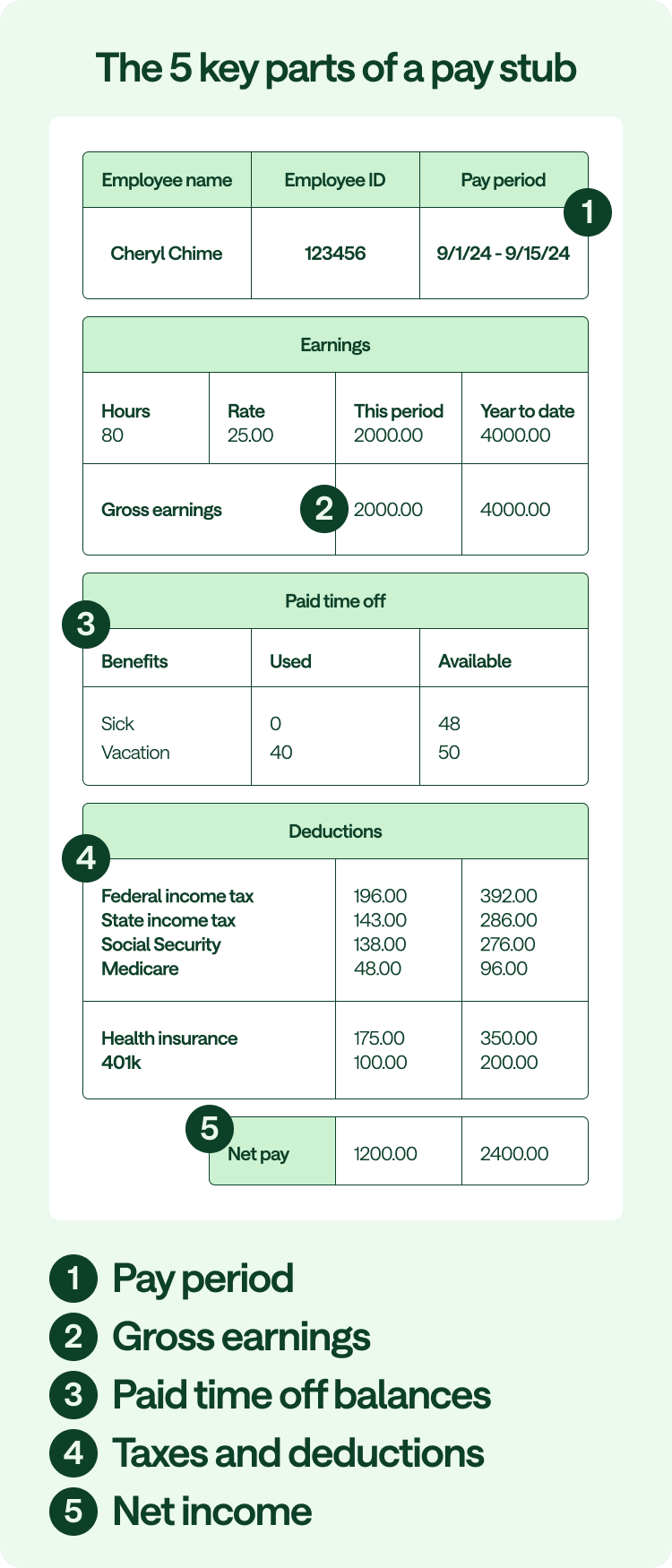
- Hourly Employees: For those paid an hourly wage, gross pay is straightforwardly calculated by multiplying your hourly rate by the number of hours worked during the pay period. For instance, if you earn $25 per hour and work 80 hours in a two-week pay period, your gross pay would be $25 * 80 = $2,000.
- Salaried Employees: Salaried individuals receive a fixed amount of pay, regardless of the exact hours worked in a given week (assuming they meet job responsibilities). Their annual salary is simply divided by the number of pay periods in a year. If your annual salary is $60,000 and you are paid bi-weekly (26 pay periods per year), your gross pay per period would be $60,000 / 26 = $2,307.69.
Overtime, Bonuses, and Commissions
Beyond regular wages, several other income streams can contribute to your gross pay:
- Overtime: For non-exempt employees, hours worked beyond 40 in a workweek typically qualify for overtime pay, often at 1.5 times the regular hourly rate (or even double time in some specific cases or states). This significantly boosts gross earnings.
- Bonuses: Discretionary payments made by employers for performance, loyalty, or company success are added to your gross pay. While often seen as a windfall, bonuses are generally subject to withholding taxes, sometimes at a higher supplemental rate.
- Commissions: Common in sales roles, commissions are a percentage of sales generated. These are added to your base salary or hourly wage to form your total gross income for the period.
- Tips: For service industry workers, tips received are also considered taxable income and contribute to your gross earnings, even if not directly paid by the employer.
Understanding how each of these components factors into your gross pay is the first crucial step in mastering your paycheck calculation.
Navigating Deductions: Pre-Tax vs. Post-Tax Contributions
Once your gross pay is established, the next layer of complexity involves deductions. These are amounts subtracted from your gross pay, and they fall into two primary categories: pre-tax and post-tax deductions, each having a distinct impact on your taxable income and net pay.
Unpacking Pre-Tax Deductions: Reducing Your Taxable Income
Pre-tax deductions are perhaps the most financially advantageous deductions because they are subtracted from your gross pay before income taxes (federal, state, and sometimes local) are calculated. This means they reduce your taxable income, effectively lowering your overall tax liability. Common pre-tax deductions include:
- Health, Dental, and Vision Insurance Premiums: Your share of employer-sponsored health benefits is typically deducted pre-tax.
- Retirement Contributions (e.g., 401(k), 403(b), Traditional IRA): Contributions to these tax-deferred accounts are a powerful way to reduce current taxable income while saving for retirement. The money grows tax-deferred until withdrawal in retirement.
- Flexible Spending Accounts (FSAs): These accounts allow you to set aside pre-tax money for eligible healthcare or dependent care expenses. The catch is “use it or lose it” by year-end.
- Health Savings Accounts (HSAs): Available with high-deductible health plans, HSAs offer a triple tax advantage: pre-tax contributions, tax-free growth, and tax-free withdrawals for qualified medical expenses. Unlike FSAs, funds roll over year to year.
- Commuter Benefits (e.g., Transit Passes, Parking): Some employers offer pre-tax deductions for work-related commuting expenses.
By understanding and maximizing pre-tax deductions, you can legally and effectively lower the amount of income on which you pay taxes, thereby increasing your take-home pay or allowing more money to be saved for future needs.
Understanding Post-Tax Deductions: Direct from Your Net
Post-tax deductions are subtracted from your pay after all taxes have been calculated and withheld. These deductions do not reduce your taxable income. While they don’t offer the same immediate tax benefits as pre-tax deductions, they are often for essential services or savings. Examples include:
- Roth 401(k) or Roth IRA Contributions: Unlike traditional retirement accounts, Roth contributions are made with after-tax dollars. The benefit comes in retirement when qualified withdrawals are entirely tax-free.
- Union Dues: If you are part of a labor union, your membership dues are typically deducted post-tax.
- Garnishments: Court-ordered deductions for debts such as child support, alimony, or unpaid taxes are always post-tax.
- Charitable Contributions (via payroll): Some employers allow you to make regular charitable donations directly from your paycheck after taxes.
- Employer-Sponsored Life Insurance (Taxable Portion): If your employer provides life insurance coverage above a certain threshold (e.g., $50,000), the premium for the excess coverage may be considered a taxable benefit and deducted post-tax.
Knowing the difference between these deduction types is vital for accurately calculating your net pay and for making informed decisions about your benefits and savings strategies.
The Tax Labyrinth: Federal, State, and Local Withholding
The most significant and often most confusing portion of paycheck calculation involves taxes. Multiple layers of government require their share, and understanding each one is key to decoding your paystub.
Federal Income Tax: Your W-4 and Tax Brackets
The U.S. federal government levies income tax on your earnings. The amount withheld from each paycheck is determined by the information you provide on your W-4 Form. This form tells your employer how much tax to withhold based on your marital status, number of dependents, and any additional income or deductions you anticipate.
Federal income tax is progressive, meaning higher earners pay a larger percentage of their income in taxes. The tax system uses tax brackets, where different portions of your taxable income are taxed at increasing rates. For example, the first segment of your income might be taxed at 10%, the next segment at 12%, and so on. It’s a common misconception that if you move into a higher tax bracket, all your income is taxed at that higher rate; only the portion of your income that falls within that bracket is.
Accurate completion of your W-4 is critical to avoid under-withholding (leading to a tax bill and potential penalties) or over-withholding (giving the government an interest-free loan throughout the year).
FICA Taxes: Social Security and Medicare Contributions
Beyond federal income tax, two other mandatory federal taxes are withheld under the Federal Insurance Contributions Act (FICA):
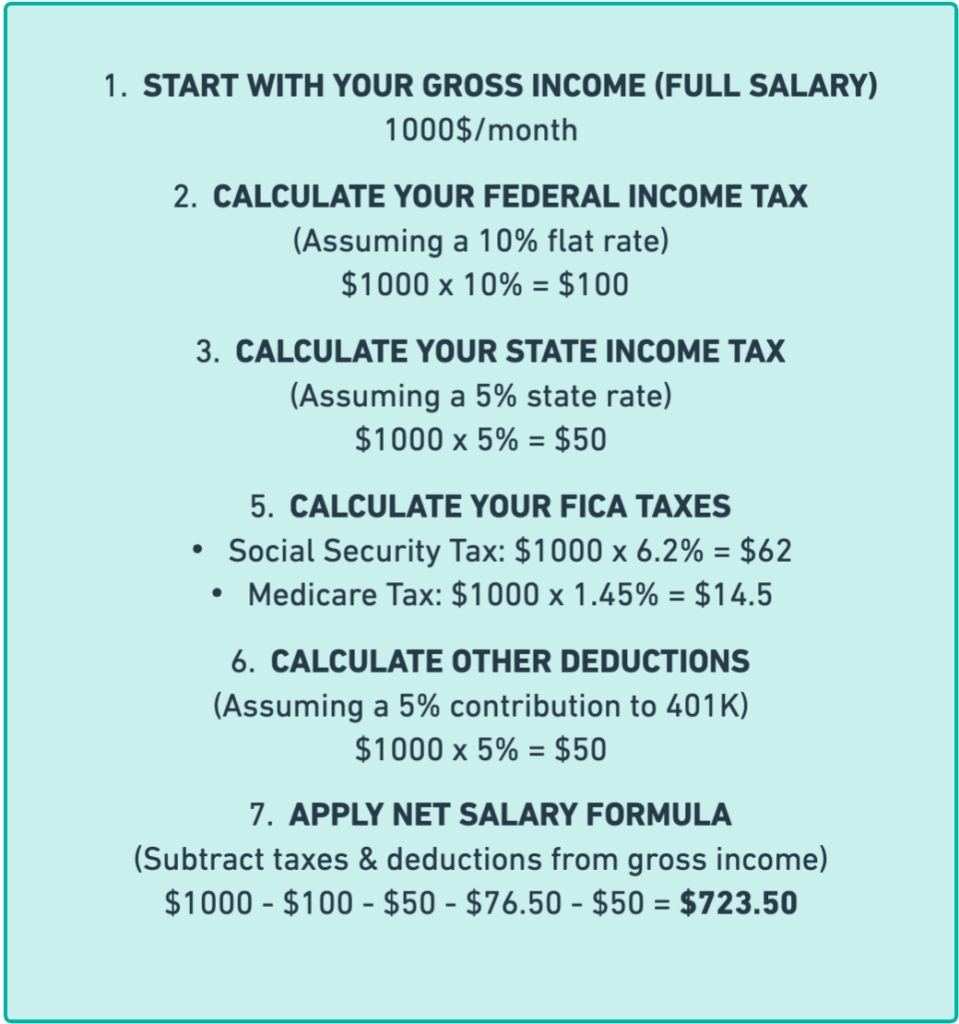
- Social Security Tax: This funds benefits for retirees, survivors, and disabled workers. In 2024, the employee contribution rate is 6.2% on earnings up to an annual wage base limit of $168,600.
- Medicare Tax: This funds health insurance for people aged 65 or older, and for some younger people with disabilities. The employee contribution rate is 1.45% on all earned income, with no wage base limit. An additional Medicare tax of 0.9% applies to individual incomes above $200,000 (or $250,000 for married couples filing jointly).
Your employer also pays a matching amount for both Social Security and Medicare taxes, effectively doubling the total contribution. These taxes are non-negotiable and apply to almost all earned income.
State and Local Income Taxes: Regional Variations
While federal and FICA taxes are universal, state and local income taxes vary significantly:
- State Income Tax: Most states levy an income tax, which can be progressive, flat, or even non-existent (e.g., Florida, Texas, Washington, Wyoming, South Dakota, Nevada, Alaska, New Hampshire and Tennessee (only on interest and dividends)). If your state has an income tax, your employer will withhold it according to your state’s tax laws and the information you provide on a state-specific withholding form.
- Local Income Tax: Some cities, counties, or municipalities also impose their own income taxes (e.g., New York City, Philadelphia, certain Ohio cities). If you live or work in one of these areas, an additional deduction will be made from your paycheck.
These regional taxes add another layer of complexity, making it essential to understand the specific tax laws that apply to your geographic location.
Arriving at Your Net Pay: What You Actually Take Home
After all the gross pay calculations, pre-tax deductions, and various taxes have been factored in, you finally arrive at your net pay – the amount of money that is actually deposited into your bank account or paid to you via check. This is your “take-home pay.”
The Net Pay Formula
Conceptually, the calculation for net pay can be summarized as:
Gross Pay
- MINUS Pre-Tax Deductions (e.g., health insurance, 401(k))
- MINUS Federal Income Tax Withholding
- MINUS FICA Taxes (Social Security and Medicare)
- MINUS State Income Tax Withholding (if applicable)
- MINUS Local Income Tax Withholding (if applicable)
- MINUS Post-Tax Deductions (e.g., Roth 401(k), union dues, garnishments)
= Net Pay
Each line item on your paystub represents a piece of this equation. Understanding where each number comes from allows you to verify its accuracy and make informed financial decisions.
The Importance of Your Paystub: More Than Just a Number
Your paystub is more than just a confirmation of your earnings; it’s a vital financial document. It details your gross pay, itemizes every deduction, shows year-to-date totals, and displays your net pay. Regularly reviewing your paystub allows you to:
- Verify Accuracy: Ensure your hours, pay rate, and deductions are correct. Errors can occur and can significantly impact your take-home pay.
- Track Contributions: Monitor your retirement savings, HSA/FSA contributions, and other benefits.
- Understand Tax Withholding: See how much you’re contributing to taxes and determine if you need to adjust your W-4 to avoid a large tax bill or refund.
- Budget Effectively: Knowing your exact net pay is fundamental for creating and sticking to a realistic budget.
Consider your paystub as a monthly financial report card, providing crucial insights into your income and expenses before the money even leaves your employer’s hands.
Empowering Your Financial Future: Proactive Paycheck Management
Understanding “how to calculate my check” is merely the first step. Proactively managing your paycheck can significantly impact your financial well-being and help you achieve your long-term monetary goals.
Utilizing Online Paycheck Calculators
In the age of digital tools, you don’t always need to manually crunch numbers. Numerous free online paycheck calculators can help you estimate your net pay. Websites like ADP, PaycheckCity, or even IRS resources offer tools where you can input your gross pay, deductions, and withholding information to get a reliable estimate of your take-home pay. These tools are particularly useful for:
- Pre-Employment Negotiations: Estimating take-home pay for new job offers.
- Budgeting: Getting a clear picture of what you’ll have available.
- W-4 Adjustments: Seeing the immediate impact of changing your withholding allowances.
While helpful, remember that these are estimates. Your actual pay may vary slightly due to specific employer policies or slight differences in tax calculations.
Adjusting Withholding for Financial Planning
One of the most powerful levers you have in paycheck management is your W-4 form. You can adjust your federal (and sometimes state) income tax withholding throughout the year.
- If you consistently receive a large tax refund: This means you’re over-withholding, essentially giving the government an interest-free loan. You might consider increasing your allowances on your W-4 to have more money in each paycheck, which you can then use for savings, investments, or debt repayment.
- If you consistently owe taxes: This indicates under-withholding. You should decrease your allowances or elect to have an additional amount withheld from each paycheck to avoid a large tax bill and potential penalties.
Regularly reviewing your tax situation, especially after major life events (marriage, birth of a child, purchasing a home), and making appropriate W-4 adjustments is a smart financial strategy.
Seeking Professional Advice
While this guide provides a comprehensive overview, personal finance can be complex. For intricate situations, such as managing significant investments, navigating complex tax scenarios, or planning for unique financial goals, consulting a qualified financial advisor or tax professional is highly recommended. They can offer personalized advice, optimize your deductions, and help you make the most of your earnings.
In conclusion, knowing “how to calculate my check” transforms a mysterious monthly deposit into a transparent financial transaction. It equips you with the knowledge to scrutinize your paystub, make informed decisions about your benefits and taxes, and ultimately, gain greater control over your financial destiny. This foundational understanding is an indispensable tool for anyone committed to sound personal finance and effective money management.
aViewFromTheCave is a participant in the Amazon Services LLC Associates Program, an affiliate advertising program designed to provide a means for sites to earn advertising fees by advertising and linking to Amazon.com. Amazon, the Amazon logo, AmazonSupply, and the AmazonSupply logo are trademarks of Amazon.com, Inc. or its affiliates. As an Amazon Associate we earn affiliate commissions from qualifying purchases.