
Understanding the financial mechanics of a car loan is a fundamental aspect of responsible personal finance. For many, a car is one of the most significant purchases made after a home, and the interest rate attached to that loan can dramatically impact the total cost over its lifetime. Far too often, car buyers focus solely on the monthly payment, overlooking the crucial role the interest rate plays in their long-term financial health. Calculating this interest rate, or at least comprehending how it’s determined and applied, empowers consumers to make informed decisions, negotiate effectively, and potentially save thousands of dollars. This article will demystify the process, exploring everything from the basic definitions to advanced calculation methods and strategic financial planning for your auto loan.
Understanding Car Loan Interest Rates: The Fundamentals
Before diving into calculations, it’s essential to grasp the core concepts surrounding car loan interest rates. This foundational knowledge will provide the context necessary to interpret loan offers and understand their implications.
What is an Interest Rate?
At its simplest, an interest rate is the cost of borrowing money, expressed as a percentage of the principal loan amount. When you take out a car loan, the lender provides you with a sum of money to purchase the vehicle, and in return, you agree to pay back that principal amount plus an additional charge – the interest. This interest compensates the lender for the risk they take and for the time value of money. Car loans typically operate on a simple interest basis, meaning interest accrues only on the outstanding principal balance.
Key Factors Influencing Your Car Loan Interest Rate
Several variables converge to determine the interest rate you’ll be offered for a car loan. Understanding these factors can help you position yourself to secure the most favorable terms.
- Credit Score: This is perhaps the most significant determinant. Lenders use your credit score (e.g., FICO, VantageScore) as a snapshot of your creditworthiness and your likelihood of repaying the loan. A higher credit score (generally above 700) signals lower risk, leading to lower interest rates. Conversely, a lower score indicates higher risk, resulting in higher rates.
- Loan Term: The length of your repayment period (e.g., 36, 48, 60, 72, or even 84 months) also influences the rate. Shorter loan terms generally come with lower interest rates because the lender’s risk is contained over a shorter period. Longer terms, while offering lower monthly payments, often carry higher interest rates due to increased risk over time.
- Down Payment: A larger down payment reduces the amount you need to borrow (the principal) and decreases the loan-to-value (LTV) ratio. This reduced risk for the lender can translate into a lower interest rate for you.
- Vehicle Type: New cars often qualify for lower interest rates than used cars, primarily because new cars typically hold their value better, presenting less risk to the lender if repossession becomes necessary. Also, manufacturers sometimes offer promotional, subvented rates on new vehicles to stimulate sales.
- Market Conditions: Broader economic factors, such as the prime rate set by the Federal Reserve, influence interest rates across the board. When the Fed raises rates, borrowing costs for consumers generally increase.
- Lender Competition: Different lenders (banks, credit unions, captive finance companies) have varying risk appetites and pricing strategies, leading to a range of rates for the same borrower. Shopping around is crucial.
The Difference Between Interest Rate and APR
While often used interchangeably, there’s a critical distinction between the interest rate and the Annual Percentage Rate (APR).
- Interest Rate: This is the percentage charged on the principal amount of the loan. It solely reflects the cost of borrowing the money.
- Annual Percentage Rate (APR): The APR is a broader measure of the total cost of borrowing, expressed as an annual percentage. It includes not only the interest rate but also other fees associated with the loan, such as origination fees, processing fees, or discount points. The APR provides a more comprehensive and accurate representation of the true cost of your loan, making it the best figure to use when comparing different loan offers. Lenders are legally required to disclose the APR, making it a valuable tool for consumers.
Manual Calculation Methods for Car Loan Interest
While modern tools make calculations easier, understanding the underlying manual methods can provide deeper insight into how interest accrues and how payments are structured.
The Simple Interest Formula
For basic, conceptual understanding, the simple interest formula is a good starting point. However, it’s important to note that this formula primarily calculates the total interest for the entire loan term if interest were only applied once or for a fixed period without payments. Car loans involve regular payments that reduce the principal, so it’s more complex in practice.
The basic simple interest formula is:
Interest = Principal (P) × Rate (R) × Time (T)
Where:
- P = the principal loan amount (the amount you borrowed).
- R = the annual interest rate (expressed as a decimal, e.g., 5% is 0.05).
- T = the loan term in years (e.g., 5 years).
Example: If you borrow $20,000 at a 5% annual interest rate for 5 years without making any payments until the end, the simple interest would be:
Interest = $20,000 × 0.05 × 5 = $5,000.
However, car loans are amortizing loans, meaning each monthly payment includes both principal and interest, and the interest is calculated on the remaining principal balance.
Estimating Monthly Payments and Total Interest with an Amortization Schedule
For a more realistic understanding of car loan interest, you need to consider an amortization schedule. An amortization schedule details each payment, showing how much goes towards interest and how much goes towards principal, and the remaining loan balance after each payment.
While creating a full amortization schedule manually for a 60-month loan is tedious, understanding the principle is key:
- Interest First: In the early stages of a loan, a larger portion of your monthly payment goes towards interest because the principal balance is at its highest.
- Principal Growth: As you continue to make payments, the principal balance decreases. Consequently, less interest accrues each month, and a larger portion of your payment begins to go towards the principal.
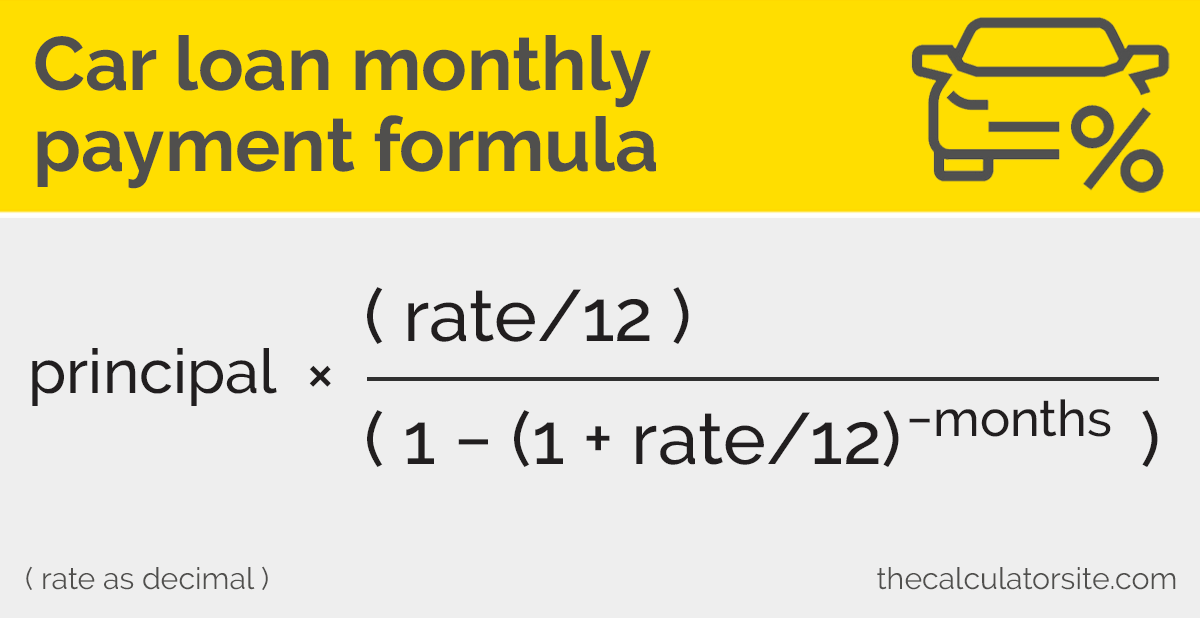
The formula for a fixed monthly payment (M) on an amortizing loan is more complex:
M = P [ i(1 + i)^n ] / [ (1 + i)^n – 1]
Where:
- P = Principal loan amount
- i = Monthly interest rate (Annual rate / 12)
- n = Total number of payments (Loan term in years × 12)
You would then multiply the monthly payment (M) by the total number of payments (n) to find the total amount repaid, and subtract the original principal (P) to find the total interest paid.
The Challenge of Manual Calculations for Complex Loans
Manually calculating the exact interest paid on an amortizing car loan can be cumbersome and prone to error. The monthly interest rate calculation, the declining principal balance, and the fixed monthly payment make it a multi-step process for each payment period. Even a slight miscalculation in one month can throw off subsequent calculations. For this reason, relying on financial calculators or software is highly recommended for accuracy. The focus of manual understanding should be on the principle of how interest works, rather than the tedious arithmetic.
Leveraging Financial Tools for Accurate Interest Rate Calculation
Given the complexity of amortizing loans, financial tools are indispensable for precise and rapid interest rate calculations and payment estimations.
Online Car Loan Calculators
Online car loan calculators are perhaps the most accessible and widely used tools. They are designed to be user-friendly and provide quick, accurate results.

- Benefits: Instant results, easy to compare different scenarios (e.g., changing loan term or down payment), often provide a full amortization schedule.
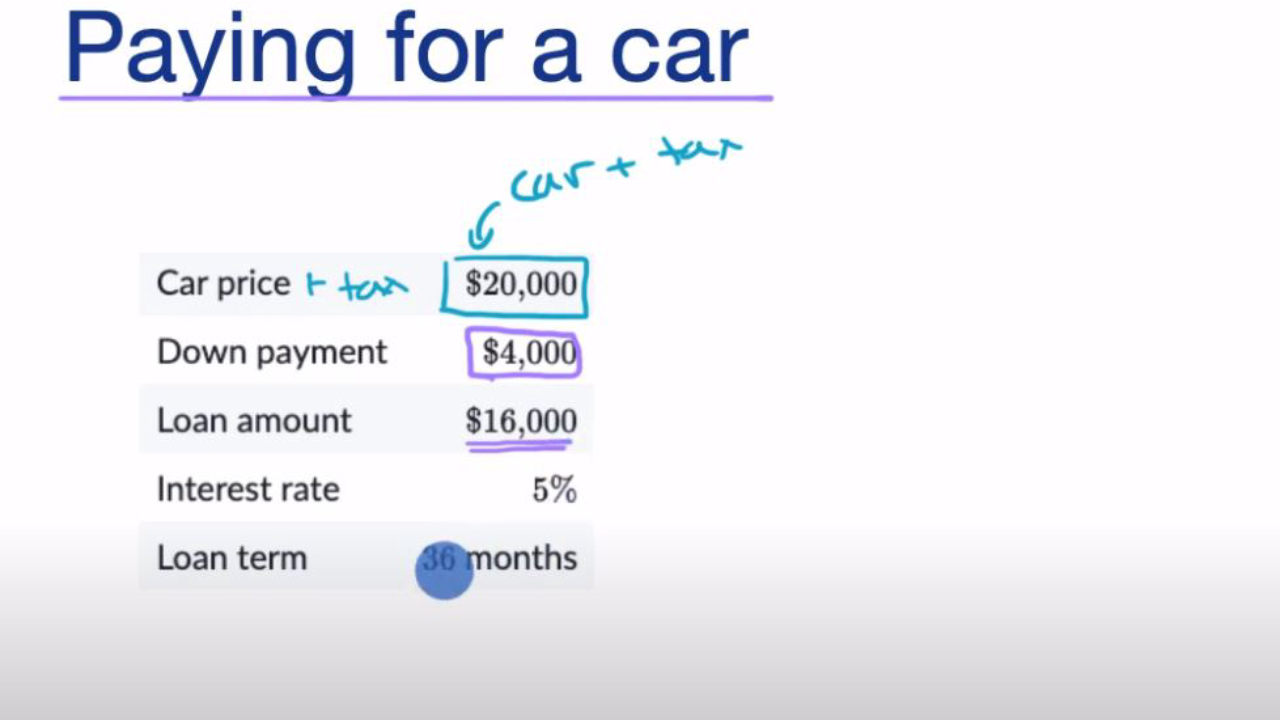
- Information Required: Typically, you’ll need to input the loan amount (car price minus down payment), the annual interest rate (APR), and the loan term in months or years. Some advanced calculators might ask for sales tax, trade-in value, and other fees.
- Common Features: Beyond just monthly payments, many calculators can show you the total interest paid over the life of the loan, the total cost of the car, and even suggest how extra payments could reduce your interest.
Spreadsheet Software (Excel/Google Sheets)
For those who prefer a more hands-on approach or need to perform more customized analyses, spreadsheet software like Microsoft Excel or Google Sheets is incredibly powerful.
- PMT Function: The primary function for calculating monthly payments is
PMT.=PMT(rate, nper, pv, [fv], [type])- Rate: Your annual interest rate divided by 12 (e.g., 0.05/12 for 5% annual rate).
- Nper: The total number of payments (loan term in months, e.g., 60 for a 5-year loan).
- Pv: The present value or principal loan amount.
[fv]and[type]are optional and usually omitted for simple loan calculations.
- Building an Amortization Schedule: You can set up a spreadsheet to generate a full amortization schedule. This involves columns for payment number, starting balance, interest paid, principal paid, and ending balance for each month. This allows you to visualize the breakdown of each payment and track how your principal decreases over time.
- “What If” Scenarios: Spreadsheets excel at allowing you to easily change variables (interest rate, term, principal) to see how they impact your monthly payment and total interest, empowering powerful “what if” analysis.
Mobile Banking Apps and Financial Planning Tools
Many modern banking apps and dedicated financial planning tools (like Mint, YNAB, Personal Capital) offer features that help you track and understand your existing loans.
- Loan Overview: They often display your current loan balance, next payment due, and sometimes an estimated total interest remaining.
- Payment Projections: Some tools can project how extra payments might reduce your loan term and total interest paid.
- Integration: By linking your car loan account, these apps provide a centralized view of your financial obligations, making it easier to manage your budget and stay on top of payments. While they might not be primary calculation tools, they are excellent for monitoring and ongoing management.
Decoding Your Car Loan Agreement and Making Informed Decisions
The final step in mastering your car loan is to thoroughly understand the agreement presented by the lender and use that knowledge to make the best financial choices.
Where to Find the Interest Rate on Your Loan Documents
Always scrutinize your loan documents carefully before signing. The most important figure to look for is the Annual Percentage Rate (APR). This will typically be prominently displayed in the loan disclosure statement, often on the first page or within a summary box. It’s crucial not to confuse the APR with a simple stated interest rate, as the APR gives you the full cost. Also, pay attention to any other fees listed, such as origination fees, documentation fees, or prepayment penalties (though these are less common with car loans today).
The Impact of Interest Rate on Total Loan Cost
Even a seemingly small difference in interest rate can result in a significant difference in the total amount you pay over the life of the loan.
Example:
- Loan Amount: $30,000
- Loan Term: 60 months (5 years)
Scenario 1: 3% APR
- Monthly Payment: ~$539
- Total Paid: $32,340
- Total Interest: $2,340
Scenario 2: 6% APR
- Monthly Payment: ~$580
- Total Paid: $34,800
- Total Interest: $4,800
In this example, a 3% difference in APR results in an extra $2,460 in interest paid over five years. This demonstrates why even fractions of a percentage point matter significantly over the loan term.
Strategies to Secure a Lower Interest Rate
Being proactive can save you a substantial amount on your car loan.
- Improve Your Credit Score: Prioritize paying bills on time, reducing credit card balances, and correcting any errors on your credit report before applying for a loan.
- Make a Larger Down Payment: A substantial down payment reduces the loan amount and the lender’s risk, often leading to better rates. Aim for at least 10-20% if possible.
- Choose a Shorter Loan Term: While monthly payments will be higher, shorter terms typically come with lower interest rates and result in less overall interest paid.
- Shop Around for Lenders: Don’t just accept the financing offered by the dealership. Obtain pre-approvals from multiple banks, credit unions, and online lenders. Credit unions often have very competitive rates.
- Consider a Co-signer: If you have limited or poor credit, a co-signer with excellent credit can help you qualify for a better rate. Be aware that the co-signer is equally responsible for the debt.
- Negotiate: Even if you have a good pre-approval, the dealership’s finance department might be able to beat it. Always be prepared to negotiate.
Beyond the Calculation: Managing Your Car Loan Effectively
Calculating the interest rate is just the beginning. Effective management of your car loan throughout its term can lead to further savings and financial peace of mind.
Refinancing Your Car Loan
Refinancing involves taking out a new loan to pay off your existing car loan, ideally with a lower interest rate or better terms.
- When it Makes Sense: Consider refinancing if your credit score has significantly improved since you took out the original loan, if interest rates have dropped, or if you want to change your loan term (e.g., shorten it to pay less interest, or lengthen it to lower monthly payments if you’re struggling).
- Benefits: Lower monthly payments, reduced total interest paid, or a shorter repayment period.
- Process: Shop for new lenders, compare offers, and ensure the savings from the new rate outweigh any refinancing fees.
Making Extra Payments
Even small extra payments can have a powerful impact on your loan. Since car loans use simple interest, any payment above your scheduled amount goes directly towards reducing your principal balance.
- How it Reduces Total Interest Paid: By reducing the principal faster, you reduce the base on which future interest is calculated, leading to significant savings over time.
- Strategies: Round up your monthly payment, make an extra payment whenever you receive a bonus or tax refund, or switch to bi-weekly payments (which results in one extra full payment per year). Always ensure your lender applies extra payments directly to the principal.
Monitoring Your Loan Progress
Regularly reviewing your loan statements and checking your outstanding balance is crucial for effective management.
- Understanding Statements: Verify that payments are being applied correctly, that the interest rate matches your agreement, and that your principal balance is decreasing as expected.
- Tracking Progress: Use online banking portals or personal finance apps to monitor your loan’s progress. Seeing your balance decrease can be a great motivator to continue making smart financial choices.
In conclusion, the ability to calculate and understand the interest rate on your car loan is an indispensable financial skill. It moves you beyond simply accepting a monthly payment and empowers you to make strategic decisions that can save you thousands of dollars over the life of your vehicle. By understanding the underlying principles, utilizing available financial tools, and actively managing your loan, you take control of your auto financing and contribute significantly to your overall financial well-being.
aViewFromTheCave is a participant in the Amazon Services LLC Associates Program, an affiliate advertising program designed to provide a means for sites to earn advertising fees by advertising and linking to Amazon.com. Amazon, the Amazon logo, AmazonSupply, and the AmazonSupply logo are trademarks of Amazon.com, Inc. or its affiliates. As an Amazon Associate we earn affiliate commissions from qualifying purchases.