
Understanding how to calculate interest paid is a fundamental skill for anyone managing personal finances, whether you’re considering a mortgage, taking out a car loan, using a credit card, or even saving for the future. Interest, at its core, is the cost of borrowing money or the return on lending money. For borrowers, it represents an additional amount paid back on top of the principal amount received. For lenders, it’s the compensation for the risk and opportunity cost of providing funds. Mastering these calculations empowers individuals to make informed financial decisions, negotiate better terms, and ultimately save a significant amount of money over time.
Ignoring how interest is accrued and calculated can lead to paying far more than necessary for loans, or missing out on potential earnings from investments. This guide will demystify the process, breaking down the essential concepts, calculation methods for various financial products, and the tools available to help you accurately determine the true cost of borrowing. By the end, you’ll possess a deeper insight into this crucial aspect of personal finance, enabling you to navigate the financial landscape with greater confidence and intelligence.
Understanding the Fundamentals of Interest
Before diving into complex calculations, it’s imperative to grasp the basic building blocks of interest. These foundational concepts are universal, regardless of the type of loan or investment. A clear understanding here will simplify all subsequent discussions and calculations.
What is Interest?
At its simplest, interest is a fee paid by a borrower to a lender for the use of borrowed money. It’s typically expressed as a percentage of the principal amount. From a lender’s perspective, it’s the income earned from providing funds. From a borrower’s perspective, it’s the extra cost associated with financing a purchase or obtaining capital. This fee compensates the lender for the time value of money, inflation, and the risk of default.
Key Components: Principal, Rate, Term
Three primary variables dictate the total amount of interest paid on any loan:
- Principal (P): This is the original amount of money borrowed or invested. If you take out a $10,000 personal loan, $10,000 is your principal.
- Interest Rate (R): Expressed as a percentage, this is the cost of borrowing the principal for a given period, usually annually. An annual interest rate of 5% means you’ll pay 5% of the principal as interest each year. It’s crucial to distinguish between the nominal annual rate and the Annual Percentage Rate (APR), which often includes additional fees and charges, giving a more accurate total cost of borrowing.
- Loan Term (T): This is the duration over which the loan is to be repaid, typically measured in years or months. A 30-year mortgage has a loan term of 30 years, while a 60-month car loan has a term of 5 years. The longer the term, generally the lower the monthly payments, but the higher the total interest paid over the life of the loan.
The Difference Between Simple and Compound Interest
The method by which interest is calculated significantly impacts the total amount paid. There are two primary types:
- Simple Interest: This is calculated only on the principal amount of a loan or deposit. It does not take into account any interest accrued in previous periods. Simple interest is relatively straightforward and is often used for short-term loans or simple investment accounts.
- Compound Interest: This is calculated on the principal amount and on the accumulated interest from previous periods. It’s often referred to as “interest on interest.” Compound interest can significantly increase the total amount paid on a loan or earned on an investment over time, especially over longer periods and with higher compounding frequencies. Most long-term loans, like mortgages and car loans, use compound interest.
Step-by-Step Calculation Methods
Once you understand the basic components, you can apply formulas to calculate interest paid. The method you use will depend on whether the interest is simple or compound, and the frequency of compounding.
Calculating Simple Interest
The formula for simple interest is direct and easy to apply:
Simple Interest = P × R × T
Where:
- P = Principal amount
- R = Annual interest rate (expressed as a decimal, e.g., 5% becomes 0.05)
- T = Loan term in years
Example: If you borrow $1,000 at a 6% annual simple interest rate for 2 years:
Simple Interest = $1,000 × 0.06 × 2 = $120.
Total amount paid back = Principal + Simple Interest = $1,000 + $120 = $1,120.
This calculation shows the total interest over the entire term. For monthly payments, you’d divide the total interest by the number of months in the term.
Demystifying Compound Interest Calculations
Compound interest is more common and powerful. The formula for future value with compound interest is:
A = P (1 + r/n)^(nt)
Where:
- A = The future value of the investment/loan, including interest
- P = The principal investment amount (the initial deposit or loan amount)
- r = The annual interest rate (as a decimal)
- n = The number of times that interest is compounded per year
- t = The number of years the money is invested or borrowed for
To find the total interest paid, you subtract the principal from the future value:
Total Compound Interest Paid = A – P
Example: You borrow $1,000 at an annual interest rate of 6%, compounded monthly, for 2 years.
P = $1,000
r = 0.06
n = 12 (compounded monthly)
t = 2
A = $1,000 (1 + 0.06/12)^(12*2)
A = $1,000 (1 + 0.005)^24
A = $1,000 (1.005)^24
A ≈ $1,000 × 1.12716
A ≈ $1,127.16
Total Compound Interest Paid = $1,127.16 – $1,000 = $127.16.
Notice that even with the same principal, rate, and term, the compound interest is higher ($127.16) than the simple interest ($120) because the interest itself started earning interest.
The Impact of Compounding Frequency
The ‘n’ variable in the compound interest formula highlights the significant impact of compounding frequency. The more frequently interest is compounded (e.g., daily vs. annually), the more interest accrues, assuming the same nominal annual rate.
- Annually (n=1): Interest is calculated once a year.
- Semi-annually (n=2): Interest is calculated twice a year.
- Quarterly (n=4): Interest is calculated four times a year.
- Monthly (n=12): Interest is calculated twelve times a year.
- Daily (n=365): Interest is calculated every day.

For borrowers, higher compounding frequency means higher total interest paid. For savers and investors, it means faster growth of their money. Always check the compounding frequency on any loan or investment product.
Interest Calculation Across Different Financial Products
The principles of simple and compound interest apply across a spectrum of financial products, but their application varies depending on the loan structure and repayment schedule.
Loans with Fixed Amortization Schedules (Mortgages, Auto Loans)
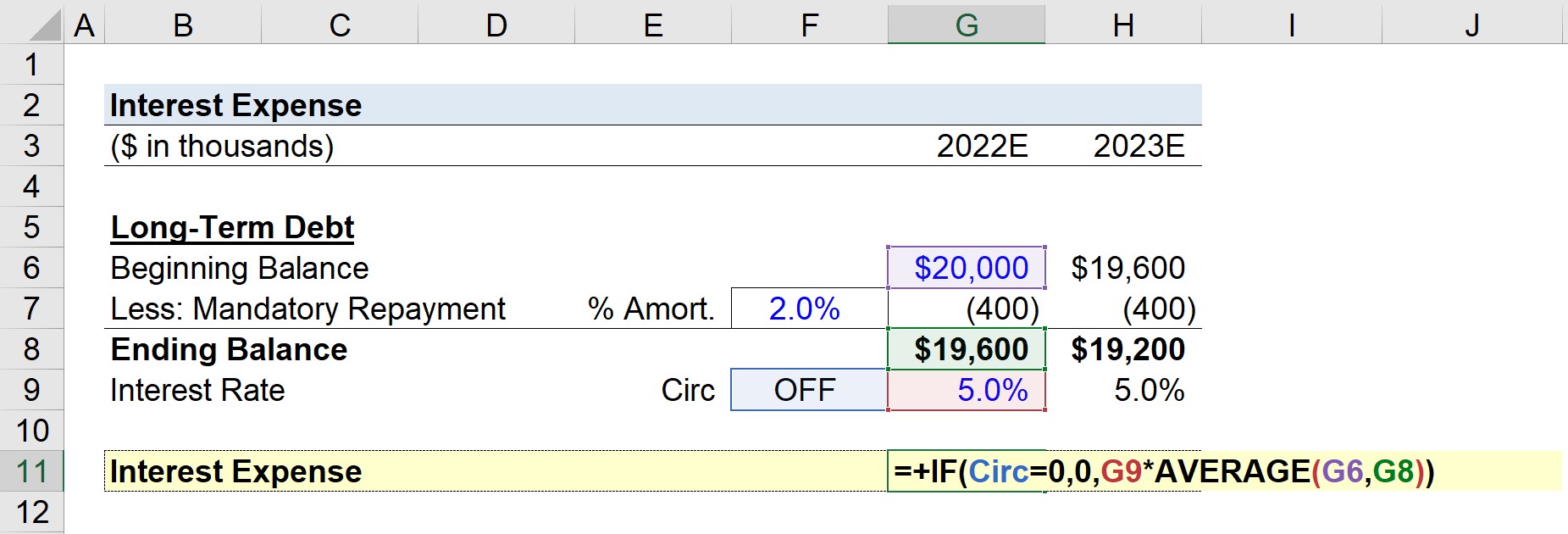
Loans like mortgages and auto loans typically use an amortization schedule. This is a table that details each loan payment, showing how much goes towards the principal and how much goes towards interest over the life of the loan. In the early stages of these loans, a larger portion of each payment goes towards interest, and a smaller portion towards principal. As the principal balance decreases over time, the interest component of each payment also decreases, and more goes towards paying down the principal.
Calculating the interest paid on each specific payment in an amortized loan involves using the current outstanding principal balance. The interest for a given period is typically:
Interest for Period = Current Outstanding Principal × (Annual Interest Rate / Number of Payments per Year)
For example, on a $200,000 mortgage at 4% annual interest, paid monthly:
If the first month’s payment is made, the interest component would be:
Interest = $200,000 × (0.04 / 12) = $666.67.
If your monthly payment is, say, $954.83, then $666.67 goes to interest, and the remaining $288.16 goes to principal, reducing the outstanding balance for the next month’s calculation. This iterative process is what makes up an amortization schedule.
Revolving Credit (Credit Cards)
Credit cards operate on a revolving credit basis, meaning you can borrow up to a certain limit, repay it, and borrow again. Interest on credit cards is typically calculated daily based on your average daily balance. This can make precise manual calculation complex, but the general principle is:
Daily Interest = (Average Daily Balance × Annual Interest Rate) / 365
This daily interest is then summed up for the billing cycle to determine the total interest charge. Any new purchases, payments, or cash advances will affect the average daily balance and thus the interest accrued. Carrying a balance month-to-month on a credit card can result in significant interest payments due to high APRs and daily compounding.
Personal Loans and Lines of Credit
Personal loans often have fixed terms and interest rates, much like auto loans, using an amortization schedule. The calculation of interest paid on each installment follows the same logic as described for mortgages. Lines of credit, similar to credit cards, offer flexibility to borrow and repay, with interest usually calculated on the outstanding balance and often compounded monthly or daily, depending on the lender. Understanding the specific terms (fixed vs. variable rate, compounding frequency) is crucial for these products.
Practical Applications and Tools for Accuracy
While understanding the formulas is vital, nobody expects you to manually calculate complex compound interest schedules for a 30-year mortgage. Fortunately, a variety of practical tools and resources can help you accurately determine interest paid.
Leveraging Amortization Schedules
For fixed-term loans like mortgages and auto loans, an amortization schedule is your best friend. Lenders are often required to provide one, and they clearly lay out how much principal and interest you’ll pay with each installment over the entire loan term. This allows you to see the exact amount of interest paid at any given point in the loan’s life and the total interest paid over the full term. You can request one from your lender or easily generate one using online calculators.
Utilizing Online Calculators and Spreadsheets
The internet is replete with free online interest calculators. These tools allow you to input the principal, interest rate, term, and compounding frequency to quickly determine monthly payments, total interest paid, and even generate full amortization schedules. They are invaluable for comparing different loan scenarios or understanding the impact of making extra payments.
For those comfortable with numerical tools, spreadsheet software like Microsoft Excel or Google Sheets offers immense power. You can use built-in financial functions (e.g., PMT for payment, IPMT for interest payment, PPMT for principal payment) to build your own custom amortization tables. This gives you unparalleled control to model various scenarios, such as the impact of lump-sum payments or refinancing.
The Importance of Understanding Your Loan Documents
Always read your loan documents carefully. Key figures like the nominal annual interest rate, the Annual Percentage Rate (APR), the compounding frequency, and any associated fees are explicitly stated in your loan agreement. The APR is particularly important as it gives you the true annual cost of borrowing, including interest and other charges, making it easier to compare different loan offers. Understanding these documents ensures you’re aware of exactly how interest will be calculated and what your total obligations will be.
Why Mastering Interest Calculation Matters
Beyond the academic exercise, a profound understanding of how interest is calculated carries significant real-world benefits for your financial well-being. It transforms you from a passive recipient of financial terms to an active participant in your financial destiny.
Informed Financial Decision-Making
Knowing how interest works allows you to critically evaluate loan offers. Is a lower interest rate with a shorter term better than a slightly higher rate with a longer term? What is the real cost of that “0% APR for 12 months” credit card offer once the promotional period ends? Understanding interest helps you answer these questions confidently, leading to choices that align with your financial goals rather than simply accepting the first offer presented. It empowers you to compare apples to apples, even when financial products seem designed to confuse.
Budgeting and Financial Planning
When you understand how much interest you’re paying on your debts each month, you can create a more accurate budget. This allows you to allocate funds more effectively, prioritizing high-interest debts for faster repayment, thereby reducing your overall interest burden. For long-term planning, such as retirement savings or large purchases, a grasp of compound interest (as an earner, not a payer) enables you to project future wealth growth more realistically and set achievable financial milestones.

Identifying Opportunities for Savings
A clear picture of interest calculations can reveal numerous opportunities to save money. For instance:
- Making extra payments on principal: Even small additional payments can significantly reduce the total interest paid on amortized loans, especially in the early years.
- Refinancing: If interest rates drop, understanding your current interest burden helps you assess whether refinancing to a lower rate will genuinely save you money after considering closing costs.
- Debt consolidation: Consolidating multiple high-interest debts into a single loan with a lower interest rate can drastically reduce your monthly interest outflow.
- Avoiding credit card interest: Paying off credit card balances in full each month is the most effective way to avoid high daily compounded interest.
In conclusion, the ability to calculate interest paid is not merely an accounting skill; it’s a critical life skill. It removes the mystery from financial transactions, giving you the clarity and control needed to manage debt effectively, optimize savings, and build a more secure financial future. By applying the knowledge and tools discussed here, you can make smarter money choices that resonate throughout your financial life.
aViewFromTheCave is a participant in the Amazon Services LLC Associates Program, an affiliate advertising program designed to provide a means for sites to earn advertising fees by advertising and linking to Amazon.com. Amazon, the Amazon logo, AmazonSupply, and the AmazonSupply logo are trademarks of Amazon.com, Inc. or its affiliates. As an Amazon Associate we earn affiliate commissions from qualifying purchases.