
Embarking on the journey to power your home with solar energy is a forward-thinking decision, aligning with global trends towards sustainable living and technological self-sufficiency. However, the critical first step isn’t just deciding to “go solar,” but precisely determining the optimal size of your solar photovoltaic (PV) system. This involves a meticulous calculation of your energy needs against the potential energy production of solar panels, taking into account various technical and environmental factors. An accurately sized system ensures maximum efficiency, avoids unnecessary overproduction or underperformance, and optimizes the integration of this advanced energy technology into your home infrastructure. This guide will walk you through the technical methodology required to calculate exactly how many solar panels you need, focusing purely on the technological aspects and system design principles.
Understanding Your Energy Consumption Profile
The foundation of any solar panel calculation is a comprehensive understanding of your current and projected energy consumption. This isn’t just about looking at a total kilowatt-hour (kWh) figure; it requires a deeper dive into how and when you use electricity.
Analyzing Historical Electricity Bills
Your past electricity bills are a goldmine of data. They typically show your monthly energy consumption in kWh over the last year. Collecting 12 months of bills provides an average daily or monthly consumption figure and, crucially, reveals seasonal variations. You’ll likely see higher consumption during peak heating or cooling months, which is vital for sizing a system that can meet your demands throughout the year. Look for usage patterns, not just totals. Some bills even provide a breakdown of usage by time of day, which is exceptionally helpful for understanding peak demand. This historical data forms the baseline requirement your solar system must meet or exceed.
Identifying Peak Usage Times and Appliances
Beyond total consumption, understanding when you use the most power and which appliances contribute most significantly to your demand is paramount. Major energy consumers include HVAC systems, water heaters, refrigerators, and electric vehicles (EVs). Analyzing their individual power draw (wattage) and average daily run-time allows for a more granular understanding of your load profile. For instance, if your highest usage occurs in the evenings when solar production is minimal, this might prompt considerations for battery storage integration, a key technological enhancement, rather than just increasing the number of panels. Smart home energy monitoring systems, which are increasingly accessible, can provide real-time data on appliance-specific consumption, offering unparalleled insights into your home’s energy dynamics.
Projecting Future Energy Needs
Solar panels are a long-term investment, often lasting 25-30 years. Therefore, projecting future energy needs is as important as analyzing past consumption. Consider any upcoming changes that will impact your electricity usage. Are you planning to purchase an electric vehicle, which will significantly increase your charging demand? Are you contemplating adding a heat pump, undertaking a home extension, or acquiring new high-power appliances? Perhaps you’re looking into smart home technologies that might slightly increase baseline consumption but offer greater efficiency in other areas. Factor these anticipated technological upgrades and lifestyle changes into your calculations to ensure your solar system remains adequate for decades to come, preventing the need for costly retrofits or expansions down the line. Over-sizing slightly to accommodate these future demands can be a strategic technical decision.
Deciphering Solar Panel Specifications and Performance
Once you have a clear picture of your energy needs, the next step is to understand the technical capabilities and characteristics of solar panels themselves. Not all panels are created equal, and their specifications directly impact how many you’ll need.
Watts, Efficiency, and Power Ratings
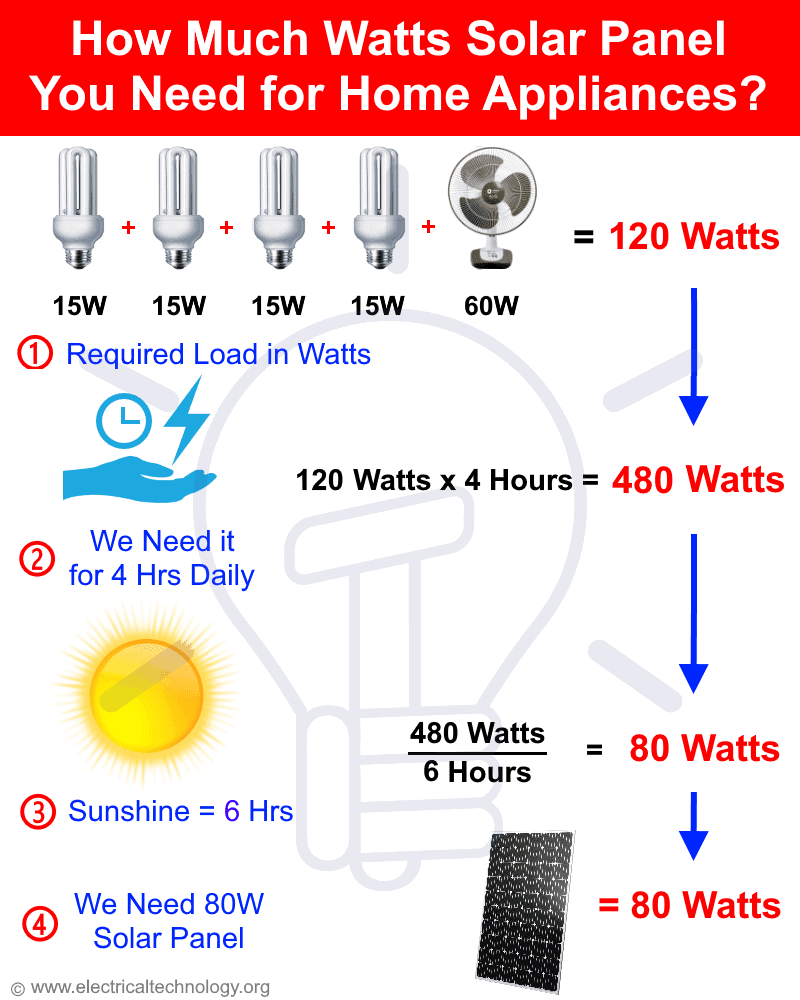
Every solar panel has a power rating, typically expressed in watts (W), indicating its maximum power output under standard test conditions (STC). A common residential panel might range from 300W to 450W. The efficiency rating, expressed as a percentage, tells you how much of the sunlight hitting the panel is converted into usable electricity. Higher efficiency panels (e.g., 20-22%) convert more sunlight, meaning you might need fewer panels to achieve your desired power output, especially beneficial for limited roof space. Understanding these core metrics is fundamental to calculating the total system wattage required to meet your kWh demands. The total power output of your system (in kilowatts, kW) is the sum of the individual panel wattages.
Impact of Temperature and Degradation
Solar panel performance is not static. Temperature plays a significant role; panels generally operate less efficiently at very high temperatures. Manufacturers provide a temperature coefficient, detailing the percentage decrease in power output for every degree Celsius above 25°C. While this might seem like a minor detail, it’s crucial for accurate long-term performance modeling, especially in hotter climates. Furthermore, solar panels undergo a phenomenon known as degradation. Their power output gradually decreases over time, typically by about 0.5% per year. Manufacturers usually guarantee a certain percentage of original power output (e.g., 80% after 25 years). Factoring in this expected degradation, perhaps by initially over-sizing your system by a small margin, ensures your system maintains adequate output throughout its operational lifespan.
Monocrystalline vs. Polycrystalline vs. Thin-Film Technologies
The type of solar panel technology you choose also influences system sizing and performance.
-
Monocrystalline panels are known for their high efficiency and sleek, dark appearance. They are typically more expensive but require less space to produce the same amount of power, making them ideal for smaller roofs or areas where maximizing output is critical.
-
Polycrystalline panels are generally less efficient than monocrystalline but are also less expensive. They have a slightly bluer hue and require more space for the same power output.
-
Thin-film panels are the least efficient but are flexible and lightweight, suitable for niche applications. They typically take up the most space per watt.
For most residential installations, monocrystalline panels are the preferred technological choice due to their efficiency and space-saving characteristics, which directly impacts the number of physical panels required.
Assessing Your Site’s Solar Potential
Even the most efficient solar panels can’t produce electricity without adequate sunlight. The specific characteristics of your property’s location and roof dictate the actual power production.
Sunlight Hours and Irradiance Levels (Geographic Factors)
The amount of usable sunlight your location receives, known as solar irradiance, varies significantly by geography and time of year. Irradiance is measured in watts per square meter (W/m²) and represents the power of sunlight. More practically, “peak sun hours” or “solar insolation” is often used, representing the equivalent number of hours per day when solar irradiance averages 1,000 W/m². For instance, a region with 5 peak sun hours means that, on average, your panels will receive the same amount of solar energy as if they were exposed to full, direct sunlight for 5 hours. Online tools and solar maps (like those provided by national renewable energy laboratories) offer precise data for specific addresses, which is fundamental input for your calculation. This dictates the maximum potential energy production for a given panel size.
Roof Orientation, Tilt, and Shading Analysis (Site-Specific Factors)
Beyond general geographic data, your specific roof characteristics are paramount.
-
Orientation: In the Northern Hemisphere, south-facing roofs receive the most direct sunlight throughout the day, maximizing production. East or west-facing roofs can still be viable but will produce less total energy. North-facing roofs are generally unsuitable for solar installations due to minimal direct sunlight.
-
Tilt: The angle at which the panels are installed relative to the horizontal plane (roof pitch) also affects production. An optimal tilt angle generally matches your latitude, allowing for maximum sun exposure throughout the year. Adjustable racking systems are technological solutions to optimize this.
-
Shading: Any obstructions that cast shadows on your roof – trees, chimneys, adjacent buildings – can drastically reduce solar panel output. Even partial shading on one panel can impact the performance of an entire string of panels in certain system configurations. A detailed shading analysis using specialized software or a physical sun path study is crucial. This technological assessment helps identify problem areas and inform panel placement or trimming solutions.
Software Tools for Site Assessment
Modern solar design relies heavily on sophisticated software tools. These applications can simulate solar production based on detailed 3D models of your home, local weather data, and specific panel types. They can account for roof dimensions, tilt, orientation, and complex shading patterns, providing highly accurate estimates of annual and monthly energy production. Platforms like Aurora Solar, Helioscope, or even simpler online calculators integrate satellite imagery and climate data to generate precise kilowatt-hour output predictions for a proposed system, effectively streamlining the complex site assessment process and enhancing calculation accuracy.
The Core Calculation: Matching Production to Consumption
With your energy consumption data and site-specific production potential, you can now perform the central calculation to determine your required system size.
Determining Required System Size (kW)
The goal is to generate enough energy (kWh) to meet your identified daily or monthly needs.
-
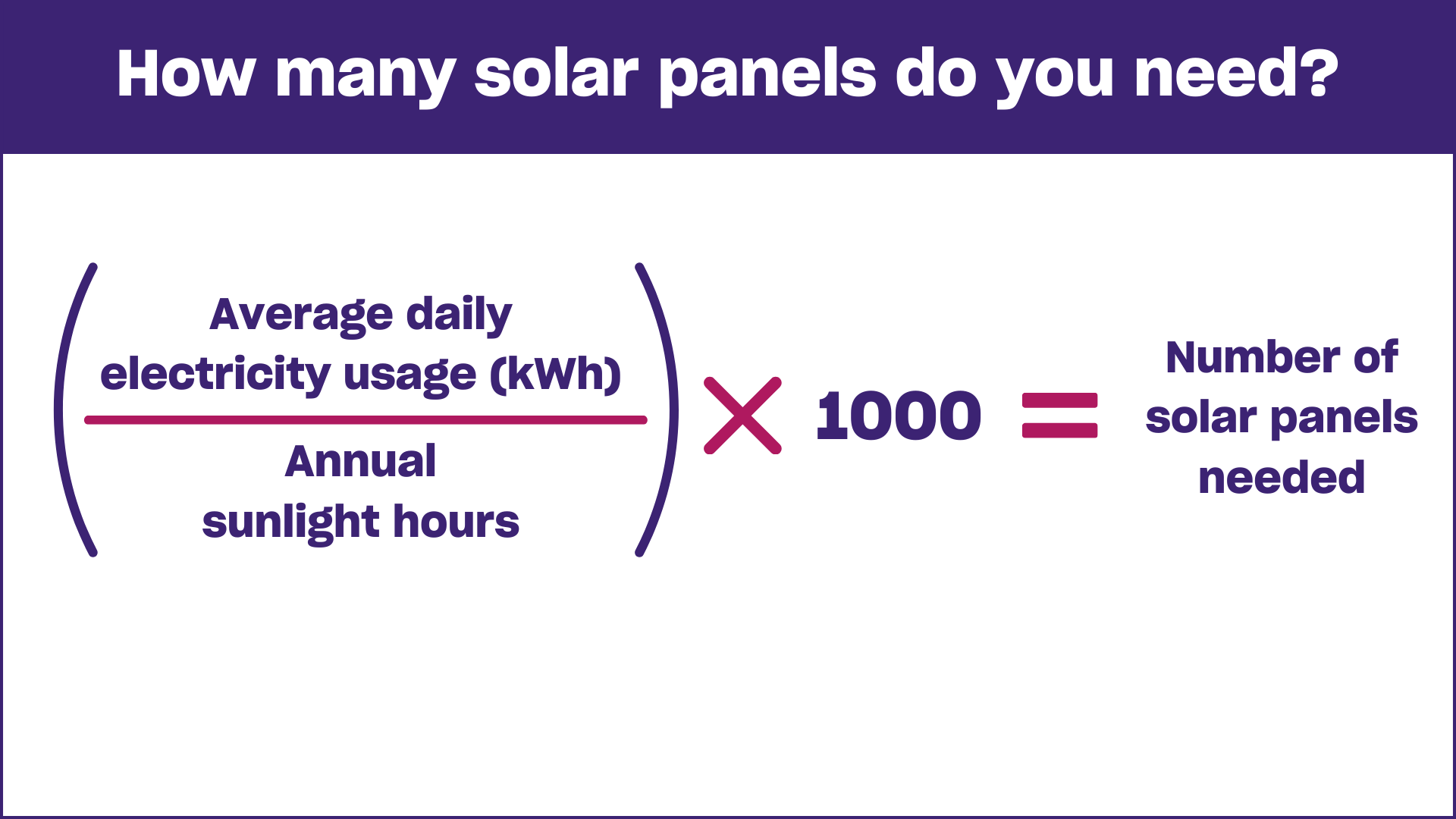
Calculate daily energy need: Take your average monthly kWh consumption (e.g., from your electricity bills) and divide it by 30 (days in a month) to get your average daily kWh requirement.
-
Account for system losses: Not all energy produced by the panels reaches your home; there are inherent system losses (e.g., wiring, inverter efficiency, temperature effects, dust). A typical system loss factor is 15-25%. So, you need to produce more raw energy than you consume. Divide your daily energy need by (1 – loss factor, e.g., 0.80 for 20% loss).
-
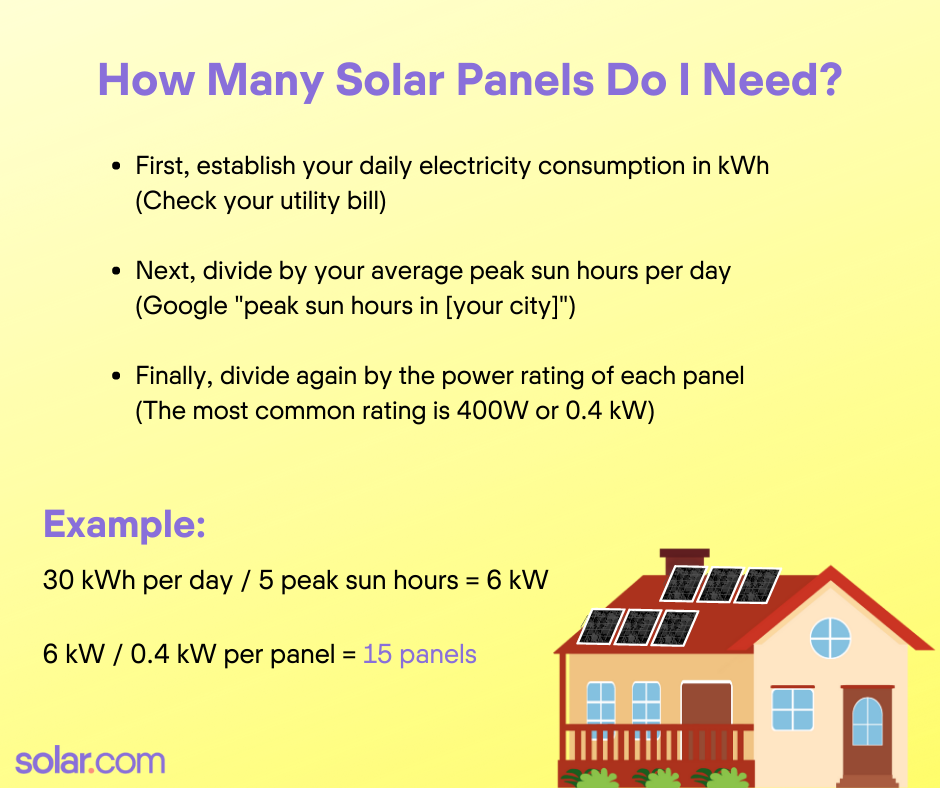
Divide by peak sun hours: Take this adjusted daily energy requirement and divide it by your average daily peak sun hours (from your site assessment) to get the necessary system size in kilowatts (kW).
- Formula Example: (Average Daily kWh Needed / 0.80) / Peak Sun Hours = Required System Size (kW)
Calculating the Number of Panels
Once you have your required system size in kilowatts (kW), you can determine the number of panels.
-
Convert panel wattage to kW: Divide a single panel’s wattage (e.g., 400W) by 1000 to get its power in kilowatts (e.g., 0.4 kW).
-
Divide total system kW by individual panel kW: Divide your Required System Size (kW) by the individual panel’s kW rating.
- Formula Example: Required System Size (kW) / Individual Panel Power (kW) = Number of Panels
Since you cannot install a fraction of a panel, always round up to the nearest whole number to ensure you meet your energy targets. This gives you the theoretical number of panels required.
Accounting for System Losses and Derate Factors
Beyond the general system losses mentioned above, a more granular approach involves “derate factors.” These are multipliers that account for various real-world inefficiencies:
-
Inverter Efficiency: Inverters convert DC power from panels to AC power for your home, typically operating at 95-98% efficiency.
-
Temperature Derating: Panels produce less power in hotter conditions.
-
Wiring Losses: Resistance in wires causes minor energy loss.
-
Dust/Soiling: Accumulation of dust, dirt, or snow reduces light absorption.
-
Mismatch Losses: Slight differences in individual panel performance.
-
Shading: As discussed, this is a significant derate factor.
Industry standard derate factors or a total system loss factor are often applied to the initial calculation to predict realistic output. For example, a system with a 0.77 derate factor means it will produce 77% of its STC-rated power in real-world conditions. This technical refinement ensures your predicted energy production is accurate and robust.
Optimizing System Design and Future-Proofing
Calculating the number of panels is a vital step, but a truly effective solar system integrates seamlessly with your home and prepares for future technological advancements.
Considerations for Battery Storage Integration
As grid technologies evolve and energy independence becomes more desirable, integrating battery storage alongside your solar panels is a significant technological enhancement. Batteries allow you to store excess solar energy generated during the day and use it during the night or during grid outages, optimizing your energy self-consumption. While not directly part of the “number of panels” calculation, understanding your peak evening demand and desire for backup power might influence an upward adjustment in your total system size to ensure sufficient energy for charging the battery, especially if net metering policies limit grid export. Battery capacity (kWh) must be matched with your load profile and solar production.
Scalability and Smart Home Integration
The modular nature of solar PV systems allows for future expansion, a key aspect of technological foresight. Designing your initial system with scalability in mind means considering roof space for additional panels, inverter capacity that can handle more input, and wiring that can be easily upgraded. Furthermore, smart home integration technologies are transforming how we manage energy. Solar systems can be linked with smart thermostats, smart appliances, and home energy management systems (HEMS) to optimize energy usage based on real-time solar production, grid conditions, and user preferences. This level of integration maximizes efficiency and leverages the full potential of your renewable energy setup.
Consulting with Solar Technology Experts
While this guide provides a comprehensive framework, the nuances of solar system design can be complex. Consulting with certified solar technology experts or engineers is highly recommended. They possess the specialized tools, certifications, and experience to conduct detailed site assessments, navigate local building codes and technical standards, and design a system optimized for your specific needs and constraints. They can refine calculations, suggest optimal panel types and inverter technologies, and ensure the entire system is designed for maximum performance, longevity, and technological harmony with your existing home infrastructure. Their expertise ensures that your solar investment is not only technically sound but also future-proofed against evolving energy demands and technological innovations.
aViewFromTheCave is a participant in the Amazon Services LLC Associates Program, an affiliate advertising program designed to provide a means for sites to earn advertising fees by advertising and linking to Amazon.com. Amazon, the Amazon logo, AmazonSupply, and the AmazonSupply logo are trademarks of Amazon.com, Inc. or its affiliates. As an Amazon Associate we earn affiliate commissions from qualifying purchases.