
In the intricate world of finance, percentages are not just mathematical constructs; they are the universal language that underpins nearly every financial decision, from personal budgeting to multi-million dollar investments. Understanding “how to calculate different percentages” is not merely an academic exercise; it is a fundamental skill that empowers individuals and businesses to make informed, strategic choices. Whether you’re deciphering a discount, evaluating an investment return, or analyzing a company’s profit margin, percentages provide the context and clarity needed to navigate financial landscapes effectively.
This article delves into the core mechanics of percentage calculations and illuminates their indispensable role across various financial domains. By mastering these calculations, you unlock a deeper understanding of your money, paving the way for greater financial literacy and success.
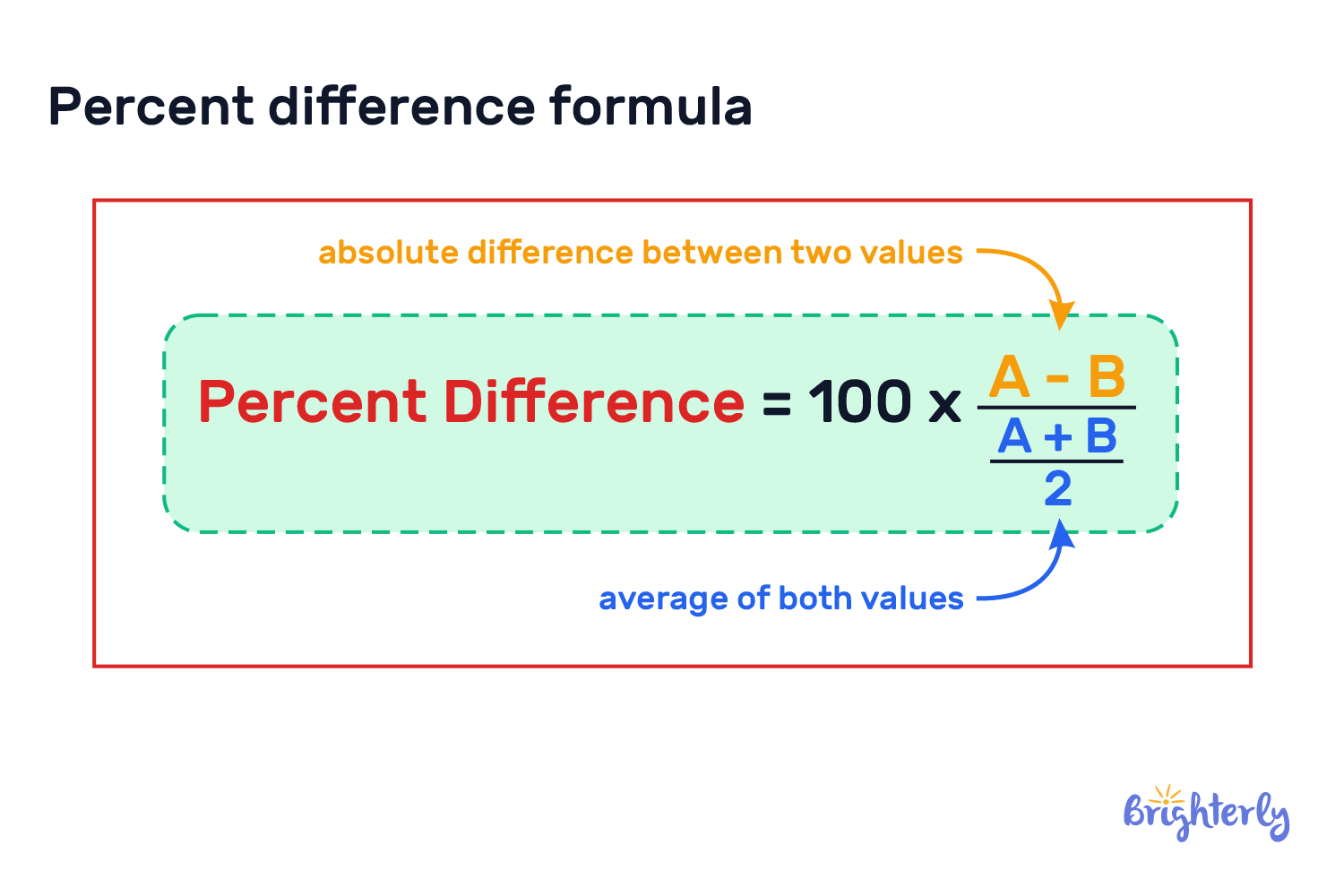
The Foundational Understanding of Percentages
Before we apply percentages to complex financial scenarios, it’s crucial to grasp their basic definition and the fundamental formula that governs them. This foundational knowledge serves as the bedrock for all subsequent calculations.
What is a Percentage?
At its heart, a percentage represents a proportion or a fraction of a whole, expressed as a number out of 100. The term “percent” literally means “per one hundred.” It’s a standardized way to compare parts of different wholes, making complex data more digestible and comparable. For instance, saying “50% of your income goes to rent” is often clearer and more impactful than “half of your income” or “0.5 of your income.” It immediately translates to “50 out of every 100 units of your income.”
Percentages are fundamentally linked to decimals and fractions.
-
Fraction: 1/2
-
Decimal: 0.5
-
Percentage: 50%
These three forms are interchangeable, and knowing how to convert between them is a vital skill for financial calculations.
The Basic Percentage Formula
The most fundamental formula for calculating a percentage is:
Percentage = (Part / Whole) * 100
Let’s break down its components:
-
Part: This is the specific amount or quantity you are interested in, which is a portion of the total.
-
Whole: This represents the total amount or the entire quantity against which the “part” is being compared.
-
100: Multiplying by 100 converts the decimal result (from Part/Whole) into a percentage format.
Example: If you spent $300 on groceries from a total income of $2,000, your grocery expense as a percentage of your income would be:
($300 / $2,000) * 100 = 0.15 * 100 = 15%
This formula is incredibly versatile and forms the basis for almost every percentage calculation you’ll encounter in finance.
Quick Conversion: Decimals to Percentages and Vice Versa
Efficiently converting between decimals and percentages is a practical skill that speeds up calculations and enhances comprehension.
-
Decimal to Percentage: To convert a decimal to a percentage, simply multiply the decimal by 100 and add the percent symbol (%).
-
Example: 0.25 = 0.25 * 100 = 25%
-
Example: 1.5 = 1.5 * 100 = 150% (useful for gains or increases over 100%)
-
-
Percentage to Decimal: To convert a percentage to a decimal, divide the percentage number by 100 and remove the percent symbol.
-
Example: 75% = 75 / 100 = 0.75
-
Example: 5% = 5 / 100 = 0.05
-
Understanding these conversions is critical when working with financial formulas, as many calculators and spreadsheet functions require input in decimal form even when thinking in percentages.
Everyday Financial Applications of Percentages
Percentages are not confined to advanced financial modeling; they are embedded in our daily transactions and financial decisions. Recognizing them in these common scenarios can significantly improve your financial literacy and consumer awareness.
Calculating Discounts and Sales Tax
One of the most frequent uses of percentages involves shopping. From “20% off” sales to the sales tax added at the register, percentages dictate the final price we pay.
-
Discounts: To calculate a discount, multiply the original price by the discount percentage (in decimal form). Then subtract this discounted amount from the original price.
-
Example: A shirt costs $50, and there’s a 30% discount.
-
Discount amount = $50 * 0.30 = $15
-
New price = $50 – $15 = $35
-
-
Alternatively, you can calculate the remaining percentage (100% – 30% = 70%) and multiply it by the original price: $50 * 0.70 = $35.
-
-
Sales Tax: To calculate sales tax, multiply the price of the item by the sales tax percentage (in decimal form) and add this amount to the original price.
-
Example: An item costs $100, and the sales tax is 7%.
-
Tax amount = $100 * 0.07 = $7
-
Total price = $100 + $7 = $107
-
-
These calculations are essential for budgeting and ensuring you know the true cost of your purchases.
Understanding Tips and Service Charges
In many service industries, tips and service charges are calculated as a percentage of the bill. This is particularly common in restaurants, salons, and for delivery services.
-
Tips: If your bill is $60 and you want to leave a 15% tip:
-
Tip amount = $60 * 0.15 = $9
-
Total paid = $60 + $9 = $69
-
-
Service Charges: Some establishments automatically add a service charge, often for large parties. If a 20% service charge is added to a $150 bill:
-
Service charge amount = $150 * 0.20 = $30
-
Total bill = $150 + $30 = $180
-
Being able to quickly estimate these percentages can prevent overspending and ensure fair compensation.
Interest Rates: Loans, Savings, and Credit Cards
Interest rates are arguably one of the most significant applications of percentages in personal finance, affecting everything from how much you earn on savings to how much you pay for debt.
-
Simple Interest: Calculated only on the principal amount.
-
Formula:
Interest = Principal * Rate * Time -
Example: A $1,000 savings account earns 2% simple interest per year. After 1 year:
- Interest = $1,000 * 0.02 * 1 = $20
-
-
Compound Interest: Interest calculated on the initial principal and also on the accumulated interest from previous periods. This is a far more powerful concept, often described as the “eighth wonder of the world.”
-
Formula:
A = P (1 + r/n)^(nt)where A = amount, P = principal, r = annual interest rate, n = number of times interest is compounded per year, t = number of years. -
While the formula looks complex, the underlying percentage rate (r) is the key driver. Understanding how a 5% compounded annually differs from 5% compounded monthly is crucial for evaluating loans and investments.
-
-
Credit Card Interest: This is often expressed as an Annual Percentage Rate (APR). If your credit card charges 20% APR, and it’s compounded monthly, your effective monthly rate is 20% / 12 months. Any balance carried over accrues interest based on this percentage, leading to substantial costs if not managed.
Mastering interest rate calculations is paramount for managing debt, growing savings, and making smart borrowing decisions.
Percentages in Personal Finance and Investing
Beyond daily transactions, percentages play a pivotal role in long-term financial planning, wealth accumulation, and understanding market dynamics.
Budgeting and Expense Tracking
Effective budgeting relies heavily on percentages to allocate income and control spending. Many financial advisors recommend specific percentage breakdowns for budgeting.
-
The 50/30/20 Rule: A popular budgeting guideline suggests allocating:
-
50% of income to Needs (housing, utilities, groceries)
-
30% to Wants (dining out, entertainment, hobbies)
-
20% to Savings and Debt Repayment
-
-
Calculating Expense Ratios: You can determine what percentage of your income goes towards various categories, allowing you to identify areas for adjustment.
-
If your monthly income is $4,000 and you spend $1,200 on rent:
- Rent percentage = ($1,200 / $4,000) * 100 = 30%
-
This percentage-based approach to budgeting provides a clear visual of your financial priorities and helps in making informed adjustments to achieve financial goals.
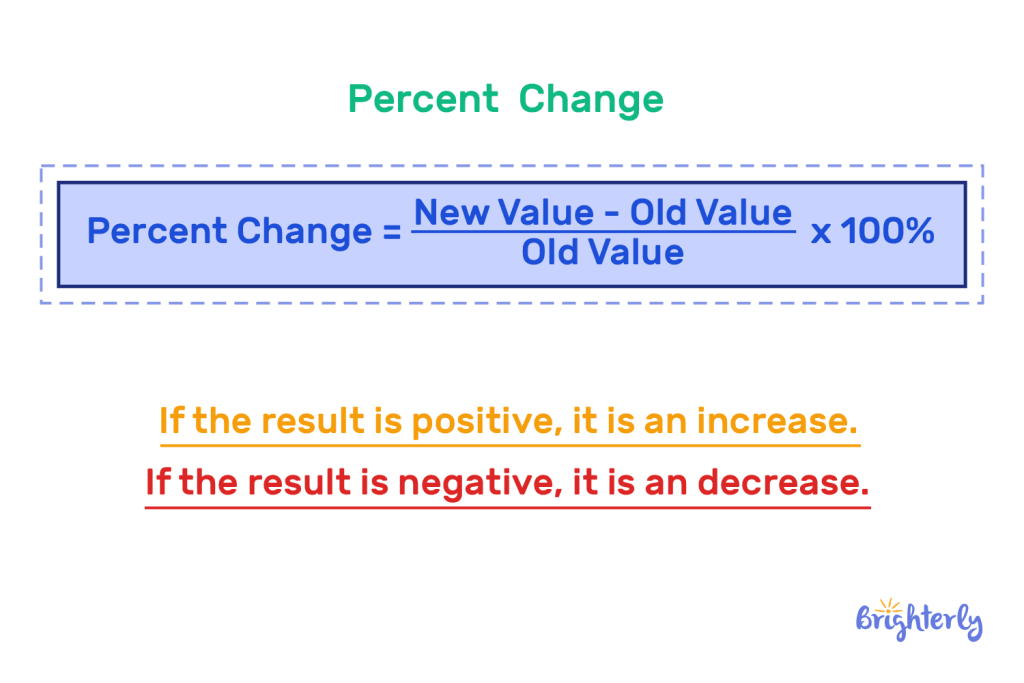
Investment Returns and Portfolio Performance
For investors, percentages are the primary metric for evaluating the success or failure of investments.
-
Return on Investment (ROI): This measures the profitability of an investment relative to its cost.
-
Formula:
ROI = ((Current Value - Original Cost) / Original Cost) * 100 -
Example: You invested $1,000 in a stock, and it’s now worth $1,200.
- ROI = (($1,200 – $1,000) / $1,000) * 100 = ($200 / $1,000) * 100 = 20%
-
-
Annual Growth Rate: This indicates the average rate at which an investment has grown year over year. Understanding compound annual growth rate (CAGR) is especially important for long-term investments.
-
Portfolio Allocation: Investors often diversify their portfolios by allocating specific percentages to different asset classes (e.g., 60% stocks, 30% bonds, 10% cash). Monitoring these percentages ensures the portfolio remains aligned with risk tolerance and financial goals.
Accurate percentage calculations are indispensable for tracking performance, comparing investment options, and making strategic rebalancing decisions.
Inflation and Cost of Living Increases
Inflation, the rate at which the general level of prices for goods and services is rising, is expressed as a percentage. Understanding its impact is crucial for maintaining purchasing power.
-
If inflation is 3% annually, an item that cost $100 last year will cost approximately $103 this year.
-
Similarly, cost of living adjustments (COLAs) for salaries or benefits are often expressed as a percentage increase designed to help income keep pace with inflation. If your salary increases by 2%, but inflation is 3%, your real purchasing power has decreased.
These percentages help individuals understand the erosion of their money’s value over time and plan accordingly for retirement and long-term savings.
Business and Professional Financial Calculations
In the business world, percentages are foundational to financial analysis, strategic planning, and performance measurement. They provide concise metrics for evaluating health, growth, and efficiency.
Profit Margins and Markups
Businesses use percentages to determine pricing strategies and assess profitability.
-
Gross Profit Margin: Measures the percentage of revenue that exceeds the cost of goods sold.
-
Formula:
Gross Profit Margin = ((Revenue - Cost of Goods Sold) / Revenue) * 100 -
A higher gross profit margin indicates more money available to cover operating expenses.
-
-
Net Profit Margin: Represents the percentage of revenue left after all expenses, including taxes, have been deducted. It’s a key indicator of overall profitability.
- Formula:
Net Profit Margin = (Net Profit / Revenue) * 100
- Formula:
-
Markup: The percentage added to the cost of a product to determine its selling price.
- Formula:
Markup Percentage = ((Selling Price - Cost) / Cost) * 100
- Formula:
These percentage metrics are vital for pricing products, managing costs, and reporting financial performance.
Growth Rates and Market Share
Businesses are constantly tracking growth and their position within the market, both typically expressed in percentages.
-
Sales Growth Rate: Measures the percentage increase or decrease in sales over a specific period.
- Formula:
Sales Growth Rate = ((Current Period Sales - Previous Period Sales) / Previous Period Sales) * 100
- Formula:
-
Market Share: Represents the percentage of total sales in an industry that a single company accounts for.
- Formula:
Market Share = (Company Sales / Total Industry Sales) * 100
- Formula:
These growth and market share percentages are critical for strategic planning, investor relations, and competitive analysis.
Financial Ratios
Many crucial financial ratios used to evaluate a company’s liquidity, solvency, efficiency, and profitability are often expressed or interpreted using percentages. While the ratios themselves might be expressed as a single number (e.g., current ratio of 2:1), their implications for percentage-based analysis (e.g., percentage of assets financed by debt) are profound.
-
Debt-to-Equity Ratio: While typically a decimal, its interpretation often involves thinking about the percentage of assets financed by debt versus equity.
-
Return on Equity (ROE) / Return on Assets (ROA): These are directly calculated and expressed as percentages, indicating how efficiently a company uses shareholder investments or its assets to generate profit.
Understanding these ratios, even if not always strictly percentages themselves, requires a deep comprehension of proportional relationships, which percentages excel at communicating.
Leveraging Tools for Percentage Calculations
While the underlying principles are crucial, modern financial management benefits greatly from tools that automate and simplify percentage calculations, reducing the risk of error and enhancing efficiency.
The Power of Spreadsheets
Microsoft Excel and Google Sheets are indispensable tools for anyone dealing with financial percentages, offering powerful functions for calculation and analysis.
-
Basic Calculations: Simply enter your “part” and “whole” into cells, then use the formula
=(A1/B1)*100to get the percentage. -
Percentage Formatting: Spreadsheets can instantly format numbers as percentages, automatically multiplying by 100 and adding the ‘%’ symbol.
-
Advanced Scenarios: Spreadsheets excel at compound interest calculations, budgeting models, and return on investment analysis, allowing you to quickly adjust variables and see the impact.
Learning basic spreadsheet functions can dramatically streamline your financial percentage calculations.
Financial Calculators and Online Tools
For quick, specific calculations, dedicated financial calculators (both physical and online) are extremely useful.
-
Mortgage Calculators: These often break down loan payments into principal and interest percentages.
-
Investment Return Calculators: Allow you to input initial investments, contributions, and assumed growth rates to project future values, all driven by percentages.
-
Tip Calculators: Convenient for on-the-spot calculations without mental math.
These tools are designed to handle complex formulas, allowing users to focus on inputting correct data and interpreting the results.
Understanding When to Use Mental Math vs. Tools
While tools are powerful, developing the ability to perform quick mental percentage estimations is a valuable skill.
-
Mental Math for Estimates: For simple discounts (10%, 20%, 50%), tips, or rough budget allocations, mental math can provide quick estimates. For example, 10% of $75 is $7.50, so 20% is $15.
-
Tools for Precision and Complexity: For large sums, compound interest, tax calculations, or when accuracy is paramount, always rely on calculators or spreadsheets. They eliminate human error and handle multiple variables efficiently.
A balanced approach, combining mental agility with strategic tool usage, is the most effective way to manage financial percentages.

Conclusion
Percentages are more than just numbers; they are the bedrock of financial understanding, offering a universal metric for comparison, growth, and risk. From the simple act of calculating a discount at a store to the intricate analysis of investment returns and corporate profit margins, mastering “how to calculate different percentages” is an indispensable skill for navigating the modern financial world.
By embracing these calculations, individuals can budget more effectively, manage debt strategically, grow investments wisely, and make informed consumer choices. For businesses, percentages provide the critical insights needed to assess performance, plan for growth, and maintain profitability. In an increasingly data-driven economy, proficiency with percentages is not just an advantage; it is a fundamental requirement for financial literacy and sustained success. Take the time to understand and apply these essential calculations, and you will unlock a more profound and empowered relationship with your money.
aViewFromTheCave is a participant in the Amazon Services LLC Associates Program, an affiliate advertising program designed to provide a means for sites to earn advertising fees by advertising and linking to Amazon.com. Amazon, the Amazon logo, AmazonSupply, and the AmazonSupply logo are trademarks of Amazon.com, Inc. or its affiliates. As an Amazon Associate we earn affiliate commissions from qualifying purchases.