
In the dynamic world of finance, change is the only constant. While growth and increase often capture the spotlight, understanding and accurately calculating decrease is equally, if not more, crucial. Whether you’re managing a personal budget, analyzing investment performance, or scrutinizing business financials, the ability to quantify reductions, losses, or downward trends provides invaluable insights. This guide delves into the methods, applications, and significance of calculating decrease, empowering you to make informed financial decisions and navigate economic landscapes with greater precision.
The Indispensable Role of Decrease Calculation in Finance
The concept of decrease extends far beyond simple subtraction. In financial contexts, it allows us to gauge the magnitude of price drops, assess the severity of budget overruns, quantify investment losses, or evaluate the impact of cost-cutting measures. Without a clear understanding of how to calculate and interpret these downward movements, individuals and businesses alike are essentially flying blind, unable to react effectively to adverse trends or capitalize on opportunities presented by reductions.
Why Decrease Matters: From Personal Budgets to Market Analysis
At the personal level, calculating decrease is a cornerstone of effective financial management. Imagine your monthly grocery bill drops by a certain amount; knowing the percentage decrease helps you understand the efficiency of your new shopping habits. Or consider a discount code for an online purchase; calculating the percentage decrease instantly reveals the true savings. For investors, understanding how to calculate a decrease in stock value is critical for assessing risk and making timely decisions. A 10% drop in a stock price is very different from a 50% drop, and only precise calculation can highlight this distinction.
In the business realm, calculating decrease is vital for operational efficiency and strategic planning. A decrease in sales revenue, for instance, signals potential issues that need immediate investigation. A decrease in production costs, however, might indicate successful efficiency improvements. Market analysts constantly calculate decreases in economic indicators, such as GDP contraction or unemployment rate increases, to predict recessions or assess the health of the economy. These calculations are not merely academic exercises; they are practical tools that drive tangible financial outcomes.
Beyond Simple Subtraction: The Nuance of Percentage Decrease
While absolute decrease (the direct numerical difference) provides a basic understanding, percentage decrease offers a far more insightful perspective. A dollar amount decrease might seem small in absolute terms, but if it represents a large percentage of the original value, it could be highly significant. Conversely, a large absolute decrease might be negligible if the original value was enormous. For example, a $100 drop in a $200 asset is a 50% decrease, signaling a significant loss. The same $100 drop in a $10,000 asset is only a 1% decrease, a much less impactful event. This relative perspective provided by percentage decrease is what makes it an indispensable tool in financial analysis, allowing for apples-to-apples comparisons across different scales and timeframes.
Core Methods for Calculating Decrease
Calculating decrease involves a straightforward set of formulas, but understanding when and why to use each is key to accurate financial analysis. We’ll explore the two primary methods: absolute decrease and percentage decrease.
Absolute Decrease: The Straightforward Difference
Absolute decrease is the simplest form of decrease calculation. It measures the direct numerical difference between an initial value and a subsequent, smaller value. It tells you “by how much” a value has gone down in raw units.
The formula for absolute decrease is:
Absolute Decrease = Original Value – New Value
Example:
-
If your monthly expense for subscriptions was $150 last month (Original Value) and dropped to $120 this month (New Value).
-
Absolute Decrease = $150 – $120 = $30.
- This means your subscription expenses decreased by $30.
While easy to calculate, absolute decrease lacks the context of the original value, making it less useful for comparative analysis across different scales.
Percentage Decrease: Unveiling Relative Change
Percentage decrease expresses the absolute decrease as a proportion of the original value, multiplied by 100 to convert it into a percentage. This method provides a standardized way to compare changes regardless of the absolute size of the numbers involved. It answers the question, “by what percentage” did the value decrease?
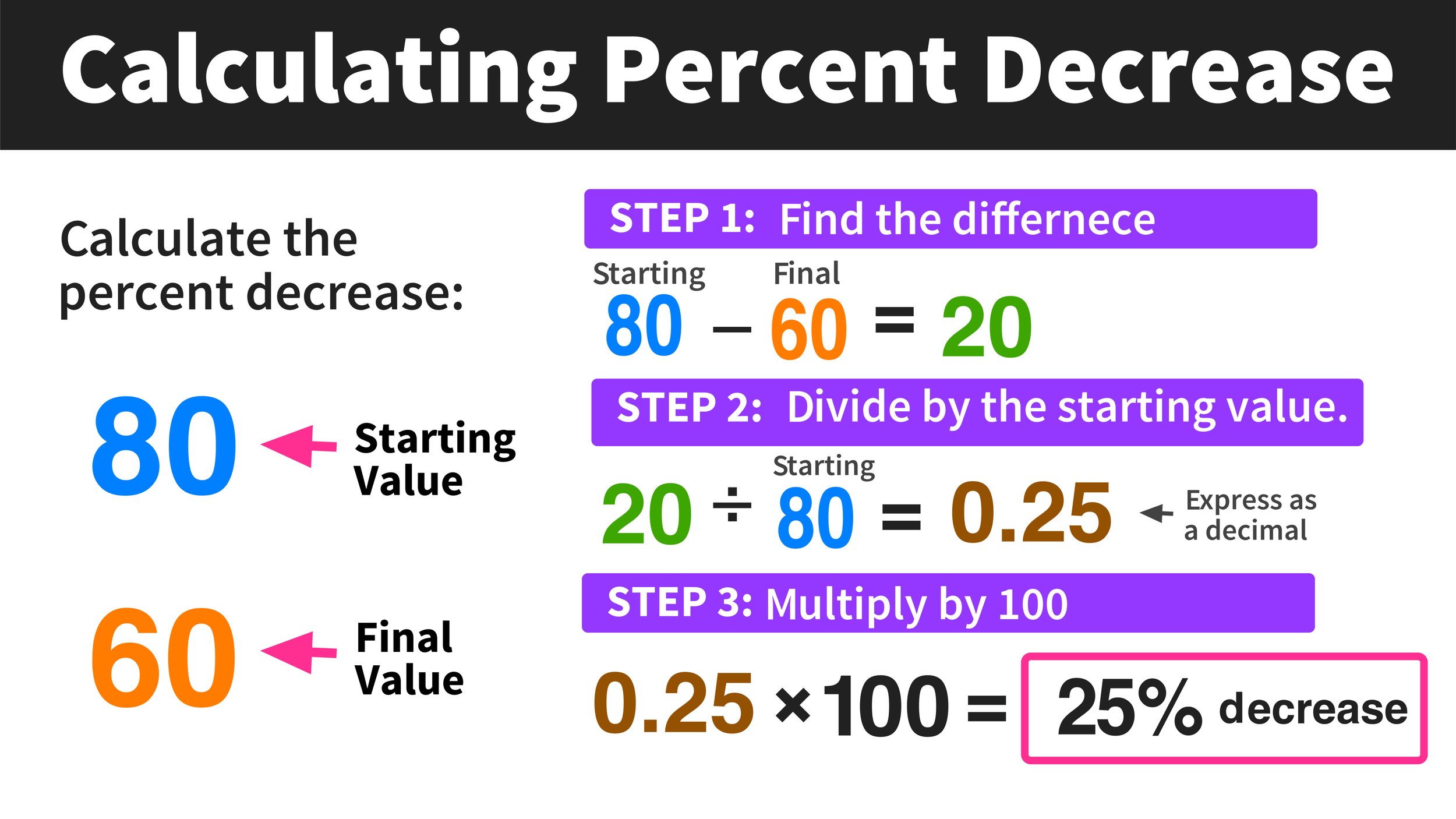
The formula for percentage decrease is a two-step process, often combined into one:
-
Calculate the Absolute Decrease: Original Value – New Value
-
Divide by the Original Value: (Absolute Decrease) / Original Value
-
Multiply by 100: (Result from Step 2) * 100
The Percentage Change Formula: A Universal Tool
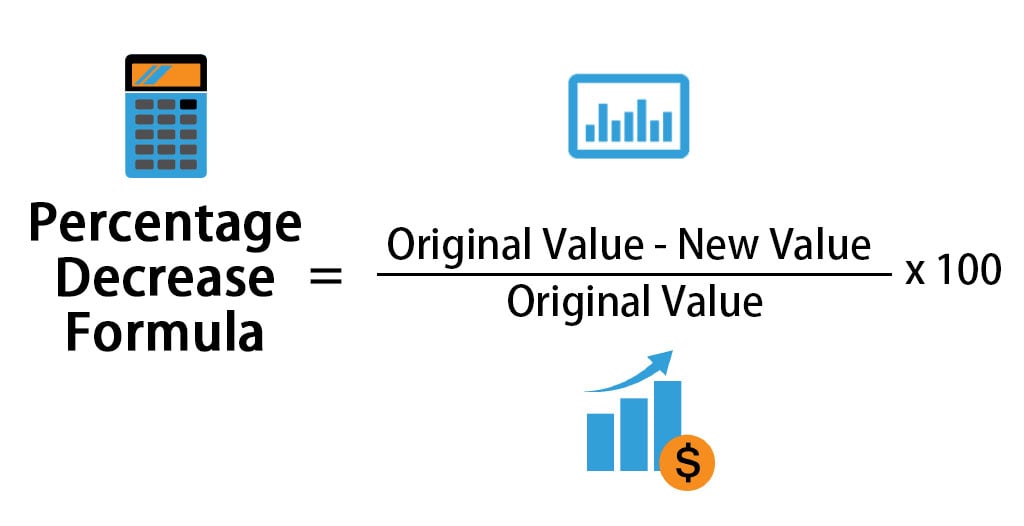
The most commonly used and universally applicable formula for calculating percentage decrease, which is essentially a specific application of the broader percentage change formula, is:
Percentage Decrease = [(Original Value – New Value) / Original Value] * 100
Example:
-
Using the same subscription expense example: Original Value = $150, New Value = $120.
-
Percentage Decrease = [($150 – $120) / $150] * 100
-
Percentage Decrease = [$30 / $150] * 100
-
Percentage Decrease = 0.20 * 100
-
Percentage Decrease = 20%
- This means your subscription expenses decreased by 20%.
This formula is robust because it automatically yields a positive percentage when there’s a decrease. If the result were negative, it would indicate an increase.
Practical Applications of Decrease Calculation in Personal Finance
Understanding how to calculate decrease is not an abstract skill; it has direct, tangible benefits for managing your personal finances effectively. From day-to-day spending to long-term wealth building, these calculations offer clarity and control.
Tracking Expenses and Budget Variances
One of the most immediate applications of decrease calculation is in personal budgeting. By comparing your actual spending for a given category this month to the previous month, or to your budgeted amount, you can identify decreases (or increases) and understand their impact.
Scenario: You budgeted $400 for dining out, but only spent $320.
-
Absolute Decrease = $400 – $320 = $80
-
Percentage Decrease = [($400 – $320) / $400] * 100 = ($80 / $400) * 100 = 0.20 * 100 = 20%
- You spent 20% less than budgeted, saving $80. This positive decrease allows you to allocate those funds elsewhere or add them to savings.
Conversely, if you’re trying to cut costs, tracking the percentage decrease month-over-month in specific spending categories helps you evaluate the effectiveness of your efforts.
Understanding Discounts and Sales
Shopping smart often involves capitalizing on sales and discounts. Calculating the percentage decrease allows you to quickly assess the true value of a deal.
Scenario: A jacket originally priced at $250 is on sale for $175.
-
Absolute Decrease = $250 – $175 = $75
-
Percentage Decrease = [($250 – $175) / $250] * 100 = ($75 / $250) * 100 = 0.30 * 100 = 30%
- The jacket is 30% off. This insight helps you decide if the discount is substantial enough for your purchase, or if you should wait for a better sale.
This skill also prevents you from being swayed by marketing gimmicks where a large “absolute discount” might sound impressive, but represents a tiny percentage off an inflated original price.
Analyzing Investment Losses and Portfolio Downturns
For investors, understanding how to calculate decrease in portfolio value or individual asset prices is critical for risk management and making informed decisions during market volatility.
Scenario: You bought 10 shares of a stock at $50 per share (Total Original Value = $500). The stock price drops to $42 per share (Total New Value = $420).
-
Absolute Decrease in total value = $500 – $420 = $80
-
Percentage Decrease in total value = [($500 – $420) / $500] * 100 = ($80 / $500) * 100 = 0.16 * 100 = 16%
- Your investment has decreased by 16%.
Knowing this percentage allows you to compare the loss against your risk tolerance, other investments, or market benchmarks. It helps in deciding whether to hold, sell, or even buy more (dollar-cost averaging) during a dip, rather than reacting purely emotionally to a monetary loss.
Business and Investment Insights Through Decrease Analysis
Beyond personal finance, calculating decrease is an indispensable analytical tool for businesses and professional investors, offering critical insights into performance, market positioning, and risk.
Monitoring Revenue and Profit Declines
For businesses, a decrease in key financial metrics can be a warning sign or an indicator of necessary adjustments. Tracking revenue, gross profit, or net profit decreases year-over-year or quarter-over-quarter is essential for business health.
Scenario: A company’s quarterly revenue dropped from $1.2 million last quarter to $1.05 million this quarter.
-
Absolute Decrease = $1,200,000 – $1,050,000 = $150,000
-
Percentage Decrease = [($1,200,000 – $1,050,000) / $1,200,000] * 100 = ($150,000 / $1,200,000) * 100 = 0.125 * 100 = 12.5%
- The company experienced a 12.5% decrease in revenue. This significant drop would trigger a deep dive into sales strategies, market conditions, and operational efficiency to identify and address the root causes.
Similarly, a decrease in profit margins, even if revenue is stable, signals rising costs or decreased pricing power, demanding immediate attention.
Assessing Market Share Contraction
In competitive industries, a company’s market share can fluctuate. A decrease in market share indicates that competitors are gaining ground, or the overall market is shrinking faster than the company’s growth.
Scenario: A company’s market share fell from 25% to 22%.
-
Absolute Decrease = 25% – 22% = 3 percentage points.
-
Percentage Decrease (of market share itself) = [(25 – 22) / 25] * 100 = (3 / 25) * 100 = 0.12 * 100 = 12%
- The company’s market share decreased by 3 percentage points, which represents a 12% relative decrease in their share. This highlights a critical strategic challenge requiring analysis of competitor strategies, product offerings, and marketing effectiveness.
Risk Management and Volatility Measurement
In investing, calculating decrease helps in understanding and managing risk. Volatility, often measured by standard deviation, involves analyzing both upward and downward movements. Understanding the magnitude of previous decreases (drawdowns) can inform an investor’s risk tolerance and portfolio construction.
For instance, if a particular investment has historically experienced drawdowns of 30-40% during market corrections, an investor can mentally prepare for such a potential decrease and build a portfolio that can withstand such fluctuations without forcing a panic sale. Quantifying these decreases allows for the setting of stop-loss orders or dynamic asset allocation strategies to mitigate potential losses.
Tools and Best Practices for Accurate Decrease Calculation
While the formulas are straightforward, applying them effectively in real-world financial scenarios benefits from the right tools and adherence to best practices.
Leveraging Spreadsheets and Financial Calculators
For most individuals and small businesses, spreadsheet software like Microsoft Excel or Google Sheets are incredibly powerful tools for calculating decrease. They allow you to set up templates, automate calculations, and track multiple variables over time.
Excel/Google Sheets Formula:
If A2 contains the Original Value and B2 contains the New Value:
-
Absolute Decrease:
=A2-B2 -
Percentage Decrease:
=((A2-B2)/A2)*100(or format as percentage if desired without*100)
For quick, on-the-go calculations, dedicated financial calculators or even the calculator app on your smartphone can be sufficient. Many online financial tools and investing platforms also integrate these calculations directly into their dashboards, providing instant insights.
Common Pitfalls to Avoid
Even with simple formulas, errors can occur. Be mindful of these common pitfalls:
-
Incorrect Original Value: Always ensure you’re using the initial or base value as the denominator. Using the new value will lead to an incorrect percentage.
-
Mixing Units: Ensure that both the original and new values are in the same units (e.g., both in dollars, both in shares).
-
Rounding Errors: When dealing with very small or very large numbers, be conscious of rounding. For critical financial decisions, keep calculations to a reasonable number of decimal places before rounding the final result for presentation.
-
Ignoring Context: A percentage decrease is only meaningful within its financial context. A 10% decrease in a stable, large-cap stock is different from a 10% decrease in a highly speculative penny stock.
Interpreting and Communicating Decrease Effectively
Calculating the numbers is only half the battle; interpreting what they mean and communicating them clearly is equally important.
-
Contextualize: Always present the percentage decrease alongside the absolute decrease and explain the original values.
-
Trend Analysis: Look for patterns. Is this a one-time decrease, or part of a larger, sustained downward trend?
-
Benchmarking: Compare the decrease to industry averages, competitor performance, or historical data. Is the 10% revenue decrease better or worse than the industry average?
-
Actionability: What insights does the decrease provide? What actions should be taken as a result of this calculation? For instance, a 5% decrease in marketing ROI might prompt a re-evaluation of ad campaigns.
Mastering the calculation of decrease is a fundamental financial skill that empowers individuals and organizations to gain a deeper understanding of their financial performance. It transforms raw data into actionable intelligence, enabling proactive decision-making, effective risk management, and ultimately, greater financial control and resilience in an ever-changing economic landscape.
aViewFromTheCave is a participant in the Amazon Services LLC Associates Program, an affiliate advertising program designed to provide a means for sites to earn advertising fees by advertising and linking to Amazon.com. Amazon, the Amazon logo, AmazonSupply, and the AmazonSupply logo are trademarks of Amazon.com, Inc. or its affiliates. As an Amazon Associate we earn affiliate commissions from qualifying purchases.