
Understanding how interest accumulates is a cornerstone of sound financial literacy. Whether you’re planning to take out a loan, save for retirement, or make an investment, grasping the concept of cumulative interest is critical to making informed decisions. It illuminates the true cost of borrowing and the potential growth of your savings, often revealing surprising long-term impacts. Far from being a mere academic exercise, calculating cumulative interest is a practical skill that empowers individuals and businesses to navigate the complexities of financial markets with greater confidence and foresight. This article will demystify cumulative interest, breaking down its calculation methods, practical applications, and the tools available to master it, ensuring you can make the most of your money.
Understanding the Fundamentals of Interest
Before diving into cumulative interest, it’s essential to lay a solid foundation by understanding the basic types of interest and the key variables that influence their calculation. This foundational knowledge is crucial for appreciating the nuances of how interest builds up over time.
Simple vs. Compound Interest
The financial world primarily operates on two types of interest: simple and compound. The distinction between them is monumental, especially over extended periods.
-
Simple Interest: This is the most straightforward form of interest. It is calculated solely on the principal amount (the initial sum of money borrowed or invested). The formula for simple interest is usually expressed as:
Simple Interest = P * R * T- Where:
P= Principal amountR= Annual interest rate (as a decimal)T= Time period (in years)
For example, if you invest $1,000 at a 5% simple annual interest rate for 3 years, the interest earned each year would be $1,000 * 0.05 = $50. Over three years, the total simple cumulative interest would be $50 * 3 = $150. Simple interest is less common in modern financial products, though it might be seen in some short-term loans or specific types of bonds.
-
Compound Interest: Often hailed as the “eighth wonder of the world” by Albert Einstein, compound interest is interest calculated on the initial principal and also on all the accumulated interest from previous periods. This “interest on interest” phenomenon means that your money grows at an accelerating rate. Most savings accounts, loans, and investments utilize compound interest. The power of compounding lies in its exponential growth, making it a powerful force for wealth accumulation for investors and a significant cost factor for borrowers.
Key Variables in Interest Calculation
Regardless of whether interest is simple or compound, several universal variables dictate its calculation:
- Principal (P): This is the initial amount of money that is borrowed or invested. It forms the base upon which all interest calculations begin.
- Interest Rate (R): Represented as a percentage, the interest rate is the cost of borrowing money or the return on an investment for a specified period, typically annual. For calculations, it must always be converted to a decimal (e.g., 5% becomes 0.05).
- Time (T): This refers to the duration for which the money is borrowed or invested, usually expressed in years. The longer the time period, the greater the impact of cumulative interest, especially with compounding.
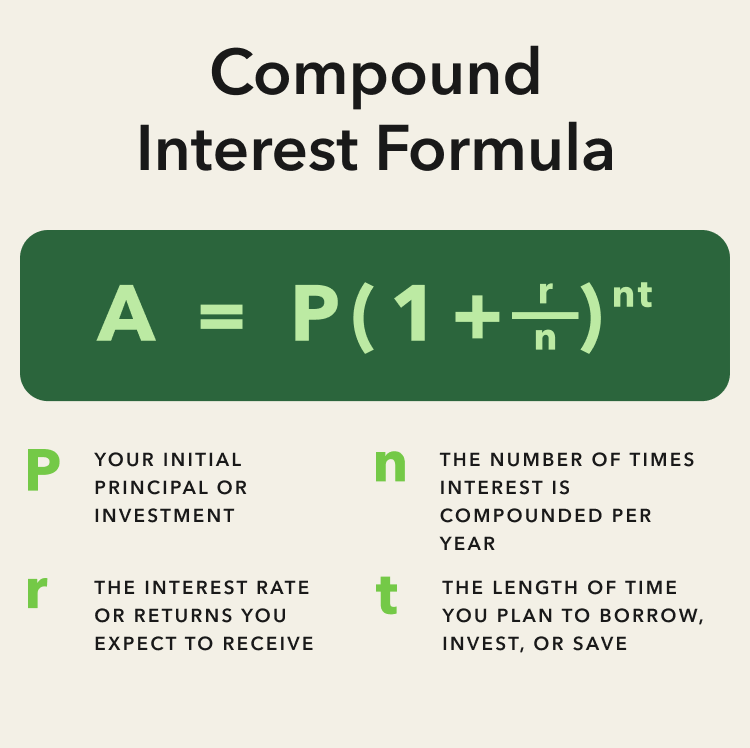
- Compounding Frequency (n): This variable is exclusive to compound interest and denotes how often interest is calculated and added to the principal within a year. Common compounding frequencies include annually (n=1), semi-annually (n=2), quarterly (n=4), monthly (n=12), or even daily (n=365). The higher the compounding frequency, the faster the interest accumulates, due to interest being earned on increasingly larger sums more often.
The Mechanics of Calculating Cumulative Interest
Once the fundamentals are clear, understanding the actual calculation process for cumulative interest becomes more intuitive. While simple interest calculations are straightforward, compound interest requires a slightly more complex approach that reflects its accelerating nature.
Calculating Simple Cumulative Interest
Calculating simple cumulative interest involves a direct application of its formula. Since interest is only ever calculated on the principal, the process remains consistent over time.
Formula:
Cumulative Simple Interest = P * R * T
Example:
Imagine you take a $10,000 loan at a 6% simple annual interest rate for 5 years.
P= $10,000R= 0.06T= 5 years
Cumulative Simple Interest = $10,000 * 0.06 * 5 = $3,000
So, over five years, you would pay $3,000 in simple interest. The total amount repaid would be $10,000 (principal) + $3,000 (interest) = $13,000. Simple interest is easy to calculate and understand, making it suitable for short-term financial instruments or agreements where the interest is not intended to grow on itself.
Calculating Compound Cumulative Interest
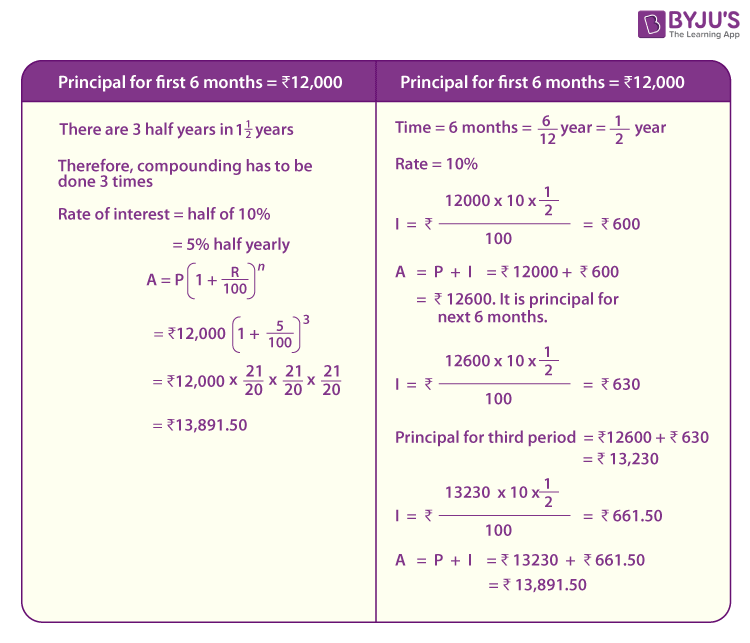
Compound interest calculations are more dynamic because the principal amount effectively grows with each compounding period. The most common way to calculate cumulative compound interest is by first determining the future value (FV) of the principal and then subtracting the original principal.
Formula for Future Value (FV) with Compounding:
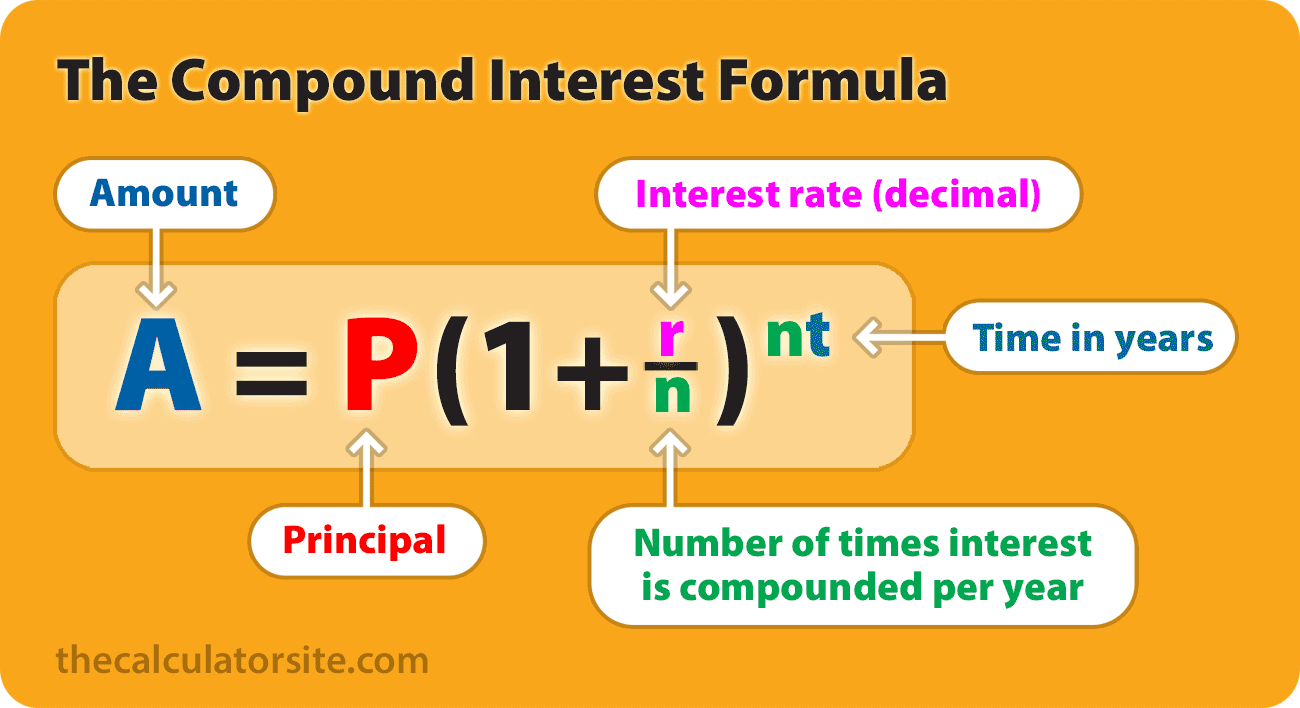
FV = P * (1 + R/n)^(n*T)
Where:
P= Principal amountR= Annual interest rate (as a decimal)n= Number of times interest is compounded per yearT= Time period (in years)
Deriving Cumulative Compound Interest:
Cumulative Compound Interest = FV - P
Detailed Step-by-Step Example (Monthly Compounding):
Let’s say you invest $5,000 in an account that pays an annual interest rate of 4% compounded monthly for 10 years.
-
Identify Variables:
P= $5,000R= 0.04 (4% as a decimal)n= 12 (compounded monthly)T= 10 years
-
Calculate R/n (Monthly Interest Rate):
0.04 / 12 = 0.00333333(approximately)
-
Calculate n*T (Total Number of Compounding Periods):
12 * 10 = 120
-
Calculate (1 + R/n):
1 + 0.00333333 = 1.00333333
-
Calculate (1 + R/n)^(n*T):
1.00333333^120 ≈ 1.48935
-
Calculate Future Value (FV):
FV = $5,000 * 1.48935 = $7,446.75
- Calculate Cumulative Compound Interest:
Cumulative Interest = $7,446.75 - $5,000 = $2,446.75
In this scenario, your $5,000 investment would yield $2,446.75 in cumulative interest over 10 years, resulting in a total of $7,446.75. This example clearly demonstrates the exponential growth effect, where the interest itself starts earning interest.
The Power of Compounding Frequency
The frequency with which interest is compounded significantly impacts the total cumulative interest. The more often interest is compounded, the higher the total interest earned or paid, even if the nominal annual interest rate remains the same. This is because interest is added to the principal more frequently, allowing subsequent interest calculations to be based on a larger sum.
Consider two accounts, both with a $10,000 principal and a 5% annual interest rate over 1 year:
- Annually (n=1):
FV = $10,000 * (1 + 0.05/1)^(1*1) = $10,500. Cumulative Interest = $500. - Monthly (n=12):
FV = $10,000 * (1 + 0.05/12)^(12*1) ≈ $10,511.62. Cumulative Interest = $511.62. - Daily (n=365):
FV = $10,000 * (1 + 0.05/365)^(365*1) ≈ $10,512.67. Cumulative Interest = $512.67.
While the differences might seem small over a single year, they compound dramatically over longer periods, illustrating why understanding compounding frequency is vital for maximizing investments and minimizing loan costs.
Practical Applications of Cumulative Interest
Understanding cumulative interest is not merely an academic exercise; it has profound practical implications for both borrowers and investors. Applying this knowledge allows individuals and businesses to make smarter financial decisions that can save or earn significant amounts of money over time.
For Borrowers: Loans and Mortgages
For anyone taking out a loan, whether it’s a personal loan, an auto loan, or a mortgage, cumulative interest represents the true cost of borrowing. It’s the total amount you pay beyond the principal, and it can often far exceed the initial sum borrowed, especially for long-term debts like mortgages.
- Understanding Total Cost of Borrowing: Calculating cumulative interest allows borrowers to see the full financial commitment. A mortgage, for instance, might appear affordable with monthly payments, but examining the cumulative interest over 15 or 30 years reveals the staggering total cost, often double or triple the original principal.
- Impact of Interest Rates and Loan Terms: Even a small difference in the interest rate can lead to a substantial variation in cumulative interest over the loan’s lifetime. Similarly, extending the loan term reduces monthly payments but dramatically increases the total cumulative interest paid. Knowing this empowers borrowers to negotiate better rates or choose shorter terms if financially feasible.
- Amortization Schedules: These tables detail each payment over the life of a loan, showing how much goes towards principal and how much to interest. By reviewing an amortization schedule, borrowers can see the cumulative interest paid month by month, providing a clear picture of their financial obligation and demonstrating how the bulk of early payments go towards interest.
- Importance of Early Principal Payments: Understanding cumulative interest highlights the immense benefit of making extra principal payments, especially early in a loan’s life. By reducing the principal sooner, you reduce the base on which future interest is calculated, leading to significant savings in cumulative interest over the loan term.
For Savers and Investors: Growth and Returns
On the other side of the coin, cumulative interest is a powerful ally for savers and investors. It’s the engine that drives wealth creation, making your money work harder for you.
- Savings Accounts, CDs, and Retirement Accounts: These financial products often use compound interest. Understanding how cumulative interest builds up helps individuals project the growth of their emergency funds, certificate of deposit (CD) investments, or vital retirement savings accounts like 401(k)s and IRAs. The earlier one starts saving and investing, the more time cumulative interest has to work its magic.
- Investment Portfolios: For investments in stocks, bonds, or mutual funds, cumulative interest is reflected in the concept of total return over time. While investment returns aren’t guaranteed like interest rates on savings accounts, the principle of compounding still applies. Reinvesting dividends or capital gains allows those returns to generate further returns, accelerating portfolio growth.
- The Concept of “Time Value of Money”: Cumulative interest is intrinsically linked to the time value of money, which posits that a dollar today is worth more than a dollar tomorrow due to its potential earning capacity. Compounding enhances this by demonstrating how money grows exponentially over time, emphasizing the importance of early investment.
Analyzing Different Financial Products
Armed with the ability to calculate cumulative interest, individuals can critically compare and analyze various financial products, making choices that align with their long-term financial goals. This could involve:
- Comparing loan offers: Evaluating different loan options not just by their stated interest rate but by their actual cumulative interest cost over the life of the loan, taking into account compounding frequency and fees.
- Evaluating investment opportunities: Assessing potential investment vehicles based on their projected cumulative returns, understanding that even small differences in annual returns can lead to vastly different outcomes over decades.
- Optimizing financial strategies: Using cumulative interest calculations to determine the most effective strategies for debt reduction (e.g., paying off high-interest debt first) or wealth accumulation (e.g., maximizing contributions to retirement accounts).
Tools and Resources for Interest Calculation
While manual calculations are excellent for understanding the mechanics of cumulative interest, real-world financial planning often benefits from the efficiency and accuracy of dedicated tools and resources. These aids simplify complex computations and allow for rapid scenario analysis.
Financial Calculators and Spreadsheets
The most accessible and widely used tools for calculating cumulative interest are financial calculators and spreadsheet software.
- Online Compound Interest Calculators: A plethora of free online calculators are available from financial institutions, investment platforms, and personal finance websites. These tools typically require you to input the principal, interest rate, compounding frequency, and time period, then instantly provide the future value and the total cumulative interest. They are invaluable for quick estimates and comparing different scenarios without manual effort. Many even offer amortization schedules for loans.
- Using Excel/Google Sheets for Custom Calculations: For those who prefer a more hands-on approach or need to integrate interest calculations into broader financial models, spreadsheet software like Microsoft Excel or Google Sheets is indispensable.
- Built-in Functions: Excel has powerful financial functions, most notably the
FV(Future Value) function, which can calculate compound interest directly:=FV(rate, nper, pmt, [pv], [type])rate: The interest rate per period (R/n).nper: The total number of payment periods (n*T).pmt: The payment made each period (for interest-only calculations, this is 0).pv: The present value or principal (entered as a negative number if it’s an outgoing cash flow).
- Manual Formulas: You can also input the compound interest formula (
=P * (1 + R/n)^(n*T)) directly into a cell, referencing other cells for your variables (P, R, n, T). This allows for greater flexibility and transparency in how the calculation is performed. - Benefits: Spreadsheets enable users to build complex models, track cumulative interest over time with granular detail, and perform sensitivity analysis by easily changing variables to see the impact on total interest. They are particularly useful for creating personalized amortization schedules or long-term investment growth projections.
- Built-in Functions: Excel has powerful financial functions, most notably the
Professional Financial Advice
While these tools empower individuals to perform their own calculations, there are times when seeking professional guidance is beneficial, especially for complex financial situations or significant financial decisions.
- When to Consult a Financial Advisor: If you’re dealing with large sums of money, complex investment strategies, retirement planning, estate planning, or significant debt management, a certified financial planner (CFP) can offer tailored advice. They can help you understand the nuances of various financial products, optimize your interest-earning potential, and structure loans in the most cost-effective way.
- How Advisors Help Optimize: Financial advisors can use their expertise to:
- Develop comprehensive financial plans: Integrating cumulative interest projections into your overall financial strategy.
- Identify suitable products: Recommending specific savings accounts, investment vehicles, or loan structures that align with your risk tolerance and financial goals, considering their cumulative interest implications.
- Tax planning: Advising on how interest income or expense can affect your tax obligations, and strategies to minimize taxes on interest earned or maximize deductions for interest paid.
- “What-if” scenarios: Guiding you through various financial scenarios, showing the long-term impact of different decisions on your cumulative interest earned or paid.
Leveraging these tools and seeking expert advice when needed ensures that your understanding of cumulative interest translates into effective and advantageous financial practices.
Conclusion
The ability to calculate cumulative interest is more than just a mathematical skill; it’s a fundamental aspect of financial empowerment. From the basic distinction between simple and compound interest to the nuanced impact of compounding frequency, every facet of cumulative interest plays a critical role in shaping personal wealth and debt obligations.
For borrowers, understanding cumulative interest reveals the true long-term cost of loans and mortgages, encouraging informed decisions about interest rates, loan terms, and the power of making additional principal payments. For savers and investors, it underscores the profound potential of compounding, emphasizing the importance of early investment and consistent contributions to harness the exponential growth of wealth over time.
In an increasingly complex financial landscape, accessible tools like online calculators and spreadsheet functions provide the means to accurately assess and project cumulative interest, allowing for proactive financial planning. When combined with the insights of professional financial advice, this knowledge transforms abstract figures into actionable strategies.
By mastering how to calculate cumulative interest, you gain the clarity and foresight needed to navigate your financial journey with confidence, optimize your savings, minimize your borrowing costs, and ultimately, achieve your financial aspirations. It’s a skill that pays dividends, quite literally, throughout your lifetime.
aViewFromTheCave is a participant in the Amazon Services LLC Associates Program, an affiliate advertising program designed to provide a means for sites to earn advertising fees by advertising and linking to Amazon.com. Amazon, the Amazon logo, AmazonSupply, and the AmazonSupply logo are trademarks of Amazon.com, Inc. or its affiliates. As an Amazon Associate we earn affiliate commissions from qualifying purchases.