
In the intricate tapestry of personal and business finance, understanding percentages is not merely an academic exercise; it is a vital, practical skill. From deciphering discounts during a sale to calculating taxes on income, assessing investment returns, or managing business profits, the ability to work with percentages forms the bedrock of informed financial decision-making. Specifically, the skill of calculating a total when you only know a part of it and its percentage representation can unlock deeper insights into your financial health and empower you to navigate complex scenarios with confidence. This article will demystify the process, providing clear methodologies and real-world applications to master this essential financial competency.

Understanding the Fundamentals: What is a Percentage?
Before we delve into the mechanics of finding a total from a percentage, it’s imperative to solidify our understanding of what a percentage truly represents. This foundational knowledge will ensure that all subsequent calculations are built on a robust conceptual framework.
The Definition of a Percentage
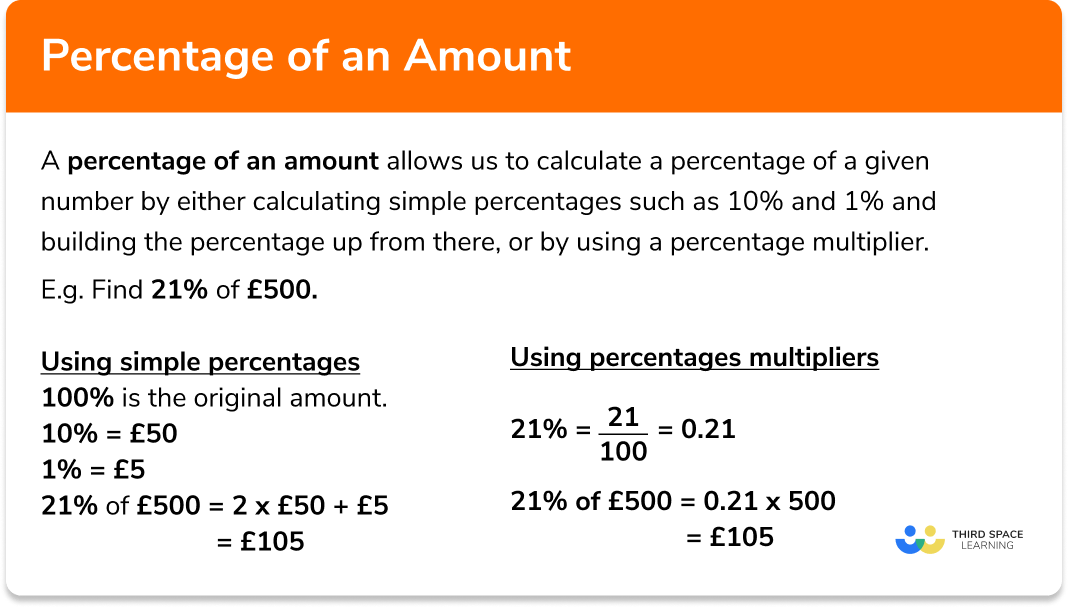
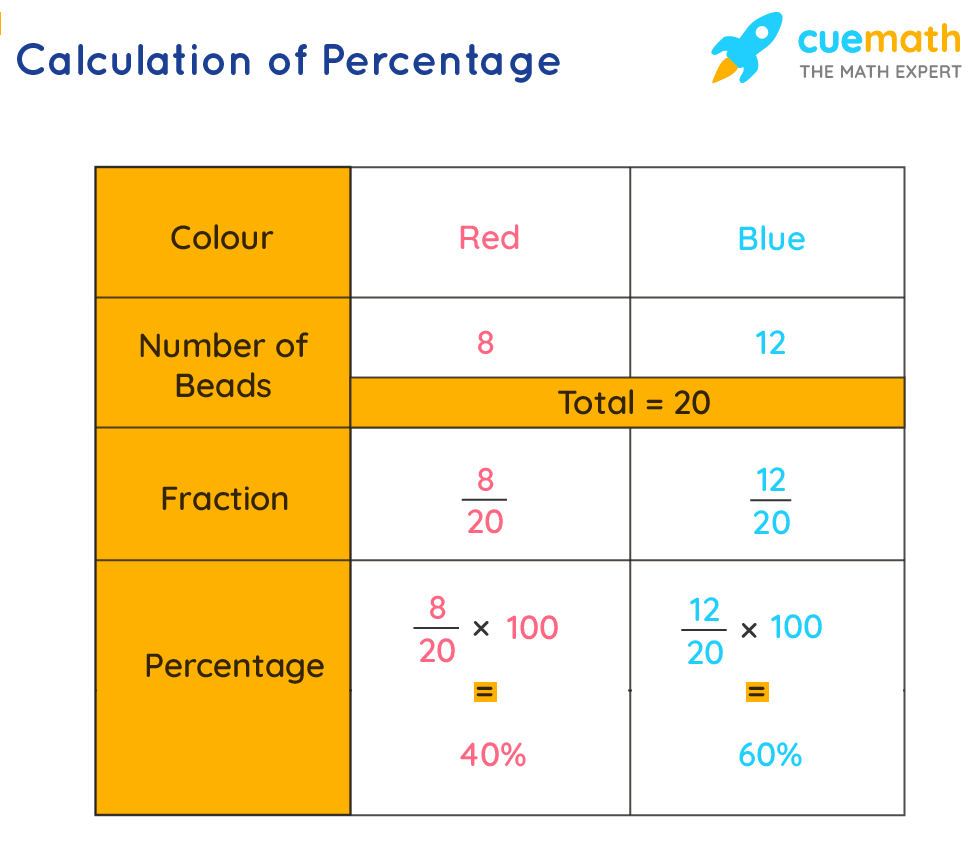
The word “percentage” is derived from “per cent,” meaning “per hundred.” Essentially, a percentage is a way of expressing a number or a ratio as a fraction of 100. It is often denoted using the percent sign (%). For instance, 25% means 25 out of 100, or $frac{25}{100}$. Percentages allow us to compare proportions easily, standardize ratios, and understand relative changes across different scales. Whether we’re talking about a 5% interest rate, a 20% discount, or a 70% profit margin, the underlying concept is always a part out of a potential hundred.
Converting Percentages to Decimals
For any mathematical calculation involving percentages, the first and most crucial step is to convert the percentage into its decimal equivalent. This is because percentages, as they are written, are not directly usable in standard arithmetic operations. To convert a percentage to a decimal, you simply divide the percentage by 100.
For example:
-
$25% = frac{25}{100} = 0.25$
-
$5% = frac{5}{100} = 0.05$
-
$120% = frac{120}{100} = 1.20$
This conversion is fundamental. Without it, calculations will yield incorrect results. Always remember to perform this step before proceeding with any formulas.
The Core Formula: Part / Whole = Percentage
At the heart of all percentage calculations lies a simple relationship: the “part” divided by the “whole” equals the “percentage” (as a decimal).
This can be expressed as:
$$ text{Percentage (as decimal)} = frac{text{Part}}{text{Whole}} $$
From this basic formula, we can rearrange it to solve for any unknown variable. Our goal in this article is to find the “Whole” (the total) when we know the “Part” and the “Percentage.” By rearranging the formula, we get:
$$ text{Whole} = frac{text{Part}}{text{Percentage (as decimal)}} $$
This formula will be the cornerstone of our calculations, adapted slightly for scenarios involving increases or decreases.
The Core Calculation: Finding the Original Total from a Percentage Value
Now that we understand the basics, let’s dive into the practical application of finding the original total. This skill is invaluable in numerous financial contexts.
The Basic Scenario: You Know the Percentage and the Part
Consider a straightforward situation where you are given a specific numerical value that represents a certain percentage of an unknown total.
Example: “20% of a number is 50. What is the number?”
Here, the “Part” is 50, and the “Percentage” is 20%.
Steps:
-
Convert the percentage to a decimal: $20% = frac{20}{100} = 0.20$
-
Apply the formula:
$$ text{Total} = frac{text{Part}}{text{Percentage (as decimal)}} = frac{50}{0.20} $$
-
Calculate the total: $frac{50}{0.20} = 250$
So, the original number (total) is 250.
Real-World Application: Sales Tax or Tip Calculation in Reverse
One common financial scenario involves knowing the final amount including a percentage increase (like sales tax, VAT, or a tip) and needing to find the original amount before that increase. This requires a slight modification to our core formula.
Example: You paid $120 for an item, which included 20% VAT (Value Added Tax). What was the original price before VAT?
In this case, the $120 represents the original price plus 20% of the original price. This means $120 is 100% (original price) + 20% (VAT) = 120% of the original price.
Steps:
-
Identify the total percentage: $100% + 20% = 120%$
-
Convert the total percentage to a decimal: $120% = frac{120}{100} = 1.20$
-
Apply the adjusted formula:
$$ text{Original Price} = frac{text{Amount Paid (including tax)}}{text{(1 + Percentage as Decimal)}} $$
$$ text{Original Price} = frac{120}{1.20} $$
-
Calculate the original price: $frac{120}{1.20} = 100$
The original price of the item before VAT was $100.
Real-World Application: Discounts and Markdowns in Reverse
Conversely, you might encounter situations where an item is discounted, and you know the sale price and the discount percentage, but you need to find the original, pre-discount price.
Example: An item is on sale for $80 after a 20% discount. What was the original price?
Here, the $80 represents the original price minus 20% of the original price. This means $80 is 100% (original price) – 20% (discount) = 80% of the original price.
Steps:
-
Identify the remaining percentage: $100% – 20% = 80%$
-
Convert the remaining percentage to a decimal: $80% = frac{80}{100} = 0.80$
-
Apply the adjusted formula:
$$ text{Original Price} = frac{text{Sale Price (after discount)}}{text{(1 – Percentage as Decimal)}} $$
$$ text{Original Price} = frac{80}{0.80} $$
-
Calculate the original price: $frac{80}{0.80} = 100$
The original price of the item before the discount was $100.
Practical Applications in Personal Finance and Business
The ability to calculate a total from a percentage is not confined to simple examples; its utility spans a vast array of financial contexts, empowering individuals and businesses alike.
Budgeting and Savings Goals
When setting financial goals, percentages often play a key role. You might decide to save a certain percentage of your income or allocate a specific percentage to different spending categories.
Example: You aim to save $500 this month, which represents 10% of your total net income. What is your total net income?
-
Part = $500
-
Percentage = 10% = 0.10
-
Total Net Income = $frac{500}{0.10} = $5,000$
This calculation helps you understand what income level is required to meet your percentage-based savings targets.
Investment Analysis and Returns
Understanding investment performance often involves percentages. If you know the profit you’ve made and the percentage return it represents, you can determine your initial investment.
Example: Your investment portfolio generated a profit of $200 last quarter, which amounts to a 5% return. What was your initial investment value at the beginning of the quarter?
-
Part = $200
-
Percentage = 5% = 0.05
-
Initial Investment = $frac{200}{0.05} = $4,000$
This insight is crucial for evaluating investment strategies and understanding the capital required to achieve desired returns.
Business Finance: Profit Margins and Commissions
In the business world, these calculations are fundamental for pricing, sales commissions, and profit analysis.
Example 1 (Commissions): A salesperson earned a commission of $150, which is 10% of the total value of the sale they closed. What was the total value of the sale?
-
Part = $150
-
Percentage = 10% = 0.10
-
Total Sale Value = $frac{150}{0.10} = $1,500$
Example 2 (Profit Margins): A company wants to achieve a 25% profit margin on a product. If the desired profit is $50 per unit, what should the selling price be?
-
Part (Profit) = $50
-
Percentage (Profit Margin) = 25% = 0.25
-
Selling Price (Total Revenue) = $frac{50}{0.25} = $200$
These calculations are essential for setting realistic targets and understanding revenue generation.
Loan and Debt Management
While interest calculations can be complex, understanding the basic relationship between a percentage and a total can help in managing debt.
Example: You made an interest payment of $50 this month, which represents 0.5% of your outstanding loan principal. What is your current loan principal?
-
Part (Interest Payment) = $50
-
Percentage (Interest Rate) = 0.5% = 0.005
-
Loan Principal = $frac{50}{0.005} = $10,000$
Knowing this helps you grasp the scale of your debt relative to your interest payments.
Common Pitfalls and How to Avoid Them
Even with a clear understanding of the formulas, common mistakes can lead to inaccurate financial conclusions. Being aware of these pitfalls can help you avoid them.
Confusing the “Part” with the “Total”
This is arguably the most frequent error. Always clarify what number represents the “part” (the value that is a percentage of something else) and what you are trying to find (the “total” or “whole”). In a discount scenario, the sale price is the part that remains after the discount, not the total original price. In a tax scenario, the amount including tax is the part that is 100% + tax percentage of the original.
Incorrect Decimal Conversion
Forgetting to divide the percentage by 100 (e.g., using 20 instead of 0.20) will lead to vastly incorrect results. This simple step is critical for accuracy. Double-check your decimal conversions before any calculation.
Misapplying Increase vs. Decrease Formulas
It’s crucial to distinguish between scenarios where a percentage is added to an original value (e.g., tax, tip, markup) and where it is subtracted (e.g., discount, markdown).
-
For increases: Divide by $(1 + text{Percentage as Decimal})$
-
For decreases: Divide by $(1 – text{Percentage as Decimal})$
Mixing these up will give you a completely wrong answer.
Over-reliance on Calculators Without Understanding
While calculators and financial software are invaluable tools, relying on them without understanding the underlying mathematics can be detrimental. If you don’t grasp the logic, you won’t be able to identify input errors or adapt to slightly different problem structures. Practice manual calculations to build intuition and ensure you truly comprehend the process.
Leveraging Financial Tools for Efficiency
While the conceptual understanding is paramount, modern financial tools can significantly enhance efficiency once you’ve mastered the basics.
Spreadsheets (Excel/Google Sheets)
Spreadsheets are powerful for automating these calculations. You can set up formulas to instantly calculate totals. For example, if your “Part” is in cell A1 and your “Percentage” (as a number, e.g., 20 for 20%) is in cell B1:
-
Basic calculation:
=A1/(B1/100) -
After a percentage increase:
=A1/(1+B1/100) -
After a percentage decrease:
=A1/(1-B1/100)
This allows you to quickly model different scenarios and analyze various financial data sets.
Online Calculators and Budgeting Apps
Numerous online calculators and budgeting apps integrate these percentage calculations. While convenient, remember that these tools are only as good as the information you input and your understanding of what they are calculating. Use them to verify your manual calculations or for quick checks, but never as a substitute for fundamental financial literacy.
Conclusion
The ability to calculate a total from a percentage is more than just a mathematical trick; it’s a cornerstone of financial literacy that empowers you to make smarter decisions in every facet of your monetary life. From personal budgeting and understanding your payslip to analyzing investment opportunities and navigating business finances, mastering this skill provides clarity and control. By understanding the core definitions, applying the correct formulas for increases and decreases, and diligently avoiding common pitfalls, you can confidently unravel complex financial puzzles. Embrace the journey of continuous learning in finance, and you will find yourself better equipped to achieve your financial goals and secure a prosperous future.
aViewFromTheCave is a participant in the Amazon Services LLC Associates Program, an affiliate advertising program designed to provide a means for sites to earn advertising fees by advertising and linking to Amazon.com. Amazon, the Amazon logo, AmazonSupply, and the AmazonSupply logo are trademarks of Amazon.com, Inc. or its affiliates. As an Amazon Associate we earn affiliate commissions from qualifying purchases.