
In the realm of personal finance and business, understanding percentages is not just a mathematical skill; it’s a fundamental life skill that empowers individuals to make informed decisions. From deciphering discount offers and calculating interest on loans to managing budgets and evaluating investment returns, percentages are woven into the very fabric of our financial lives. This guide aims to demystify the process of calculating a percentage of money, offering clear explanations, practical examples, and insights that will enhance your financial literacy and confidence.
At its core, a percentage represents a fraction of a whole, expressed as a number out of 100. The term “percent” itself is derived from the Latin “per centum,” meaning “by the hundred.” Whether you’re a consumer trying to determine the final price of a sale item, an investor assessing portfolio performance, or a business owner calculating profit margins, a solid grasp of percentage calculations is indispensable. This article will walk you through the essential concepts, practical applications, and common pitfalls, ensuring you can confidently navigate the numerical landscape of money.
Understanding the Fundamentals of Percentages
Before diving into complex financial scenarios, it’s crucial to establish a strong foundation in what percentages are and how they relate to other mathematical concepts.
What is a Percentage?
A percentage is essentially a way to express a proportion or a fraction of a whole, where the whole is considered to be 100. For instance, if you hear that 50% of your income goes towards rent, it means that for every 100 units of currency you earn, 50 units are allocated to rent. It’s a standardized way of comparing parts of different wholes, making financial data universally understandable. Imagine comparing a budget where rent is $1,000 out of $2,000 income to another where rent is $500 out of $1,000 income. Expressing both as 50% makes the comparison immediate and clear.
The Basic Formula for Calculating a Percentage
The fundamental formula for calculating a percentage is straightforward:
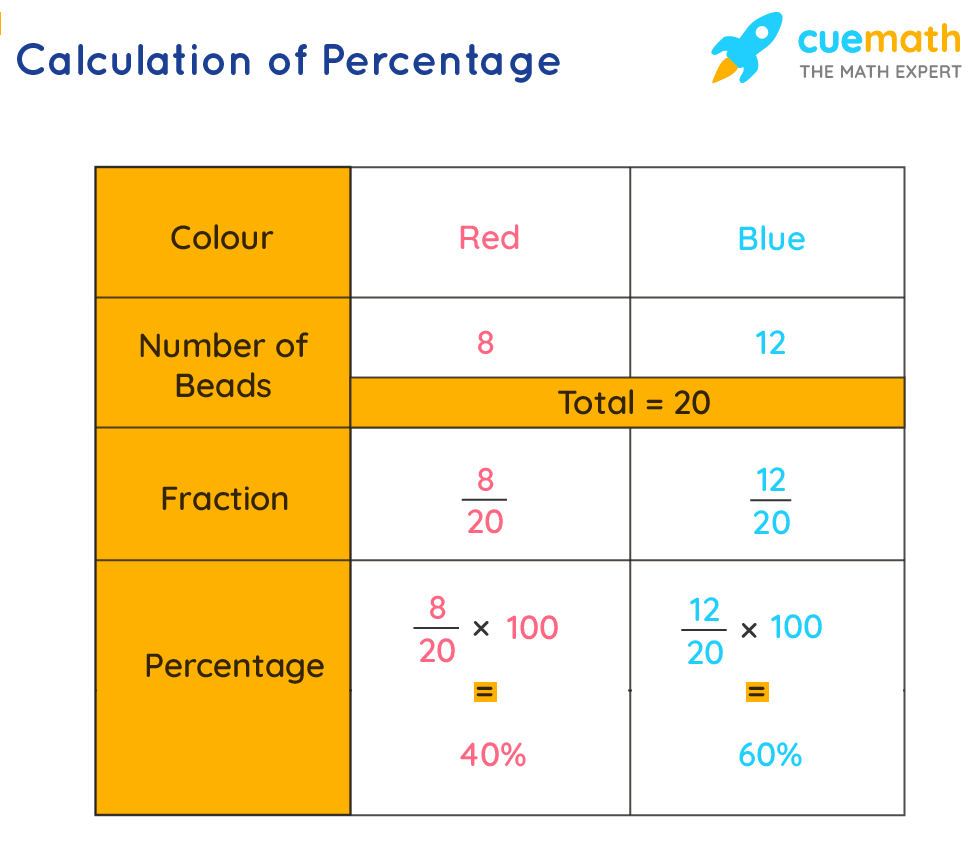
Percentage = (Part / Whole) × 100
Let’s break down the components:
- Part: This is the specific amount or quantity you want to express as a percentage of the whole. For example, the discount amount, the tax amount, or the interest earned.
- Whole: This is the total amount or the base value against which the part is being compared. This could be the original price, your total income, or the principal amount of a loan.
- 100: Multiplying by 100 converts the resulting decimal or fraction into a percentage, giving it the familiar ‘%’ symbol.
For example, if you earned $20 in interest on a $500 investment, the calculation would be ($20 / $500) × 100 = 0.04 × 100 = 4%. This tells you that your investment yielded a 4% return.
Converting Between Percentages, Decimals, and Fractions
To effectively work with percentages in financial calculations, you often need to convert them into decimals or, less frequently, into fractions.
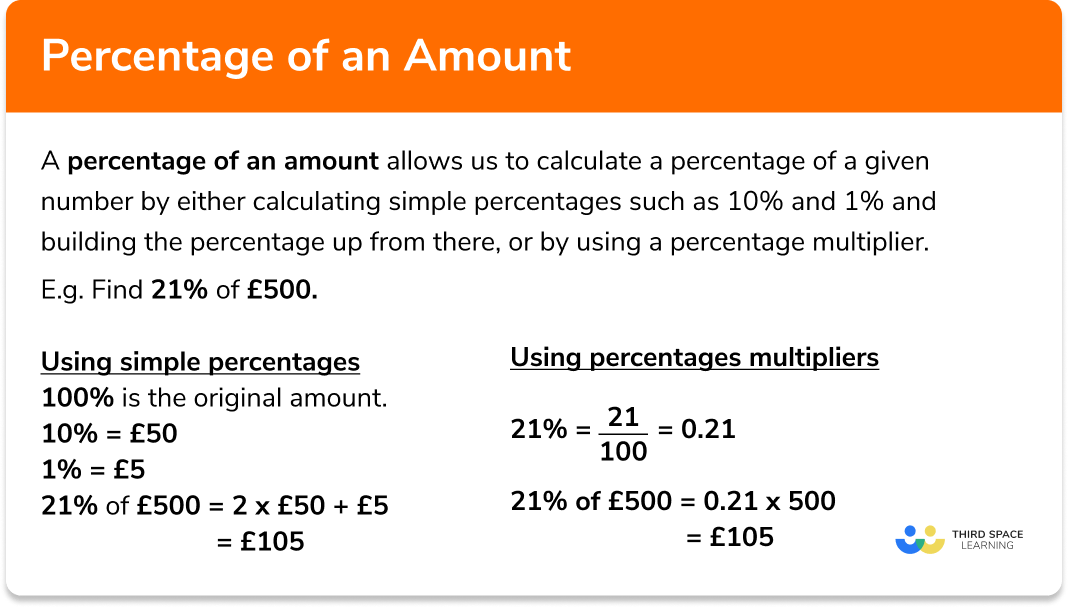
- Percentage to Decimal: To convert a percentage to a decimal, simply divide the percentage by 100. For example, 25% becomes 25 / 100 = 0.25. Similarly, 5% becomes 5 / 100 = 0.05. This conversion is crucial when performing calculations, as most mathematical operations with percentages require them to be in decimal form.
- Decimal to Percentage: To convert a decimal to a percentage, multiply the decimal by 100. For example, 0.75 becomes 0.75 × 100 = 75%. This is useful when you have a proportion and want to express it as a percentage.
- Percentage to Fraction: To convert a percentage to a fraction, place the percentage value over 100 and simplify the fraction. For example, 50% becomes 50/100, which simplifies to 1/2. 25% becomes 25/100, simplifying to 1/4. While less common in quick financial calculations, understanding this relationship reinforces the concept of a percentage as a part of a whole.
Practical Applications of Percentage Calculations in Finance
The true power of understanding percentages lies in their wide-ranging applications across various financial scenarios. Mastering these common uses will significantly enhance your ability to manage and grow your money.
Calculating Discounts and Markups
One of the most frequent encounters with percentages is in retail, dealing with discounts and markups.
- Discounts: When an item is advertised at “20% off,” you’re calculating a percentage of the original price.
- Example: A jacket costs $150. It’s on sale for 20% off.
- Discount amount = 20% of $150 = 0.20 × $150 = $30.
- New price = Original price – Discount amount = $150 – $30 = $120.
- Example: A jacket costs $150. It’s on sale for 20% off.
- Markups: Businesses use markups to price their products above cost to achieve a desired profit margin.
- Example: A store buys a product for $40 and wants a 25% markup.
- Markup amount = 25% of $40 = 0.25 × $40 = $10.
- Selling price = Cost + Markup amount = $40 + $10 = $50.
- Example: A store buys a product for $40 and wants a 25% markup.
Determining Sales Tax and Tips
Sales tax and tips are everyday expenses that rely on percentage calculations.
- Sales Tax: Most purchases are subject to sales tax, which is a percentage of the purchase price.
- Example: You buy groceries for $80, and the sales tax rate is 7.5%.
- Sales tax amount = 7.5% of $80 = 0.075 × $80 = $6.
- Total cost = Groceries + Sales tax = $80 + $6 = $86.
- Example: You buy groceries for $80, and the sales tax rate is 7.5%.
- Tips: Tipping for services is customary in many cultures, typically calculated as a percentage of the bill before tax.
- Example: Your restaurant bill is $65, and you want to leave an 18% tip.
- Tip amount = 18% of $65 = 0.18 × $65 = $11.70.
- Total payment = Bill + Tip = $65 + $11.70 = $76.70.
- Example: Your restaurant bill is $65, and you want to leave an 18% tip.
Understanding Interest Rates (Simple and Compound)
Interest is the cost of borrowing money or the income earned from lending money, almost always expressed as a percentage.
- Simple Interest: This is calculated only on the principal amount.
- Formula: Interest = Principal × Rate × Time (I = PRT)
- Example: You deposit $1,000 into a savings account with a 3% simple annual interest rate for 2 years.
- Annual interest = 3% of $1,000 = 0.03 × $1,000 = $30.
- Total interest over 2 years = $30 × 2 = $60.
- Compound Interest: This is interest calculated on the initial principal and also on the accumulated interest from previous periods. It’s often called “interest on interest” and is a powerful force in wealth building. While the full formula is more complex, understanding that the percentage rate applies to an ever-growing principal is key. A small percentage compounded over time can lead to significant growth.
Budgeting and Financial Allocations
Budgeting involves allocating your income into different categories, often expressed as percentages. This helps visualize how your money is being spent and ensures you’re meeting financial goals.
- Example: You earn $4,000 per month and follow the 50/30/20 rule: 50% for needs, 30% for wants, 20% for savings/debt repayment.
- Needs (50%): 0.50 × $4,000 = $2,000
- Wants (30%): 0.30 × $4,000 = $1,200
- Savings/Debt (20%): 0.20 × $4,000 = $800
This simple percentage-based allocation provides a clear framework for managing your monthly cash flow.
Investment Gains and Losses
For investors, understanding percentage changes is crucial for tracking performance and making strategic decisions.
- Example 1 (Gain): You buy stocks for $5,000, and their value increases by 12%.
- Gain amount = 12% of $5,000 = 0.12 × $5,000 = $600.
- New value = $5,000 + $600 = $5,600.
- Example 2 (Loss): Your portfolio of $10,000 experiences a 5% downturn.
- Loss amount = 5% of $10,000 = 0.05 × $10,000 = $500.
- New value = $10,000 – $500 = $9,500.
Percentage changes allow for easy comparison of performance across different investments, regardless of their initial value.
Step-by-Step Guide to Calculating a Percentage of Money
Let’s consolidate our understanding into a clear, actionable methodology for calculating percentages of money.
Step 1: Identify the Whole (Base Amount)
The first and most critical step is to correctly identify the total or original amount from which you are calculating the percentage. This is your ‘Whole’ value.
- Example: If you’re calculating a discount, the ‘Whole’ is the original price. If you’re calculating interest, the ‘Whole’ is the principal amount.
Step 2: Identify the Percentage Rate (or the Part if calculating rate)
Determine the percentage value you are working with. This will typically be given as a number followed by the ‘%’ symbol (e.g., 15%, 7.5%). If you are trying to find what percentage one amount is of another, you will identify the ‘Part’.
Step 3: Convert the Percentage to a Decimal
Before any calculation, convert the percentage rate into its decimal equivalent. This is done by dividing the percentage number by 100 or simply moving the decimal point two places to the left.
- Example: 25% becomes 0.25; 8% becomes 0.08; 0.5% becomes 0.005.
Step 4: Perform the Calculation (Multiplication or Division)
-
To find a percentage of an amount: Multiply the decimal equivalent of the percentage by the ‘Whole’ amount.
- Formula: Percentage Amount = Decimal Percentage × Whole Amount
- Example: Find 15% of $200.
- Decimal Percentage = 0.15
- Whole Amount = $200
- Percentage Amount = 0.15 × $200 = $30.
-
To find what percentage one amount is of another: Divide the ‘Part’ by the ‘Whole’, then multiply by 100.
- Formula: Percentage = (Part / Whole) × 100
- Example: What percentage is $50 of $250?
- Part = $50
- Whole = $250
- Percentage = ($50 / $250) × 100 = 0.20 × 100 = 20%.
Step 5: Review and Interpret the Result
Always double-check your calculation. Does the answer make sense in the context of the problem? For example, if you’re calculating a 10% discount on a $50 item and get $45 as the discount amount, you know there’s an error. The discount should be $5, making the final price $45. Understanding what the calculated number represents (e.g., the discount, the tax, the interest) is as important as the calculation itself.
Common Pitfalls and Tips for Accuracy
While percentage calculations are fundamental, certain errors are common. Being aware of these can significantly improve your accuracy.
Misinterpreting the Base Amount
A frequent mistake is applying a percentage to the wrong base amount. For instance, a discount might be applied before tax, but sometimes people calculate tax on the original price, then the discount. Always clarify what the percentage is “of.”
- Tip: Read carefully. Is it 20% off the original price, or 20% off the sale price? Is tax applied to the price before or after a coupon?
Rounding Errors
When dealing with money, rounding can impact final figures. It’s generally best to carry calculations out to several decimal places and only round to the nearest cent (two decimal places) at the very end of the calculation.
- Tip: Use financial tools (calculators, spreadsheets) that handle decimal precision automatically. When rounding manually, follow standard rounding rules: round up if the third decimal place is 5 or greater, otherwise round down.
Confusing “Percentage Of” with “Percentage Increase/Decrease”
Calculating a percentage of money (e.g., 20% of $100 = $20) is different from calculating a percentage increase or decrease (e.g., a 20% increase from $100 means a new total of $120). While related, the result of the initial calculation is used differently.
- Tip:
- To calculate a percentage of an amount: Multiply the amount by the decimal percentage.
- To calculate an amount after a percentage increase: Multiply the original amount by (1 + decimal percentage).
- To calculate an amount after a percentage decrease: Multiply the original amount by (1 – decimal percentage).
Leveraging Financial Tools
In today’s digital age, you don’t always need to perform mental math or rely on a basic calculator.
- Calculators: Standard and scientific calculators have a ‘%’ function, though understanding how it operates is key.
- Spreadsheets (e.g., Excel, Google Sheets): These are powerful tools for complex financial calculations. You can input formulas directly, e.g.,
=A1*0.20to calculate 20% of the value in cell A1. - Online Percentage Calculators: Numerous websites offer quick and easy percentage calculations for specific scenarios.
- Banking Apps & Budgeting Software: Many financial apps integrate percentage calculations for budgeting, tracking expenses, and showing investment performance.
- Tip: Familiarize yourself with these tools. They can save time and reduce errors, especially for recurring or complex financial tasks.
Advanced Concepts Briefly
While this article focuses on the core calculations, it’s helpful to be aware of slightly more advanced concepts related to percentages in finance.
Percentage Change vs. Percentage Point Change
These terms are often confused.
- Percentage Change: Refers to the relative change between two numbers, expressed as a percentage of the initial value.
- Example: If an interest rate goes from 4% to 5%, the percentage change is (($5 – $4) / $4) * 100 = 25%.
- Percentage Point Change: Refers to the absolute difference between two percentages.
- Example: If an interest rate goes from 4% to 5%, that’s a 1 percentage point increase.
Reverse Percentage Calculations
Sometimes you know the amount after a percentage has been added or subtracted, and you need to find the original amount.
- Example: A product costs $120 after a 20% tax has been applied. What was the original price?
- $120 represents 120% (100% original + 20% tax) of the original price.
- Original Price = $120 / 1.20 = $100.
These are particularly useful for finding pre-tax prices or original values before discounts.

Conclusion
The ability to accurately calculate percentages of money is an indispensable skill in modern financial life. From managing daily expenses and making astute purchasing decisions to planning for the future through investments and savings, percentages provide a universal language for understanding and comparing financial data. By grasping the basic formula, understanding its practical applications, and being mindful of common pitfalls, you equip yourself with the confidence to navigate financial decisions with greater clarity and control.
Whether you’re using a simple mental calculation for a tip or leveraging a complex spreadsheet for budget analysis, the core principles remain the same. Embrace these calculations, practice them regularly, and watch as your financial literacy grows, empowering you to make smarter, more informed choices that contribute to your overall financial well-being.
aViewFromTheCave is a participant in the Amazon Services LLC Associates Program, an affiliate advertising program designed to provide a means for sites to earn advertising fees by advertising and linking to Amazon.com. Amazon, the Amazon logo, AmazonSupply, and the AmazonSupply logo are trademarks of Amazon.com, Inc. or its affiliates. As an Amazon Associate we earn affiliate commissions from qualifying purchases.