
In the realm of personal and business finance, numbers are the primary language of progress. Whether you are tracking the growth of a retirement portfolio, evaluating a potential salary increase, or measuring the quarterly revenue gains of a startup, understanding how to calculate and interpret percentage increase is a fundamental skill. It transforms raw data into actionable insights, allowing investors and professionals to move beyond simple arithmetic and toward strategic financial planning.
Calculating a percentage increase is more than just a mathematical exercise; it is a lens through which we view economic momentum. In a world where inflation fluctuates and markets shift daily, the ability to quantify growth ensures that you are making informed decisions based on relative value rather than just nominal figures. This guide explores the mechanics of the percentage increase formula within the context of the “Money” niche, examining its application in investing, corporate finance, and personal wealth management.
The Fundamentals of Percentage Increase in Personal Finance
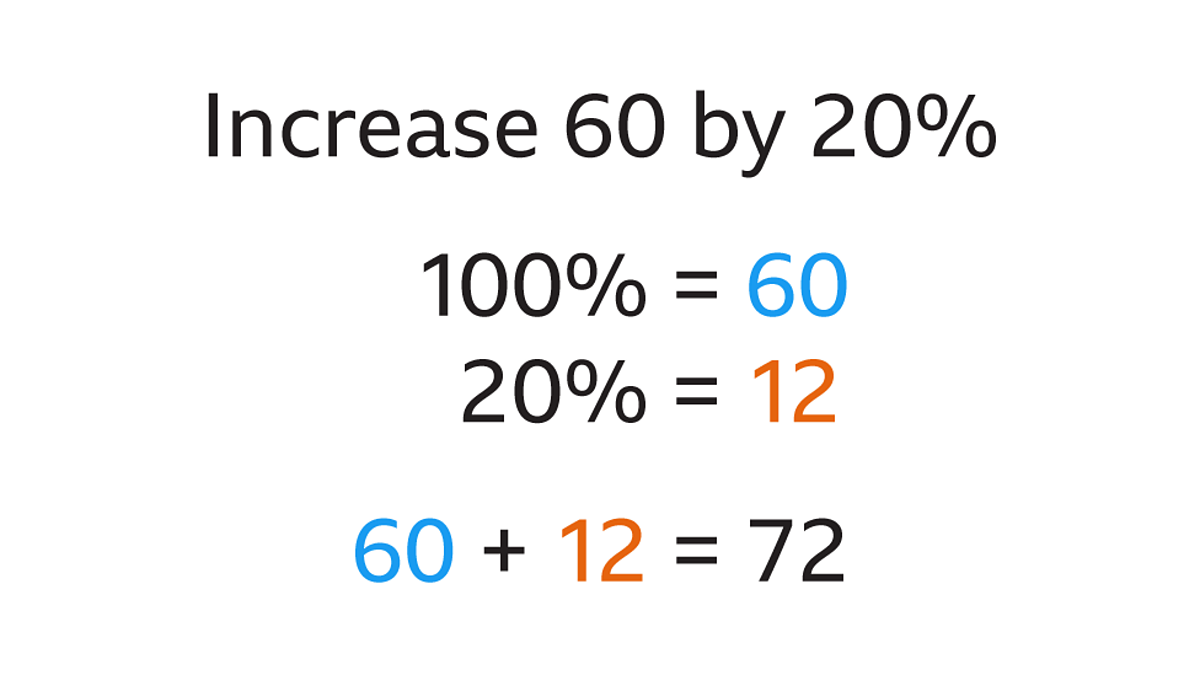
At its core, a percentage increase represents the difference between a final value and a starting value, expressed as a portion of the original amount. For anyone looking to master their personal finances, this calculation is the first step in auditing their financial health.
Defining the Formula: The Mechanics of Growth
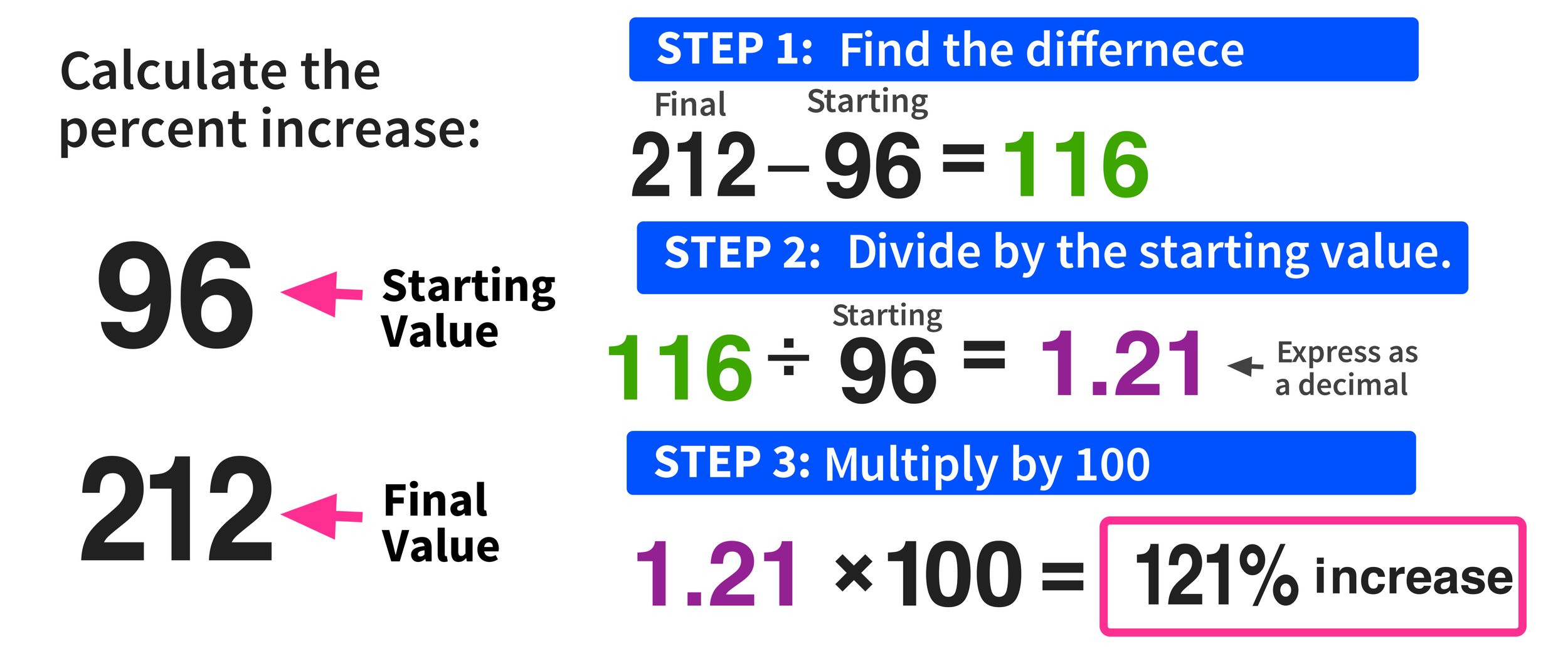
The mathematical formula for percentage increase is straightforward, yet its implications are profound. To find the percentage increase, you subtract the original value (the “old” value) from the new value to find the “absolute increase.” You then divide that increase by the original value and multiply the result by 100 to get the percentage.
Formula:
((New Value - Original Value) / Original Value) × 100 = Percentage Increase
For example, if you began the year with $5,000 in a high-yield savings account and ended the year with $5,250, your absolute increase is $250. Dividing $250 by your original $5,000 gives you 0.05. Multiplying by 100 results in a 5% increase. This percentage provides a standardized way to compare this account’s performance against other financial vehicles, such as stocks or bonds.
Real-World Application: Navigating Salary Negotiations
One of the most frequent applications of this formula is in the context of professional compensation. When an employer offers a raise, they often frame it in terms of a dollar amount. However, to understand the true impact of that raise on your lifestyle and financial goals, you must calculate the percentage increase.
A $5,000 raise means something very different to someone earning $50,000 (a 10% increase) than it does to someone earning $150,000 (a 3.3% increase). By calculating the percentage, you can determine if your income growth is keeping pace with your career trajectory and the rising cost of living. This data serves as a powerful tool during performance reviews, allowing you to advocate for your market value with mathematical precision.
Leveraging Percentage Increase for Investment Strategy
In the world of investing, percentage increase is the ultimate metric of success. It allows investors to compare apples to oranges—comparing the performance of a high-priced tech stock to a low-priced penny stock or a real estate investment.
Evaluating Portfolio Performance and ROI
Return on Investment (ROI) is essentially a calculation of percentage increase. When you analyze your portfolio, you aren’t just looking for “more money”; you are looking for the rate of return relative to the capital you risked. If you purchased shares in an Exchange-Traded Fund (ETF) at $200 and the price rose to $260, the percentage increase is 30%.
Understanding this allows you to benchmark your performance against market indices like the S&P 500. If the market grew by 10% during the same period your portfolio grew by 30%, you have achieved “alpha,” or excess return. Conversely, if your assets increased by 5% while the market increased by 10%, your percentage increase reveals that your current strategy may require adjustment, despite the nominal gain.
Understanding Compound Growth and the Rule of 72
Percentage increases become even more powerful when they are compounded. Compounding is the process where the percentage increase of one period is applied to the new, higher base of the next period. This is the “snowball effect” that builds generational wealth.
Investors often use the “Rule of 72” to estimate how long it will take for an investment to double based on a fixed annual percentage increase. By dividing 72 by your expected annual growth rate, you can determine the number of years required for your money to grow by 100%. For instance, an investment with a consistent 8% annual increase will double approximately every 9 years. This perspective shifts the focus from short-term fluctuations to long-term wealth accumulation.

Business Finance: Using Growth Metrics to Drive Strategy
For entrepreneurs and corporate executives, percentage increase is the primary Key Performance Indicator (KPI) used to signal the health of a business to stakeholders, lenders, and the market at large.
Measuring Revenue Growth and Profit Margins
A business’s success is rarely judged by its total revenue alone, but rather by its “Year-over-Year” (YoY) or “Quarter-over-Quarter” (QoQ) growth. If a company generated $1 million in revenue last year and $1.2 million this year, the 20% increase suggests a healthy, scaling enterprise.
However, savvy financial managers also apply this calculation to expenses and profit margins. If revenue increased by 20% but operating expenses increased by 30%, the company is actually becoming less efficient despite making more money. By calculating the percentage increase across different line items on a balance sheet, managers can identify “red flags” where costs are outstripping growth, allowing for surgical budget cuts or operational pivots.
Analyzing Market Share Expansion
In competitive industries, percentage increase is used to measure market penetration. If the total market for a product grows by 5% but your company’s sales grow by 15%, you are successfully capturing market share from competitors. This relative growth is often more important than absolute numbers in attracting venture capital or private equity. Investors look for companies that can demonstrate a consistent percentage increase in their user base or client list, as this indicates a scalable business model and a strengthening brand presence in the financial ecosystem.
The Economic Perspective: Inflation and Purchasing Power
To truly master the concept of percentage increase in a “Money” context, one must understand the difference between nominal growth and real growth. This requires looking at the percentage increase of prices across the economy, otherwise known as inflation.
How Inflation Impacts Your Real Rate of Return
Inflation is the percentage increase in the Consumer Price Index (CPI). If your investments grew by 7% this year, but the cost of goods and services (inflation) increased by 4%, your “real” percentage increase—or your increase in purchasing power—is only 3%.
This is a critical distinction for retirees and long-term savers. If you do not account for the percentage increase in the cost of living, you may find that while your bank balance is higher, your ability to afford a lifestyle has actually stagnated or decreased. Strategic wealth management involves seeking out assets that historically provide a percentage increase that significantly outpaces inflation, such as equities or real estate.
Adjusting Your Budget for Rising Costs
On a household level, calculating the percentage increase in your recurring bills—such as utilities, insurance, and groceries—is vital for maintaining a functional budget. If your grocery bill has seen a 15% increase over twelve months, but your income has only seen a 3% increase, your “discretionary income” is being squeezed. By identifying these percentages, you can make informed decisions about where to reallocate funds or where to seek more cost-effective alternatives before a financial crisis occurs.
Common Pitfalls in Financial Percentage Analysis
While the math is simple, the interpretation of percentage increases can be misleading if not viewed in the proper context.
The Danger of “Low Base” Effects
One common phenomenon in finance is the “Low Base Effect.” This occurs when a small absolute increase results in a massive percentage increase because the starting point was very low. For example, if a startup goes from 1 client to 4 clients, they have experienced a 300% increase. While the percentage sounds impressive, the actual scale of the business is still very small.
Investors must be wary of “explosive growth” percentages in small-cap stocks or new cryptocurrencies. A 100% increase on a $0.01 stock only brings it to $0.02. Always pair percentage increases with absolute values to get a full picture of the financial reality.
Nominal vs. Real Increases: A Final Check
Finally, always distinguish between nominal increases (the face value) and real increases (adjusted for external factors). Whether you are looking at a business’s “Gross Profit” vs. “Net Profit” or your “Gross Pay” vs. “Take-Home Pay,” the percentage increase can vary wildly depending on which figure you use.
To be financially literate is to understand that a 10% increase in gross revenue is meaningless if it results in a 0% increase in net profit. By consistently applying the percentage increase formula to the right metrics, you ensure that your financial journey is guided by data, precision, and a clear understanding of true growth.
In conclusion, mastering the calculation of a percentage increase is the gateway to sophisticated financial management. It allows you to strip away the noise of raw numbers and see the underlying trends that define your wealth. By applying these calculations to your savings, investments, and business ventures, you position yourself to thrive in an ever-changing economic landscape.
aViewFromTheCave is a participant in the Amazon Services LLC Associates Program, an affiliate advertising program designed to provide a means for sites to earn advertising fees by advertising and linking to Amazon.com. Amazon, the Amazon logo, AmazonSupply, and the AmazonSupply logo are trademarks of Amazon.com, Inc. or its affiliates. As an Amazon Associate we earn affiliate commissions from qualifying purchases.