
In the world of personal finance, investing, and business, understanding percentages is not just a mathematical curiosity—it’s an essential skill. From deciphering interest rates on loans and evaluating investment returns to budgeting expenses and calculating sales tax, percentages are the language of financial literacy. Mastering how to calculate a percentage from a total empowers you to make informed decisions, identify opportunities, and avoid costly mistakes. This guide will break down the foundational principles and demonstrate their practical application across various financial scenarios.
The Foundational Formula: Part, Whole, and Percentage
At its core, calculating a percentage from a total is about understanding the relationship between a part of something and its entire quantity. This fundamental concept underpins all percentage-based financial analyses.

Understanding the Components
Before diving into the calculation, let’s define the key terms:
- Part: This is the specific amount or quantity you are interested in. It represents a portion of the whole.
- Whole (or Total): This is the entire amount, the complete quantity, or the grand total from which the part is taken.
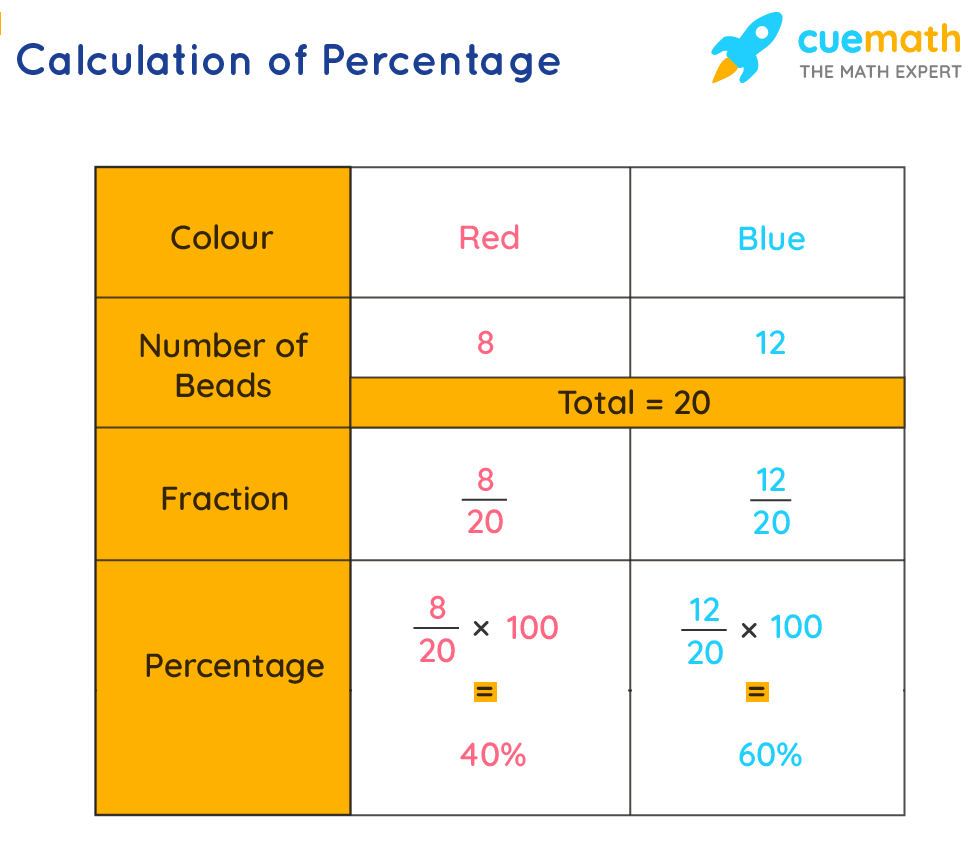
- Percentage: This expresses the part as a fraction of the whole, multiplied by 100. It’s a way to standardize comparisons by showing how many parts per hundred.
Imagine you have a budget of $1,000 for the month (the Whole), and you spent $200 on groceries (the Part). You want to know what percentage of your budget went to groceries.
The Basic Calculation
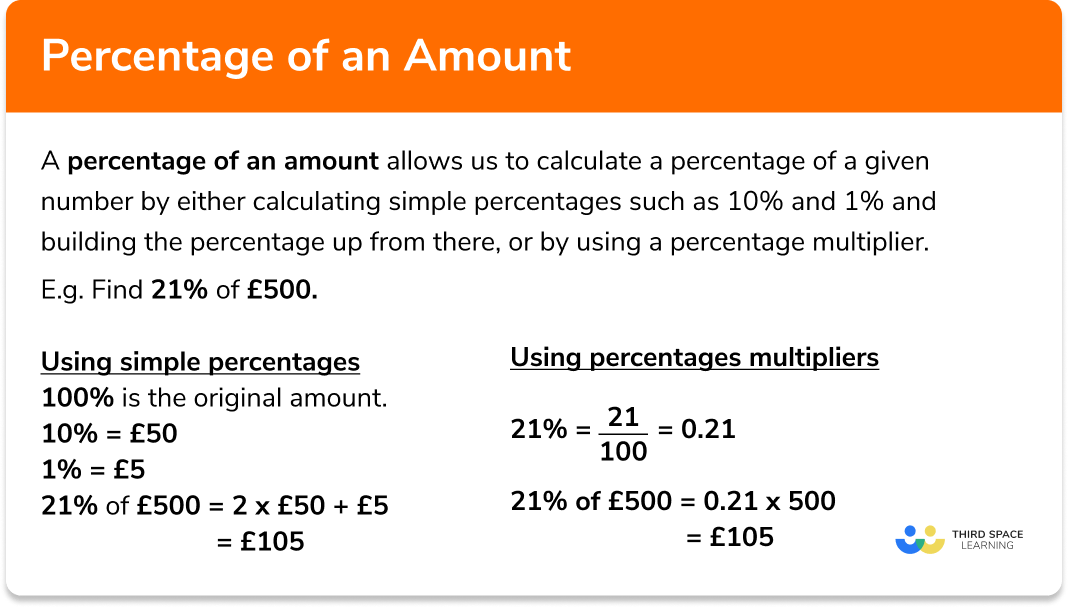
The formula for calculating a percentage is straightforward:
Percentage (%) = (Part / Whole) × 100
Let’s apply this to our grocery example:
- Divide the Part by the Whole: $200 (groceries) / $1,000 (total budget) = 0.2
- Multiply by 100: 0.2 × 100 = 20%
So, 20% of your monthly budget was spent on groceries. This simple formula is the bedrock for nearly all percentage calculations you’ll encounter in finance.
Practical Applications in Personal Finance
Percentages are ubiquitous in personal finance, helping individuals manage their money effectively and make prudent spending and saving decisions.
Budgeting and Expense Tracking
One of the most critical applications of percentage calculation is in creating and sticking to a budget. Understanding what proportion of your income goes to different categories helps in identifying areas for potential savings.
- Example: If your net monthly income is $4,000 and you spend $1,200 on rent, the percentage of income spent on housing is ($1,200 / $4,000) × 100 = 30%. Financial rules of thumb often suggest keeping housing costs below a certain percentage (e.g., 30% or 35%), so this calculation immediately gives you insight into whether you are within a healthy range. Similarly, you can calculate the percentage of income spent on entertainment, transportation, or debt repayment to ensure you’re allocating funds wisely.
Discounts, Sales, and Savings
When shopping, percentages are used to advertise sales and discounts. Knowing how to calculate the actual saving allows you to quickly assess the value of a deal.
- Example: A shirt originally priced at $50 is on sale for 20% off. To find the discount amount, you’d calculate 20% of $50: ($50 × 0.20) = $10. The new price would be $50 – $10 = $40. Conversely, if you want to know what percentage off an item is when you know the original price and the discount amount, you’d use the original formula. If a $75 item is discounted by $15, the percentage discount is ($15 / $75) × 100 = 20%. This empowers you to verify advertised discounts and make smart purchasing decisions.
Interest Rates and Loan Repayments
Interest rates on savings accounts, credit cards, mortgages, and personal loans are always expressed as percentages. Understanding how these percentages translate into actual dollar amounts is vital for managing debt and growing savings.
- Example: If you have a savings account with an annual interest rate of 1.5% and a balance of $10,000, the interest earned in one year (assuming simple interest) would be ($10,000 × 0.015) = $150. For loans, understanding interest can prevent you from overpaying. If you have a credit card balance of $2,000 with an 18% annual interest rate, and you only make minimum payments, a significant portion of your payment goes towards interest. Calculating the monthly interest charge ($2,000 × (0.18 / 12)) = $30 helps illustrate the cost of carrying a balance.
Leveraging Percentages in Investing and Business
Beyond personal finances, percentages are the backbone of financial analysis in investing and business operations. They provide clear, comparable metrics for performance and growth.
Investment Returns and Portfolio Allocation
Investors rely heavily on percentages to evaluate the performance of their investments and manage their portfolios.
- Example: Return on Investment (ROI): If you invested $5,000 in a stock and sold it for $6,500, your profit is $1,500. To calculate the percentage return, it’s (Profit / Original Investment) × 100. So, ($1,500 / $5,000) × 100 = 30%. This 30% ROI allows you to compare the performance of this investment against others, regardless of the initial capital invested.
- Example: Portfolio Allocation: Diversifying investments is key. If your total investment portfolio is $100,000, and $30,000 is in stocks, $50,000 in bonds, and $20,000 in real estate, you can calculate the percentage allocation for each:
- Stocks: ($30,000 / $100,000) × 100 = 30%
- Bonds: ($50,000 / $100,000) × 100 = 50%
- Real Estate: ($20,000 / $100,000) × 100 = 20%
This allows you to quickly see if your portfolio aligns with your desired asset allocation strategy.
Profit Margins and Business Growth
For entrepreneurs and business owners, percentages are crucial for assessing profitability, setting prices, and tracking growth.
- Example: Gross Profit Margin: If a business sells a product for $100 (revenue) that cost $60 to produce (cost of goods sold), the gross profit is $40. The gross profit margin is (Gross Profit / Revenue) × 100. So, ($40 / $100) × 100 = 40%. This metric indicates how much profit a company makes from each dollar of sales before considering operating expenses.
- Example: Revenue Growth: If a company’s revenue was $500,000 last year and $600,000 this year, the increase in revenue is $100,000. The percentage growth is (Increase in Revenue / Last Year’s Revenue) × 100. So, ($100,000 / $500,000) × 100 = 20%. This shows the business’s growth trajectory and is a vital indicator for investors and stakeholders.
Sales Tax and Commissions
Sales tax and commissions are everyday business applications where percentage calculations are essential.
- Example: Sales Tax: If an item costs $80 and the sales tax rate is 7.5%, the sales tax amount is ($80 × 0.075) = $6. The total price paid would be $80 + $6 = $86. Businesses need to accurately calculate this for customers and for remittance to tax authorities.
- Example: Commissions: A salesperson earns a 10% commission on sales. If they make $5,000 in sales, their commission earned is ($5,000 × 0.10) = $500. This is crucial for payroll and motivating sales teams.
Tools and Techniques for Efficient Calculation
While the basic formula is simple, various tools can expedite and simplify percentage calculations, especially with larger datasets or complex scenarios.
Manual Calculation and Mental Math
For quick estimates or simple figures, manual calculation is often the fastest. Practicing mental math with percentages can significantly boost your financial fluency. For instance, calculating 10% of any number is simply moving the decimal one place to the left (e.g., 10% of $150 is $15). From there, you can derive other percentages (20% is double 10%, 5% is half of 10%, etc.).
Spreadsheets (Excel, Google Sheets)
For more complex budgeting, financial modeling, or tracking multiple investments, spreadsheet software is indispensable.
- Entering the Formula: In Excel or Google Sheets, you can directly input the formula:
= (Part / Whole) * 100. For instance, if your part is in cell A2 and your whole is in B2, the formula would be=(A2/B2)*100. - Percentage Formatting: Spreadsheets also allow you to format cells as percentages. If you enter
=(A2/B2)and then format the cell as a percentage, it will automatically multiply by 100 and display with the “%” symbol, saving you a step. This is particularly useful for large datasets where you need to calculate numerous percentages rapidly.
Financial Calculators and Online Tools
Dedicated financial calculators, whether physical devices or online applications, often have specific functions for percentage changes, interest calculations, and more. Many banking apps and investment platforms also incorporate percentage calculators to show returns, fees, or interest accrued. These tools are excellent for ensuring accuracy and for specific financial computations that involve time value of money.
Common Pitfalls and How to Avoid Them
Even with a simple formula, misinterpreting or misapplying percentages can lead to significant financial errors.
- Confusing the Base (Whole): Always be clear about what the “whole” or “total” refers to. Is the percentage based on the original price, the discounted price, the starting balance, or the ending balance? For example, a “20% increase” followed by a “20% decrease” does not result in the original amount. If you have $100, a 20% increase makes it $120. A 20% decrease from $120 is ($120 * 0.20) = $24, leaving you with $96. The base changed.
- Decimal Point Errors: When converting percentages to decimals for multiplication (e.g., 20% to 0.20), ensure the decimal is moved correctly. Dividing by 100 is key. Using 2.0 instead of 0.20 will lead to a drastically wrong result.
- Not Annualizing Rates: Interest rates, especially in investing, are often quoted annually. If you’re looking at a monthly or quarterly return, be mindful of whether it needs to be annualized for proper comparison or projection.
- Ignoring Compounding: For interest-bearing accounts or loans, simple interest is rare. Compound interest, where interest is earned on both the initial principal and the accumulated interest, significantly impacts the total. While calculating the percentage from a total still holds, understanding the effect of compounding over time adds another layer of complexity that basic percentage calculation won’t fully capture.
Mastering the calculation of percentages from a total is an indispensable skill for anyone navigating the financial landscape. By understanding the foundational formula and its diverse applications in personal finance, investing, and business, you equip yourself with the tools to make smarter decisions, monitor your financial health, and achieve your monetary goals.
aViewFromTheCave is a participant in the Amazon Services LLC Associates Program, an affiliate advertising program designed to provide a means for sites to earn advertising fees by advertising and linking to Amazon.com. Amazon, the Amazon logo, AmazonSupply, and the AmazonSupply logo are trademarks of Amazon.com, Inc. or its affiliates. As an Amazon Associate we earn affiliate commissions from qualifying purchases.