
The landscape of personal finance has undergone a seismic shift over the last decade. Historically, the stock market was perceived as an exclusive club reserved for institutional investors and those with significant capital. However, the advent of fintech platforms—most notably Robinhood—has democratized access to the financial markets. By pioneering commission-free trading and introducing a user-centric interface, Robinhood has made it possible for anyone with a smartphone and a few dollars to become a shareholder in the world’s largest companies.
Buying stocks on Robinhood is more than just a sequence of taps on a screen; it is an entry point into wealth creation and capital management. To navigate this platform effectively, an investor must understand not only the mechanics of the app but also the fundamental principles of the “Money” niche, including risk management, asset allocation, and market dynamics. This guide provides an exhaustive walkthrough of how to buy stocks on Robinhood while building a sustainable financial foundation.
1. Establishing Your Financial Foundation on Robinhood
Before executing your first trade, you must establish a secure and funded brokerage account. In the realm of personal finance, your brokerage account is the vehicle for your investment journey. Robinhood simplifies this process, but there are critical financial considerations to keep in mind during the setup phase.
Eligibility and Account Requirements
To open an account on Robinhood, you must meet specific regulatory and financial criteria. You need to be at least 18 years old, have a valid Social Security Number, and be a legal U.S. resident. During the application process, the platform will ask about your investment experience and risk tolerance. These questions are not merely administrative; they are part of “Know Your Customer” (KYC) regulations designed to protect investors and prevent financial crimes. Being honest about your financial standing ensures that the platform provides appropriate warnings and features suited to your experience level.
Navigating the Digital Brokerage Interface
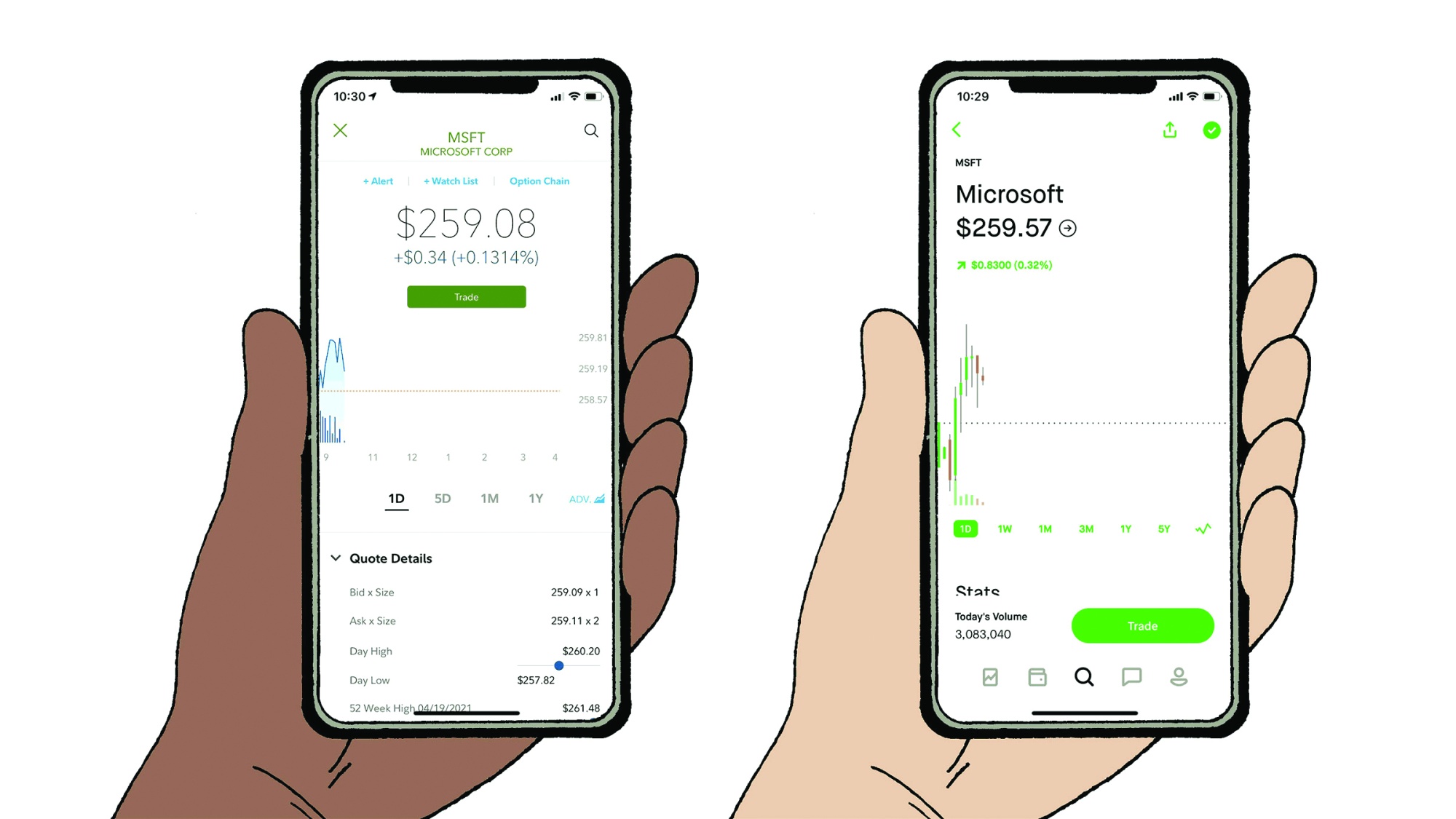
Once your account is approved, the interface becomes your primary tool for financial oversight. Unlike traditional legacy brokerages, Robinhood emphasizes a streamlined aesthetic. The home screen displays your total portfolio value and a “volatility line” showing your performance over different timeframes (1D, 1W, 1M, 3M, 1Y, and ALL). Understanding these metrics is vital for monitoring your net worth. The search icon allows you to look up individual companies by their names or ticker symbols (e.g., AAPL for Apple or TSLA for Tesla), providing real-time price data and relevant financial news.
Linking Your Bank and Funding Strategies
To buy stocks, you must transfer capital from a traditional bank account to your Robinhood brokerage account. You can link your bank via Plaid, a secure service that connects your financial institutions. From a money management perspective, it is wise to decide between a lump-sum transfer or setting up recurring deposits. Robinhood offers “Instant Deposits,” which allow you to trade with a portion of your funds immediately, even before the bank transfer officially clears. This feature provides liquidity, but investors should use it responsibly to avoid “overdrafting” their intentions relative to their actual bank balance.
2. Executing Your First Trade: The Mechanics of Purchasing Equities
Once your account is funded, you are ready to participate in the market. Buying a stock is an act of purchasing partial ownership in a corporation. On Robinhood, the execution process is designed to be intuitive, but choosing the right order type is a critical financial skill.
Searching for Assets and Market Research
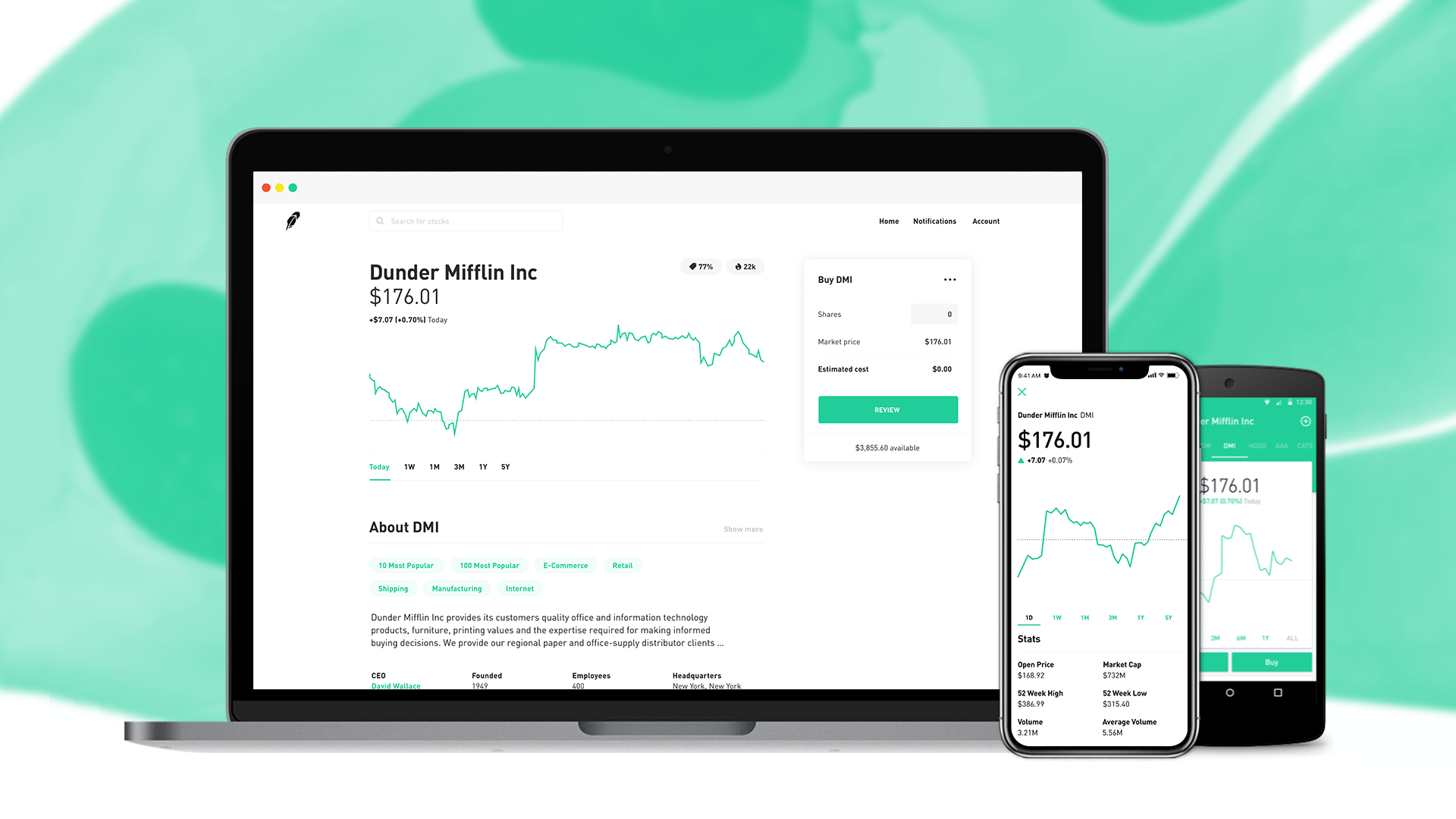
When you select a stock, Robinhood provides a variety of data points: the current price, a historical chart, market capitalization, and the Price-to-Earnings (P/E) ratio. For a disciplined investor, these figures are the starting point for fundamental analysis. You should look at the company’s earnings reports and analyst ratings—features integrated directly into the app—to determine if the stock fits your financial goals. Buying a stock simply because the “line is green” is speculation; buying because the company has strong cash flow and growth potential is investing.
Market Orders vs. Limit Orders
This is perhaps the most important technical aspect of buying stocks.
- Market Order: This instructs Robinhood to buy the stock immediately at the best available current price. While fast, market prices can fluctuate rapidly, meaning you might pay slightly more than the price you saw a second ago.
- Limit Order: This allows you to set a maximum price you are willing to pay. If the stock does not hit that price, the trade is not executed. In a professional “Money” context, limit orders are often preferred because they provide price certainty and protect the investor from “slippage” during periods of high market volatility.
Utilizing Fractional Shares for Diversification
One of Robinhood’s most revolutionary features is fractional share trading. If a single share of a high-priced stock like Berkshire Hathaway or Amazon is too expensive for your current budget, you can buy a “fraction” of that share for as little as $1. This is a powerful tool for diversification. Instead of putting $100 into one cheap “penny stock,” you can spread that $100 across ten blue-chip companies. This strategy lowers your idiosyncratic risk—the risk associated with a single company failing—and allows you to build a balanced portfolio regardless of your starting capital.
3. Advanced Wealth-Building Strategies within the Platform
Buying your first stock is just the beginning. To grow your wealth over time, you must transition from a “buyer” to a “strategist.” Robinhood offers several features that align with sophisticated personal finance goals.
Dividend Reinvestment Programs (DRIP)
Many established companies pay out a portion of their profits to shareholders in the form of dividends. Robinhood allows you to enable “Dividend Reinvestment,” or DRIP. When you receive a dividend, the platform automatically uses that cash to buy more shares of the same stock. Over years and decades, this creates a compounding effect. Compounding is often called the “eighth wonder of the world” in finance because it allows your money to earn money, which then earns more money, accelerating your path to financial independence.
The Role of Exchange-Traded Funds (ETFs)
For many investors, picking individual stocks is time-consuming and risky. Robinhood provides access to thousands of ETFs, which are “baskets” of stocks that track an index, such as the S&P 500 (e.g., VOO or SPY). By buying an ETF, you are instantly diversified across hundreds of companies. In professional financial planning, ETFs are often the “core” of a portfolio, providing steady growth with lower volatility than individual equities. Using Robinhood to automate monthly purchases of an S&P 500 ETF is one of the most effective ways to build long-term wealth.
Robinhood Retirement and Tax-Advantaged Growth
A significant advancement in the Robinhood ecosystem is the introduction of Retirement accounts (IRAs and Roth IRAs). Unlike a standard brokerage account where you pay taxes on capital gains and dividends, a Roth IRA allows your investments to grow tax-free, and withdrawals in retirement are also tax-free. Robinhood even offers a “match” on contributions for certain users. From a “Money” perspective, utilizing these tax-advantaged accounts is essential for maximizing your net return on investment.
4. Managing Risk and Portfolio Performance
Investing involves inherent risk, and the ease of use of the Robinhood app can sometimes lead to impulsive decisions. Managing your portfolio requires a disciplined approach to risk and a clear understanding of your financial timeline.
Understanding Volatility and Risk Management
Stock prices do not move in a straight line. Market volatility is a natural part of the economic cycle. To manage risk on Robinhood, investors should avoid “over-concentration”—the mistake of putting too much money into a single sector (like Tech) or a single stock. A well-managed portfolio includes a mix of different industries and perhaps even different asset classes, such as crypto or bonds, which Robinhood also supports. Furthermore, setting “Stop-Loss” orders can act as an automated safety net, selling a stock if it drops below a certain price to prevent further losses.
Robinhood Gold and Margin Investing
For more experienced investors, Robinhood Gold is a subscription service that provides deeper market data, higher interest rates on uninvested cash, and access to margin investing. Margin is essentially a loan from the brokerage to buy more stocks. While margin can amplify your gains, it also significantly amplifies your losses and carries the risk of a “margin call,” where you are forced to sell assets at a loss to cover the loan. In the niche of personal finance, margin is a high-risk tool that should be approached with extreme caution and only by those with a deep understanding of leverage.
Monitoring Performance and Rebalancing
Effective money management requires periodic reviews of your portfolio performance. Robinhood provides clear visual representations of your gains and losses. However, it is important to look beyond the “daily” view. Long-term investors focus on the “All” or “1 Year” charts. Periodically, you may need to “rebalance” your portfolio. If one stock has grown so much that it now makes up 50% of your total value, it may be wise to sell a portion of it and reinvest in other areas to maintain your desired risk profile. This disciplined approach ensures that you are “buying low and selling high” in a systematic way.
Conclusion: The Path to Financial Literacy
Buying stocks on Robinhood is a gateway into the broader world of finance. The platform has successfully removed the technical and financial barriers to entry, but the responsibility of successful investing remains with the individual. By understanding the mechanics of orders, the importance of diversification, and the power of tax-advantaged accounts, you can transform a mobile app into a powerful engine for wealth creation.
Ultimately, the key to success in the “Money” niche is consistency and education. Whether you are starting with $5 or $50,000, the principles remain the same: spend less than you earn, invest the difference wisely, and maintain a long-term perspective. Robinhood is the tool, but your strategy is what will determine your financial future. As you continue to buy and hold assets, you are not just participating in the market; you are taking control of your financial destiny.
aViewFromTheCave is a participant in the Amazon Services LLC Associates Program, an affiliate advertising program designed to provide a means for sites to earn advertising fees by advertising and linking to Amazon.com. Amazon, the Amazon logo, AmazonSupply, and the AmazonSupply logo are trademarks of Amazon.com, Inc. or its affiliates. As an Amazon Associate we earn affiliate commissions from qualifying purchases.