
In recent years, the world of stock market investing has become significantly more accessible, largely thanks to innovative platforms that have demystified the process for everyday individuals. Among these, Robinhood stands out as a pioneering force, known for its commission-free trading and user-friendly mobile interface. What was once the exclusive domain of seasoned brokers and financial institutions is now available at your fingertips, empowering millions to take control of their financial futures. This guide is designed to walk you through the precise steps of buying stock on Robinhood, transforming a potentially intimidating prospect into a straightforward, manageable task. Whether you’re a complete novice eager to make your first investment or someone looking to understand the mechanics of this particular platform, this comprehensive overview will equip you with the knowledge and confidence needed to navigate Robinhood effectively, all within the crucial context of sound financial decision-making.
Setting Up Your Robinhood Account: The Gateway to Investing
Before you can begin buying stocks, the first crucial step is to establish and fund your Robinhood account. This process is designed to be as streamlined as possible, reflecting the platform’s ethos of democratizing finance, but it also adheres to strict regulatory requirements to ensure security and compliance.
Eligibility Requirements
To open a Robinhood account, you generally need to meet a few basic criteria. Primarily, you must be at least 18 years old, possess a valid Social Security Number (SSN), and have a legal residential address within the United States. These requirements are standard across the brokerage industry and are in place to prevent fraud and comply with federal regulations like the Know Your Customer (KYC) rule and the Patriot Act, which aim to combat money laundering and terrorist financing. While these might seem like bureaucratic hurdles, they are fundamental to maintaining the integrity and security of the financial system, protecting both individual investors and the broader market.
The Application Process
The application itself is typically handled digitally and can be completed swiftly, often within minutes, directly through the Robinhood app or website. You’ll be asked to provide personal details such as your full legal name, date of birth, contact information (email and phone), and your residential address. In addition, you’ll need to disclose information about your employment status, income, and investment experience. This financial profile helps Robinhood, as a regulated brokerage, understand your risk tolerance and suitability for various investment products, though for basic stock trading, the bar is relatively low. You’ll also be prompted to link a bank account, which is essential for funding your investments and withdrawing any profits. It’s vital to ensure all information provided is accurate and up-to-date, as any discrepancies could delay your application or even lead to account suspension. Once submitted, Robinhood typically reviews applications quickly, and many users gain approval within hours, sometimes even minutes, after which they can proceed to fund their accounts.
Funding Your Account
With your account approved, the next logical step is to deposit funds. Robinhood offers several convenient methods for this, with the most common being linking your bank account directly through an Automated Clearing House (ACH) transfer. This method allows you to transfer money from your checking or savings account directly to your Robinhood brokerage account. For faster access to funds, Robinhood often provides instant deposits for certain amounts, allowing you to begin trading almost immediately while the full ACH transfer is still processing (which typically takes 2-3 business days). This feature is particularly attractive for new investors eager to get started. Alternatively, you can initiate a wire transfer for larger sums, though this method might incur fees from your bank. Robinhood Gold subscribers often benefit from higher instant deposit limits, adding another layer of convenience for active traders. Regardless of the method, ensure you only transfer funds you are comfortable investing and are prepared to potentially lose, as stock market investments inherently carry risk.
Understanding the Robinhood Interface and Key Features
Once your account is set up and funded, familiarizing yourself with the Robinhood platform is crucial. Its design prioritizes simplicity and intuitive navigation, but understanding its core components will empower you to make informed decisions.
Navigating the Dashboard
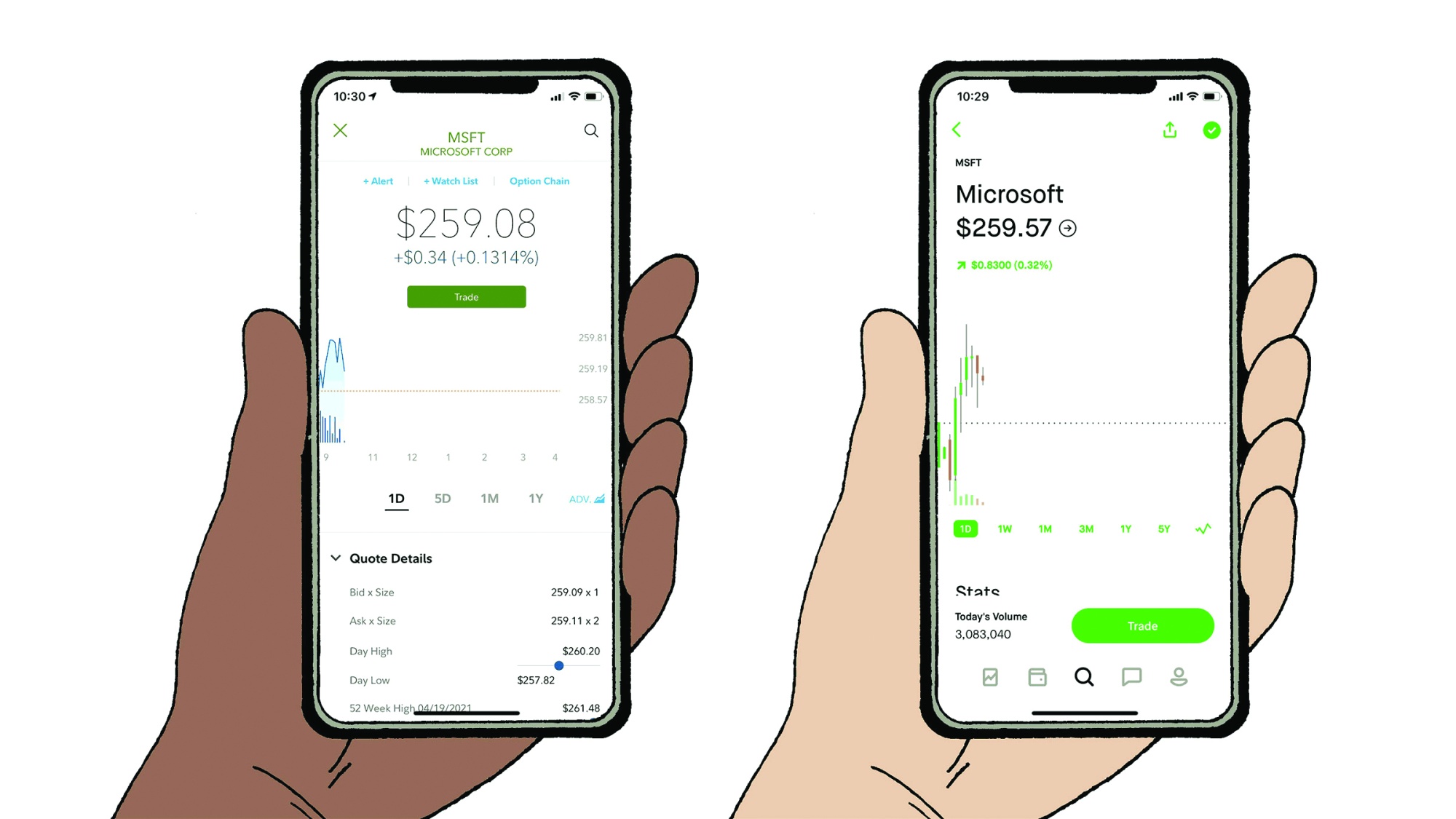
Upon logging in, you’re greeted by Robinhood’s clean and uncluttered dashboard. This central hub provides an immediate snapshot of your portfolio’s performance, displaying your total account value, daily gains or losses, and an interactive graph visualizing your portfolio’s historical performance. Below this summary, you’ll typically find a watchlist of stocks you’re tracking, news relevant to your holdings, and perhaps even some trending stocks or sectors. The dashboard is designed to be easily digestible, offering key data points at a glance without overwhelming the user with excessive jargon or complex charts. Key navigation tabs or icons, usually located at the bottom of the screen, allow you to quickly access your portfolio, search for stocks, view your account history, manage your profile, and access customer support. Getting comfortable with these basic navigation elements will make your investing journey much smoother.
Researching Stocks
While Robinhood is celebrated for its ease of use, it also provides basic tools for stock research. When you search for a specific stock, its dedicated page will display critical information such as the current price, a historical price chart (with various timeframes), market capitalization, dividend yield (if applicable), and key financial metrics like P/E ratio. You’ll also find analyst ratings, news articles related to the company, and typically a brief description of the company’s business. For fundamental analysis, Robinhood integrates some basic financial statements and earnings reports, allowing you to delve deeper into a company’s health. While these tools are a good starting point, serious investors often complement Robinhood’s built-in research with external sources, financial news websites, and advanced analytical platforms to conduct more thorough due diligence. Remember, diligent research is the cornerstone of responsible investing, helping you understand what you’re buying and why.
Types of Orders
Understanding different order types is fundamental to effectively buying and selling stocks. Robinhood primarily facilitates two main types:
- Market Order: This is the simplest and most common order type. When you place a market order, you instruct Robinhood to buy or sell a stock immediately at the best available current market price. While it guarantees execution, the exact price you pay or receive might slightly differ from the quoted price at the moment you hit “buy” or “sell,” especially in fast-moving markets, due to market volatility and bid-ask spreads.
- Limit Order: A limit order gives you more control over the price at which your trade is executed. When buying, you set a maximum price you’re willing to pay; the order will only execute if the stock’s price falls to or below that limit. When selling, you set a minimum price you’re willing to accept; the order will only execute if the stock’s price rises to or above that limit. Limit orders do not guarantee execution but ensure you trade at your desired price point, making them useful for executing specific strategies or avoiding unfavorable prices during volatile periods.
Robinhood also offers “Stop Orders” and “Trailing Stop Orders,” which are advanced order types primarily used to limit potential losses or lock in profits by automatically triggering a market or limit order when a stock hits a certain price threshold. While not strictly necessary for a first purchase, understanding them adds another layer of control to your investing strategy.
Your First Stock Purchase on Robinhood
With your account ready and an understanding of the basics, you’re now poised to make your first investment. This step-by-step guide will walk you through the process of executing a trade on Robinhood.
Searching for a Stock
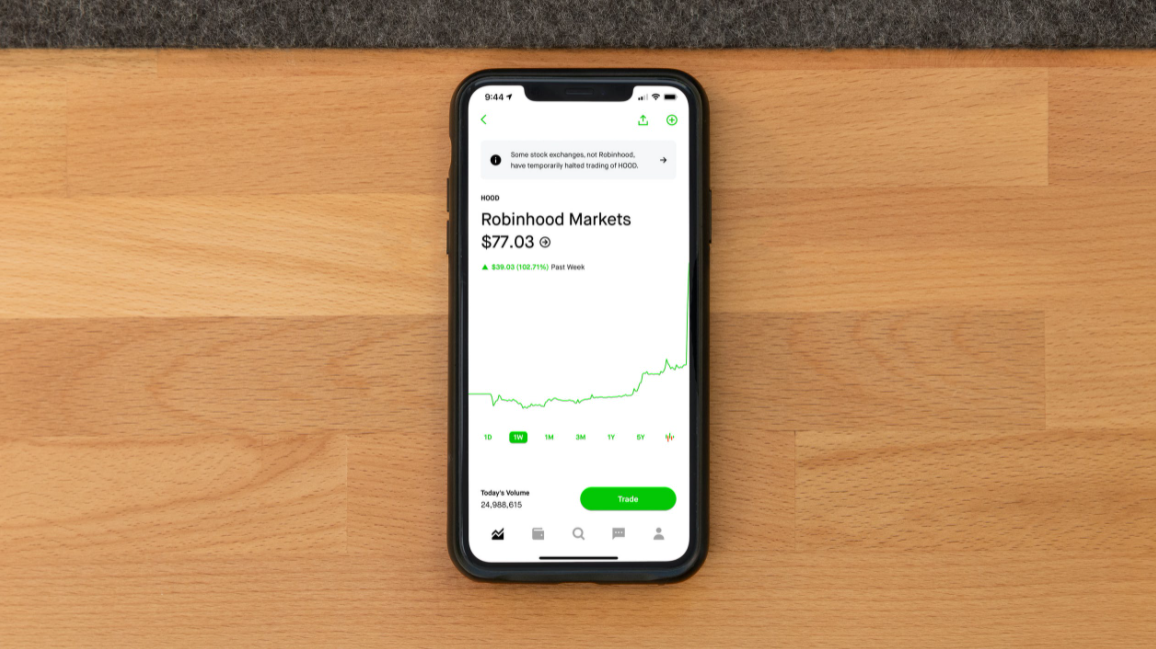
The first step to buying a stock is to find the company you wish to invest in. Use the search bar, typically represented by a magnifying glass icon, located within the Robinhood app. You can type in the company’s name (e.g., “Apple”) or its stock ticker symbol (e.g., “AAPL”). As you type, Robinhood will display relevant results, allowing you to select the correct company. Once selected, you’ll be taken to that stock’s dedicated page, which displays its current price, performance charts, news, and research data. Take a moment to review this information, ensuring it aligns with your research and investment thesis before proceeding.
Entering Order Details
On the stock’s page, you’ll find a “Trade” button, which you’ll tap to initiate a purchase. Robinhood will then prompt you to choose between buying or selling, and you’ll select “Buy.” Next, you’ll be asked to specify the order type. For most beginners, a “Market Order” is the simplest way to get started, ensuring your trade executes immediately. If you prefer to set a specific price, select “Limit Order.” After choosing your order type, you’ll enter the number of shares you wish to buy or the dollar amount if you’re utilizing Robinhood’s fractional shares feature. Fractional shares allow you to invest in a company by specifying a dollar amount (e.g., $100 of Apple stock) rather than buying whole shares, making high-priced stocks accessible to investors with smaller budgets. Review the estimated cost, which includes the share price multiplied by the number of shares, before moving forward.
Confirming Your Trade
Before the order is placed, Robinhood will present you with a confirmation screen. This is your final opportunity to review all the details of your trade: the company, the ticker symbol, the number of shares (or dollar amount), the order type, and the estimated total cost. It’s crucial to double-check everything at this stage to prevent errors. Ensure the amount you’re investing aligns with your budget and conviction. Once you are confident that all details are correct, you will typically “Swipe to Submit” or tap a “Confirm” button. Upon submission, Robinhood will process your order. For market orders, execution is usually instantaneous during market hours. For limit orders, it will await the specified price condition.
What Happens After You Buy?
Immediately after your order is executed, you will receive a confirmation message from Robinhood. The purchased stock will then appear in your portfolio, and your cash balance will be updated to reflect the transaction. The stock’s performance will now contribute to your overall portfolio value, fluctuating with market movements. It’s important to understand that while your trade is executed quickly, the actual settlement of the trade (the official transfer of ownership and funds) typically takes two business days (T+2 settlement). This is standard practice in the brokerage industry. While you own the shares and their value is reflected in your portfolio immediately, you won’t be able to withdraw the funds from a sale of those shares until after the settlement period. You can monitor your investment’s performance from your dashboard, watching its daily gains or losses and understanding how it impacts your overall financial position.
Managing Your Investments and Portfolio
Buying a stock is just the beginning of your investing journey. Effective management of your portfolio is key to achieving your financial goals and navigating the inherent volatility of the market.
Monitoring Performance
Regularly monitoring your investments allows you to stay informed about their performance and react strategically to market changes. Robinhood’s dashboard provides real-time updates on your portfolio’s total value, daily performance, and individual stock performance. You can tap on any stock in your portfolio to view its specific performance metrics, historical charts, and related news. While it’s wise to monitor, it’s equally important not to over-monitor, especially for long-term investors. Daily fluctuations are normal, and reacting impulsively to every dip or surge can lead to poor decisions. Establish a review routine—perhaps once a week or month—to assess your portfolio’s alignment with your financial objectives rather than getting caught up in the emotional rollercoaster of daily market noise.
Diversification Strategies
One of the most fundamental principles of investing is diversification. The adage “don’t put all your eggs in one basket” holds immense truth in the financial markets. Diversification involves spreading your investments across various asset classes, industries, and geographies to mitigate risk. If one sector experiences a downturn, others might remain stable or even perform well, cushioning the impact on your overall portfolio. For instance, instead of investing solely in technology stocks, consider diversifying into healthcare, consumer goods, and energy. Within Robinhood, you can achieve diversification by purchasing stocks from different sectors, investing in Exchange-Traded Funds (ETFs) that hold a basket of stocks, or even exploring other asset classes like cryptocurrencies or gold (though these carry their own unique risks). While Robinhood might not offer as many advanced diversification tools as some traditional brokerages, consciously selecting a variety of investments is a crucial step for any investor.
Understanding Gains and Losses
Investing in the stock market comes with the inherent possibility of both gains and losses. It’s crucial to understand how these impact your financial position and taxes. A gain occurs when the selling price of an asset is higher than its purchase price, while a loss occurs when the selling price is lower. These are categorized as either short-term (for assets held one year or less) or long-term (for assets held for more than a year), with different tax implications. Short-term capital gains are typically taxed at your ordinary income rate, while long-term capital gains often receive more favorable tax treatment. It’s also important to differentiate between “unrealized” gains or losses (which exist on paper as long as you hold the stock) and “realized” gains or losses (which occur only after you sell the stock). Maintaining a clear record of your purchase prices and dates will be invaluable come tax season. Robinhood provides tax documents (e.g., Form 1099-B) that summarize your realized gains and losses for the year, simplifying this process.
Important Considerations Before You Invest
While Robinhood makes investing seem straightforward, it’s essential to approach the market with a well-informed and cautious mindset. Investing carries inherent risks, and a clear understanding of these is paramount.
The Role of Research and Due Diligence
Never invest in a company without first conducting thorough research and due diligence. While the temptation to jump on trending stocks or tips from social media can be strong, such approaches often lead to significant losses. Instead, take the time to understand the company’s business model, its financial health (revenue, profit, debt), its competitive landscape, and its future prospects. Look at earnings reports, analyst consensus, and reputable financial news sources. Consider the company’s management team and their track record. Robinhood provides basic research tools, but complementing these with external resources like Yahoo Finance, Google Finance, or reputable financial publications is highly recommended. Intelligent investing is not about guesswork; it’s about informed decision-making based on concrete data and a clear understanding of the underlying business.
Understanding Market Volatility and Risk
The stock market is inherently volatile, meaning prices can fluctuate significantly and unpredictably over short periods. This volatility is driven by a myriad of factors, including economic news, company performance, geopolitical events, and investor sentiment. Every investment carries a degree of risk, from the possibility of minor price dips to the extreme scenario of losing your entire investment. While commission-free trading lowers the barrier to entry, it does not eliminate the risk of capital loss. It’s crucial to understand that past performance is not indicative of future results, and there are no guarantees in the stock market. Only invest money you can afford to lose without impacting your financial stability or ability to meet essential living expenses. A clear understanding and acceptance of these risks will help you maintain a rational perspective during market downturns and avoid panic-selling.
Long-Term vs. Short-Term Investing
Before making your first purchase, clarify your investment horizon: are you aiming for short-term gains or long-term growth?
- Short-Term Investing (Trading): This involves buying and selling stocks rapidly, often within days or weeks, to capitalize on small price movements. It requires significant time commitment, advanced analytical skills, and a high tolerance for risk. While potentially lucrative, it’s highly speculative and often results in substantial losses for inexperienced investors.
- Long-Term Investing: This involves holding investments for many years, often decades, with the goal of capital appreciation and compounding returns over time. Long-term investors typically focus on strong companies with solid fundamentals and growth potential, often weathering short-term market fluctuations. This approach generally aligns better with the financial goals of most individual investors, allowing time for market corrections and the power of compounding to work its magic.
Robinhood caters to both, but its accessible interface might inadvertently encourage short-term trading. For beginners, a long-term, buy-and-hold strategy, focused on diversified investments, is generally recommended as it is less stressful and historically more rewarding. Define your goals, stick to your strategy, and remember that patience is often the most valuable asset in investing.
aViewFromTheCave is a participant in the Amazon Services LLC Associates Program, an affiliate advertising program designed to provide a means for sites to earn advertising fees by advertising and linking to Amazon.com. Amazon, the Amazon logo, AmazonSupply, and the AmazonSupply logo are trademarks of Amazon.com, Inc. or its affiliates. As an Amazon Associate we earn affiliate commissions from qualifying purchases.