
Entering the stock market is one of the most effective ways to build long-term wealth and outpace inflation. While the prospect of investing can seem daunting to the uninitiated, the process has become more accessible than ever due to the digital revolution in finance. Buying into the stock market is no longer reserved for the elite in mahogany-paneled offices; it is a tool available to anyone with an internet connection and a disciplined mindset. However, success in the markets requires more than just a brokerage account; it demands a clear understanding of the mechanics, a well-defined strategy, and the psychological fortitude to weather volatility.
Building a Financial Foundation Before Your First Trade
Before you execute your first trade, it is imperative to ensure that your personal finances are structured to support the risks inherent in the equity markets. Investing should never be done with money that is needed for immediate living expenses or short-term emergencies. The stock market is a long-term wealth-generation machine, and its efficacy is best realized over years and decades, not weeks or months.
Assessing Your Financial Health
A primary prerequisite for investing is the establishment of an emergency fund. Most financial advisors recommend having three to six months of living expenses held in a liquid, high-yield savings account. This “moat” protects your investments; if an unexpected medical bill or job loss occurs, you will not be forced to liquidate your stocks at a loss to cover the cost.
Furthermore, it is generally advisable to pay off high-interest debt, such as credit card balances, before aggressive investing. If your credit card carries an 18% interest rate and the stock market historically returns about 10% annually, you are mathematically better off paying down the debt first. Once your debt is manageable and your emergency fund is set, you have the “dry powder” necessary to begin your investment journey.
Defining Your Investment Goals and Horizon
Your approach to the market depends entirely on why you are investing. Are you saving for retirement forty years away, or are you looking to grow a down payment for a house in five years? This is known as your “time horizon.” A longer time horizon allows you to take more risk and invest more heavily in equities, as you have the time to recover from market downturns. Conversely, if you need the money soon, a more conservative approach involving bonds or cash equivalents is appropriate.
Selecting the Right Brokerage and Account Type
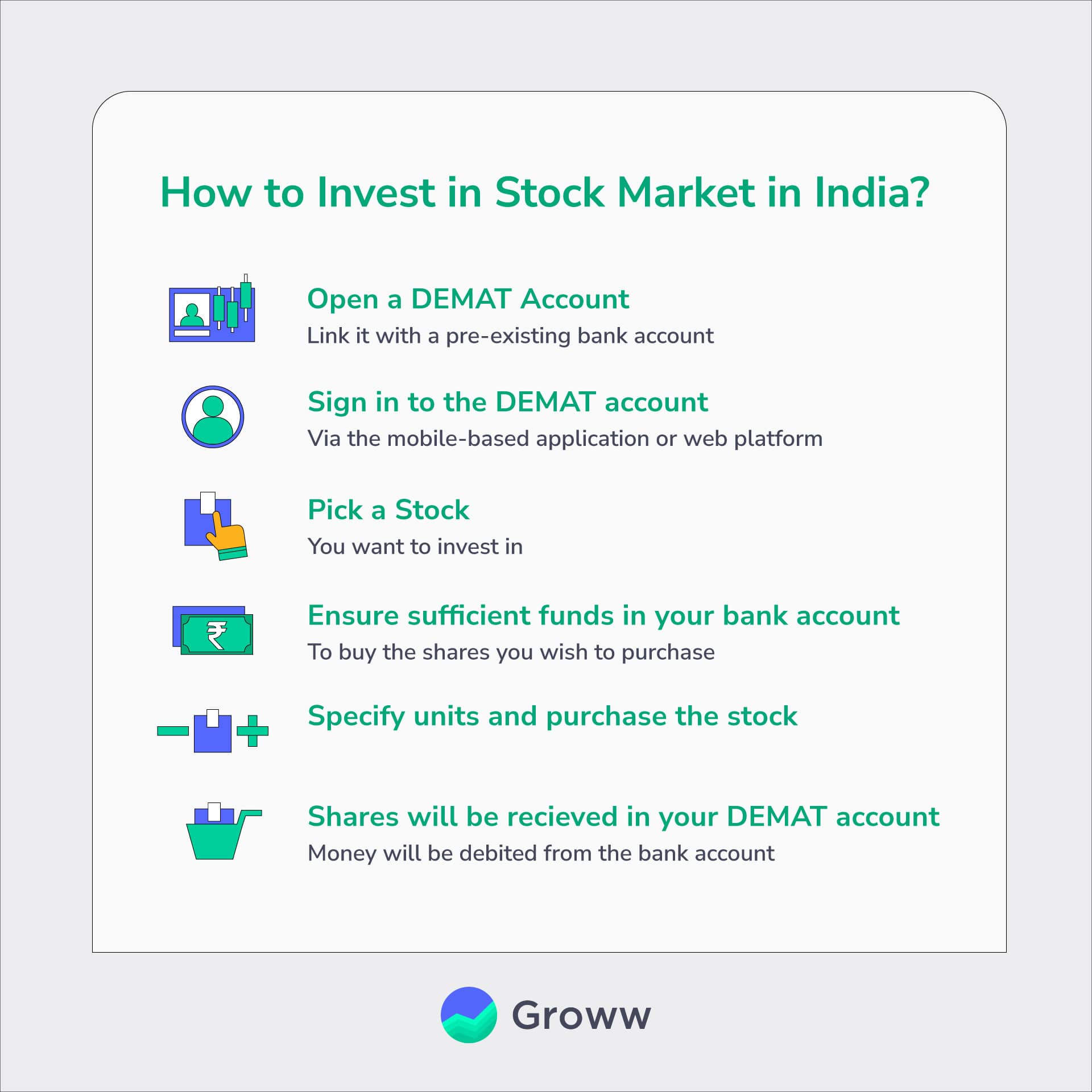
Once your foundation is solid, the next step is to choose a gateway to the market. A brokerage serves as the intermediary between you and the stock exchanges. In the current landscape, the barrier to entry is nearly non-existent, with many reputable firms offering zero-commission trades and no minimum balance requirements.
Choosing a Platform
Modern investors are spoiled for choice. Discount brokerages and mobile apps like Robinhood, Webull, and Public offer sleek interfaces and fractional shares, which allow you to buy $5 worth of a high-priced stock like Amazon or Berkshire Hathaway. On the other hand, established giants like Fidelity, Charles Schwab, and Vanguard offer robust research tools, extensive educational resources, and world-class customer support. When choosing a platform, consider the ease of use, the quality of their mobile app, and whether they offer the specific types of investments (like international stocks or options) that you might eventually want to explore.
Understanding Account Structures
Where you hold your stocks is just as important as what you buy. The two primary categories are taxable brokerage accounts and tax-advantaged retirement accounts.
-
Taxable Brokerage Accounts: These offer the most flexibility. You can contribute as much as you want and withdraw your money at any time. However, you will owe taxes on dividends received and capital gains realized when you sell a stock for a profit.
-
Retirement Accounts (IRAs and 401ks): In the United States, accounts like the Individual Retirement Account (IRA) or the employer-sponsored 401(k) offer significant tax benefits. A Traditional IRA may offer a tax deduction on contributions, while a Roth IRA allows for tax-free withdrawals in retirement. The trade-off is that these funds are generally “locked away” until age 59 ½, with penalties for early withdrawal. For most investors, maximizing tax-advantaged accounts is the most efficient way to grow wealth.
Navigating Investment Options: Stocks, ETFs, and Mutual Funds
The “stock market” is not a monolith; it is a collection of various instruments. How you choose to buy into the market should align with how much time you want to spend researching companies.

Individual Stocks: High Reward, High Research
Buying individual stocks makes you a partial owner of a specific corporation. If the company prospers, its stock price typically rises, and it may pay out a portion of its profits as dividends. However, this carries “idiosyncratic risk.” If you invest heavily in a single company and that company faces a scandal or a decline in its industry, your portfolio will suffer significantly. Investing in individual stocks requires a deep dive into financial statements, competitive advantages, and management quality.
Index Funds and ETFs: The Power of Diversification
For the vast majority of investors, the most effective way to buy the stock market is through Exchange-Traded Funds (ETFs) or index mutual funds. These funds allow you to buy a “basket” of hundreds or even thousands of stocks in a single transaction.
For example, an S&P 500 index fund seeks to mirror the performance of the 500 largest publicly traded companies in the U.S. By owning an S&P 500 ETF, you are automatically diversified across technology, healthcare, finance, and consumer goods. This mitigates the risk of a single company failing. As the legendary investor John Bogle famously said, “Don’t look for the needle in the haystack. Just buy the haystack.”
The Mechanics of Buying: Executing Your First Order
With an account funded and a strategy in place, you are ready to place an order. Understanding the technical side of the trade ensures you don’t pay more than necessary or get caught in a volatile price swing.
Understanding Market and Limit Orders
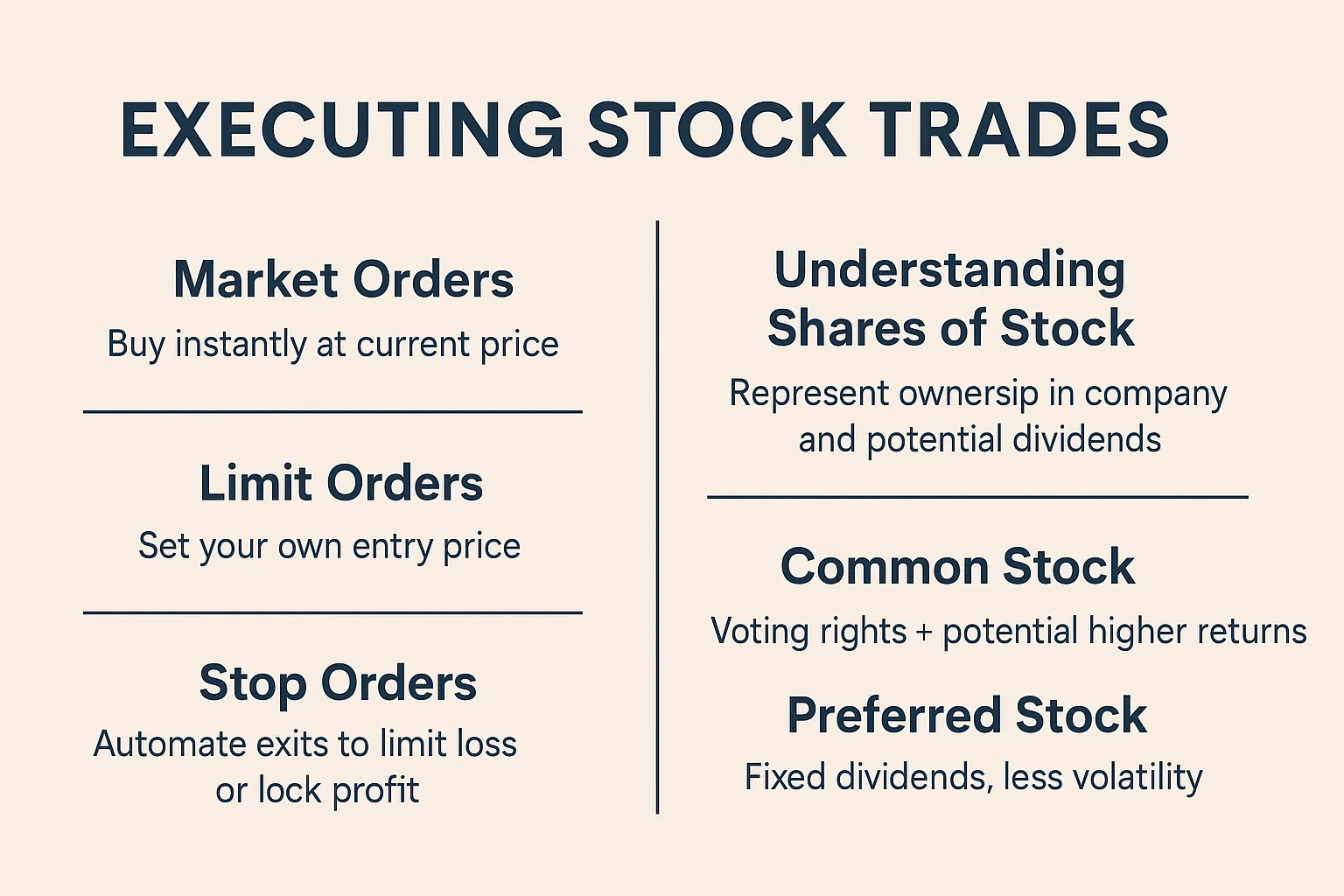
When you go to buy a stock, you will typically see two main order types:
-
Market Order: This instructs the broker to buy the stock immediately at the best available current price. This guarantees that the trade will be executed, but in a fast-moving market, the price might be slightly higher than you expected.
-
Limit Order: This allows you to set a maximum price you are willing to pay. If the stock is trading at $150 but you only want to pay $148, the trade will only execute if the price drops to your limit. This gives you more control but runs the risk that the trade may never be filled if the price keeps rising.
The Importance of Dollar-Cost Averaging
A common mistake for beginners is trying to “time the market”—waiting for a crash to buy or selling because they fear a correction is coming. Professional data shows that time in the market is more important than timing the market.
A superior strategy is Dollar-Cost Averaging (DCA). This involves investing a fixed amount of money at regular intervals (e.g., $200 every payday), regardless of the stock price. When prices are high, your $200 buys fewer shares; when prices are low, your $200 buys more shares. Over time, this lowers your average cost per share and removes the emotional stress of trying to predict daily market movements.
Long-Term Portfolio Management and Psychological Discipline
The final step in buying into the stock market is the most difficult: holding on. The market is inherently volatile, with occasional “corrections” (a 10% drop) and “bear markets” (a 20% or more drop). Your success depends on your ability to stay the course during these periods.
Rebalancing Your Portfolio
Over time, some of your investments will grow faster than others, which can shift your intended asset allocation. If you started with 80% stocks and 20% bonds, a strong year for the stock market might leave you with 90% stocks. This makes your portfolio riskier than you intended. Rebalancing involves selling a portion of your winning investments and buying more of the underperforming ones to return to your target allocation. This forced “sell high, buy low” mechanism is a hallmark of disciplined investing.
Avoiding the Pitfalls of Emotional Investing
The stock market is a mirror of human psychology. When prices are skyrocketing, FOMO (Fear Of Missing Out) drives people to buy at the peak. When prices plummet, panic drives people to sell at the bottom. To be a successful investor, you must decouple your emotions from your portfolio.
View market downturns not as disasters, but as opportunities to buy quality assets at a discount. By maintaining a long-term perspective and adhering to a consistent investment plan, you transform from a spectator of the economy into a participant in its growth. Buying into the stock market is a marathon, not a sprint; the goal is to reach the finish line with a more secure financial future, built on the bedrock of patience, diversification, and compound interest.
aViewFromTheCave is a participant in the Amazon Services LLC Associates Program, an affiliate advertising program designed to provide a means for sites to earn advertising fees by advertising and linking to Amazon.com. Amazon, the Amazon logo, AmazonSupply, and the AmazonSupply logo are trademarks of Amazon.com, Inc. or its affiliates. As an Amazon Associate we earn affiliate commissions from qualifying purchases.