
Investing in the S&P 500 is often cited by financial experts, including legendary investor Warren Buffett, as one of the most effective ways for the average person to build long-term wealth. Representing the 500 largest publicly traded companies in the United States, the S&P 500 serves as a barometer for the overall health of the American economy. Because it covers approximately 80% of the available market capitalization of the U.S. equity markets, owning a piece of this index means owning a stake in the global leaders of technology, healthcare, finance, and consumer goods.

However, a common misconception among new investors is that you can “buy” the S&P 500 index directly. In reality, the S&P 500 is a theoretical list maintained by S&P Dow Jones Indices. To invest in it, you must use specific financial instruments designed to track its performance. This guide will walk you through the mechanics of the index, the vehicles available for purchase, and the strategic steps required to build your position in the market.
Understanding the S&P 500 and Why It Matters
Before committing capital, it is essential to understand what the S&P 500 actually represents. Unlike the Dow Jones Industrial Average, which is price-weighted, the S&P 500 is a float-adjusted market-capitalization-weighted index. This means that companies with higher total market values, such as Apple, Microsoft, and Amazon, have a more significant impact on the index’s performance than smaller companies.
The Power of Passive Investing
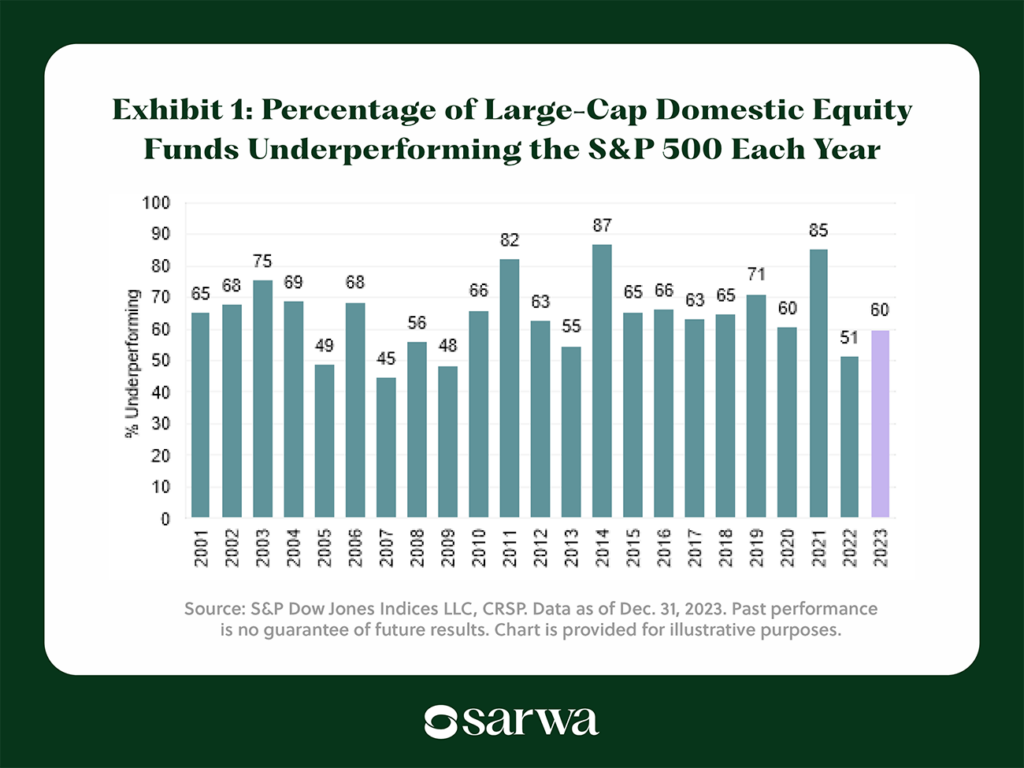
The primary appeal of the S&P 500 lies in the philosophy of passive investing. Instead of trying to “beat the market” by picking individual stocks—a feat that even professional fund managers struggle to achieve consistently—passive investors seek to “be the market.” Historically, the S&P 500 has delivered an average annual return of approximately 10% before inflation over long periods. While past performance does not guarantee future results, the index’s track record of recovery from recessions and market downturns makes it a cornerstone of modern portfolio theory.
Diversification in a Single Purchase
When you invest in an S&P 500 fund, you are instantly diversifying your portfolio across 11 different sectors. You gain exposure to the growth of Big Tech, the stability of Utilities and Consumer Staples, and the cyclical nature of Energy and Financials. This built-in diversification reduces “idiosyncratic risk”—the risk associated with an individual company failing—leaving you primarily with “market risk,” which is the general fluctuation of the economy.
Choosing the Right Investment Vehicle: ETFs vs. Mutual Funds
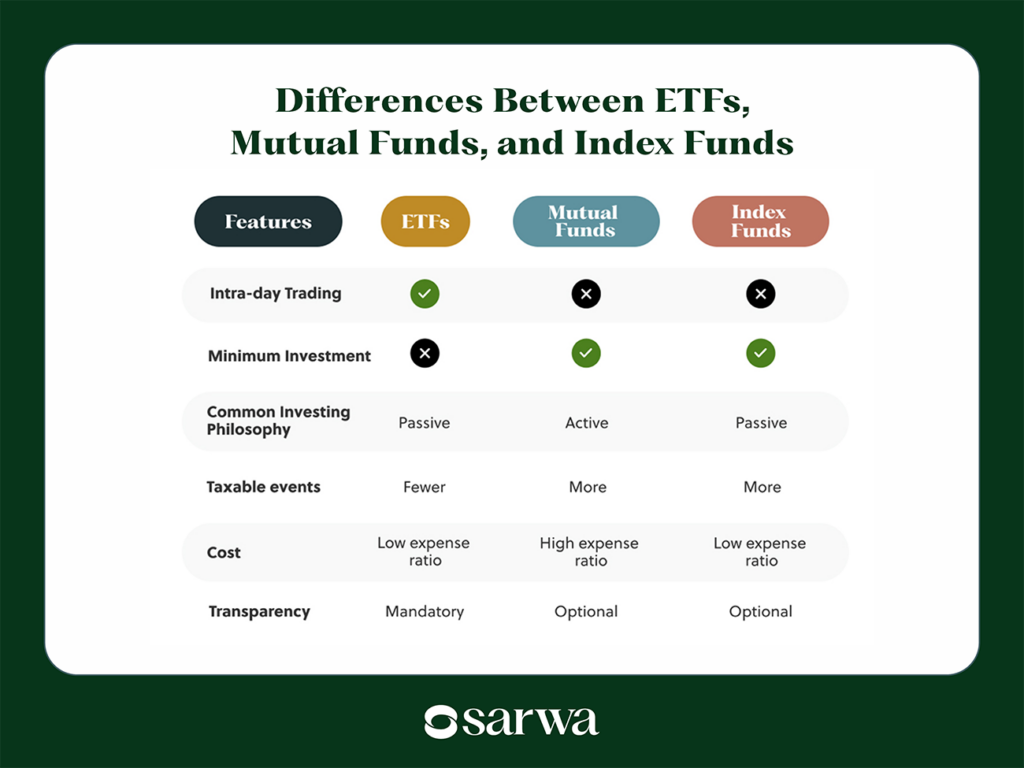
To gain exposure to the S&P 500, you must choose between two primary types of investment vehicles: Exchange-Traded Funds (ETFs) and Index Mutual Funds. While both aim to replicate the index, they function differently in terms of trading mechanics and cost structures.
Exchange-Traded Funds (ETFs)
ETFs are currently the most popular choice for individual investors. They trade on stock exchanges throughout the day, just like individual stocks. This means you can buy or sell shares at any time during market hours at the prevailing market price.
Some of the most prominent S&P 500 ETFs include:
- SPDR S&P 500 ETF Trust (SPY): The oldest and most liquid S&P 500 ETF, often favored by institutional traders.
- iShares Core S&P 500 ETF (IVV): Known for its extremely low expense ratio and tax efficiency.
- Vanguard S&P 500 ETF (VOO): A favorite among long-term retail investors due to Vanguard’s reputation for low costs.
The primary advantage of ETFs is their flexibility and the lack of high investment minimums; you can often start with the price of a single share (or even less with fractional shares).
Index Mutual Funds
Index mutual funds are priced only once a day at the end of the trading session. Unlike ETFs, you cannot “day trade” them. However, they offer a “set it and forget it” advantage. Many brokerages allow you to set up automatic recurring investments into mutual funds, where a specific dollar amount is pulled from your bank account and invested regardless of the share price.
Leading examples include the Vanguard 500 Index Fund (VFIAX) and the Fidelity 500 Index Fund (FXAIX). Note that some mutual funds may require a minimum initial investment (e.g., $3,000 for Vanguard’s Admiral Shares), though many modern brokerages have waived these requirements.
Key Metrics: Expense Ratios and Tracking Error
When comparing funds, the most critical number to look at is the expense ratio. This is the annual fee charged by the fund manager to cover administrative costs. For S&P 500 funds, this should be incredibly low—often between 0.03% and 0.09%. A difference of a few basis points may seem negligible, but over thirty years of compounding, high fees can erode tens of thousands of dollars from your wealth. Additionally, check for “tracking error,” which measures how closely the fund’s returns match the actual S&P 500 index.
Step-by-Step Guide to Buying Your First S&P 500 Fund
Once you have decided on a fund, the process of actually purchasing it is straightforward. Following a disciplined approach ensures that you avoid common pitfalls related to fees and security.
Selecting a Brokerage Platform
To buy an ETF or mutual fund, you need a brokerage account. In the modern financial landscape, you have several options:
- Traditional Discount Brokers: Companies like Fidelity, Charles Schwab, and Vanguard offer robust research tools, excellent customer service, and $0 commissions on stock and ETF trades.
- Fintech Apps: Platforms like Robinhood or Betterment offer streamlined, mobile-first experiences. These are often preferred by younger investors for their simplicity and fractional share capabilities.
- Robo-Advisors: If you prefer a completely hands-off approach, services like Wealthfront will automatically invest your money into a diversified portfolio that heavily features S&P 500 ETFs.
Opening and Funding Your Account
Opening an account typically takes less than ten minutes. You will need to provide your Social Security number, employment information, and link a bank account via ACH transfer.
At this stage, you must also decide on the account type. A standard brokerage account offers the most flexibility, as you can withdraw money at any time. However, if you are investing for retirement, consider an Individual Retirement Account (IRA). Contributions to a Traditional IRA may be tax-deductible, while a Roth IRA allows for tax-free withdrawals in retirement.
Executing the Trade
If you are buying an ETF (like VOO or IVV), you will navigate to the “Trade” section of your brokerage. Enter the ticker symbol, choose the number of shares, and select your “Order Type.”
- Market Order: Buys the shares immediately at the best available current price.
- Limit Order: Allows you to set a maximum price you are willing to pay. If the stock doesn’t hit that price, the trade doesn’t execute. For highly liquid funds like those tracking the S&P 500, a market order is usually sufficient for most retail investors.
Strategies for Long-Term Success
Buying the S&P 500 is only the beginning. The real wealth is generated through discipline and the application of proven investment strategies.
Dollar-Cost Averaging (DCA)
The S&P 500 is volatile. Prices can swing wildly based on inflation data, geopolitical events, or corporate earnings. Trying to “time the market” to buy at the absolute bottom is a losing game for most. Instead, utilize dollar-cost averaging. This involves investing a fixed amount of money at regular intervals (e.g., $500 every month) regardless of the price. When prices are high, your $500 buys fewer shares; when prices are low, your $500 buys more. Over time, this lowers your average cost per share and removes the emotional stress of market timing.
Reinvestment of Dividends
Most companies in the S&P 500 pay dividends—a portion of their profits distributed to shareholders. While you can take this cash, the more powerful move is to use a Dividend Reinvestment Plan (DRIP). Most brokerages allow you to automatically reinvest these dividends back into more shares of the fund. This creates a powerful compounding effect, as you begin to earn dividends on your dividends.
Maintaining Emotional Discipline
The biggest threat to an S&P 500 investor is not a market crash, but their own reaction to it. Historically, the index has experienced “corrections” (10% drops) almost every year and “bear markets” (20% drops) every few years. Successful investors view these downturns as “sales” rather than disasters. Staying the course during the 2008 financial crisis or the 2020 pandemic crash was the difference between financial ruin and significant wealth accumulation.
Managing Risks and Portfolio Diversification
While the S&P 500 is a powerful tool, it is not without risk. Understanding these limitations will help you build a more resilient financial future.
Market Concentration Risk
Because the S&P 500 is market-cap weighted, it has become increasingly concentrated in a few massive technology companies. As of recent years, the top ten companies can account for nearly 30% of the entire index. If the tech sector faces specific regulatory hurdles or a valuation reset, the S&P 500 will feel the impact disproportionately. Investors should be aware that while they own 500 companies, the performance is heavily driven by the “Magnificent Seven.”
Beyond the S&P 500
While the S&P 500 provides excellent exposure to large-cap U.S. companies, it lacks exposure to two other critical areas: Small-cap stocks and International markets. Small-cap stocks (found in the Russell 2000 index) often offer higher growth potential, while international stocks provide a hedge against a declining U.S. dollar or a stagnant domestic economy.
A well-rounded “Money” strategy often involves using the S&P 500 as the core “anchor” of a portfolio while adding smaller allocations to total international stock ETFs (like VXUS) or total bond market ETFs (like BND) to reduce overall volatility.
By understanding the vehicles available—from low-cost ETFs to automated mutual funds—and committing to a strategy of consistency and dividend reinvestment, any individual can harness the growth of the world’s most successful corporations. Buying the S&P 500 is not just a trade; it is a commitment to participating in the long-term upward trajectory of the global economy.
aViewFromTheCave is a participant in the Amazon Services LLC Associates Program, an affiliate advertising program designed to provide a means for sites to earn advertising fees by advertising and linking to Amazon.com. Amazon, the Amazon logo, AmazonSupply, and the AmazonSupply logo are trademarks of Amazon.com, Inc. or its affiliates. As an Amazon Associate we earn affiliate commissions from qualifying purchases.