
Buying a vehicle is often the second-largest financial commitment a person makes, surpassed only by the purchase of a home. Yet, many consumers approach the process with more emotional impulse than financial calculation. In the modern economy, “how to buy an auto” is not merely a question of choosing a color or a model; it is a complex financial maneuver that requires an understanding of credit markets, asset depreciation, and cash flow management.
To navigate this landscape successfully, one must view a car not just as a mode of transportation, but as a depreciating asset that must be financed and maintained with precision. This guide explores the essential economic pillars of car buying to ensure your next vehicle purchase strengthens your financial portfolio rather than straining it.
1. Establishing Your Financial Foundation
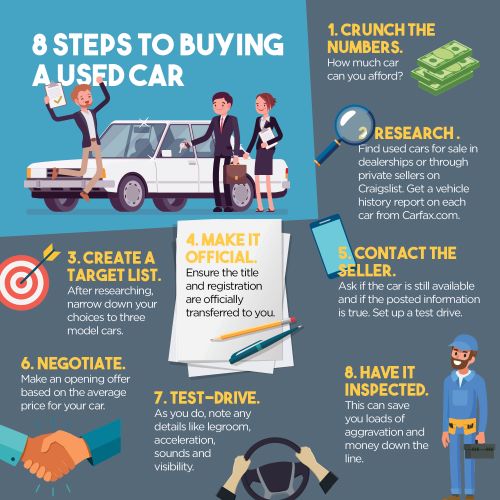
Before stepping onto a dealership lot or browsing online marketplaces, the most critical work happens within your own balance sheet. Determining what you can afford is the difference between a sustainable investment and a debt trap.
Assessing Your Net Worth and Cash Flow
The first step in any major purchase is a candid audit of your current financial health. You must distinguish between what a bank says you can borrow and what your cash flow can actually support. A professional approach involves looking at your debt-to-income ratio (DTI). If your existing debts—mortgage, student loans, and credit cards—already consume a significant portion of your monthly income, adding a high-interest auto loan can jeopardize your liquidity.
The 20/4/10 Rule of Car Financing
Financial experts often recommend the “20/4/10 rule” as a benchmark for responsible car buying. First, you should aim to provide a 20% down payment. This immediate equity helps protect you from becoming “upside down” on the loan (owing more than the car is worth) the moment you drive off the lot. Second, the loan term should be no longer than four years (48 months). While 72- or 84-month loans are increasingly common, they result in significantly higher interest payments over time. Finally, your total monthly transportation costs—including the loan payment, insurance, and fuel—should not exceed 10% of your gross monthly income.
Factoring in the Total Cost of Ownership (TCO)
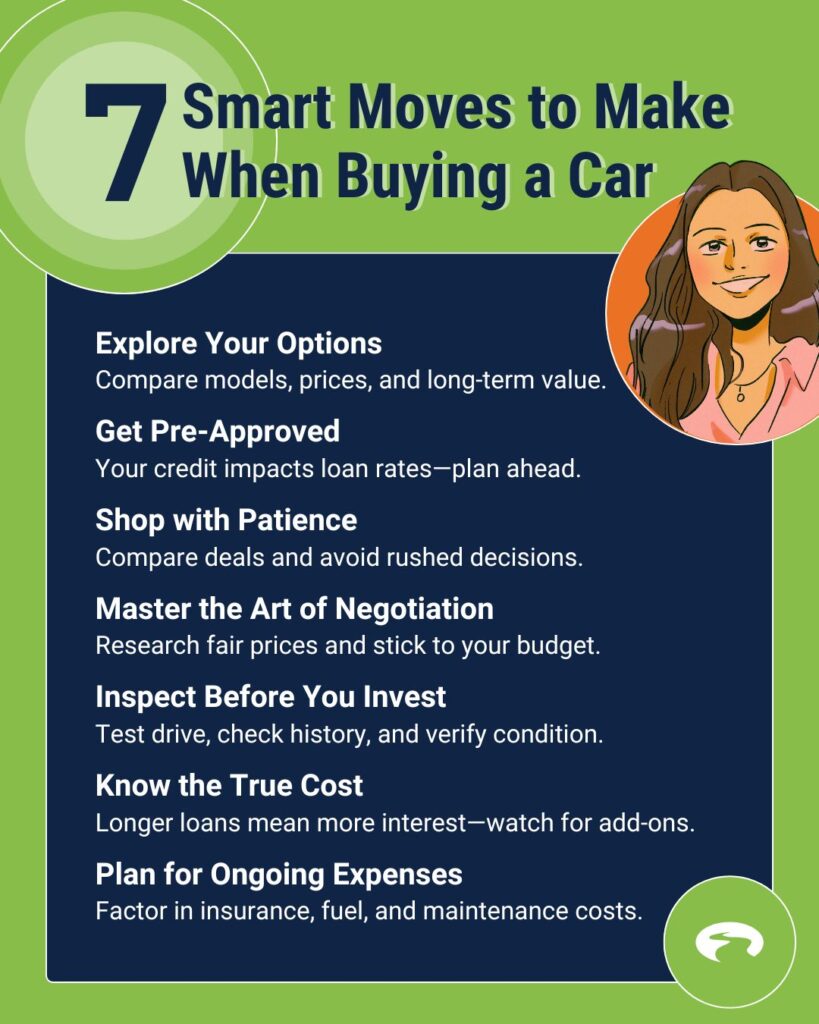
The “sticker price” is a deceptive figure. To buy an auto intelligently, you must calculate the Total Cost of Ownership. This includes recurring expenses such as insurance premiums, which vary wildly depending on the vehicle’s safety rating and theft risk, as well as fuel economy and scheduled maintenance. Furthermore, some luxury brands carry “prestige taxes” in the form of specialized parts and labor costs. Analyzing the TCO over a five-year period allows you to compare two vehicles of the same price and realize that one might actually cost $5,000 more to own in the long run.
2. Navigating the Lending Landscape
Unless you are paying in full with cash—which is the most cost-effective method but can impact your liquidity—financing is the most pivotal part of the transaction. The interest rate you secure will dictate the ultimate price of the vehicle.
Understanding Credit Scores and Interest Rates
Your credit score is your most powerful tool in the negotiation process. In the world of auto finance, a difference of 100 points on your FICO score can translate to thousands of dollars in interest. Before shopping for a car, pull your credit report and rectify any errors. Understanding whether you qualify for “prime” or “subprime” rates allows you to walk into a dealership with a realistic expectation of your borrowing costs, preventing you from being exploited by predatory lending rates.
Pre-approval vs. Dealership Financing
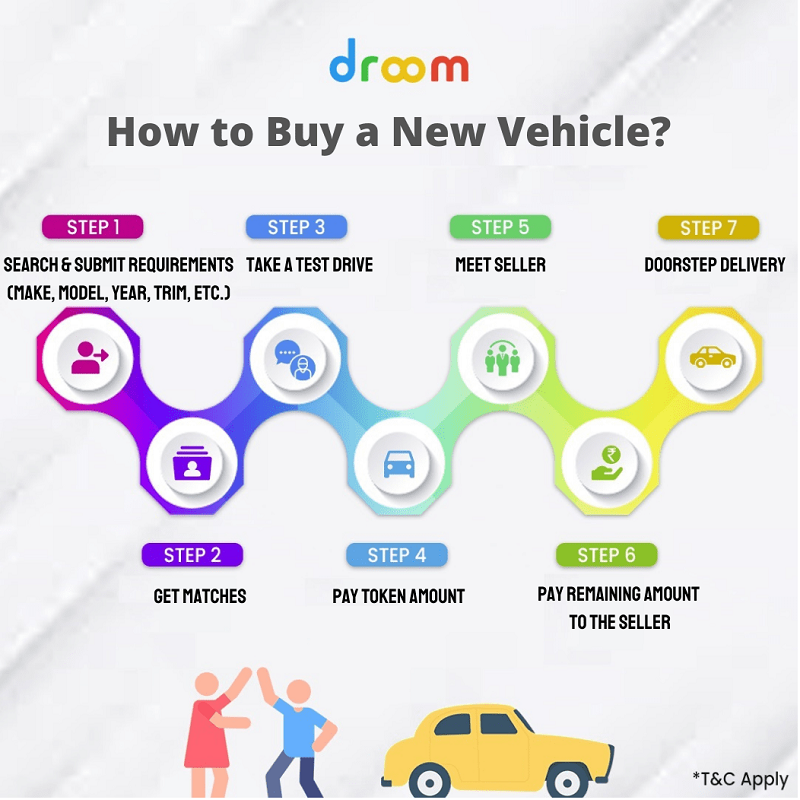
One of the most common financial mistakes buyers make is relying solely on the dealership for financing. Dealerships often act as intermediaries, “selling” you a loan from a bank and adding a percentage point or two as a commission (known as the dealer reserve). To avoid this, seek pre-approval from a credit union or a traditional bank before you shop. Having a pre-approved loan in hand effectively turns you into a “cash buyer” in the eyes of the salesperson and sets a ceiling on the interest rate. If the dealer wants you to use their financing, they must beat the rate you already have.
The Pros and Cons of Leasing vs. Buying
From a pure wealth-building perspective, buying a vehicle and driving it until the end of its mechanical life is almost always superior to leasing. However, leasing can be a strategic move for business owners who can utilize tax deductions or for individuals who prioritize cash flow over equity. When you buy, you are paying for the entire value of the asset; when you lease, you are paying for the vehicle’s depreciation over a fixed term, plus interest and fees. While leasing offers lower monthly payments, it leaves you with zero equity at the end of the term, necessitating a perpetual cycle of payments.
3. Strategic Negotiation and Value Maximization
Once the financial parameters are set, the focus shifts to the transaction itself. Negotiation is not about “winning” a confrontation; it is about reaching a price that reflects the true market value of the asset.
Determining Fair Market Value: MSRP vs. Invoice
In the digital age, there is no excuse for not knowing what a dealer paid for a car. The MSRP (Manufacturer’s Suggested Retail Price) is exactly that—a suggestion. The “Invoice Price” is what the dealer theoretically paid the manufacturer. However, even the invoice price can be inflated by “dealer holdbacks” and incentives. Use valuation tools like Kelley Blue Book or Edmunds to find the “Fair Purchase Price” in your specific zip code. Knowing the spread between the invoice and the MSRP gives you the boundaries for your negotiation.
Mastering the Art of the “Out-the-Door” Price
Salespeople often try to steer the conversation toward the “monthly payment.” This is a classic psychological tactic designed to hide the true cost of the vehicle. By adjusting the loan term or the interest rate, a dealer can make an overpriced car fit your monthly budget while costing you thousands more in the long run. Always negotiate the “Out-the-Door” (OTD) price. This figure includes the vehicle price, taxes, registration fees, and any documentation fees. By focusing on the OTD price, you ensure that no hidden “add-ons” or “protection packages” are being rolled into your debt unnoticed.
Managing the Trade-In Value
If you are trading in your current vehicle, treat it as a completely separate financial transaction. Dealers often use the trade-in to balance the books; they might give you a great price on the new car but offer you thousands less than your trade-in is worth. Research your current car’s wholesale value and obtain a written offer from a third-party buyer (like CarMax or a local competitor) before discussing the trade with the dealer. This gives you a baseline “floor” for your asset’s value.
4. Protecting the Investment and Managing Depreciation
The moment a new car is driven off the lot, it undergoes an immediate and sharp decline in value. Managing this depreciation is essential for maintaining your personal net worth.
Evaluating Extended Warranties and GAP Insurance
The “F&I” (Finance and Insurance) office is where dealerships make a significant portion of their profit. Here, you will be offered extended warranties, tire protection, and GAP insurance. From a financial standpoint, most extended warranties are high-margin products that are rarely utilized; you are often better off “self-insuring” by putting that money into a high-yield savings account for future repairs. However, GAP (Guaranteed Asset Protection) insurance can be a wise investment if you put down a small down payment. It covers the “gap” between what you owe on the loan and what the insurance company will pay if the car is totaled, preventing a catastrophic financial loss.
Resale Value and Depreciation Mitigation
Not all cars depreciate at the same rate. When buying an auto, consider the historical resale value of the brand. Vehicles with high reliability ratings and consistent demand tend to retain their value better, lowering your “cost per mile” over the life of the vehicle. Choosing a neutral color and keeping meticulous maintenance records are not just about car care; they are about protecting the eventual resale value of your asset.
Insurance Premiums and Risk Management
Insurance is a mandatory but variable cost of car ownership. Before finalizing a purchase, call your insurance provider with the Vehicle Identification Number (VIN) to get a quote. A slightly more expensive car with advanced safety features might actually be cheaper to insure than a budget car with poor crash test ratings. Optimizing your deductible—choosing a higher deductible if you have a sufficient emergency fund—can also lower your monthly premiums and improve your overall cash flow.
In conclusion, buying an auto is a multifaceted financial event that requires a disciplined approach. By establishing a rigorous budget, securing competitive financing, negotiating based on data rather than emotion, and accounting for the long-term costs of depreciation and maintenance, you can transform a routine purchase into a savvy financial decision. In the realm of personal finance, the goal is not just to own a car, but to own it in a way that serves your broader wealth-building objectives.
aViewFromTheCave is a participant in the Amazon Services LLC Associates Program, an affiliate advertising program designed to provide a means for sites to earn advertising fees by advertising and linking to Amazon.com. Amazon, the Amazon logo, AmazonSupply, and the AmazonSupply logo are trademarks of Amazon.com, Inc. or its affiliates. As an Amazon Associate we earn affiliate commissions from qualifying purchases.