
A business plan is often described as a roadmap for a company’s journey, but in the realm of high-stakes finance, it is more accurately viewed as a technical blueprint for a financial engine. Whether you are seeking a seed-stage investment, a commercial bank loan, or simply trying to bootstrap a side hustle into a sustainable enterprise, the efficacy of your business plan is measured by its financial logic. Every strategic decision—from product development to marketing—must eventually be translated into numbers. To plan a business is to master the art of capital allocation, risk assessment, and value creation.
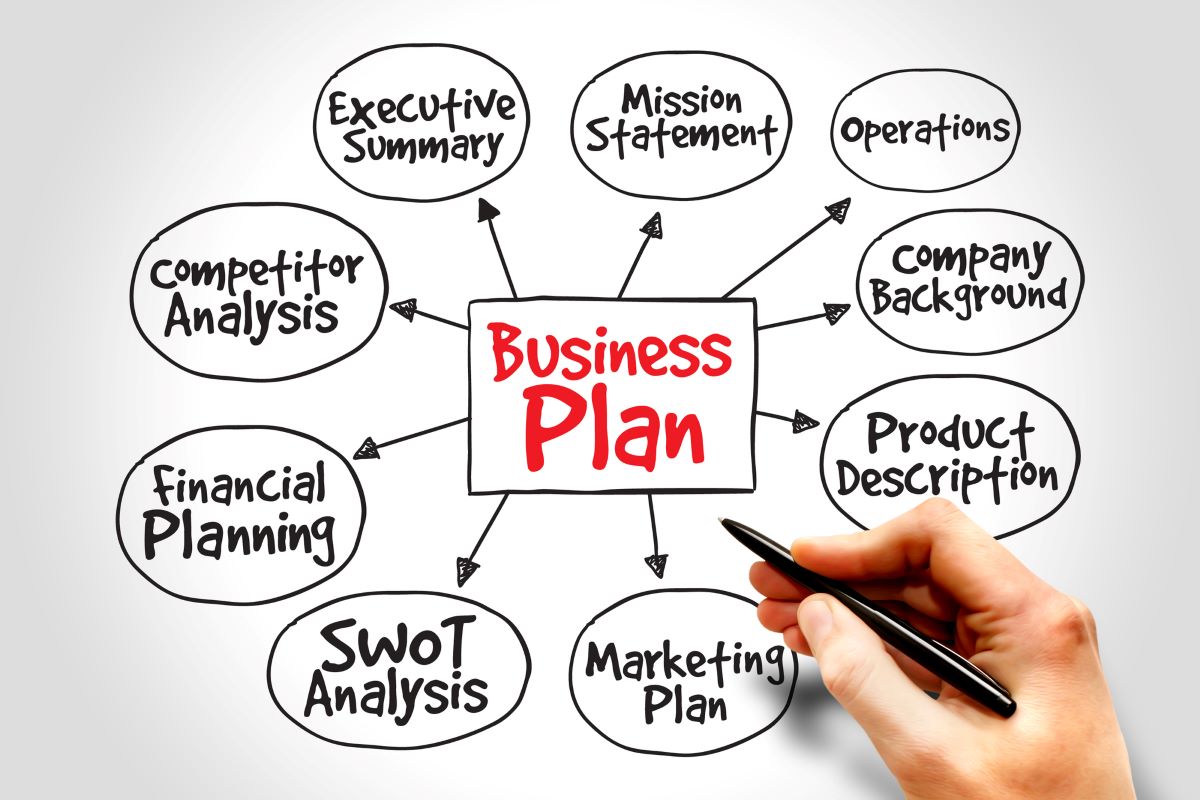
Developing a robust business plan requires moving beyond conceptual ideas and into the granular details of financial modeling. It is the process of proving, on paper, that a venture is not just a good idea, but a viable financial instrument capable of generating a return on investment (ROI). This guide explores the critical financial pillars required to build a business plan that satisfies the scrutiny of investors and provides a sustainable path to profitability.
The Financial Foundation: Why Capital Planning Precedes Operations
The most common pitfall for new entrepreneurs is focusing on the “what” of the business before the “how much.” A business plan rooted in financial reality begins with a comprehensive audit of capital requirements. This foundation dictates the scale of operations and the speed at which the company can realistically grow.
Identifying Startup Costs and Initial Capital Requirements
Before the first sale is ever made, a business incurs costs. These are categorized into capital expenditures (CAPEX) and operating expenses (OPEX). Your business plan must meticulously detail these initial requirements to determine your “starting line.” CAPEX includes long-term assets such as equipment, property, or proprietary software development. OPEX includes the immediate costs of staying open—rent, insurance, legal fees, and initial inventory.
A sophisticated business plan does not just list these costs; it categorizes them by their impact on the company’s liquidity. Understanding the difference between sunk costs and depreciable assets is vital for tax planning and future valuation. Investors look for founders who demonstrate a conservative yet realistic grasp of these numbers, ensuring that the business is not under-capitalized from day one.
The Role of the Executive Summary in Securing Funding
While the executive summary appears at the beginning of the document, it is the financial conclusion of the entire planning process. In a money-centric business plan, the executive summary serves as a “pitch deck in prose.” It must clearly state the funding requirement, the intended use of funds, and the projected financial outcome.
An effective summary highlights the “unit economics”—the profitability of a single unit of sale. If the unit economics are sound, the business is scalable. If they are flawed, no amount of capital will save the enterprise. By leading with the financial strength of the business model, you immediately signal to lenders and investors that you are focused on the bottom line.
Mastering Revenue Projections and Market Feasibility
Revenue is the lifeblood of any business, but it is also the most difficult metric to predict. A professional business plan replaces guesswork with data-driven forecasting. This involves an intersection of market research and financial modeling to create a realistic picture of the company’s earning potential.
Bottom-Up vs. Top-Down Forecasting Models
Financial experts typically utilize two methods for revenue projection: top-down and bottom-up. A top-down approach looks at the total market size (Total Addressable Market, or TAM) and estimates a percentage of market share the business might capture. While useful for understanding the ceiling of a business, it is often criticized by investors for being overly optimistic.
The bottom-up approach is far more rigorous and respected in financial planning. This method starts with the company’s capacity—how many units can be produced, how many sales calls can be made, or how much web traffic can be converted. By multiplying these operational inputs by the average transaction value, you arrive at a revenue figure rooted in reality. A strong business plan utilizes both methods to “triangulate” a realistic revenue target, providing a range of conservative, moderate, and aggressive growth scenarios.
Assessing the Break-Even Point
Every business plan must answer one critical question: When will the company stop losing money? The break-even analysis is a calculation that determines the point at which total revenue equals total expenses. This is a psychological and financial milestone for any entrepreneur.
To calculate this, you must distinguish between fixed costs (which stay the same regardless of sales volume) and variable costs (which rise as you sell more). By understanding your contribution margin—the amount left over from each sale after paying variable costs—you can determine exactly how many units you need to sell to cover your fixed overhead. This number defines the level of risk in the venture; a low break-even point suggests a resilient business, while a high break-even point indicates a high-risk, high-reward scenario.

Operational Finance: Managing Cash Flow and Working Capital
Profit is a theoretical concept found on an income statement, but cash is a physical reality. Many profitable businesses fail because they run out of cash. A business plan that ignores the timing of cash inflows and outflows is incomplete and dangerous.
The Cash Flow Statement: The Lifeblood of the Business Plan
The cash flow statement is the most important financial document for an early-stage business. It tracks the actual movement of money into and out of the business bank account. In many industries, there is a significant lag between making a sale and receiving payment (Accounts Receivable), yet the business must still pay its suppliers and employees (Accounts Payable) in the meantime.
A professional business plan includes a month-by-month cash flow projection for at least the first 12 to 24 months. This allows the entrepreneur to identify “cash crunches”—periods where expenses exceed cash on hand, even if the business is technically profitable. Managing this working capital is the difference between a thriving business and a technical insolvency.
Budgeting for Contingencies and Financial Risk
No business plan survives its first contact with the market without adjustments. Financial resilience is built into the plan through contingency budgeting. This involves setting aside a “burn rate” cushion—extra capital to cover unexpected costs or slower-than-expected revenue growth.
Risk management also involves identifying external financial threats, such as fluctuating interest rates, inflation on raw materials, or shifts in consumer spending. By including a “sensitivity analysis” in your plan, you demonstrate how the business would perform under adverse conditions. This level of financial foresight builds immense trust with institutional lenders and private investors.
Strategic Capital Allocation and Investor Relations
Once the financial model is built, the business plan must address the “Ask.” If you are seeking external money, you must decide what kind of capital is most appropriate for your business structure.
Structuring the Ask: Debt vs. Equity Financing
A business plan should explicitly state whether the company is seeking debt (loans) or equity (selling shares). Each has distinct financial implications. Debt requires regular interest payments and collateral but allows the founder to retain full ownership. Equity provides capital without the burden of repayment but dilutes the founder’s share of future profits and grants investors a say in the company’s direction.
The choice depends on the business’s risk profile and asset base. A real estate venture with tangible assets is well-suited for debt, while a high-growth startup with intangible assets (like intellectual property) is better suited for venture capital equity. The business plan must justify why the chosen path is the most efficient way to lower the “Weighted Average Cost of Capital” (WACC).
Demonstrating ROI and Exit Strategy for Stakeholders
Investors are not just interested in the business; they are interested in their exit. A sophisticated business plan outlines the potential for a “liquidity event.” This could be an Initial Public Offering (IPO), an acquisition by a larger corporation, or a management buyout.
By providing a clear ROI projection, you show investors how their initial capital will grow over a five-to-seven-year horizon. This includes calculating the Internal Rate of Return (IRR) and the Multiple on Invested Capital (MOIC). Even for a small business not looking to sell, defining what “success” looks like in financial terms is essential for maintaining focus and measuring progress.

The Dynamic Financial Plan: Iteration and Long-Term Value Creation
A business plan is not a static document to be filed away once funding is secured. It is a dynamic financial tool that must be updated as market conditions change. The most successful businesses use their plan as a baseline for “Variance Analysis”—comparing actual financial performance against the original projections.
This iterative process allows for agile financial management. If marketing costs are higher than planned, the business plan helps you identify where to cut other expenses to maintain your margins. If revenue exceeds expectations, the plan provides a framework for reinvesting that surplus into the most productive areas of the business.
Ultimately, the goal of business planning is to move from a state of financial uncertainty to one of calculated risk and strategic growth. By mastering the numbers, you gain the clarity needed to lead your organization with confidence, ensuring that every dollar spent is an investment in the long-term value and sustainability of the enterprise. In the world of business, the plan is the bridge between a vision and a fortune.
aViewFromTheCave is a participant in the Amazon Services LLC Associates Program, an affiliate advertising program designed to provide a means for sites to earn advertising fees by advertising and linking to Amazon.com. Amazon, the Amazon logo, AmazonSupply, and the AmazonSupply logo are trademarks of Amazon.com, Inc. or its affiliates. As an Amazon Associate we earn affiliate commissions from qualifying purchases.