
In an era defined by rapid economic shifts and the pursuit of greater personal autonomy, the concept of passive income has transcended a mere buzzword to become a fundamental pillar of financial independence. For many, the traditional model of exchanging time directly for money through a 9-to-5 job represents a ceiling, limiting both earning potential and lifestyle freedom. Passive income offers a powerful alternative: the ability to generate wealth that continues to flow with minimal ongoing effort, freeing up time and resources for other pursuits, whether they be passion projects, family, or early retirement.
This comprehensive guide will demystify passive income, exploring its foundational principles, diverse avenues, strategic implementation, and the mindset required to build sustainable streams of wealth that work for you, rather than the other way around.
The Foundation of Financial Freedom: Understanding Passive Income
Before embarking on the journey to build passive income, it’s crucial to grasp what it truly entails, distinguish it from active income, and appreciate its profound benefits. Often misunderstood as “get rich quick” schemes, true passive income streams are built on a foundation of initial effort, strategic investment, or both, designed to yield returns over time without constant intervention.
Defining Passive Income: More Than Just “Get Rich Quick”
At its core, passive income is money earned regularly from an enterprise in which one is not actively involved. It’s income that accrues while you sleep, travel, or pursue other ventures. This doesn’t mean it requires no effort at all; rather, the significant effort is front-loaded. You might spend countless hours creating a digital product, researching and investing in dividend stocks, or setting up a rental property, but once established, the income generated from these assets requires significantly less ongoing work than an equivalent active income stream.
The distinction lies in the leveraging of assets – be they intellectual property, capital, or physical property – to generate recurring revenue. It’s about building systems that generate wealth for you, rather than being the system yourself.
Active vs. Passive Income: A Crucial Distinction
To fully appreciate passive income, it’s helpful to contrast it with active income:
- Active Income: This is income derived directly from services performed. Examples include a salary from a job, hourly wages, commissions, and income from a freelance gig where you are trading your time directly for money. If you stop working, the income stops. It requires your continuous presence and effort.
- Passive Income: This is income derived from an asset or an enterprise that does not require your continuous presence or direct labor. Once set up, it can generate revenue with minimal upkeep. Examples include rental income, dividends from stocks, royalties from books or music, profits from an automated online business, or interest from investments.
The key differentiator is the degree of ongoing effort. While an active income stream demands your constant attention, a passive stream, once operational, aims to detach income generation from your direct, daily involvement. This detachment is the gateway to genuine financial freedom and time flexibility.
The Allure and Benefits of Passive Income
The appeal of passive income is multi-faceted and extends far beyond merely earning more money. It fundamentally transforms one’s relationship with work and wealth.
- Financial Independence and Security: Passive income streams can create a safety net, reducing reliance on a single active income source. In times of job loss or economic downturns, these streams can provide crucial stability. Ultimately, accumulating enough passive income to cover your living expenses is the definition of financial independence.
- Time Freedom: Perhaps the most coveted benefit, time freedom allows individuals to allocate their hours according to their values and desires, rather than being dictated by a work schedule. This means more time for family, hobbies, personal growth, or even starting new ventures.
- Location Independence: Many passive income models, especially those digital in nature, can be managed from anywhere with an internet connection. This opens up possibilities for travel, relocation, and a truly global lifestyle.
- Wealth Acceleration: By generating income without demanding continuous direct labor, passive streams can run concurrently, allowing individuals to build multiple income sources. This accelerates wealth accumulation and harnesses the power of compounding returns more effectively.
- Legacy Building: Well-structured passive income assets, such as real estate portfolios or robust investment accounts, can be passed down, providing a lasting financial legacy for future generations.
Diverse Avenues to Generate Passive Wealth
The world of passive income is vast and varied, offering opportunities tailored to different skill sets, risk appetites, and capital availability. While each avenue requires initial strategic input, they all share the goal of creating income streams that eventually run independently.
Digital Assets: Leveraging the Online World
The internet has democratized access to passive income, creating numerous opportunities for those willing to invest time in creation and marketing.
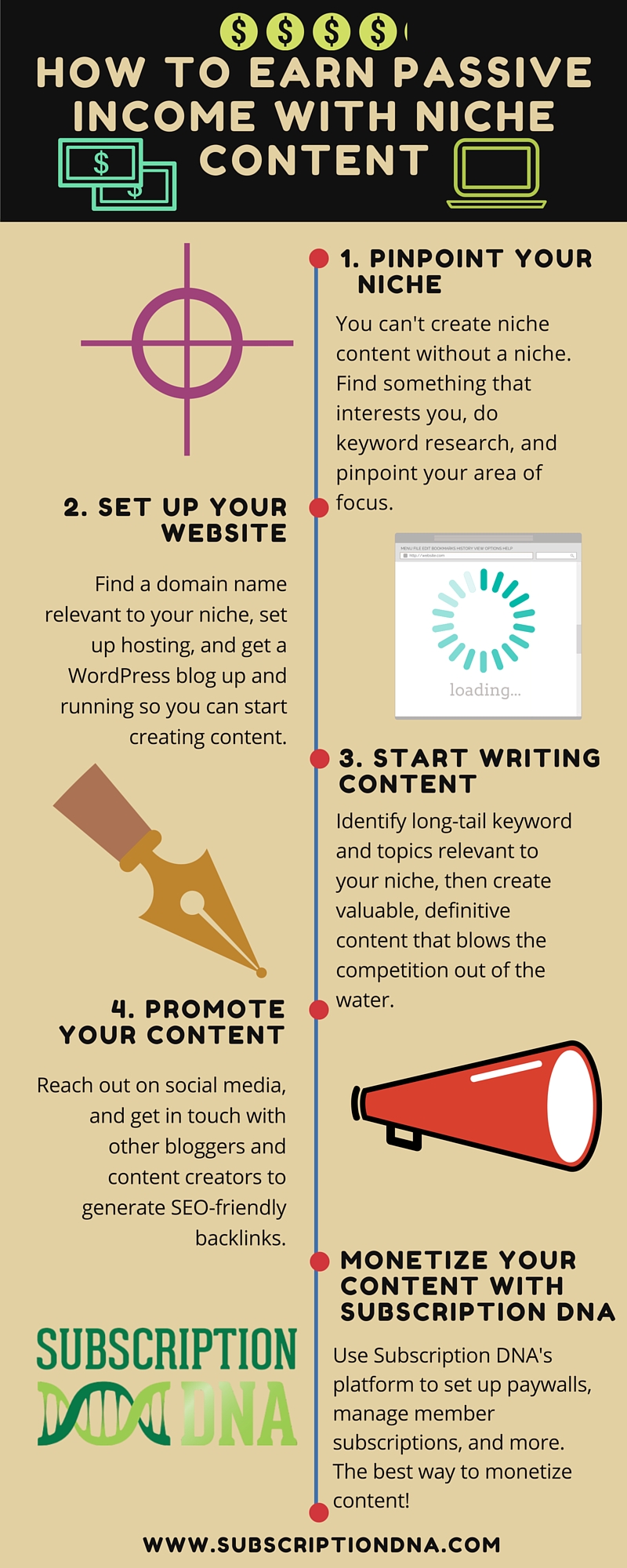
- Affiliate Marketing: This involves promoting other companies’ products or services. When someone makes a purchase through your unique affiliate link, you earn a commission. This can be done through blogging, YouTube reviews, social media, or dedicated niche websites. The initial effort involves building an audience and creating compelling content, after which the links can continue to generate income.
- Digital Products (eBooks, Courses, Stock Photos/Videos): Creating digital content that can be sold repeatedly is a highly scalable passive income model. Once an eBook is written, an online course is filmed, or a collection of stock media is uploaded, these assets can be sold an infinite number of times without requiring additional production effort for each sale. Platforms like Gumroad, Udemy, Etsy, and dedicated marketplaces for stock media facilitate this.
- YouTube Channel/Blogging with Ads & Sponsors: Building an audience around a specific niche on YouTube or a blog can generate passive income through advertising revenue (e.g., Google AdSense), sponsored content (where brands pay to be featured), and selling your own products or services. While content creation is active, older, popular content continues to draw views and generate revenue over time.
Investment Vehicles: Making Your Money Work
Perhaps the most traditional form of passive income, investing involves deploying capital into assets that generate returns.
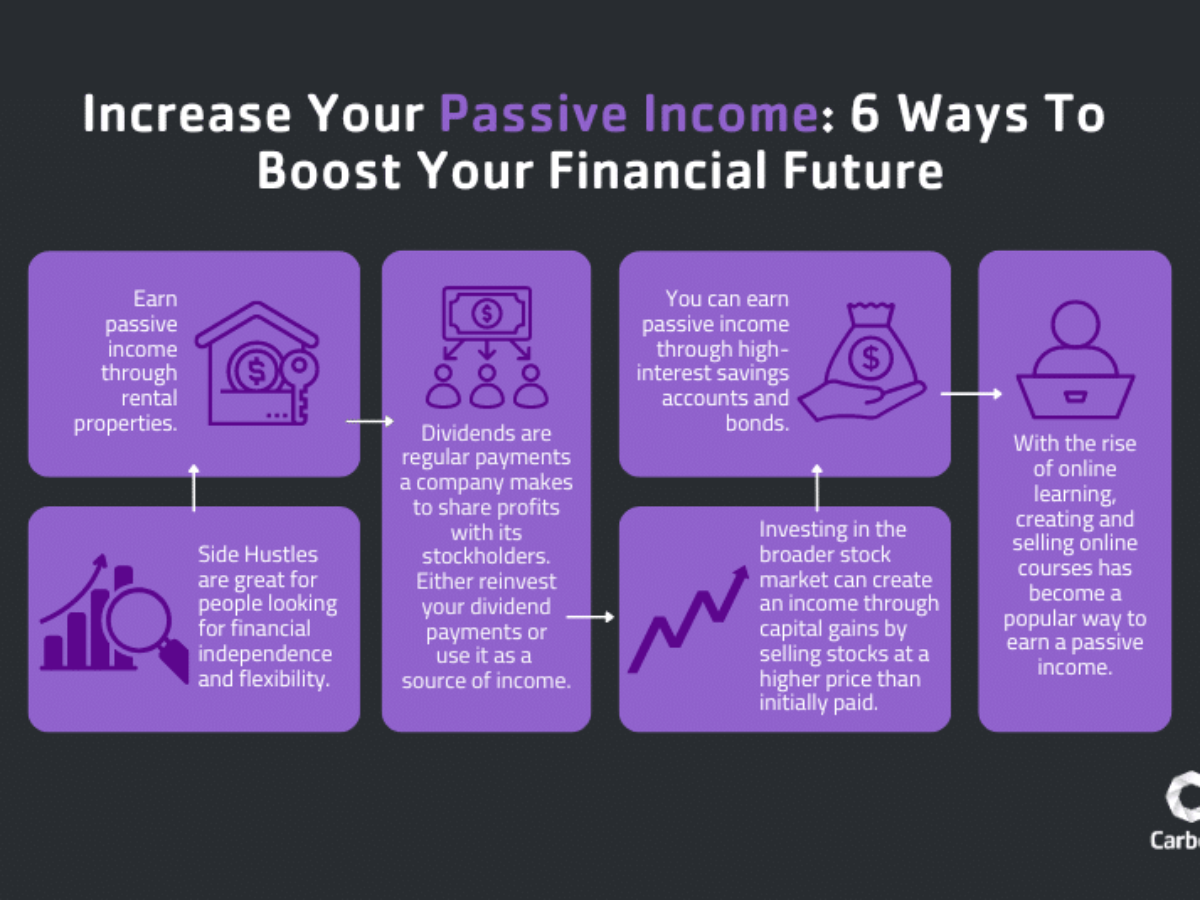
- Dividend Stocks and ETFs: Investing in companies that regularly distribute a portion of their earnings to shareholders (dividends) can create a steady stream of passive income. Dividend Exchange Traded Funds (ETFs) offer diversification by holding a basket of dividend-paying stocks, reducing individual company risk. The income is truly passive, requiring only initial research and ongoing monitoring.
- Real Estate (Rental Properties, REITs): Owning physical rental properties can provide consistent income through rent payments. While it may require initial capital and some management, professional property managers can make this a largely passive endeavor. Alternatively, Real Estate Investment Trusts (REITs) allow investors to purchase shares in companies that own and operate income-producing real estate, providing exposure to the real estate market without the complexities of direct ownership.
- Peer-to-Peer Lending: Platforms connect individual lenders with borrowers, allowing you to earn interest on your money. While there’s a risk of default, diversifying across many small loans can mitigate this, providing a stream of passive interest income.
Business Ventures with Automated Systems
Some businesses, if structured correctly with automation and reliable staff, can evolve into largely passive income generators.
- Vending Machines: Once a vending machine is placed in a high-traffic location and stocked, it can generate sales with minimal ongoing effort beyond restocking and maintenance. The initial investment is in the machines and inventory, followed by finding suitable locations.
- Laundromats: A well-managed laundromat with reliable machines and an attendant (or even completely self-service) can provide consistent cash flow. The key is finding a good location and ensuring robust equipment.
- Self-Storage Units: Investing in or developing self-storage facilities can be highly passive. Once built and rented, the income comes from monthly rental fees, with relatively low overhead and minimal tenant interaction compared to residential properties.
Crafting Your Passive Income Strategy: Steps to Success
Building passive income isn’t a random endeavor; it requires strategic planning, disciplined execution, and a long-term perspective. Success hinges on a thoughtful approach to selecting, launching, and managing your income streams.
Initial Investment: Time, Money, or Both?
Every passive income stream demands an initial investment. This can manifest in three primary ways:
- Time-Intensive, Low Capital: This often applies to digital product creation, blogging, or building an affiliate marketing presence. You invest significant hours upfront in content creation, audience building, and system setup, with relatively little monetary outlay.
- Capital-Intensive, Low Time: Investing in dividend stocks, REITs, or purchasing rental properties typically requires substantial upfront capital. Once the investment is made, the ongoing time commitment can be minimal.
- Both Time and Capital: Some ventures, like starting an automated business or developing a complex online course with professional production, may demand significant investments in both time and money during the initial phase.
Understanding which resource you have in abundance (time or capital) will guide your choice of passive income ventures.
Research and Due Diligence: Avoiding Common Pitfalls
Before committing to any passive income strategy, thorough research is paramount. This includes:
- Market Research: Is there demand for your product or service? What does the competition look like?
- Viability Assessment: Can this venture realistically generate the income you desire? What are the typical profit margins?
- Risk Analysis: What are the potential downsides? How can you mitigate risks such as market fluctuations, lack of interest, or operational failures?
- Legal and Tax Implications: Understand the legal requirements for your venture and how income will be taxed. This often requires consulting with financial and legal professionals.
Skipping due diligence is a common mistake that leads to wasted resources and disillusionment.
Building and Automating: The Path to True Passivity
The “passive” aspect is achieved through building robust systems and leveraging automation.
- Systemization: Document every step of your process. How will customers find your product? How will sales be processed? How will support inquiries be handled?
- Automation Tools: Utilize technology to automate repetitive tasks. This could include email marketing sequences, social media scheduling, payment processing, or even chatbots for customer service.
- Delegation: As your passive income stream grows, identify tasks that can be outsourced to virtual assistants, freelancers, or automated services. This frees up your time to focus on strategic growth or to launch new ventures.
The goal is to create a well-oiled machine that operates efficiently with minimal intervention from you.
Diversification: Spreading Risk and Maximizing Opportunity
Putting all your eggs in one basket is a risky strategy. Diversifying your passive income streams offers several critical advantages:
- Risk Mitigation: If one income stream falters due to market changes or unforeseen circumstances, others can continue to generate revenue, providing a buffer.
- Enhanced Stability: Multiple streams often mean a more consistent overall income, as different assets may perform well under varying economic conditions.
- Increased Growth Potential: By exploring diverse avenues, you increase your chances of identifying high-growth opportunities and scaling your overall wealth faster.
Aim to build a portfolio of passive income sources, combining different types of assets and strategies to create a resilient and robust financial engine.
Overcoming Challenges and Scaling Your Passive Income Streams
While the promise of passive income is alluring, the journey is rarely without its hurdles. Understanding these challenges and adopting strategies for continuous growth and adaptation are crucial for long-term success.
The Myth of “Zero Effort”: Initial Setup and Maintenance
One of the biggest misconceptions about passive income is that it requires absolutely no effort. As previously discussed, a significant upfront investment of time, money, or both is almost always necessary to establish a truly passive stream. Furthermore, even the most automated systems require some level of ongoing maintenance:
- Monitoring Performance: Regularly checking sales figures, website analytics, investment returns, and market trends.
- Updates and Improvements: Digital products may need updates, rental properties require maintenance, and investment portfolios need rebalancing.
- Troubleshooting: Systems can break, platforms can change, and unforeseen issues can arise, requiring your intervention.
Embracing the reality that “minimal effort” still means “some effort” will set realistic expectations and prevent burnout or abandonment.
Reinvesting for Growth: Compounding Your Returns
One of the most powerful strategies for scaling passive income is to reinvest a portion of your earnings back into your ventures.
- Compounding Dividends: Reinvesting dividends from stocks to buy more shares, which then generate more dividends, creates an exponential growth effect.
- Expanding Digital Assets: Using profits from one eBook to fund the creation of another, or to invest in advertising for your online course.
- Acquiring More Assets: Using rental income to save for a down payment on a second property, or to upgrade existing ones.
This compounding effect is the engine of accelerated wealth creation, turning modest beginnings into substantial income streams over time.
Monitoring and Adapting: Staying Ahead of the Curve
The world is constantly evolving, and so too must your passive income strategies.
- Market Changes: Consumer preferences shift, new technologies emerge, and economic conditions fluctuate. Regularly assess if your passive income streams remain relevant and profitable.
- Platform Updates: Online platforms frequently change their algorithms, policies, and features, which can impact visibility and revenue.
- Competitive Landscape: New competitors may emerge, requiring you to innovate or differentiate your offerings.
Proactive monitoring and a willingness to adapt, pivot, or even sunset underperforming assets are vital for sustained success. This might involve learning new skills, exploring new niches, or refining your existing strategies.

Tax Implications and Financial Planning
Generating passive income brings with it tax responsibilities that can vary significantly based on the type of income and your jurisdiction.
- Understanding Tax Laws: Income from rentals, dividends, capital gains, and business profits are all subject to different tax treatments. Consulting with a qualified tax professional is essential to ensure compliance and optimize your tax strategy.
- Record Keeping: Meticulous record-keeping of all income and expenses is crucial for accurate tax reporting and identifying deductible expenses.
- Long-Term Financial Planning: Integrate your passive income streams into your overall financial plan. Consider how they contribute to your retirement goals, estate planning, and wealth transfer strategies. This holistic approach ensures that your passive income endeavors align with your broader financial objectives.
Building passive income is not merely about accumulating money; it’s about constructing a life of greater freedom, security, and purpose. It demands foresight, persistence, and an entrepreneurial spirit, but the rewards of creating financial systems that work for you are immeasurable. By understanding the principles, exploring the diverse opportunities, and committing to the strategic effort required, anyone can embark on the path to genuine financial independence through passive income.
aViewFromTheCave is a participant in the Amazon Services LLC Associates Program, an affiliate advertising program designed to provide a means for sites to earn advertising fees by advertising and linking to Amazon.com. Amazon, the Amazon logo, AmazonSupply, and the AmazonSupply logo are trademarks of Amazon.com, Inc. or its affiliates. As an Amazon Associate we earn affiliate commissions from qualifying purchases.