
A budget sheet is more than just a collection of rows and columns; it is a visual representation of your priorities, your discipline, and your future. In the realm of personal finance, visibility is the precursor to control. Without a structured way to track where every dollar originates and where it eventually settles, individual wealth building remains a game of chance rather than a calculated strategy.
Creating an effective budget sheet requires a shift in perspective. It is not a restrictive tool designed to prevent spending, but a liberating framework that ensures your money is working toward your specific goals. Whether you are aiming to eliminate debt, save for a primary residence, or build a robust investment portfolio, the budget sheet serves as your primary financial dashboard.
The Anatomy of a High-Performance Budget Sheet
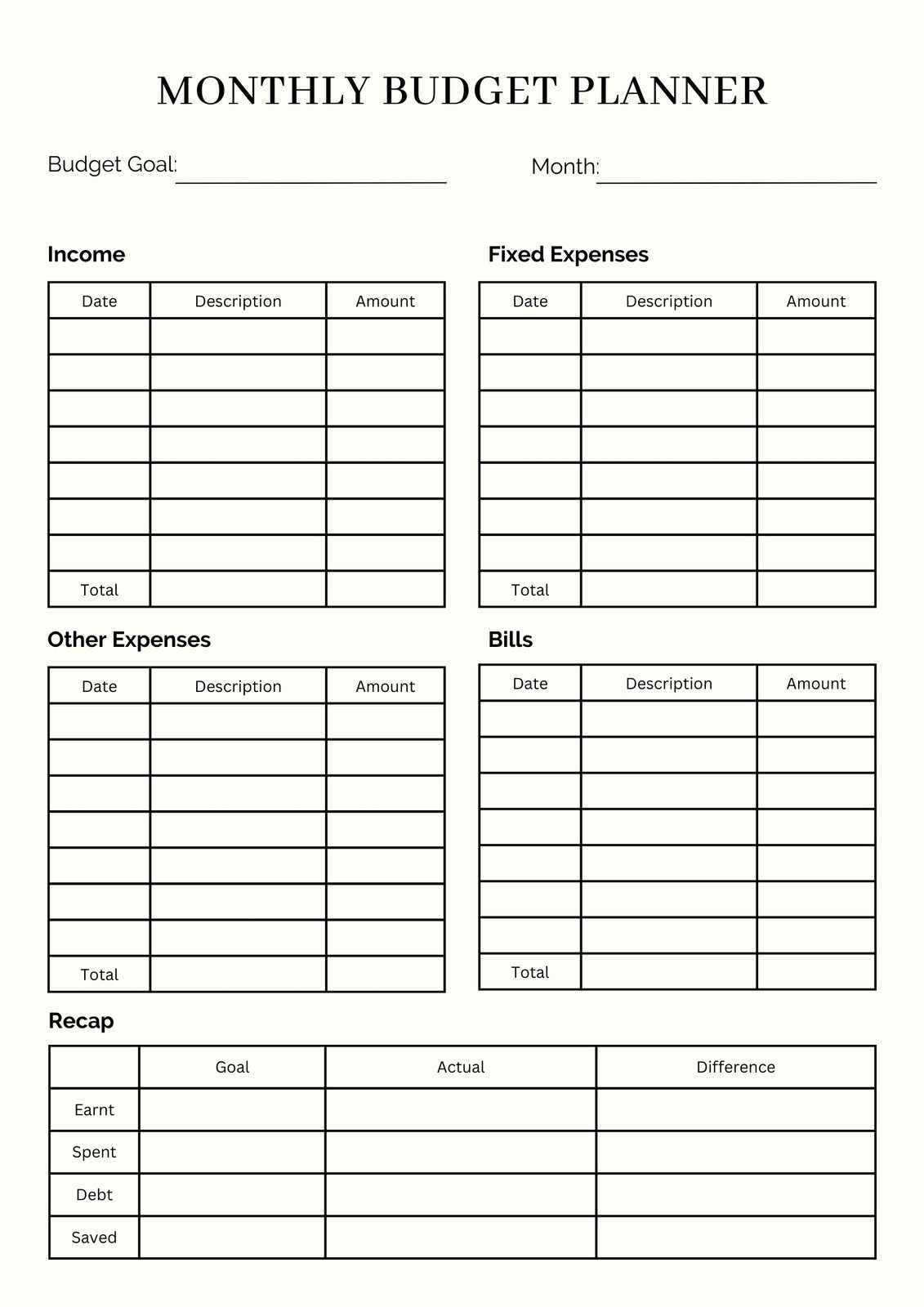
To build a budget sheet that actually drives financial progress, one must understand its core components. A high-performance sheet is divided into logical segments that allow for quick analysis and long-term planning.
Tracking Income Sources
Most people start their budget by listing their primary salary, but a truly comprehensive sheet accounts for every inflow of capital. This includes net pay from a full-time job, side hustle earnings, dividend payouts, interest from high-yield savings accounts, and tax refunds. By tracking “Net Income” (the amount that actually hits your bank account) rather than “Gross Income,” you ensure that your planning is based on liquid reality rather than theoretical numbers.
Categorizing Fixed vs. Variable Expenses
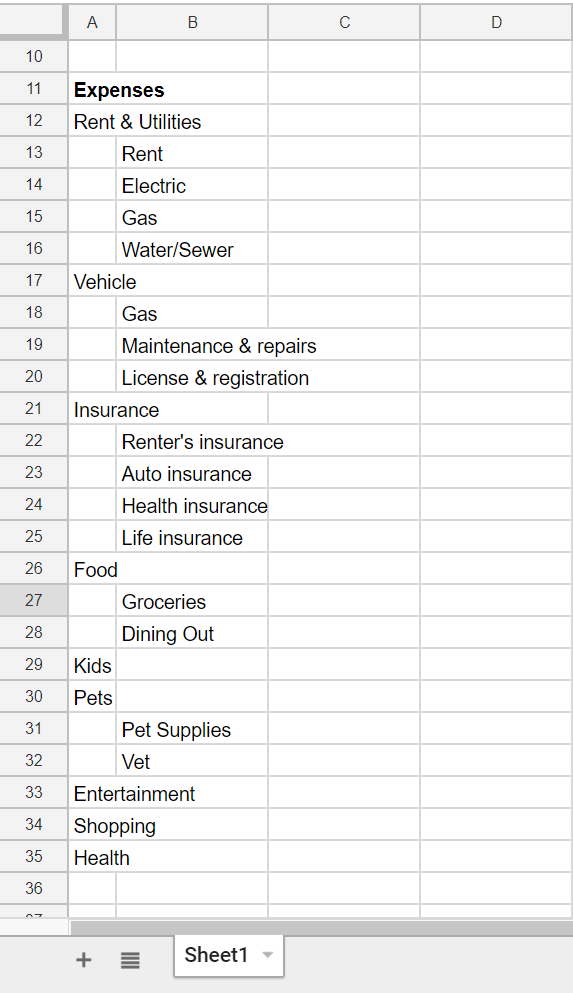
A common mistake in financial tracking is treating all expenses as equal. To gain control, you must distinguish between fixed and variable costs.
-
Fixed Expenses: These are non-negotiable costs that remain relatively stable month-to-month, such as rent or mortgage payments, insurance premiums, and subscription services.
-
Variable Expenses: these are the fluid costs that you have the most power to influence, including groceries, dining out, entertainment, and fuel.
By separating these, you can quickly identify which “levers” to pull when you need to increase your savings rate. If your fixed costs are too high—exceeding 50% of your take-home pay—it is a signal that you may be “house poor” or over-leveraged, necessitating a broader lifestyle adjustment.
Allocating for Savings and Debt Repayment
The final essential section of the anatomy is the allocation for the future. This is where you record contributions to retirement accounts, emergency funds, and debt overpayments. A budget sheet that only tracks spending is merely a diary; a budget sheet that tracks savings and debt reduction is a blueprint for wealth.
Choosing the Right Budgeting Methodology
Before inputting numbers into your sheet, you must decide on a methodology. The “how” of your budget sheet depends entirely on your financial personality and your current stage of life.
The 50/30/20 Rule
Popularized as a standard for middle-class financial health, this rule suggests allocating 50% of your income to “Needs,” 30% to “Wants,” and 20% to “Savings and Debt Repayment.” This is an excellent starting point for those who find granular tracking overwhelming. In your budget sheet, you would create three main headers and ensure the totals at the bottom of each column adhere to these percentages.

Zero-Based Budgeting
For those who want absolute control, zero-based budgeting is the gold standard. The philosophy is simple: Income minus Expenses equals Zero. This does not mean you have no money left in your bank account; it means that every single dollar is assigned a specific job—whether that job is “buying groceries” or “investing in an S&P 500 index fund.” A zero-based budget sheet requires a more detailed breakdown but offers the highest level of accountability.
The Pay-Yourself-First Model
This is a “top-down” approach. In this model, your budget sheet prioritizes the savings and investment column. As soon as income is recorded, the first deduction is to your investment accounts or high-yield savings. Whatever remains is what you are permitted to spend on lifestyle. This methodology is particularly effective for high-earners who struggle with “lifestyle creep.”
Step-by-Step: Building Your Budget Sheet from Scratch
Building the sheet is a process of data gathering and honest assessment. It is often a sobering experience, but it is the only way to establish a baseline for growth.
Step 1: Gathering Historical Data
You cannot project the future without understanding the past. Begin by reviewing the last three months of bank statements and credit card bills. Many people are surprised to find they spend significantly more on “small” items—like coffee, app subscriptions, or convenience fees—than they realized. Take the average of these three months to create your initial “Estimated Spending” column.
Step 2: Defining Your Financial Timeframe
While a monthly budget is the standard, it is often beneficial to have a secondary “Annual View” tab. This allows you to account for “irregular expenses” that can ruin a monthly budget if not planned for. Think of annual car registration, holiday gifts, or quarterly insurance premiums. By dividing these annual costs by 12, you can create a monthly “sinking fund” line item in your main sheet.
Step 3: Setting Up Formulas for Automation
A budget sheet should not be a manual burden. Use basic spreadsheet formulas to automate the math.
-
SUM formulas should automatically calculate total income and total expenses.
-
Percentage formulas should show you what portion of your income is going toward housing or debt.
-
Conditional formatting can be used to highlight cells in red when you exceed your budgeted amount in a specific category, providing an immediate visual warning.
Advanced Strategies for Financial Optimization
Once the basic structure is in place and you have tracked your finances for a few months, you can move from basic tracking to advanced optimization.
Analyzing Variance and Spending Trends
The most valuable part of a budget sheet is the “Variance” column—the difference between what you planned to spend and what you actually spent. If you consistently overspend in the “Entertainment” category by $200, you have two choices: increase the budget for that category (and decrease it elsewhere) or change your behavior. Consistent variance analysis turns the budget sheet into a behavioral modification tool.
Preparing for Sinking Funds and Emergencies
A sophisticated budget sheet tracks more than just the current month’s cash flow; it tracks the growth of specific “envelopes” or sinking funds. By creating a section for “Future Obligations,” you can watch your car repair fund or vacation fund grow month by month. This prevents the “financial shock” that often leads people to rely on high-interest credit cards when unexpected expenses arise.
Scaling Your Budget Sheet for Long-Term Wealth
As your financial literacy grows, your budget sheet should evolve into a “Net Worth Tracker.” This involves adding a separate tab that lists all Assets (cash, brokerage accounts, real estate, retirement funds) and all Liabilities (student loans, mortgages, credit card debt). By linking your monthly budget surplus to your asset column, you can see exactly how a disciplined month of spending contributes to the growth of your overall net worth.
The ultimate goal of a budget sheet is to make itself obsolete through the cultivation of good habits—but even the most wealthy investors continue to use them. In a world of rising inflation and economic volatility, the ability to manage your capital with precision is the ultimate competitive advantage. A well-maintained budget sheet provides the clarity needed to make bold moves, the security to weather downturns, and the roadmap to eventual financial independence. Success in personal finance is rarely about the size of the shovel (the income); it is almost always about the quality of the blueprint (the budget).
aViewFromTheCave is a participant in the Amazon Services LLC Associates Program, an affiliate advertising program designed to provide a means for sites to earn advertising fees by advertising and linking to Amazon.com. Amazon, the Amazon logo, AmazonSupply, and the AmazonSupply logo are trademarks of Amazon.com, Inc. or its affiliates. As an Amazon Associate we earn affiliate commissions from qualifying purchases.