
The landscape of personal finance is significantly influenced by the tools one chooses to manage cash flow, earn rewards, and build credit history. Among the most prestigious and versatile options available to consumers today are the credit products offered by JPMorgan Chase & Co. Known for their robust rewards programs—specifically the Ultimate Rewards ecosystem—Chase credit cards are often the cornerstone of a sophisticated financial strategy. However, the application process is more than a simple form; it requires a strategic understanding of banking regulations, credit health, and product alignment. This guide explores the intricate process of applying for a Chase credit card, ensuring you are positioned for approval and long-term financial success.
Understanding Your Financial Profile and the Chase “5/24” Rule
Before initiating an application, it is imperative to conduct an internal audit of your financial standing. Chase is known for having some of the most stringent approval criteria in the industry, and a blind application can result in a hard inquiry on your credit report without a successful outcome.
Assessing Your Credit Score and History
Chase typically targets applicants in the “Good” to “Excellent” credit range. While specific requirements vary by card, a FICO score of 690 or higher is generally recommended for their entry-level rewards cards like the Chase Freedom Flex or Freedom Unlimited. For premium products such as the Chase Sapphire Reserve, a score of 720 or higher is often the baseline.
Beyond the numerical score, the depth of your credit history matters. Chase often prefers to see at least one year of individual credit history before approving a primary account holder. If you are a student or someone new to credit, starting with a Chase Freedom Rise or establishing a banking relationship through a Chase checking account can improve your internal standing with the institution.
Navigating the “5/24” Rule
Perhaps the most critical piece of “insider” knowledge in the world of personal finance is the Chase 5/24 rule. While not an officially published policy, it is a well-documented algorithm used by Chase to prevent “churning” (the practice of opening cards solely for sign-up bonuses).
The rule dictates that if you have opened five or more personal credit cards from any issuer in the last 24 months, your application for a Chase card will almost certainly be denied. This includes being added as an authorized user on someone else’s account in some instances. Before applying, review your credit report to count how many new accounts have been opened in the two-year window. If you are at 5/24 or higher, the most prudent financial move is to wait until a slot opens before submitting your application.
Selecting the Right Card for Your Economic Goals
Chase offers a diverse portfolio of cards tailored to different spending habits and financial objectives. Applying for the “wrong” card—one that doesn’t align with your spending or one for which you are overqualified/underqualified—can lead to missed opportunities for value.
Chase Freedom Series for Daily Spending
For those looking to maximize cash back on everyday purchases, the Freedom series is the primary choice. The Chase Freedom Unlimited offers a flat-rate earning structure, making it an ideal “catch-all” card for expenses that don’t fall into specific categories. Conversely, the Chase Freedom Flex utilizes rotating 5% quarterly categories, requiring more active management but offering higher yield potential. Both cards typically feature no annual fee, making them low-risk entries into the Chase ecosystem.
Chase Sapphire for Travel and Lifestyle
The Sapphire suite is designed for consumers who prioritize travel and dining. The Sapphire Preferred is widely considered one of the best mid-tier travel cards, offering a significant sign-up bonus and the ability to transfer points to airline and hotel partners at a 1:1 ratio. The Sapphire Reserve is the “prestige” tier, carrying a higher annual fee but offering premium benefits such as lounge access, a $300 annual travel credit, and higher redemption values. Choosing between these requires a cost-benefit analysis of your annual travel frequency versus the fee.
Chase Ink for Business Owners
If you are an entrepreneur, freelancer, or small business owner, the Chase Ink line offers some of the highest rewards rates available. The Ink Business Cash and Ink Business Unlimited are excellent for no-annual-fee business management, while the Ink Business Preferred is the powerhouse for those with significant spend in shipping, advertising, and travel. Applying for a business card requires different documentation, such as an Employer Identification Number (EIN) or, for sole proprietors, a Social Security Number (SSN).
The Step-by-Step Application Process
Once you have identified the appropriate card and verified that you are within the 5/24 limits, the actual application process is relatively straightforward but requires precision.
Gathering Necessary Documentation
To ensure a smooth application, have the following information ready:
-
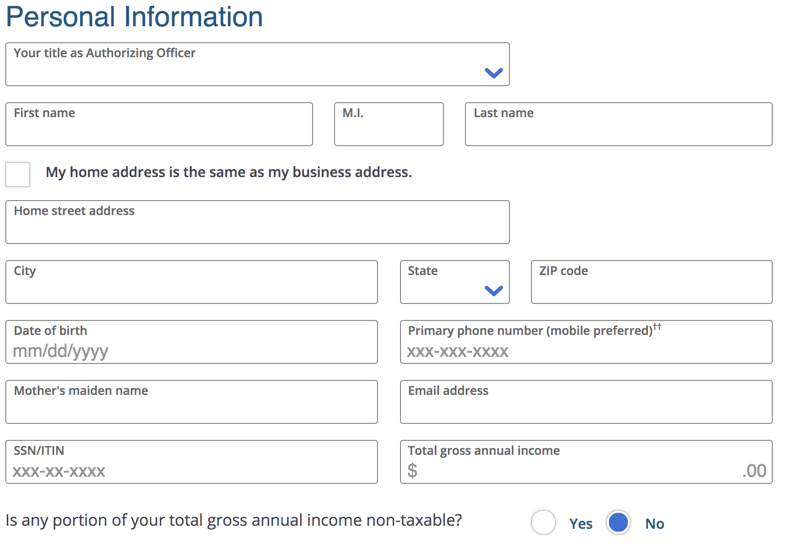
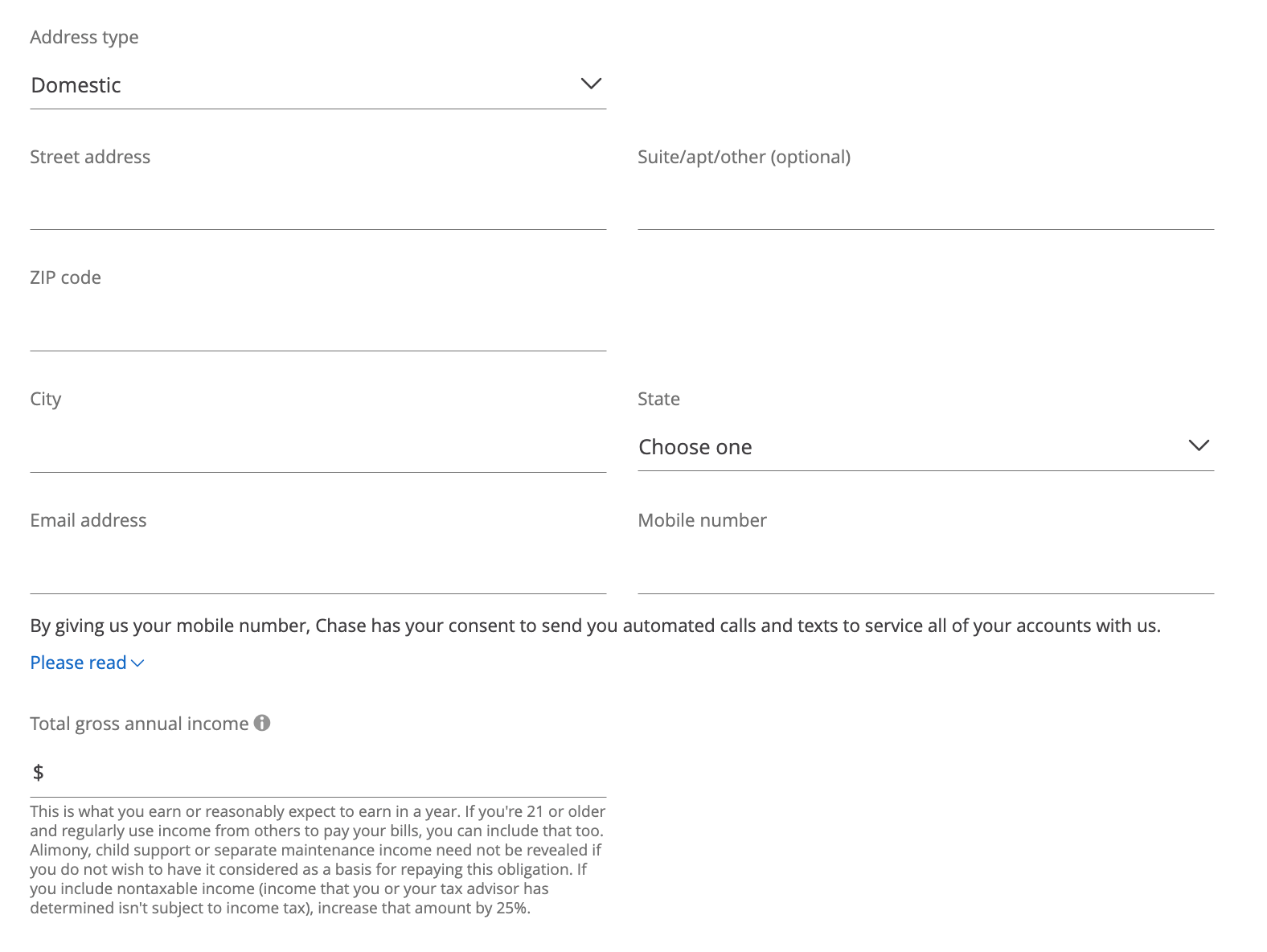
Personal Identification: Legal name, Social Security Number, and date of birth.
-
Contact Information: Physical address (Chase typically does not accept P.O. boxes for primary addresses), email, and phone number.
-
Financial Data: Total annual gross income. It is important to note that for applicants 21 and older, you may include “accessible income,” which includes income from a spouse or partner that is used to pay shared expenses.
-
Employment Status: Current employer and position.
Completing the Online Application
Applying online is the most efficient method and often results in an instant decision. Navigate to the specific card page on the Chase website. Ensure you are applying through a secure connection to protect your sensitive data.
As you fill out the form, double-check for typos. Errors in a Social Security Number or address can trigger a fraud alert, delaying your application or leading to an automatic denial that requires manual intervention to fix. When asked for your “Total Annual Income,” be honest but comprehensive. Under-reporting your income can lead to a lower credit limit than you deserve, while over-reporting can be considered bank fraud.
In-Branch Applications
For those who prefer a personal touch or have a complex financial situation, applying at a local Chase branch is an alternative. Sometimes, branch-exclusive offers are available that provide higher sign-up bonuses than those found online. Additionally, a relationship manager can occasionally provide context to an underwriter if the application isn’t an immediate “yes.”
Post-Application Strategies and Reconsideration
After submitting your application, you will receive one of three outcomes: an instant approval, a denial, or a “pending” status.
Dealing with a “Pending” Status
A “pending” status (often seen as “We’ll let you know our decision in 7-10 days” or “30 days”) does not mean you have been denied. It usually means the system needs to verify a piece of information or that your application has been flagged for manual review by an underwriter.
During this period, avoid opening other lines of credit. You can check your status by calling the automated Chase status line. If the message says “30 days,” it is generally a positive sign. If it says “7-10 days,” it often points toward a denial or a request for more information (like proof of address).
Utilizing the Reconsideration Line
If your application is denied, it is not necessarily the end of the road. Chase has a “Reconsideration Line” where you can speak directly with a credit analyst. This is a unique opportunity in the banking world to plead your case.
When calling the reconsideration line:
-
Be Professional: Treat the analyst with respect.
-
Have a Reason: Explain why you want the card specifically (e.g., “I am planning a trip and want to use the Sapphire’s travel protections”).
-
Offer Solutions: If the denial was due to too much credit already extended by Chase, offer to move a portion of your credit limit from an existing Chase card to the new one. This reduces the bank’s risk while still allowing you to open the new account.
Managing Your New Line of Credit Responsibly
Securing the card is only the beginning of the journey. To maximize the financial benefit of a Chase card, you must manage it with a focus on long-term credit health and reward optimization.
Meeting the Minimum Spend Requirement
Most Chase cards come with a “Sign-up Bonus” (SUB) that requires you to spend a certain amount within the first three months. This is often where the most significant value lies. However, never spend money you don’t have just to hit a bonus. Use the card for existing expenses like groceries, utilities, and insurance.
Understanding the Ultimate Rewards Ecosystem
If you hold multiple Chase cards, you can “pool” your points. For example, points earned on the Chase Freedom Flex can be moved to a Chase Sapphire Preferred account, where they become more valuable when redeemed for travel. This “Trifecta” strategy—using three different Chase cards for their specific category bonuses and consolidating the points—is a hallmark of expert personal finance management.

Maintaining Financial Discipline
A credit card is a tool, but it can become a liability if not handled correctly. Always pay your balance in full and on time. Chase’s interest rates can be high, and carrying a balance will quickly negate any rewards or cash back you have earned. Set up autopay for at least the minimum amount to ensure you never miss a due date, which could damage your credit score and forfeit your earned points.
By following this strategic approach—checking your credit health, respecting the 5/24 rule, choosing the right product, and utilizing the reconsideration line if necessary—you can successfully navigate the Chase application process and integrate these powerful financial tools into your personal wealth-building strategy.
aViewFromTheCave is a participant in the Amazon Services LLC Associates Program, an affiliate advertising program designed to provide a means for sites to earn advertising fees by advertising and linking to Amazon.com. Amazon, the Amazon logo, AmazonSupply, and the AmazonSupply logo are trademarks of Amazon.com, Inc. or its affiliates. As an Amazon Associate we earn affiliate commissions from qualifying purchases.