
In today’s fast-paced economy, the ability to accept credit card payments is no longer a luxury but a fundamental necessity for businesses of all sizes. From burgeoning startups to established enterprises, facilitating credit card transactions streamlines operations, broadens customer reach, and significantly impacts a company’s financial health and growth trajectory. This comprehensive guide will demystify the process, exploring the financial tools, cost considerations, and strategic advantages inherent in integrating credit card acceptance into your business model. For any business looking to thrive in the modern marketplace, understanding the ‘how’ and ‘why’ of credit card payments is a critical step towards sustained financial success and operational efficiency.

The Imperative of Credit Card Acceptance in Modern Business
In an increasingly cashless society, businesses that fail to offer credit card payment options risk alienating a significant portion of their potential customer base. The convenience and security offered by credit cards have made them the preferred payment method for millions worldwide, influencing everything from daily coffee purchases to significant investment decisions.
Why Your Business Needs to Accept Credit Cards
The reasons for embracing credit card payments extend far beyond mere convenience; they are deeply rooted in financial strategy and customer retention. Firstly, accepting credit cards can dramatically increase sales volume and average transaction value. Customers are often more willing to make impulse purchases or spend more when they aren’t limited by the cash in their wallet. Secondly, it enhances professionalism and credibility, signaling to customers that your business is legitimate, modern, and trustworthy. This trust can translate directly into repeat business and stronger brand loyalty, vital components of long-term financial stability.
Furthermore, credit card payments contribute to improved cash flow management. Unlike checks or manual invoicing, which can involve significant delays, credit card transactions are typically processed quickly, with funds often settling into your business bank account within 24-48 hours. This predictability in revenue streams is invaluable for budgeting, managing expenses, and making timely financial decisions. Lastly, in a competitive landscape, not accepting credit cards can be a significant competitive disadvantage, pushing potential customers directly into the arms of rivals who offer more flexible payment options.
Understanding the Basic Transaction Flow
Before diving into the specifics of setting up your system, it’s crucial to grasp the fundamental steps involved when a customer pays with a credit card. While seemingly instantaneous to the user, a complex, multi-party process unfolds behind the scenes:
-
Authorization: When a customer swipes, taps, or enters their card details, the payment information is sent from your point-of-sale (POS) system or e-commerce gateway to the payment processor. The processor then routes the request to the customer’s bank (the “issuing bank”) via the credit card network (Visa, Mastercard, etc.) to verify funds availability and card validity.
-
Approval: The issuing bank sends an approval or denial back through the credit card network to the payment processor, and then to your POS or gateway. If approved, the transaction is authorized.
-
Batching: At the end of the day (or a set period), your business “batches” or submits all authorized transactions to the payment processor for settlement.
-
Funding (Settlement): The payment processor then sends these batched transactions to the credit card networks. The networks forward them to the respective issuing banks, which debit the customers’ accounts. The issuing banks then send the funds, minus interchange fees, to the merchant’s bank (the “acquiring bank”). Finally, the acquiring bank deposits the net funds into your business’s bank account.
Understanding this flow illuminates the various entities involved and hints at the different fees that will be discussed later, demonstrating why it’s a financial ecosystem rather than a simple direct transfer.
Navigating Payment Processing Solutions: Your Financial Toolset
Choosing the right payment processing solution is a critical financial decision, impacting both operational efficiency and your bottom line. The landscape is diverse, offering options tailored to different business models and scales.
Merchant Accounts vs. Payment Service Providers (PSPs)
At the heart of credit card acceptance lies the choice between a traditional merchant account and a Payment Service Provider (PSP).
-
Merchant Account: This is a dedicated bank account that holds funds from credit card sales before they are transferred to your regular business bank account. Traditionally, businesses would apply for a merchant account directly with an acquiring bank. This often involves a rigorous underwriting process and might require long-term contracts and various fees. While potentially offering lower per-transaction rates for high-volume businesses, they can be complex to set up and manage.
-
Payment Service Providers (PSPs): Companies like Stripe, PayPal, Square, and Shopify Payments act as aggregators. They provide a “sub-merchant account” under their master merchant account, simplifying the setup process significantly. PSPs are often ideal for small to medium-sized businesses, startups, and those with fluctuating sales volumes. They typically offer transparent, pay-as-you-go pricing (often a flat rate per transaction) and integrated tools for online and in-person payments, but their per-transaction fees might be slightly higher for very high-volume businesses compared to a dedicated merchant account.
The choice hinges on your business’s volume, risk profile, desired level of integration, and tolerance for complexity. For many, a PSP offers a more accessible and financially manageable entry point.
In-Person Solutions: POS Systems and Mobile Card Readers
For brick-and-mortar stores, pop-up shops, or service providers, accepting payments face-to-face requires specific hardware and software.
-
Point-of-Sale (POS) Systems: Modern POS systems are comprehensive financial hubs. They include hardware (card readers, receipt printers, cash drawers, touchscreens) and software that manages sales, inventory, customer data, and employee management. A robust POS system integrates with payment processors, streamlining transactions, and providing valuable financial reporting. Brands like Square, Clover, and Toast offer integrated POS solutions tailored to various industries.
-
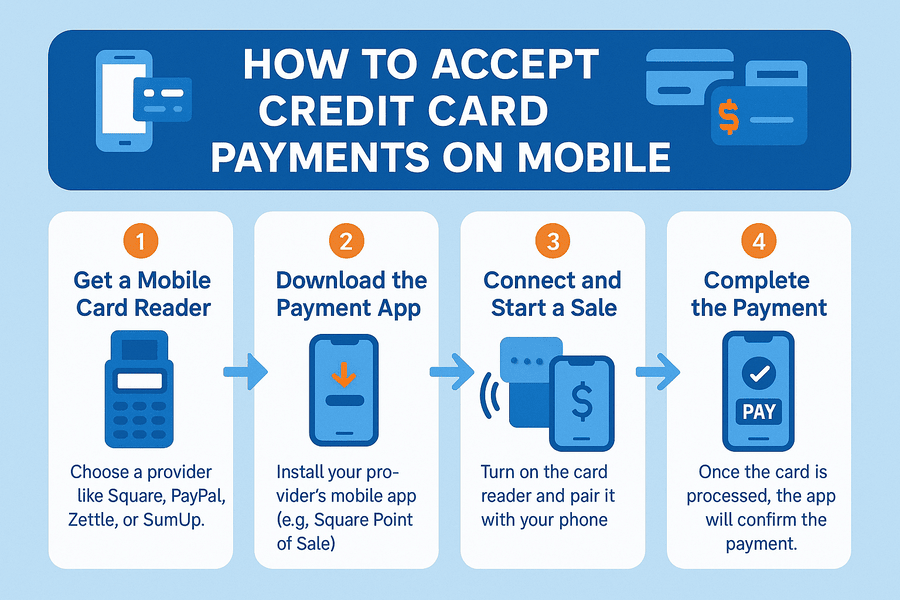
Mobile Card Readers: For businesses on the go, mobile card readers (dongles that attach to smartphones or tablets) offer unparalleled flexibility. They allow businesses to accept credit card payments virtually anywhere there’s a cellular or Wi-Fi connection. These are often offered by PSPs and are perfect for contractors, market vendors, and mobile service providers, turning a smartphone into a fully functional financial transaction device.
Online Solutions: Payment Gateways and E-commerce Integrations
For businesses operating online, payment gateways are indispensable. A payment gateway is a service that authorizes credit card payments for e-businesses and online retailers. It acts as the digital equivalent of a physical POS terminal, encrypting sensitive credit card details and ensuring secure transmission between the customer, merchant, and banks.
-
Stand-alone Gateways: These services (e.g., Authorize.Net) connect your e-commerce website to your merchant account, providing the secure conduit for online transactions.
-
Integrated Gateways (via PSPs): Many PSPs offer built-in payment gateway functionality as part of their comprehensive service package, making integration with popular e-commerce platforms (like Shopify, WooCommerce, BigCommerce) straightforward. These often come with developer APIs for custom integrations, offering flexibility for businesses with unique online financial needs.
Choosing an online solution involves considering ease of integration, security features, and the range of payment methods supported, all of which have direct financial implications for customer conversion and operational costs.
Specialized Options: Invoicing and Recurring Payments
Beyond standard transaction processing, many businesses benefit from specialized payment tools:
-
Invoicing Software: For B2B services or project-based work, integrated invoicing platforms allow businesses to send professional invoices directly to clients, often with embedded links for online credit card payment. This accelerates payment cycles and improves cash flow.
-
Recurring Payments/Subscriptions: Businesses with subscription models or installment plans require solutions that can securely store card details and automatically process payments at predetermined intervals. Many PSPs and dedicated billing platforms offer this functionality, which is crucial for predictable revenue streams and managing customer relationships.
Deconstructing the Costs: A Financial Deep Dive into Processing Fees
While the benefits of accepting credit cards are undeniable, understanding the associated costs is paramount to protecting your profit margins. Credit card processing fees are complex, comprising multiple layers charged by various entities involved in the transaction.
The Core Components: Interchange, Assessment, and Processor Markups
Every credit card transaction incurs a series of fees, primarily categorized into three main components:
-
Interchange Fees: These are the largest component of credit card processing fees, typically accounting for 70-90% of the total. Interchange is a non-negotiable fee paid by the acquiring bank (your bank) to the issuing bank (the customer’s bank) for processing the transaction. These fees are set by the credit card networks (Visa, Mastercard, Discover, American Express) and vary based on numerous factors: card type (rewards, corporate, debit), transaction type (card-present, card-not-present), industry, transaction amount, and even how quickly the transaction is settled.
-
Assessment Fees: Also known as network fees, these are charged directly by the credit card networks themselves (Visa, Mastercard, etc.) for using their network infrastructure. They are typically a small percentage of the transaction volume plus a small fixed fee per transaction. These are also non-negotiable.
-
Processor Markup: This is the fee charged by your payment processor (e.g., Stripe, PayPal, or your merchant account provider) for their services. This is their profit margin and covers their operational costs, customer support, technology, and risk management. Unlike interchange and assessment fees, the processor markup is negotiable, especially for businesses with high processing volumes.
Understanding Pricing Models: Tiered vs. Interchange-Plus
The way your processor bundles and presents these fees is known as the pricing model, and it significantly impacts your effective rate.
-
Tiered Pricing (or Bundled Pricing): This model lumps interchange and assessment fees into a few broad categories (e.g., “qualified,” “mid-qualified,” “non-qualified”). The processor assigns each transaction to a tier, with “qualified” transactions receiving the lowest rate and “non-qualified” transactions (e.g., corporate cards, manually entered cards, international cards) receiving the highest. While seemingly simple, tiered pricing often lacks transparency, making it difficult to predict costs and compare rates. Processors often profit by pushing more transactions into higher-cost tiers.
-
Interchange-Plus Pricing: This is generally considered the most transparent and fair pricing model. The processor passes through the exact interchange and assessment fees, adding a fixed markup (e.g., “Interchange + 0.30% + $0.10 per transaction”). This allows businesses to see the true cost of each transaction component and directly compare processor markups. It’s often favored by businesses with higher volumes that want greater cost predictability and control.
-
Flat-Rate Pricing: Popular with PSPs (e.g., Square: 2.6% + $0.10 for in-person, 2.9% + $0.30 for online), this model charges a fixed percentage and/or a fixed fee per transaction, regardless of card type or transaction details. It’s simple, predictable, and excellent for small businesses with lower volumes, as it eliminates complexity. However, for high-volume businesses, the bundled rate might be higher than what they would pay with interchange-plus, as it averages out all potential interchange costs.
Carefully evaluate which pricing model aligns best with your business’s transaction volume, average ticket size, and overall financial strategy.
Hidden Costs and How to Avoid Them
Beyond the core processing fees, be vigilant for other charges that can erode your profits:
-
PCI Compliance Fees: Many processors charge a monthly or annual fee to ensure your business adheres to the Payment Card Industry Data Security Standard (PCI DSS). While compliance is crucial, some processors may overcharge for it.
-
Chargeback Fees: If a customer disputes a transaction, a “chargeback” occurs. In addition to losing the sale amount, your business will typically incur a chargeback fee (ranging from $15 to $50 or more) from your processor, regardless of the outcome of the dispute.
-
Statement Fees: Some processors charge a fee just for sending you a monthly statement.
-
Setup Fees/Application Fees: These are one-time fees for setting up your account. Many modern PSPs have eliminated these.
-
Gateway Fees: For online payments, there might be a separate monthly fee for using the payment gateway.
-
Early Termination Fees: Be wary of long-term contracts with hefty penalties for canceling early, particularly with traditional merchant accounts.
Always read the fine print, ask for a full fee schedule, and compare total effective rates, not just advertised percentages. A financially savvy approach involves negotiating where possible and choosing a processor with transparent pricing and minimal hidden fees.
Best Practices for Secure and Efficient Payment Management
Once you’ve chosen your payment solution, implementing best practices is essential for securing your financial operations, minimizing losses, and optimizing customer experience.
Prioritizing PCI DSS Compliance
The Payment Card Industry Data Security Standard (PCI DSS) is a set of security standards designed to ensure that all companies that process, store, or transmit credit card information maintain a secure environment. Compliance is not optional; it’s mandatory. Non-compliance can result in substantial fines, reputational damage, and loss of the ability to accept credit card payments.
-
Understanding Your Obligations: Your level of PCI compliance (e.g., SAQ A, SAQ C, SAQ D) depends on how you process payments. If you use a fully hosted payment page (e.g., PayPal checkout) or a mobile reader, your obligations are lighter than if you handle card data directly on your servers.
-
Implementing Security Measures: This includes using strong passwords, regularly updating software, installing firewalls, encrypting data, and training employees on security protocols.
-
Regular Validation: Most businesses must complete an annual Self-Assessment Questionnaire (SAQ) and, for some, undergo quarterly network scans by an Approved Scanning Vendor (ASV). Your payment processor can guide you through the specific requirements.
PCI compliance is a continuous process, not a one-time task. Investing in robust security measures protects not only your business from financial penalties but also your customers’ sensitive data, fostering trust and loyalty.
Strategies for Minimizing Chargebacks
Chargebacks are a significant financial headache for businesses, directly impacting revenue and incurring additional fees. They occur when a customer disputes a charge with their issuing bank. While some chargebacks are legitimate (e.g., fraud), many can be prevented.
-
Clear Communication: Ensure your billing descriptor (how your business name appears on a customer’s statement) is recognizable. Provide clear contact information on your website and invoices.
-
Excellent Customer Service: Address customer complaints and refund requests promptly. Often, a customer will initiate a chargeback if they can’t get a satisfactory resolution directly from the merchant.
-
Proof of Delivery/Service: For online sales, use shipping methods with tracking and signature confirmation. For services, maintain clear records of work performed.
-
Fraud Prevention Tools: Utilize address verification service (AVS) and card verification value (CVV) checks for online transactions. Consider advanced fraud detection tools offered by your processor, especially for high-value items.
-
Clear Policies: Have explicit refund, return, and cancellation policies, and make them easily accessible to customers.
Proactive chargeback management is a direct measure to protect your business’s financial health and reputation.
Leveraging Data for Financial Insights and Growth
Modern payment processing systems do more than just facilitate transactions; they generate a wealth of financial data that can be invaluable for strategic decision-making.
-
Sales Trends: Analyze sales data by product, time of day, day of the week, or seasonality to identify peak periods, optimize staffing, and manage inventory effectively.
-
Customer Behavior: Track average transaction values, frequency of purchases, and preferred payment methods to tailor marketing efforts and customer loyalty programs.
-
Cost Analysis: Regularly review your processing statements to understand your effective rates, identify any unexpected fees, and ensure you’re getting the best deal from your processor.
-
Inventory Management: Integrate payment data with inventory systems to automate reordering, reduce stockouts, and minimize carrying costs.
By actively utilizing the reporting and analytics features of your payment processor or POS system, you can gain deep financial insights that drive better business decisions, improve efficiency, and foster sustainable growth.
Enhancing Customer Experience Through Seamless Transactions
Ultimately, the goal of accepting credit cards is to facilitate sales and build a loyal customer base. A smooth and secure payment experience directly contributes to this.
-
Speed and Convenience: Ensure your in-person transactions are quick and efficient. For online stores, simplify the checkout process to minimize abandoned carts. Offer diverse payment options, including mobile wallets (Apple Pay, Google Pay) and “buy now, pay later” services, which cater to modern consumer preferences.
-
Transparency: Clearly display prices, shipping costs, and any taxes or surcharges upfront.
-
Reliability: Ensure your payment system is always operational and rarely experiences downtime, as payment failures can lead to immediate lost sales and frustrated customers.
-
Security Reassurance: Clearly display security badges (e.g., PCI compliant, SSL certificates) on your website to reassure customers that their financial data is protected.
A well-executed credit card acceptance strategy goes beyond simply processing payments; it’s about creating a seamless, secure, and satisfying financial interaction that encourages repeat business and strengthens your brand’s financial future.
Accepting credit card payments is a multifaceted but essential aspect of modern business finance. By understanding the core mechanisms, carefully selecting the right solutions, meticulously analyzing costs, and adhering to best practices for security and efficiency, businesses can not only meet customer expectations but also strategically position themselves for enhanced profitability and sustainable growth in a dynamic economic landscape.
aViewFromTheCave is a participant in the Amazon Services LLC Associates Program, an affiliate advertising program designed to provide a means for sites to earn advertising fees by advertising and linking to Amazon.com. Amazon, the Amazon logo, AmazonSupply, and the AmazonSupply logo are trademarks of Amazon.com, Inc. or its affiliates. As an Amazon Associate we earn affiliate commissions from qualifying purchases.