
The stock market, often perceived as a complex labyrinth of numbers and jargon, is fundamentally a marketplace where shares of publicly traded companies are bought and sold. It’s a critical engine of modern economies, enabling businesses to raise capital for growth and providing investors with opportunities to participate in that growth. Far from being a mere casino, the stock market is a sophisticated system driven by supply and demand, economic indicators, corporate performance, and human psychology, all underpinned by a robust regulatory framework. Understanding its mechanics is essential for anyone looking to navigate the world of finance, whether as an aspiring investor, a business owner, or simply an informed citizen. This article will demystify the stock market, exploring its core components, key participants, trading mechanisms, influential factors, and the balance of risk and reward that defines its operation.

The Foundation: What is the Stock Market?
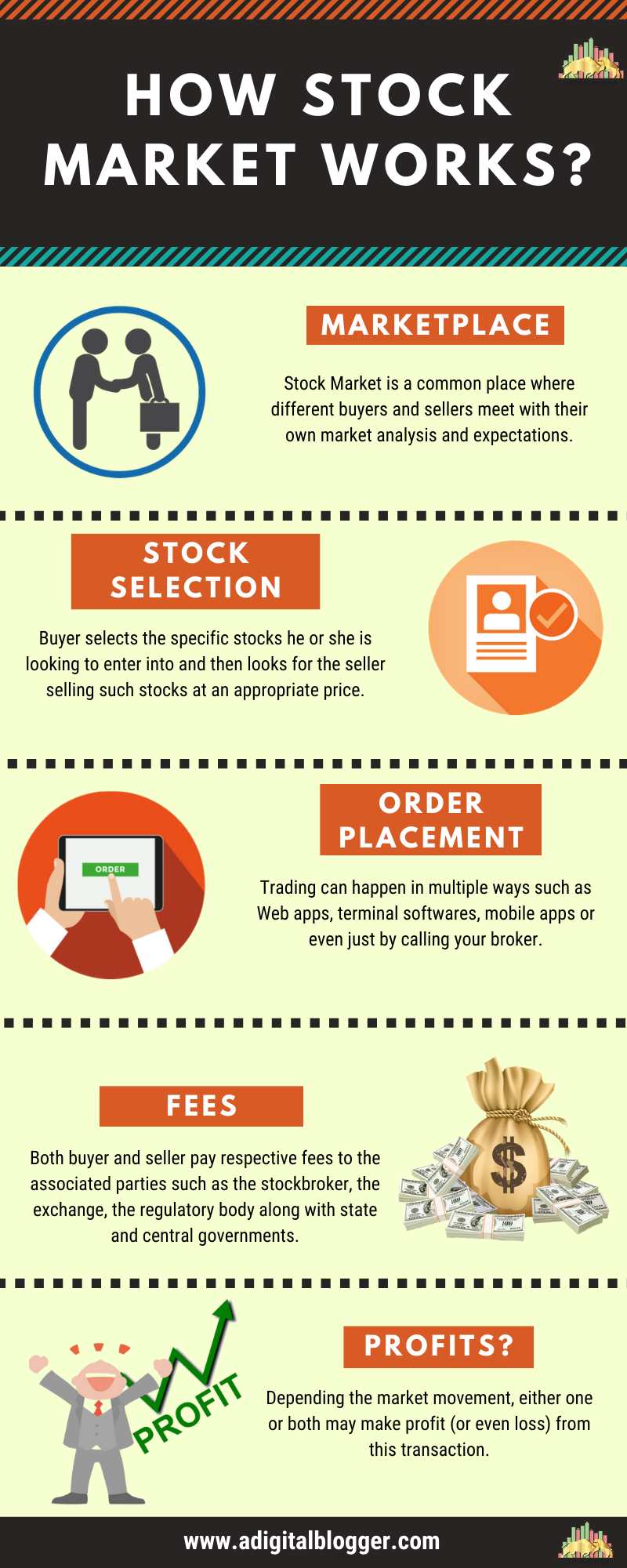
At its core, the stock market is a global network of exchanges and brokers where financial securities are traded. It’s not a single physical location but rather a vast, interconnected ecosystem designed to facilitate the transfer of ownership of corporate shares. Its primary functions are capital formation for companies and wealth creation for investors.
Stocks: Ownership in a Company
A stock, or share, represents a fractional ownership interest in a company. When you buy a company’s stock, you become a shareholder, meaning you own a tiny piece of that business. This ownership comes with certain rights, typically including voting rights on company matters (like electing the board of directors) and a claim on a portion of the company’s earnings (dividends) and assets. Companies issue stocks to raise capital, using the funds to expand operations, develop new products, pay off debt, or for various other corporate purposes. The value of these shares fluctuates based on the company’s performance, industry trends, and broader economic conditions.
Primary vs. Secondary Markets
The journey of a stock begins in the primary market. This is where new securities are issued for the first time. The most common primary market event is an Initial Public Offering (IPO), where a private company sells its shares to the public to become a publicly traded entity. Investment banks typically underwrite these offerings, helping the company price its shares and find initial investors. Once these shares are bought in the primary market, they can then be traded among investors in the secondary market. This is what most people typically refer to when they talk about the “stock market.” Stock exchanges like the New York Stock Exchange (NYSE) or NASDAQ are examples of secondary markets, providing platforms for investors to buy and sell existing shares from each other. The company that initially issued the stock does not directly receive money from secondary market trades; rather, the transaction is between two investors.
Indices: Barometers of Performance
Stock market indices are crucial tools that provide a snapshot of market performance. An index is a hypothetical portfolio of stocks representing a particular market or a segment of it. For instance, the S&P 500 tracks the performance of 500 large U.S. companies, while the Dow Jones Industrial Average (DJIA) follows 30 significant U.S. companies. Other prominent indices include the NASDAQ Composite (technology and growth-oriented companies) and various international indices like the FTSE 100 (UK) or Nikkei 225 (Japan). These indices serve as benchmarks against which investors measure the performance of their own portfolios and analysts gauge the overall health and direction of the stock market and the economy.
Key Players and Their Roles
The stock market is a vibrant ecosystem populated by various participants, each playing a distinct yet interconnected role in facilitating trades and shaping market dynamics. Understanding these players is key to comprehending how the market functions.
Issuers: Companies Going Public
Issuers are the companies that offer their shares to the public to raise capital. From technology startups seeking funding for innovation to established corporations looking to expand globally, these entities initiate the public trading process. The decision to go public is a significant strategic move, offering access to substantial capital but also bringing increased scrutiny, regulatory obligations, and public accountability. Companies decide on the number of shares to issue, the initial price, and work with investment banks to manage the IPO process, ensuring their shares are available for trading on major exchanges.
Investors: The Capital Providers
Investors are the lifeblood of the stock market, providing the capital that companies need to grow. This diverse group includes:
- Individual Investors (Retail Investors): Everyday people who invest their personal savings, often through brokerage accounts, aiming for financial growth, retirement planning, or specific financial goals.
- Institutional Investors: Large organizations with substantial capital, such as mutual funds, hedge funds, pension funds, insurance companies, and sovereign wealth funds. These entities manage vast sums of money on behalf of their clients or members and often exert significant influence on market trends due to the sheer volume of their trades.
- Day Traders: Individuals who buy and sell stocks multiple times within a single trading day, aiming to profit from short-term price fluctuations. This is a high-risk, high-reward strategy requiring intensive market monitoring.
Brokers and Dealers: Facilitating Transactions
Brokers act as intermediaries between investors and the stock exchange. They execute buy and sell orders on behalf of their clients, charging a commission for their services. In the modern era, online discount brokers have largely replaced traditional full-service brokers for many retail investors, offering lower fees and direct access to trading platforms. Dealers, on the other hand, trade securities for their own accounts, acting as principals in transactions. They provide liquidity by being willing to buy or sell securities at quoted prices, effectively “making a market.” Many firms operate as both brokers and dealers.
Exchanges: The Trading Venues
Stock exchanges are the organized marketplaces where buyers and sellers meet to trade securities. They provide the infrastructure and rules for fair and orderly trading. Historically, exchanges were physical trading floors with open outcry systems (like the NYSE before it went electronic), but today, most trading is conducted electronically. The largest and most influential exchanges include:
- New York Stock Exchange (NYSE): Known for listing many large, established “blue-chip” companies.
- NASDAQ: Predominantly lists technology and growth companies, and is entirely electronic.
- London Stock Exchange (LSE), Euronext, Tokyo Stock Exchange (TSE): Major international exchanges.
Exchanges provide price discovery, liquidity, and transparency, ensuring that transactions occur efficiently and at fair market prices.
Mechanics of Trading: Buying and Selling
The process of buying and selling stocks, while seemingly instantaneous in today’s digital age, involves several fundamental mechanisms that ensure orderly and efficient market operations.
Market Orders vs. Limit Orders
When an investor decides to buy or sell a stock, they typically place an order through a broker. The two most common types of orders are:
- Market Order: This is an instruction to buy or sell a stock immediately at the best available current price. Market orders prioritize execution speed over price certainty. While they ensure your trade goes through quickly, the exact price might vary slightly from what you saw just moments before, especially in volatile markets.
- Limit Order: This is an instruction to buy or sell a stock at a specific price or better. A buy limit order will only execute if the stock price drops to the specified limit price or lower. A sell limit order will only execute if the stock price rises to the specified limit price or higher. Limit orders provide price control but do not guarantee execution if the market never reaches the specified price.
Bids, Asks, and Spreads

The interaction of buyers and sellers creates the dynamic of “bid” and “ask” prices.
- Bid Price: The highest price a buyer is currently willing to pay for a stock.
- Ask Price (or Offer Price): The lowest price a seller is currently willing to accept for a stock.
The difference between the bid and ask price is known as the bid-ask spread. This spread represents the profit margin for market makers or dealers who facilitate trades by buying at the bid and selling at the ask. A narrow spread indicates high liquidity and efficient trading, while a wider spread might suggest lower liquidity or higher volatility.
Electronic Trading Systems
Modern stock markets are predominantly electronic. Algorithmic trading, high-frequency trading (HFT), and automated matching systems have replaced manual processes on trading floors. When an investor places an order, it is routed electronically to the exchange, where it enters an order book. This book matches buy orders with sell orders based on price and time priority. If a match is found, the trade is executed instantly. This electronic infrastructure allows for immense trading volumes, rapid price discovery, and global market access, making transactions incredibly fast and efficient.
Factors Influencing Market Dynamics
The stock market is a complex adaptive system, constantly reacting to a myriad of internal and external forces. Stock prices are rarely static; they are in perpetual motion, driven by a confluence of economic, corporate, and psychological factors.
Economic Indicators
Macroeconomic data provides a broad picture of the economy’s health and direction, significantly impacting market sentiment and stock prices. Key indicators include:
- Gross Domestic Product (GDP): A measure of a country’s total economic output. Strong GDP growth often signals a healthy economy, which can translate to higher corporate earnings and stock prices.
- Inflation: The rate at which prices for goods and services are rising. High inflation can erode corporate profits and consumer purchasing power, leading to concerns about future growth.
- Interest Rates: Set by central banks, interest rates influence borrowing costs for companies and consumers. Lower rates can stimulate economic activity and make stocks more attractive compared to bonds, while higher rates can have the opposite effect.
- Unemployment Data: Low unemployment rates often indicate a robust economy and strong consumer spending, generally positive for corporate revenues.
- Consumer Confidence: Measures how optimistic consumers are about the economy. Confident consumers are more likely to spend, boosting corporate sales.
Company Performance and Earnings
Ultimately, the intrinsic value of a stock is tied to the performance and profitability of the underlying company.
- Earnings Reports: Companies periodically release their financial results, including revenue, profit, and earnings per share (EPS). Strong earnings growth, especially exceeding analyst expectations, can send a stock soaring, while disappointing results can trigger a sell-off.
- Future Growth Prospects: Investors often look beyond current earnings to a company’s potential for future growth, innovation, and market expansion. News about new product launches, strategic partnerships, or market leadership can fuel investor optimism.
- Management Quality: The competence, vision, and integrity of a company’s leadership team are critical. Effective management can navigate challenges, capitalize on opportunities, and build long-term shareholder value.
Geopolitical Events and Global Trends
The interconnectedness of the global economy means that events far beyond a company’s immediate operations can ripple through the stock market.
- Political Stability: Geopolitical tensions, elections, or policy changes can introduce uncertainty, affecting investor confidence and capital flows.
- Trade Wars and Tariffs: Restrictions on international trade can impact supply chains, input costs, and export revenues for companies, particularly those with significant global operations.
- Commodity Prices: Fluctuations in the prices of oil, gas, metals, or agricultural products can heavily influence sectors like energy, manufacturing, and food production, with knock-on effects across the broader market.
- Technological Disruptions: Breakthroughs in technology can create new industries and render old ones obsolete, causing shifts in market leadership and investment focus.
Investor Sentiment and Market Psychology
Beyond the quantifiable data, the collective emotions and perceptions of investors play a significant role in market movements.
- Fear and Greed: These powerful human emotions often drive irrational exuberance or panic selling, leading to market bubbles or crashes.
- Herd Behavior: Investors sometimes follow the crowd, buying what others are buying or selling what others are selling, amplifying market trends regardless of underlying fundamentals.
- Market News and Rumors: The constant flow of information, both verified and unverified, can trigger immediate and sometimes overreactions from market participants.
- Technical Analysis: Some traders use charting tools and historical price patterns to predict future price movements, believing that market psychology often repeats itself.
Risk, Regulation, and Rewards
While the stock market offers unparalleled opportunities for wealth accumulation, it is intrinsically linked with risk. To balance this, robust regulatory frameworks are in place to protect investors and maintain market integrity.
Volatility and Market Risk
Investing in the stock market inherently involves risk. Share prices are volatile, meaning they can fluctuate significantly in short periods. This volatility stems from all the factors discussed above, making it impossible to guarantee returns.
- Market Risk: The risk that the overall market will decline, affecting even fundamentally sound stocks. This is often systematic risk.
- Company-Specific Risk (Idiosyncratic Risk): Risks unique to a particular company, such as poor management, declining sales, or product recalls.
- Liquidity Risk: The risk that an investor may not be able to sell a stock quickly enough without significantly impacting its price.
- Inflation Risk: The risk that the returns on an investment will not keep pace with inflation, eroding purchasing power.
Understanding and managing these risks through diversification, thorough research, and a long-term perspective is crucial for successful investing.
Regulatory Bodies and Investor Protection
To safeguard investors and ensure fair, transparent markets, stock markets are heavily regulated. In the United States, key regulatory bodies include:
- Securities and Exchange Commission (SEC): The primary federal agency responsible for enforcing securities laws, protecting investors, and maintaining fair and orderly markets. The SEC mandates full disclosure from public companies, oversees exchanges, and investigates fraud.
- Financial Industry Regulatory Authority (FINRA): A self-regulatory organization (SRO) that oversees broker-dealers in the U.S., setting rules and conducting exams to protect investors.
Similar bodies exist globally (e.g., Financial Conduct Authority (FCA) in the UK, European Securities and Markets Authority (ESMA) in the EU). These regulations aim to prevent insider trading, market manipulation, and fraudulent activities, thereby fostering confidence in the financial system.
The Potential for Capital Appreciation and Dividends
Despite the risks, the primary appeal of the stock market lies in its potential for significant returns. Investors can profit in two main ways:
- Capital Appreciation: This occurs when the value of a stock increases over time. If you buy a stock for $50 and sell it later for $70, you’ve realized a capital gain of $20 per share.
- Dividends: Many profitable companies share a portion of their earnings with shareholders in the form of regular cash payments (dividends). These payments provide a steady income stream for investors, especially valuable in income-focused portfolios.
The combination of capital appreciation and dividends can lead to substantial wealth creation over the long term, often outpacing inflation and other investment classes.
Long-Term Wealth Building
For most individual investors, the stock market is a powerful tool for long-term wealth building. While short-term fluctuations can be dramatic, historically, diversified stock portfolios have delivered superior returns over extended periods compared to other asset classes. The principle of compound interest, where returns generate further returns, becomes incredibly powerful over decades. By investing consistently, diversifying across different companies and sectors, and staying invested through market ups and downs, individuals can harness the stock market’s ability to grow their capital and achieve significant financial goals, from retirement to funding education or purchasing a home.
Conclusion
The stock market is a dynamic and multifaceted institution that serves as the engine room of global capitalism. It provides a vital mechanism for companies to secure the capital necessary for innovation and expansion, simultaneously offering investors the opportunity to partake in economic growth and build wealth. From the initial public offering to the daily electronic trades, and from the interplay of global economics to individual investor sentiment, its operations are governed by a complex dance of supply, demand, information, and emotion. While it inherently carries risks and demands careful consideration, a fundamental understanding of how the stock market operates is an indispensable asset for anyone seeking financial empowerment in the modern world.
aViewFromTheCave is a participant in the Amazon Services LLC Associates Program, an affiliate advertising program designed to provide a means for sites to earn advertising fees by advertising and linking to Amazon.com. Amazon, the Amazon logo, AmazonSupply, and the AmazonSupply logo are trademarks of Amazon.com, Inc. or its affiliates. As an Amazon Associate we earn affiliate commissions from qualifying purchases.