
Social Security stands as a cornerstone of financial security for millions of Americans, providing retirement income, disability support, and survivor benefits. While its impact is undeniable, the methodology behind calculating these benefits often remains a mystery, shrouded in complex formulas and historical adjustments. For anyone planning their financial future, understanding “how SSA is calculated” is not just a matter of curiosity; it’s a critical component of informed decision-making. This guide aims to demystify the Social Security Administration’s (SSA) calculation process, offering a professional, insightful, and engaging exploration into how your lifetime earnings translate into your future benefits.

The Foundation: Your Work Record and Earnings
The journey to understanding your Social Security benefits begins with your work history. Every dollar you’ve earned and paid Social Security taxes on contributes to your eventual benefit amount. This foundational data forms the bedrock upon which all subsequent calculations are built.
What Counts as “Credited Earnings”?
Social Security benefits are funded by dedicated payroll taxes, known as Federal Insurance Contributions Act (FICA) taxes, paid by both employees and employers. For the self-employed, these are paid under the Self-Employment Contributions Act (SECA). Only earnings up to a certain annual limit, called the “taxable maximum,” are subject to Social Security taxes and, consequently, factored into your benefit calculation. This limit changes annually to reflect national wage growth. For instance, in 2024, the taxable maximum is $168,600. Earnings above this threshold are not taxed for Social Security and therefore do not increase your future benefits. Understanding this limit is crucial for high-income earners who might erroneously assume all their income contributes equally.
The Importance of Work Credits
To qualify for Social Security benefits, you must accumulate a certain number of “work credits.” These are earned by working and paying Social Security taxes. The SSA defines a specific amount of earnings needed to earn one credit, and you can earn a maximum of four credits each year. In 2024, you earn one credit for every $1,730 in earnings, meaning $6,920 in earnings will grant you the maximum four credits for the year. Most people need 40 credits (10 years of work) to be eligible for retirement benefits. However, fewer credits may be required for disability or survivor benefits, depending on your age and other circumstances. These credits establish your eligibility, but they do not directly determine the amount of your benefit.
Accessing Your Social Security Statement
The most direct way to monitor your credited earnings and estimated future benefits is through your annual Social Security Statement. This personalized document, accessible online via your mySocialSecurity account, provides a detailed summary of your earnings history as reported to the SSA. It’s imperative to review this statement regularly for accuracy. Mistakes in reported earnings, if left uncorrected, could lead to a lower benefit amount in retirement. Identifying and rectifying discrepancies early can prevent significant financial impact later in life.
Determining Your Primary Insurance Amount (PIA)
The core of your Social Security benefit calculation is the Primary Insurance Amount (PIA). This is the monthly benefit you would receive if you start receiving benefits at your Full Retirement Age (FRA). The PIA is not a simple average of your earnings; it involves a sophisticated indexing and progressive formula.
The “Highest 35 Years” Rule
To calculate your PIA, the SSA first looks at your entire earnings record. From all the years you’ve worked, they select your 35 highest earning years. If you have fewer than 35 years of earnings, the missing years are filled in with zeroes, which can significantly reduce your average earnings and, consequently, your benefit. This rule underscores the importance of a consistent and lengthy work history. It also highlights why returning to the workforce later in life can be beneficial, as higher earnings in recent years can replace lower-earning years from earlier in your career, potentially boosting your overall average.
Indexing Your Past Earnings
Before the 35 highest earning years are selected, your past earnings are “indexed” to account for changes in the average wage level in the economy over time. This process ensures that your past earnings are translated into today’s dollars, reflecting their relative value when they were earned. For example, earnings from 1980 will be significantly adjusted upwards to reflect the purchasing power of money today. This indexing factor is typically applied up to the year you turn 60. Earnings after age 60 are generally included at their nominal value. Indexing is vital because it prevents inflation from eroding the value of your earlier contributions, ensuring a fairer calculation of your lifetime average indexed monthly earnings (AIME).
The Bend Points Formula
Once your AIME is calculated, the SSA applies a progressive formula using “bend points” to determine your PIA. This formula is designed to replace a higher percentage of earnings for lower-income workers than for higher-income workers, reflecting Social Security’s goal of providing a safety net. For instance, a certain percentage (e.g., 90%) of the first portion of your AIME is included, a smaller percentage (e.g., 32%) of the next portion, and an even smaller percentage (e.g., 15%) of the highest portion. These “bend points” are specific dollar amounts that are updated annually to reflect changes in the national average wage. This progressive structure is a hallmark of Social Security, ensuring that individuals with lower lifetime earnings receive a proportionally larger benefit relative to their contributions.
Factors Influencing Your Actual Benefit Amount
While the PIA provides a baseline, the actual amount you receive each month can be significantly altered by several key decisions and external factors. Understanding these variables is paramount for strategic retirement planning.
Your Full Retirement Age (FRA)
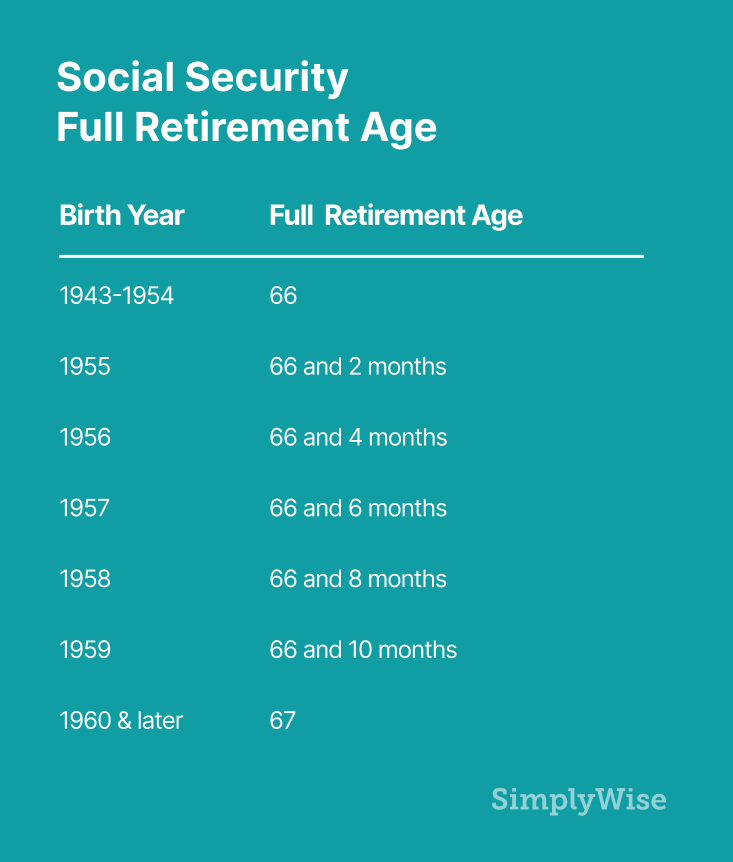
Your Full Retirement Age (FRA) is the age at which you are entitled to receive 100% of your PIA. The FRA is not universal; it depends on your birth year. For those born in 1943 through 1954, it is age 66. It gradually increases for those born between 1955 and 1959, reaching age 67 for individuals born in 1960 or later. Claiming benefits before your FRA results in a permanent reduction, while delaying benefits past your FRA can lead to a permanent increase.
Claiming Early vs. Claiming Late
One of the most critical decisions for future retirees is when to claim Social Security benefits. You can start receiving retirement benefits as early as age 62. However, claiming early results in a permanent reduction of your monthly benefit amount. The reduction can be substantial, up to 30% if you claim at age 62 and your FRA is 67. Conversely, delaying benefits past your FRA—up to age 70—earns you “delayed retirement credits.” These credits increase your monthly benefit by a certain percentage (typically 8% per year) for each year you delay, up to age 70. These delayed retirement credits are a powerful tool for maximizing your lifetime benefits, especially for those who can afford to wait. The choice to claim early or late involves a careful assessment of your health, other income sources, family situation, and overall financial goals.
Cost-of-Living Adjustments (COLAs)
Once you begin receiving benefits, your monthly payment isn’t static. Each year, the SSA typically announces a Cost-of-Living Adjustment (COLA). This adjustment is designed to help Social Security benefits retain their purchasing power in the face of inflation. COLAs are based on the Consumer Price Index for Urban Wage Earners and Clerical Workers (CPI-W). While COLAs provide vital protection against inflation, they are not guaranteed every year, and their size can vary significantly depending on economic conditions.
Taxation of Social Security Benefits
It’s important to note that a portion of your Social Security benefits may be subject to federal income tax if your “provisional income” exceeds certain thresholds. Provisional income includes your adjusted gross income, tax-exempt interest, and one-half of your Social Security benefits. Up to 50% of your benefits may be taxable if your provisional income is between $25,000 and $34,000 for an individual, or between $32,000 and $44,000 for those filing jointly. For provisional incomes above these higher thresholds, up to 85% of your benefits may be taxable. A few states also tax Social Security benefits. This potential tax liability is a crucial factor in comprehensive retirement income planning.
Different Types of Social Security Benefits
While retirement benefits are the most commonly discussed, Social Security offers a broader spectrum of financial support. Each type of benefit is linked to the worker’s earnings record, but the specific eligibility and calculation rules vary.
Retirement Benefits
As detailed above, these are the benefits paid to qualified workers based on their own earnings record, commencing as early as age 62 or up to age 70. These benefits are the primary focus of most financial planning conversations around Social Security.
Spousal and Survivor Benefits
Social Security also provides benefits to spouses and surviving family members of eligible workers. A spouse can receive up to 50% of their retired spouse’s full retirement benefit (PIA) at their own FRA, provided certain conditions are met. If a worker passes away, their surviving spouse (and sometimes dependent children) may be eligible for survivor benefits. A surviving spouse can receive up to 100% of the deceased worker’s benefit amount, again subject to age and other eligibility requirements. These benefits are critical for providing financial stability to families after the loss of an income earner.
Disability Benefits
If you become unable to work due to a severe medical condition that is expected to last at least a year or result in death, you may qualify for Social Security Disability Insurance (SSDI) benefits. To be eligible, you need to have accumulated a sufficient number of work credits, which varies depending on your age at the time of disability onset. The calculation of SSDI benefits is based on your PIA, mirroring how retirement benefits are calculated, but typically without the adjustments for claiming age, as the benefit starts when the disability is established.
Family Benefits
In addition to spouses, certain family members of a retired, disabled, or deceased worker may also be eligible for benefits. This can include minor children (under 18, or 19 if still in high school), adult children with disabilities that began before age 22, and dependent parents. These benefits are generally a percentage of the worker’s PIA, up to a family maximum benefit.
Strategic Planning and Maximizing Your Social Security
Understanding the mechanics of Social Security calculation is not merely an academic exercise; it’s a practical necessity for sound financial planning. With careful strategy, you can optimize your benefits and ensure Social Security plays its intended role in your overall financial security.
Understanding Your Break-Even Point
The decision of when to claim Social Security benefits often revolves around the “break-even point.” This is the age at which the total cumulative benefits received from delaying your claim would surpass the total cumulative benefits received from claiming early. Calculating your personal break-even point requires estimating your life expectancy and comparing the higher monthly payments from delaying against the larger number of payments received by claiming early. While complex, various online calculators and financial planning tools can assist in this analysis. For many, especially those in good health with a family history of longevity, delaying benefits can significantly increase lifetime income.
Coordinating with Other Retirement Income
Social Security is rarely the sole source of retirement income. For most individuals, it functions as one pillar among others, including personal savings (401(k)s, IRAs), pensions, and other investments. Strategic planning involves coordinating your Social Security claiming strategy with the drawdown of these other assets. For example, if you have substantial savings, you might choose to delay Social Security to age 70, allowing your benefits to grow while drawing from your investment accounts in the interim. Conversely, if your savings are modest, claiming Social Security earlier might be necessary to cover living expenses, even if it means a reduced monthly amount.
Seeking Professional Financial Advice
Given the complexity of Social Security rules and the individualized nature of optimal claiming strategies, seeking professional financial advice is often invaluable. A qualified financial advisor can help you:
-
Analyze your specific earnings record and future projections.
-
Model different claiming scenarios (e.g., age 62, FRA, age 70).
-
Integrate your Social Security benefits into your broader retirement income plan.
-
Understand the impact of taxes on your benefits and other income.
-
Navigate spousal, survivor, and disability benefit options.
Their expertise can uncover opportunities for maximizing benefits that you might overlook, providing peace of mind and greater financial security.

Conclusion
The calculation of Social Security benefits is a multifaceted process, rooted in your lifetime earnings, indexed for inflation, and progressively structured to provide a foundational level of income security. From accumulating work credits and understanding your Primary Insurance Amount to strategically choosing your claiming age and coordinating with other financial assets, every step holds significant implications for your financial well-being in retirement. By demystifying “how SSA is calculated,” this guide empowers you to take a proactive approach to your financial planning, ensuring you make the most informed decisions to secure your future. The journey to a financially secure retirement is a marathon, and understanding Social Security is a crucial step in pacing yourself for success.
aViewFromTheCave is a participant in the Amazon Services LLC Associates Program, an affiliate advertising program designed to provide a means for sites to earn advertising fees by advertising and linking to Amazon.com. Amazon, the Amazon logo, AmazonSupply, and the AmazonSupply logo are trademarks of Amazon.com, Inc. or its affiliates. As an Amazon Associate we earn affiliate commissions from qualifying purchases.