
The share market is often portrayed in popular media as a chaotic floor of shouting traders or a complex web of flickering green and red numbers. However, at its core, the share market is one of the most elegant and democratic engines of wealth creation ever devised. It serves as a bridge between companies that need capital to innovate and expand, and individuals who seek to grow their savings by participating in that corporate success. To navigate this landscape effectively, one must look past the daily volatility and understand the structural mechanics that govern the flow of trillions of dollars globally.

The Fundamental Framework of the Stock Market
To understand how the market works, we must first define what it is. The share market, or stock market, is a collection of exchanges where the buying, selling, and issuance of shares of publicly held companies take place. These financial activities are conducted through institutionalized formal exchanges or over-the-counter (OTC) marketplaces that operate under a defined set of regulations.
Primary vs. Secondary Markets
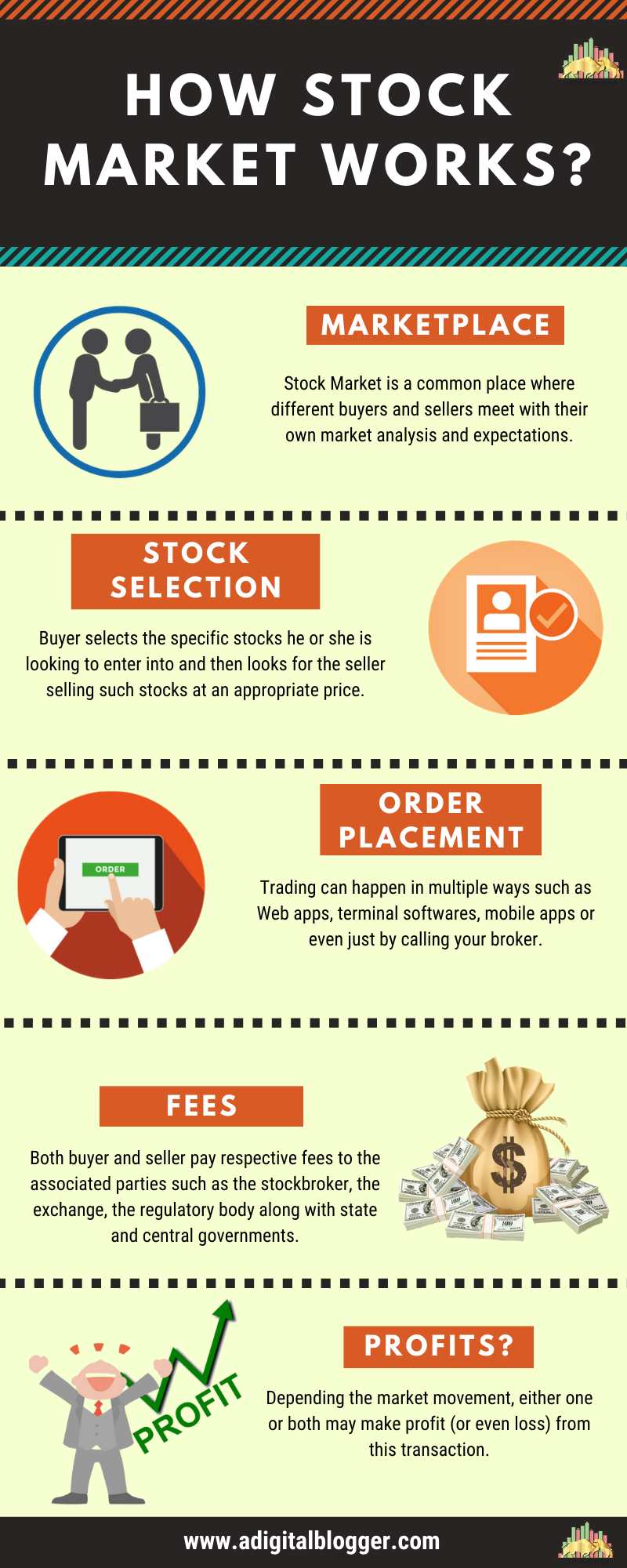
The lifecycle of a stock begins in the primary market. This is where a private company decides to go “public” through an Initial Public Offering (IPO). During an IPO, the company sells shares directly to a group of initial investors (usually large institutions) to raise capital. Once these shares are issued, they begin trading on the secondary market. When you buy a stock on an app or through a broker today, you are participating in the secondary market—buying from another investor rather than the company itself.
The Role of Stock Exchanges
Stock exchanges, such as the New York Stock Exchange (NYSE) or the NASDAQ, act as the facilitators of this secondary market. They provide a regulated environment where buyers and sellers can meet with confidence. They ensure price transparency, liquidity (the ease with which an asset can be converted to cash), and the legal transfer of ownership. Without these centralized hubs, the risk of fraud and the difficulty of finding a counterparty would make investing nearly impossible for the average person.
How Shares Represent Equity
When you purchase a share, you are literally buying a “piece” of a business. This equity represents a claim on a portion of the company’s assets and earnings. If a company has one million shares outstanding and you own ten thousand, you own 1% of the company. This entitles you to voting rights on corporate policy and a share of the profits, often distributed as dividends. As the company’s value grows, the value of your “slice” grows proportionally.
The Dynamics of Price Discovery and Trading
The most frequent question asked by new investors is: “What makes the price go up or down?” The answer lies in the concept of price discovery—the process by which the market determines the value of an asset based on the interactions of buyers and sellers.
Supply and Demand: The Invisible Hand
At any given second, the price of a stock is the result of a tug-of-war between supply and demand. If a company releases a revolutionary new product, more people want to buy the stock (demand increases), but current owners may be reluctant to sell (supply decreases). To entice someone to sell, the buyers must offer a higher price. Conversely, if a company faces a lawsuit or declining sales, owners may rush to sell while few people want to buy, forcing the price down.
Market Participants: Institutional vs. Retail
The market is composed of various players, each with different goals. Institutional investors—such as pension funds, mutual funds, and hedge funds—manage billions of dollars and often move the market with large “block” trades. Retail investors are individuals like you, trading for personal wealth. In recent years, the rise of “High-Frequency Trading” (HFT) has introduced algorithms that execute thousands of trades per second, capitalizing on tiny price discrepancies. Understanding that you are competing in an ecosystem with these diverse players is vital for setting realistic expectations.
Order Types and Execution
When you decide to trade, you interact with the market via “orders.” A Market Order instructs your broker to buy or sell immediately at the best available current price. A Limit Order sets a specific price at which you are willing to trade; if the stock doesn’t hit that price, the trade doesn’t happen. The “Bid” is the highest price a buyer is willing to pay, and the “Ask” is the lowest price a seller is willing to accept. The difference between the two is known as the “Spread,” which represents a transaction cost for the investor.
Evaluating Market Performance and Valuation
Investors do not fly blind. They use various tools and benchmarks to determine whether the market as a whole is healthy and whether a specific stock is “cheap” or “expensive.”

Stock Indices as Barometers
You have likely heard news anchors mention that “the Dow is up” or “the S&P 500 hit a record high.” These are indices—weighted averages of a specific group of stocks. The S&P 500, for instance, tracks 500 of the largest companies in the United States. These indices serve as a pulse check for the economy. When an index rises, it generally indicates investor confidence in corporate profitability and economic stability.
Fundamental vs. Technical Analysis
There are two primary schools of thought regarding valuation. Fundamental Analysis involves looking at a company’s financial statements, management quality, and market position to determine its “intrinsic value.” If the intrinsic value is higher than the current stock price, the stock is considered a “buy.” Technical Analysis, on the other hand, ignores the company’s business and focuses purely on price charts and volume patterns, betting that historical trends will repeat themselves.
The Impact of Macroeconomics
The share market does not exist in a vacuum. It is heavily influenced by external factors, most notably interest rates. When the central bank (like the Federal Reserve) raises interest rates, borrowing becomes more expensive for companies, which can lower profits. Furthermore, “safer” investments like bonds become more attractive, often causing investors to pull money out of the stock market. Inflation, geopolitical stability, and employment data also play massive roles in shaping market sentiment.
Navigating the Risks and Rewards of Investing
Investing in the share market is a balance of risk and reward. While the potential for wealth creation is high, the risk of loss is real. Understanding the nature of these risks is the hallmark of a sophisticated investor.
Compounding and Long-term Growth
The greatest “magic” of the share market is compound interest. If your investment grows by 7% a year, you aren’t just earning 7% on your initial principal; you are eventually earning 7% on the gains of previous years. Over decades, this exponential growth can turn modest savings into significant fortunes. This is why “time in the market” is almost always more important than “timing the market.”
Volatility vs. Risk
It is crucial to distinguish between volatility and risk. Volatility refers to the sharp, short-term ups and downs of the market. While uncomfortable, volatility is a natural part of the system. Risk, however, is the permanent loss of capital—such as a company going bankrupt. Investors who can stomach short-term volatility in exchange for long-term growth are usually the ones who succeed.
Diversification and Portfolio Allocation
The most effective way to mitigate risk is through diversification—the financial equivalent of not putting all your eggs in one basket. By owning a mix of different companies across various sectors (Tech, Healthcare, Energy) and even different asset classes (Stocks, Bonds, Real Estate), you ensure that a failure in one area does not ruin your entire portfolio.
Practical Steps for Modern Investors
In the digital age, the barriers to entry for the share market have never been lower. However, ease of access requires a higher degree of personal responsibility and strategy.
Choosing a Brokerage and Financial Tools
The first step is selecting a platform. Modern brokerages offer zero-commission trading and user-friendly mobile apps. When choosing, consider the “Financial Tools” they offer: Do they provide research reports? Do they allow for fractional shares (buying $5 worth of a $3,000 stock)? The right tool should align with your level of expertise and your long-term goals.
Passive vs. Active Investing
A major decision for any investor is whether to be “active” or “passive.” Active investing involves picking individual stocks in an attempt to outperform the market. Passive investing involves buying Exchange-Traded Funds (ETFs) or Mutual Funds that track an entire index. For most people, passive investing is the more successful route, as it provides instant diversification and requires much less time and specialized knowledge.
Tax Implications and Retirement Planning
Finally, how you hold your stocks matters. Investing through tax-advantaged accounts (like a 401(k) or an IRA in the U.S.) can significantly increase your net returns by shielding your gains from the taxman. Understanding the difference between short-term capital gains (taxed at higher rates) and long-term capital gains is essential for maximizing the “online income” generated by your investments.
In conclusion, the share market is a sophisticated system designed to reward those who provide capital to productive enterprises. By understanding the mechanics of exchanges, the psychology of price discovery, and the importance of a long-term, diversified strategy, you can move from being a spectator to a participant in the global economy’s growth. Wealth in the share market is rarely built overnight; it is the result of knowledge, patience, and the disciplined application of financial principles.
aViewFromTheCave is a participant in the Amazon Services LLC Associates Program, an affiliate advertising program designed to provide a means for sites to earn advertising fees by advertising and linking to Amazon.com. Amazon, the Amazon logo, AmazonSupply, and the AmazonSupply logo are trademarks of Amazon.com, Inc. or its affiliates. As an Amazon Associate we earn affiliate commissions from qualifying purchases.