
Understanding the optimal age to begin receiving Social Security retirement benefits is a critical component of sound personal financial planning. For many Americans, Social Security represents a foundational pillar of their retirement income, making the timing of one’s claim a decision with significant long-term financial implications. There isn’t a single, universally “best” age to start benefits; rather, the ideal claiming strategy is deeply personal, influenced by individual circumstances such as health, financial needs, other retirement savings, and spousal considerations. This article delves into the various ages at which you can claim Social Security, exploring the financial trade-offs and strategic considerations associated with each option to help you make an informed decision.
Navigating Your Full Retirement Age (FRA)
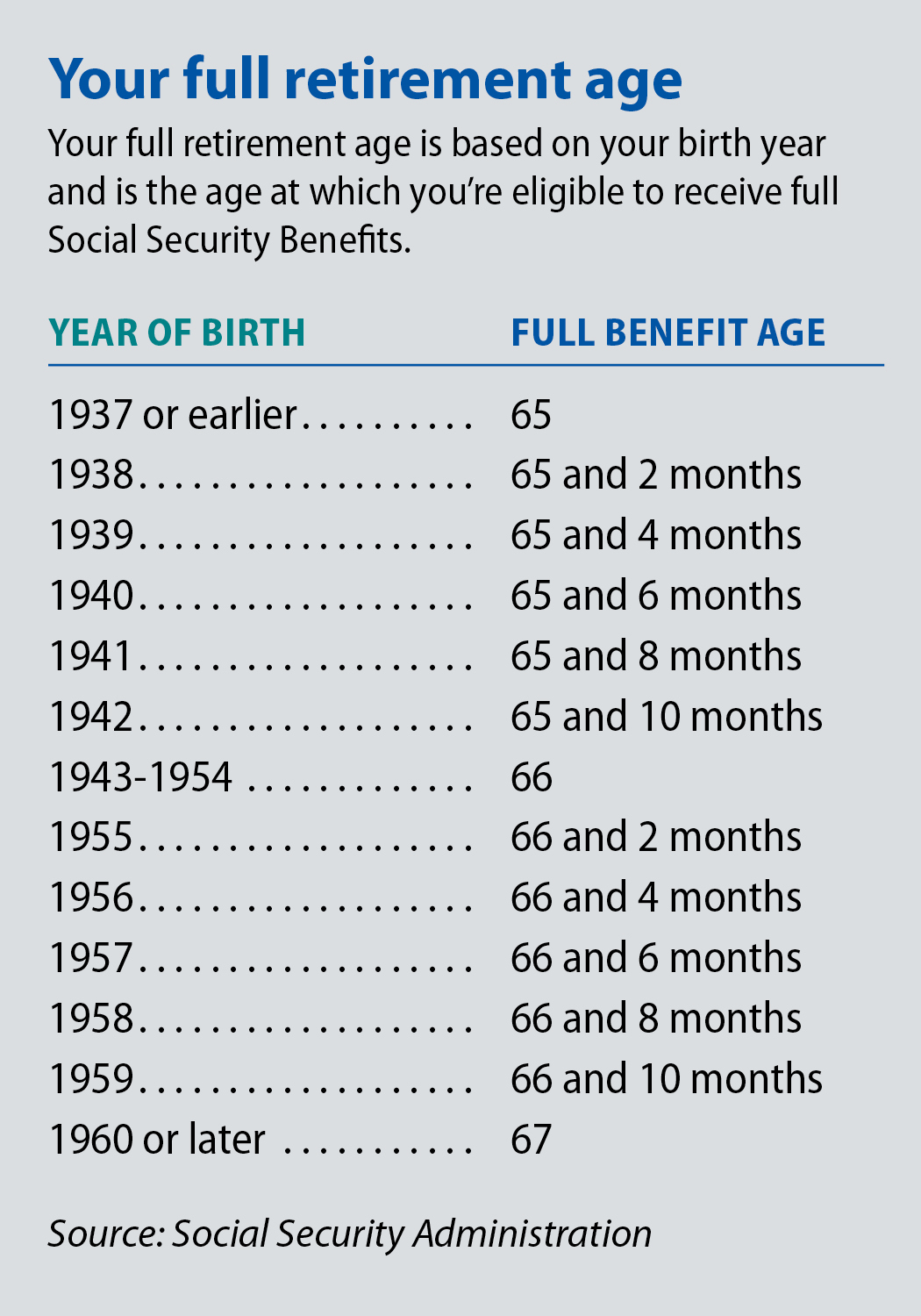
At the heart of the Social Security claiming decision is your Full Retirement Age (FRA). This is the age at which you are entitled to receive 100% of your Primary Insurance Amount (PIA), which is the benefit calculated based on your lifetime earnings. Your FRA is determined by your birth year, not by your current age or when you decide to retire.
Determining Your Full Retirement Age by Birth Year
The Social Security Administration (SSA) has a tiered system for FRA, primarily for individuals born in 1943 or later.
-
Born 1943-1954: Full Retirement Age is 66.
-
Born 1955: Full Retirement Age is 66 and 2 months.
-
Born 1956: Full Retirement Age is 66 and 4 months.
-
Born 1957: Full Retirement Age is 66 and 6 months.
-
Born 1958: Full Retirement Age is 66 and 8 months.
-
Born 1959: Full Retirement Age is 66 and 10 months.
-
Born 1960 and later: Full Retirement Age is 67.
Knowing your FRA is crucial because it serves as the benchmark against which all other claiming ages are measured. Claiming before your FRA results in a permanent reduction of your monthly benefit, while delaying beyond your FRA leads to an increase.
Early Retirement: The Trade-offs of Claiming at 62
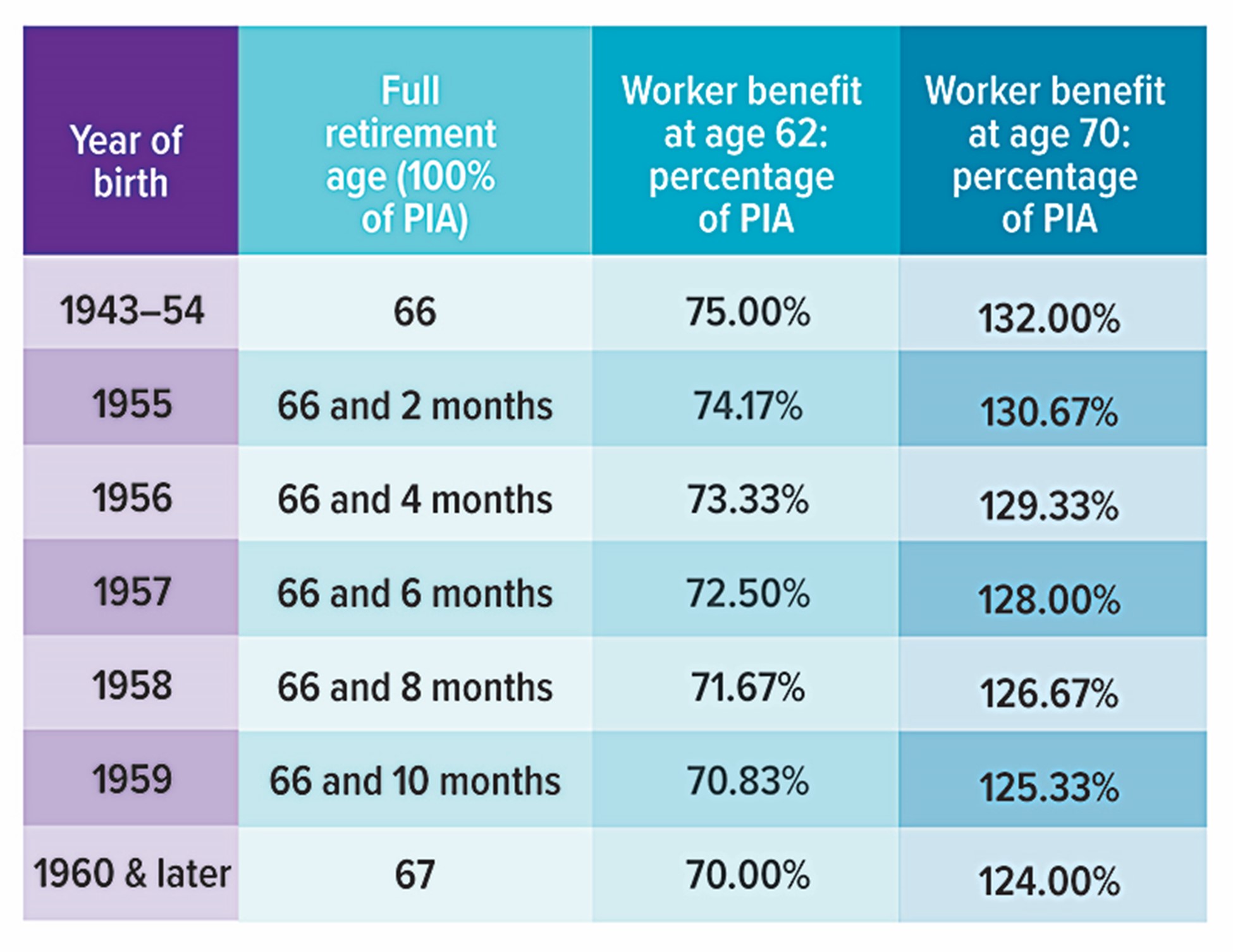
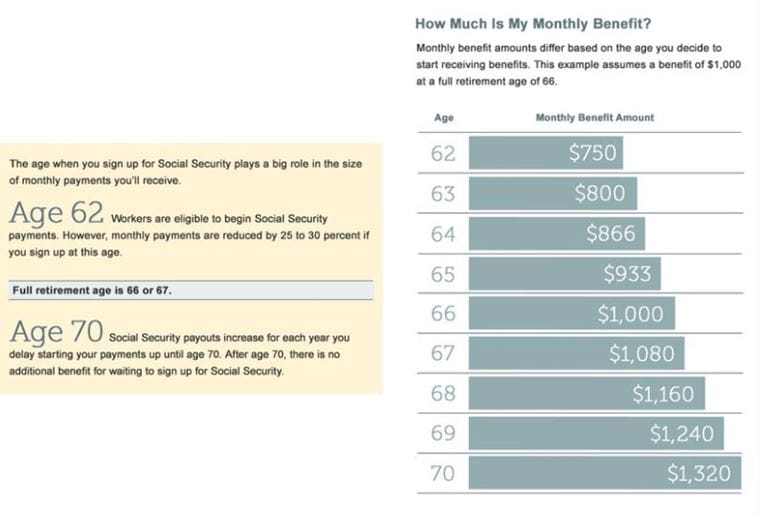
The earliest age you can begin receiving Social Security retirement benefits is 62. While this option offers immediate income, it comes with a significant and permanent reduction in your monthly benefit amount. This reduction is designed to compensate for the fact that you will be receiving benefits for a longer period.
Understanding the Benefit Reduction
If you claim Social Security at age 62, your monthly benefit will be reduced by approximately 25% to 30% compared to what you would receive at your FRA. The exact reduction depends on how many months prior to your FRA you begin receiving benefits. For example, if your FRA is 67, claiming at 62 means you’re claiming 60 months early. The reduction is calculated as 5/9 of 1% for each of the first 36 months you claim early, plus 5/12 of 1% for each additional month.
Let’s illustrate:
-
If your FRA is 67 and you claim at 62 (60 months early), your benefit could be reduced by roughly 30%. So, if your FRA benefit was $2,000, claiming at 62 would result in approximately $1,400 per month.
-
This reduction is permanent. While there are some nuances related to working while claiming early (discussed below), the core benefit reduction for early claiming is irreversible for the rest of your life.
When Early Claiming Might Be Strategic
Despite the reduction, claiming at 62 can be a viable strategy for some individuals:
-
Immediate Financial Need: If you are unable to work due to health issues, job loss, or need immediate income to cover essential living expenses, early claiming can provide a necessary financial lifeline.
-
Poor Health/Shorter Life Expectancy: If you have a serious health condition or a family history of shorter lifespans, claiming early might mean you collect more in total benefits over your lifetime, as you would receive benefits for more years, albeit at a reduced monthly rate.
-
Spousal Strategies: In some married couples, one spouse might claim early while the other delays, optimizing overall household benefits. For instance, the lower-earning spouse might claim at 62 to provide some income, allowing the higher-earning spouse to delay and maximize their own benefit.
-
Bridge to Other Retirement Income: Some individuals use early Social Security benefits as a bridge to other retirement income sources, such as pensions or annuities that begin later, or to allow their invested assets more time to grow without needing to be drawn down.
Delayed Retirement: Maximizing Your Benefits Beyond FRA
Just as claiming early reduces your benefits, delaying your claim past your Full Retirement Age (FRA) can significantly increase your monthly payment. This strategy is often referred to as “delaying for Delayed Retirement Credits (DRCs).”
How Delayed Retirement Credits Work
For each month you delay claiming benefits past your FRA, up to age 70, you earn Delayed Retirement Credits (DRCs). These credits increase your annual benefit by a certain percentage.
-
If you were born in 1943 or later, your benefit increases by 8% for each year you delay past your FRA, up until age 70.
-
This means an extra 2/3 of 1% per month for every month you delay.
For example, if your FRA is 67, and you delay claiming until age 70, you will earn 3 years of DRCs (36 months). This translates to an increase of 24% (3 years x 8% per year) on top of your FRA benefit. If your FRA benefit was $2,000, waiting until 70 could boost it to $2,480 per month.
The Benefits of Delaying Until 70
Delaying your claim until age 70 offers several compelling advantages:
-
Maximized Monthly Income: This is the highest possible monthly benefit you can receive from Social Security. The DRCs stop accruing at age 70, so there is no financial advantage to delaying beyond this point.
-
Inflation Protection: Social Security benefits receive annual cost-of-living adjustments (COLAs). By locking in a higher starting benefit, all subsequent COLAs will be applied to that larger amount, providing a stronger hedge against inflation in retirement.
-
Longevity Insurance: For individuals with good health and a family history of longevity, delaying Social Security acts as a form of longevity insurance. You guarantee yourself a significantly higher guaranteed income stream for the rest of your life, which can be invaluable in later retirement years.
-
Spousal and Survivor Benefits: A higher earner delaying their benefits can also provide a larger potential survivor benefit for their spouse. If the higher-earning spouse passes away, the surviving spouse can claim the higher of their own benefit or the deceased spouse’s benefit.
Key Considerations for Your Claiming Decision
The decision of when to claim Social Security is complex and should be integrated into your broader retirement plan. Several personal and financial factors play a significant role in determining the most advantageous strategy.
Your Health and Life Expectancy
This is arguably one of the most personal and impactful factors. If you anticipate a shorter-than-average life expectancy due to health issues, claiming earlier might allow you to receive more in total benefits over your lifetime. Conversely, if you are in excellent health and expect to live well into your 80s or 90s, delaying your claim could provide a substantially higher cumulative payout over a longer retirement. Tools and calculators that perform a “break-even analysis” can help estimate at what age the cumulative benefits of delaying surpass those of claiming early.
Other Retirement Income and Savings
How much you have saved in 401(k)s, IRAs, and other investment accounts, as well as any pensions, greatly influences your Social Security decision.
-
Ample Savings: If you have substantial retirement savings, you might be able to draw from these assets in your early retirement years, allowing your Social Security benefit to grow until age 70. This can be a powerful strategy for maximizing guaranteed income later in life.
-
Limited Savings: If your other retirement savings are modest, you might need to claim Social Security earlier to cover living expenses, even if it means a reduced monthly benefit.
Spousal and Survivor Benefits
For married couples, the claiming decision becomes more strategic and involves optimizing benefits for both spouses and potential survivor benefits.
-
Coordination: Couples often coordinate their claiming ages. For instance, a lower-earning spouse might claim early, while the higher-earning spouse delays until 70 to maximize their benefit and, by extension, the potential survivor benefit for their partner.
-
Survivor Benefits: A surviving spouse is typically eligible to receive 100% of the deceased spouse’s Social Security benefit (if higher than their own). By delaying, the higher-earning spouse ensures a more robust safety net for their partner should they pass away first. Divorced individuals may also be eligible for benefits based on an ex-spouse’s record.
Working While Receiving Benefits (The Earnings Test)
If you decide to claim Social Security benefits before your Full Retirement Age and continue to work, your benefits may be reduced if your earnings exceed certain limits. This is known as the Social Security Earnings Test.
-
Before FRA: For those claiming before FRA, the SSA will deduct $1 from your benefits for every $2 you earn above a specific annual limit (e.g., $22,320 in 2024).
-
In the Year You Reach FRA: In the year you reach your FRA, the deduction rate is $1 for every $3 earned above a higher annual limit (e.g., $59,520 in 2024), but only for earnings before the month you reach your FRA.
-
At or After FRA: Once you reach your Full Retirement Age, the earnings test no longer applies, and you can earn any amount without your Social Security benefits being reduced.
It’s important to note that any benefits withheld due to the earnings test are not permanently lost. Your monthly benefit will be recalculated at your FRA to account for the months benefits were withheld, effectively increasing your future payments.
Taxation of Social Security Benefits
Depending on your “provisional income,” a portion of your Social Security benefits may be subject to federal income tax. Provisional income includes your adjusted gross income, tax-exempt interest, and half of your Social Security benefits.
-
Single Filers: If your provisional income is between $25,000 and $34,000, up to 50% of your benefits may be taxable. Above $34,000, up to 85% may be taxable.
-
Married Filing Jointly: If your provisional income is between $32,000 and $44,000, up to 50% of your benefits may be taxable. Above $44,000, up to 85% may be taxable.
Some states also tax Social Security benefits, so it’s essential to understand your state’s tax laws.
The Value of Professional Financial Advice
Given the complexity and the long-term impact of your Social Security claiming decision, consulting with a qualified financial advisor is highly recommended. An advisor can help you:
-
Analyze your unique financial situation and retirement goals.
-
Run personalized projections for different claiming scenarios.
-
Integrate your Social Security strategy with your overall investment and income plans.
-
Consider spousal and survivor benefit optimization.
Ultimately, the question of “how old do you have to be for Social Security” reveals a spectrum of choices, each with its own financial advantages and disadvantages. By understanding your Full Retirement Age, the implications of early vs. delayed claiming, and the various personal factors at play, you can make an informed decision that best supports your financial well-being throughout retirement.
aViewFromTheCave is a participant in the Amazon Services LLC Associates Program, an affiliate advertising program designed to provide a means for sites to earn advertising fees by advertising and linking to Amazon.com. Amazon, the Amazon logo, AmazonSupply, and the AmazonSupply logo are trademarks of Amazon.com, Inc. or its affiliates. As an Amazon Associate we earn affiliate commissions from qualifying purchases.