
For the vast majority of workers, Social Security represents the cornerstone of retirement planning. Whether it serves as your primary source of income or a supplemental safety net alongside private investments, the question “How much will my Social Security be?” is one of the most critical financial inquiries you will ever make. However, the answer is not a single, static number. Your eventual payout is a moving target, influenced by your lifetime earnings, the age at which you choose to claim, and even the legislative landscape of the federal government.

Understanding the mechanics of the Social Security Administration (SSA) is essential for anyone looking to build a robust financial future. In this guide, we will break down the complex formulas used to calculate your benefits, the strategic impact of timing, and the external factors that could influence your final monthly check.
Understanding the Foundation: How Social Security Benefits Are Calculated
Social Security is not a simple savings account where you get back exactly what you put in. Instead, it is a social insurance program that uses a progressive formula designed to replace a portion of your pre-retirement income. To estimate your benefit, the SSA looks at your entire work history, but the calculation is focused specifically on your “top” years.
Average Indexed Monthly Earnings (AIME) and the 35-Year Rule
The first step in determining your benefit is calculating your Average Indexed Monthly Earnings (AIME). The SSA looks at your highest 35 years of earnings. If you have worked for more than 35 years, they take the top 35. If you have worked fewer than 35 years, the remaining years are averaged in as zeros. This is a crucial point for personal finance planning: working even a few extra years to replace “zero” years or low-earning years from your youth can significantly boost your final average.
Furthermore, these earnings are “indexed” to account for inflation and changes in standard of living over time. Your earnings from 1990 are adjusted to reflect what that money is worth in today’s economy before the average is calculated.
The Role of the Primary Insurance Amount (PIA)
Once your AIME is established, the SSA applies a formula to determine your Primary Insurance Amount (PIA). The PIA is the base amount you would receive if you retire exactly at your Full Retirement Age (FRA). The formula is progressive, meaning it uses “bend points” to replace a higher percentage of lower earnings and a lower percentage of higher earnings. For example, the formula might replace 90% of the first few hundred dollars of your monthly average, but only 15% of earnings above a certain threshold. This ensures a floor of support for all workers while still rewarding those who paid more into the system.
The Impact of Timing: Full Retirement Age vs. Early or Delayed Filing
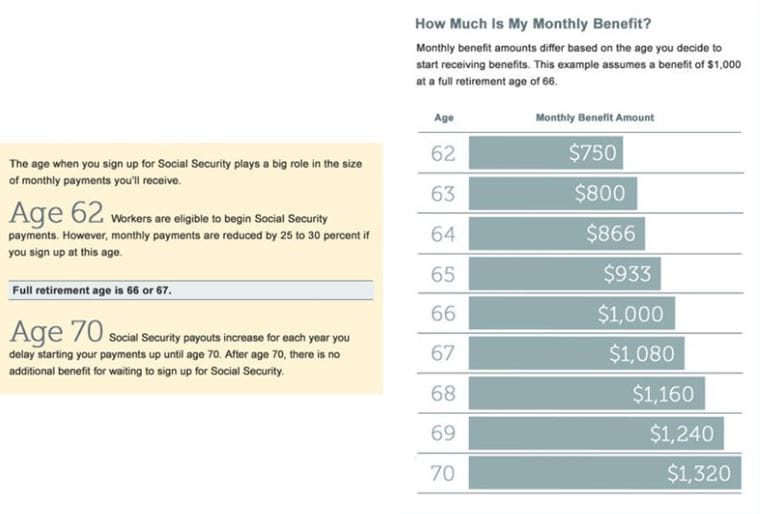
Perhaps the most significant variable in the “how much” equation is when you decide to flip the switch. While you become eligible for Social Security retirement benefits at age 62, claiming then comes at a permanent cost. Your Full Retirement Age (FRA)—the age at which you receive 100% of your calculated benefit—depends on the year you were born. For those born in 1960 or later, the FRA is 67.
Filing at Age 62: The Cost of Early Retirement
Claiming benefits as early as possible is a popular choice, but it results in a permanent reduction of your monthly check. If your FRA is 67 and you claim at 62, your monthly benefit will be reduced by approximately 30%. This reduction is calculated monthly; the closer you get to your FRA, the smaller the reduction.
From a financial perspective, filing early is often a choice driven by necessity—such as health issues or job loss—or a specific investment strategy. However, for those with a long life expectancy, filing early can result in hundreds of thousands of dollars in “lost” lifetime income compared to waiting.
Waiting Until Age 70: Maximizing Delayed Retirement Credits
On the opposite end of the spectrum is the strategy of delaying benefits past your FRA. For every year you wait beyond your Full Retirement Age (up until age 70), your benefit increases by approximately 8% per year. This is known as “Delayed Retirement Credits.”
If your FRA is 67 and you wait until 70, you will receive 124% of your Primary Insurance Amount. There is no financial incentive to wait past age 70, as the credits stop accumulating. For many retirees, waiting is the best “investment” they can make, as it provides a guaranteed, inflation-adjusted increase that is difficult to match in the stock market without significant risk.
Tools and Resources for Precise Estimation
While understanding the formulas is helpful for context, you don’t need to do the math by hand. The SSA and various financial institutions provide sophisticated tools to help you see your actual projected numbers based on your real earnings history.
Using the “my Social Security” Account
The most accurate way to answer “how much will my SS be” is to create a “my Social Security” account on the official SSA.gov website. This portal provides you with your Social Security Statement, which lists your year-by-year earnings history.
It is vital to review this statement periodically for errors. If an employer failed to report your earnings correctly twenty years ago, it could be dragging down your AIME today. The portal also provides personalized estimates for your benefits at age 62, your FRA, and age 70, based on your current trajectory.
Retirement Calculators and Professional Financial Planning
Generic online calculators can be useful for “what if” scenarios—such as “What if I stop working at 55 but don’t claim until 67?” or “What if my income doubles in the next five years?” Many financial advisors use professional-grade software that integrates Social Security projections with your 401(k), IRA, and taxable brokerage accounts. This holistic view is essential because Social Security does not exist in a vacuum; it is one piece of a larger retirement puzzle.
Factors That Can Reduce Your Monthly Payout
It is a common misconception that the number you see on your SSA statement is exactly what will hit your bank account. Several factors can “claw back” a portion of your benefits, and planning for these is a key part of personal finance.
Taxation of Social Security Benefits
Depending on your total “combined income,” you may have to pay federal income tax on your Social Security benefits. Combined income is defined as your Adjusted Gross Income (AGI) + non-taxable interest + half of your Social Security benefits.
- If you file as an individual and your combined income is between $25,000 and $34,000, you may pay income tax on up to 50% of your benefits.
- If it is above $34,000, up to 85% of your benefits may be taxable.
For retirees with significant distributions from traditional IRAs or 401(k)s, the “tax torpedo” can be a significant surprise. This is why many financial planners recommend Roth conversions or other tax-advantaged strategies to keep your combined income below these thresholds.
The Windfall Elimination Provision (WEP) and Government Pension Offset (GPO)
If you worked in a job where you did not pay Social Security taxes—such as some local government, teaching, or overseas positions—and you also qualify for a pension from that job, your Social Security benefits may be reduced. The Windfall Elimination Provision (WEP) affects your own retirement benefit, while the Government Pension Offset (GPO) affects spousal or survivor benefits. These rules are complex but essential to understand if you have a non-covered pension in your background.
Strategizing for a Secure Financial Future
Knowing how much your Social Security will be is only half the battle; the other half is determining how that figure fits into your lifestyle goals. For most middle-to-high earners, Social Security will replace roughly 40% of their pre-retirement income. This leaves a “retirement gap” that must be filled.
Bridging the Gap with Private Savings and Investments
To maintain your standard of living, you must supplement your Social Security with personal savings. This is where tools like the “4% rule” come into play. By coordinating your Social Security claiming strategy with your portfolio withdrawals, you can optimize your tax liability and ensure your money lasts as long as you do. For instance, some retirees choose to spend down their taxable accounts while delaying Social Security to 70, effectively “buying” a larger guaranteed annuity from the government.

Incorporating Cost-of-Living Adjustments (COLA) into Long-Term Projections
One of the most valuable features of Social Security is the Cost-of-Living Adjustment (COLA). Unlike most private pensions or fixed annuities, Social Security benefits are adjusted annually based on the Consumer Price Index (CPI-W). This protects your purchasing power against inflation. When modeling your long-term financial plan, it is important to realize that while your initial benefit is based on your earnings and age, your future benefit will grow to keep pace with the rising costs of healthcare, housing, and goods.
In conclusion, the amount of your Social Security benefit is not just a matter of luck; it is the result of decades of earnings, a specific federal formula, and a crucial decision regarding timing. By monitoring your earnings record, understanding the impact of filing ages, and accounting for taxes and offsets, you can transform Social Security from a mysterious government benefit into a predictable and powerful pillar of your financial independence.
aViewFromTheCave is a participant in the Amazon Services LLC Associates Program, an affiliate advertising program designed to provide a means for sites to earn advertising fees by advertising and linking to Amazon.com. Amazon, the Amazon logo, AmazonSupply, and the AmazonSupply logo are trademarks of Amazon.com, Inc. or its affiliates. As an Amazon Associate we earn affiliate commissions from qualifying purchases.