
For millions of Americans, Social Security represents a cornerstone of their financial security, particularly in retirement. It’s a vital program that provides benefits to retirees, the disabled, and survivors of deceased workers. However, despite its pervasive influence, the actual calculation of an individual’s Social Security check often remains shrouded in mystery, leading to widespread confusion and uncertainty. Understanding how your benefits are determined is not just an academic exercise; it’s a critical component of effective retirement planning, enabling you to make informed decisions about when to claim your benefits, how to potentially maximize them, and what your expected income stream will look like in your later years.
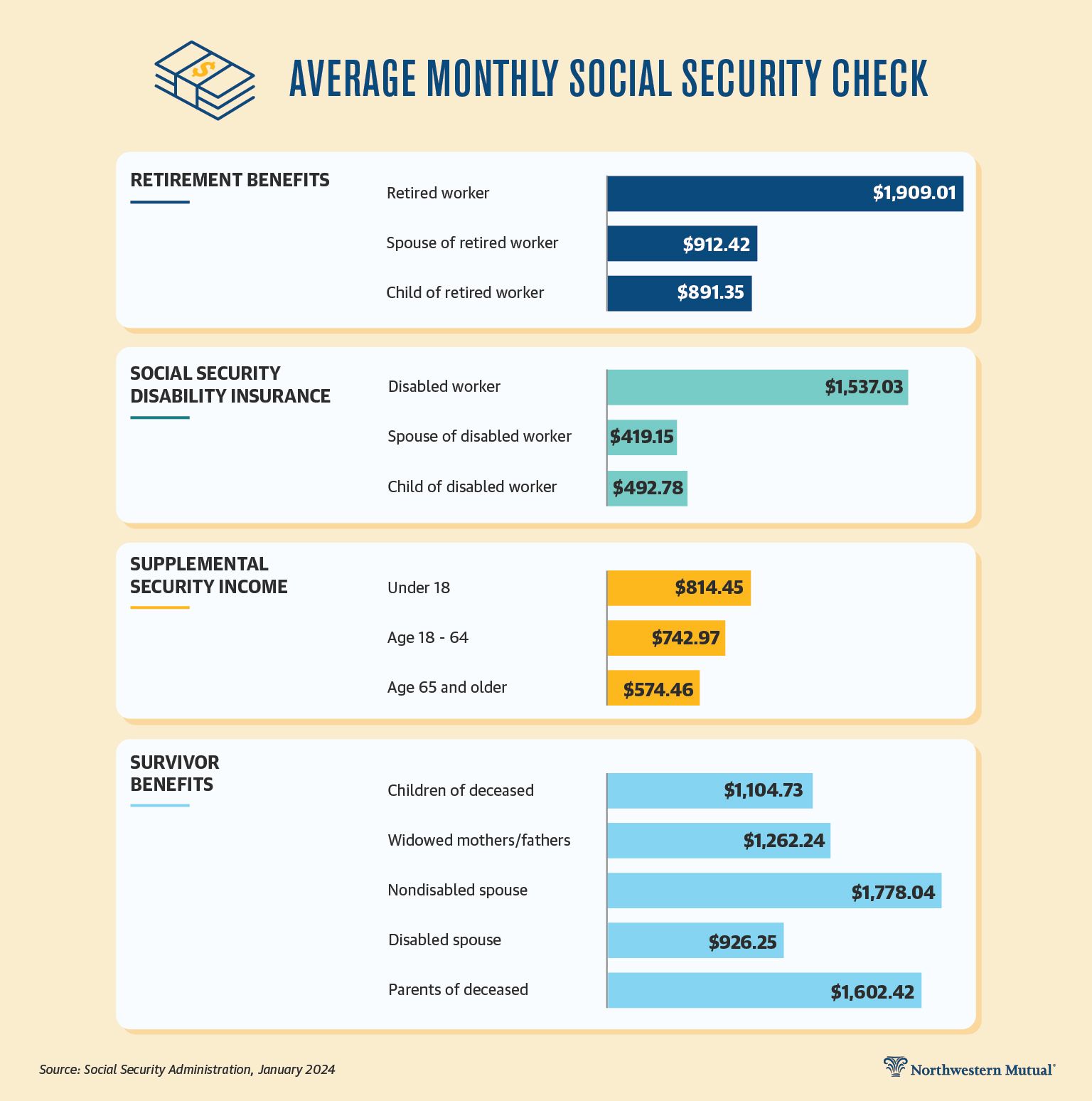
This comprehensive guide aims to demystify the complex world of Social Security benefit calculations. We will delve into the core formulas, explore the numerous factors that influence your monthly payment, and provide actionable insights into how you can estimate and potentially enhance your future Social Security income. By the end, you should have a clearer picture of what to expect and how to navigate the system with greater confidence.
Understanding the Foundation: How Social Security Benefits Are Calculated
The calculation of your Social Security retirement benefit is not arbitrary; it follows a precise formula established by the Social Security Administration (SSA). At its heart, the process considers your entire earnings history, making it a personalized calculation that reflects your contributions to the system over your working life.
The Role of Your Earnings Record: Average Indexed Monthly Earnings (AIME)
The first crucial step in calculating your benefit involves determining your Average Indexed Monthly Earnings (AIME). The SSA doesn’t just look at your raw earnings; it “indexes” them to account for changes in general wage levels over time. This indexing ensures that your past earnings are expressed in terms of their relative value closer to retirement, rather than their nominal value decades ago.
Specifically, the SSA takes your earnings from each year you worked and applies an indexing factor for all but the most recent two years before you turn 62. Once indexed, the SSA identifies your 35 highest-earning years. If you haven’t worked for 35 years, “zeroes” will be included for the missing years, which can significantly reduce your average. These 35 highest-earning years are then summed up and divided by 420 (the number of months in 35 years) to arrive at your AIME. This figure is a critical input, as it represents your average monthly earnings after adjustment for inflation.
Primary Insurance Amount (PIA): Your Benefit at Full Retirement Age
Once your AIME is calculated, the SSA applies a progressive formula to determine your Primary Insurance Amount (PIA). The PIA is the monthly benefit you are entitled to receive if you begin claiming benefits exactly at your Full Retirement Age (FRA). The formula is “progressive” because it replaces a higher percentage of earnings for lower-income workers than for higher-income workers, reflecting a core social equity principle of the program.
The PIA formula uses “bend points” – specific dollar amounts that divide your AIME into segments. For example, for someone reaching age 62 in 2024, the PIA is calculated as:
-
90% of the first $1,174 of AIME, PLUS
-
32% of AIME between $1,174 and $7,078, PLUS
-
15% of AIME over $7,078.
These bend points are adjusted annually based on wage inflation. The resulting PIA is your fundamental benefit amount, from which all other variations (early claiming, delayed claiming, spousal benefits) are derived.
The Impact of Full Retirement Age (FRA)
Your Full Retirement Age (FRA) is the age at which you are entitled to receive 100% of your PIA. This age is not universal; it depends on your birth year. For those born in 1943 through 1954, FRA is 66. It then gradually increases by two months for each birth year thereafter until it reaches 67 for those born in 1960 or later. Knowing your specific FRA is paramount, as it serves as the benchmark for calculating any adjustments to your benefit if you choose to claim earlier or later.
Key Factors Influencing Your Benefit Amount
While the AIME and PIA form the bedrock of your benefit calculation, several other critical factors can significantly alter the final amount you receive in your monthly Social Security check. These factors offer strategic opportunities for individuals to influence their benefit outcome.
When You Start Receiving Benefits
The age at which you decide to claim your Social Security benefits is perhaps the most impactful decision you’ll make regarding your monthly payment.
-
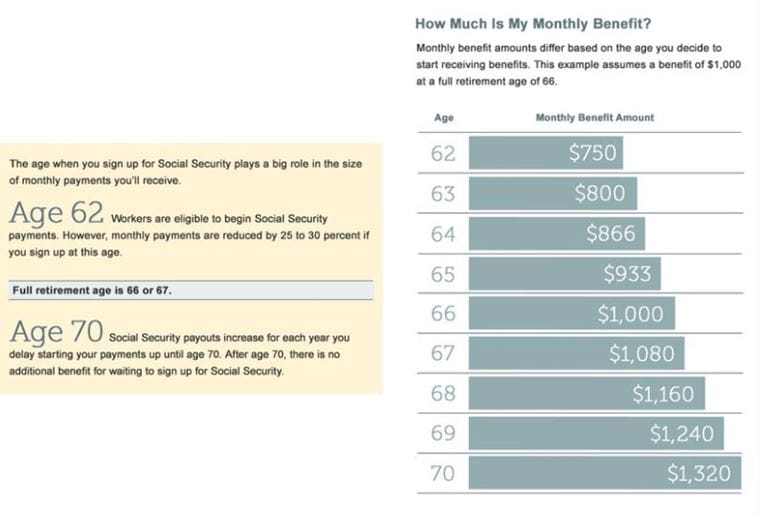
Early Retirement (Age 62): You can start receiving retirement benefits as early as age 62. However, claiming early results in a permanent reduction of your monthly benefit. This reduction can be substantial; for someone with an FRA of 67, claiming at 62 means a permanent reduction of 30% of their PIA. While it provides income sooner, it also means a significantly smaller check for the rest of your life.
-
Full Retirement Age (FRA): As discussed, claiming at your FRA ensures you receive 100% of your calculated PIA. This is the baseline from which early or delayed claiming adjustments are made.
-
Delayed Retirement (Up to Age 70): If you delay claiming benefits beyond your FRA, your monthly payment will increase. For each year you delay, up to age 70, you earn “Delayed Retirement Credits” (DRCs). These credits typically add about 8% to your annual benefit for each year of delay. For someone with an FRA of 67, waiting until age 70 could result in an increase of 24% (3 years x 8%) over their PIA, in addition to any Cost-of-Living Adjustments (COLAs) that occur during that period. This strategy is often pursued by those who can afford to wait and want to maximize their guaranteed lifetime income.
Your Work History and Earnings
The foundation of your AIME lies in your earnings history. Therefore, the longer you work and the more you earn (up to the annual Social Security earnings limit), the higher your potential benefit will be.
-
35 Highest-Earning Years: As mentioned, the SSA uses your 35 highest-earning indexed years. If you work fewer than 35 years, zero-earnings years will be factored in, substantially lowering your AIME. Conversely, working more than 35 years allows lower-earning years to be replaced by higher-earning ones, boosting your AIME.
-
Earnings Up to the Taxable Maximum: There’s an annual limit on the amount of earnings subject to Social Security taxes. For 2024, this limit is $168,600. Earnings above this amount are not taxed for Social Security and therefore do not contribute to your benefit calculation. Consistently earning at or above this taxable maximum for 35 years will result in the highest possible AIME.
Cost-of-Living Adjustments (COLAs)
Once you begin receiving Social Security benefits, your payments are generally adjusted annually to keep pace with inflation through Cost-of-Living Adjustments (COLAs). COLAs are determined by changes in the Consumer Price Index for Urban Wage Earners and Clerical Workers (CPI-W). If the CPI-W increases, your benefit payment will also increase in the following year. These adjustments are vital for maintaining the purchasing power of your benefits over time, especially during long retirements.
Beyond Individual Retirement: Other Types of Benefits
Social Security is not solely for individual retirees. It also provides crucial financial support to families through spousal, survivor, and disability benefits. Understanding these can be particularly important for comprehensive family financial planning.
Spousal Benefits
If you are married or divorced, you may be eligible for benefits based on your spouse’s (or ex-spouse’s) work record, even if you have little or no work history yourself.
-
Eligibility: To claim spousal benefits, your spouse must have already filed for their retirement or disability benefits. You must also be at least 62 years old, or caring for a child under 16 or disabled.
-
Calculation: Spousal benefits are generally up to 50% of your spouse’s PIA. However, if you claim spousal benefits before your own FRA, they will be permanently reduced, similar to claiming your own retirement benefits early. If you are eligible for benefits based on your own work record and a spousal benefit, the SSA will pay you the higher of the two amounts.
-
Divorced Spouses: You may be eligible for benefits based on an ex-spouse’s record if the marriage lasted at least 10 years, you are currently unmarried, and your ex-spouse is at least 62 and eligible for benefits. Your ex-spouse’s claiming of benefits does not affect your own.
Survivor Benefits
Social Security provides critical financial protection for families when a worker dies. These survivor benefits can be paid to a deceased worker’s spouse, children, or dependent parents.
-
Eligibility: Eligible survivors include a widow or widower (at least age 60, or 50 if disabled, or any age if caring for the deceased’s child under 16 or disabled), unmarried children under 18 (or 19 if still in high school), or dependent parents.
-
Benefit Percentages: The amount survivors receive depends on their relationship to the deceased worker and their age. A widow or widower at FRA can receive 100% of the deceased worker’s basic benefit. Children typically receive 75%, and other family members have different percentages. There is a family maximum benefit, which caps the total amount paid to all survivors on one worker’s record.
Disability Benefits (SSDI)
The Social Security Disability Insurance (SSDI) program provides benefits to individuals who are unable to work due to a severe medical condition that is expected to last at least one year or result in death.
- Calculation: SSDI benefits are calculated very similarly to retirement benefits, based on your AIME at the time you became disabled. Generally, the longer you’ve worked and paid Social Security taxes, the more “work credits” you accumulate, making you eligible for higher benefits if you become disabled. The benefit amount is essentially your PIA, payable at any age once disability is established.
Accessing and Estimating Your Social Security Benefits
Given the complexity, it’s crucial to proactively access and understand your personal Social Security information. The SSA provides excellent tools and resources to help you estimate your future benefits.
The Importance of Your Social Security Statement
Your Social Security Statement is arguably the most vital document for understanding your future benefits. This statement, which you can easily access online, provides:
-
A detailed record of your earnings: It shows all reported earnings year by year, which is used to calculate your AIME. Reviewing this regularly is critical to ensure accuracy and correct any discrepancies.
-
Estimated benefits at different claiming ages: It provides personalized estimates for your monthly benefit if you claim at age 62, your Full Retirement Age, and age 70.
-
Estimated disability and survivor benefits: It also projects what your family could receive in the event of disability or death.
Creating a “my Social Security” account at www.ssa.gov is the easiest way to access your statement and other personalized tools at any time.
Using Online Calculators and Tools
The SSA website offers several online calculators that allow you to explore various claiming scenarios and project your benefits based on different assumptions about your future earnings.
-
Retirement Estimator: This tool lets you plug in different retirement dates and future earnings scenarios to see how your benefit changes.
-
Benefit Calculators for Spouses/Survivors: Specific tools can help calculate potential spousal or survivor benefits.
-
These tools are invaluable for “what-if” planning and can help you visualize the financial implications of different claiming strategies.
Consulting with the Social Security Administration
While online tools are powerful, sometimes personalized advice is necessary. If you have complex questions, unusual work history, or need to discuss specific family situations, don’t hesitate to contact the SSA directly. They can provide clarification, explain nuances, and help you understand your options. You can call their toll-free number, or visit a local Social Security office (though appointments are often recommended).
Strategies to Maximize Your Social Security Benefits
Knowing how your benefits are calculated empowers you to make strategic choices that can significantly increase your lifetime Social Security income.
Working Longer and Earning More
The most direct way to boost your benefit is to extend your working career and maximize your earnings during your peak earning years.
-
Replace Low-Earning Years: If you’ve worked more than 35 years, continuing to work (especially at a higher salary) can replace a lower-earning year in your top 35, thereby increasing your AIME and ultimately your PIA.
-
Avoid Zero-Earning Years: If you’re short of 35 years of earnings, working additional years (even part-time) can convert “zero” years into actual earnings, dramatically improving your AIME.
Understanding Your Full Retirement Age
Don’t just default to claiming at age 62. Take the time to understand your specific FRA and the financial implications of claiming before or after it. A five-year difference in claiming age (e.g., from 62 to 67) can result in a 30% permanent reduction, while a three-year delay (e.g., from 67 to 70) can provide a 24% boost. This decision should be weighed against your health, other retirement income sources, and overall financial needs.
Strategic Claiming for Couples
Married couples have unique opportunities to coordinate their Social Security claiming strategies to maximize their combined lifetime benefits.
-
Higher Earner Delays: Often, the higher-earning spouse delaying until age 70 can significantly increase the total household income, especially if that spouse lives a long life.
-
Spousal Benefits: One spouse may be able to claim a spousal benefit while the other delays their own benefit, allowing the higher earner’s benefit to grow.
-
Exploring these options with an SSA representative or a financial advisor can yield substantial long-term benefits.
Monitoring Your Earnings Record
Proactively check your Social Security Statement annually. Discrepancies in your reported earnings can negatively impact your future benefits. If you find any errors, contact the SSA immediately with supporting documentation (like W-2s or tax returns) to correct them. Ensuring an accurate earnings record is fundamental to receiving the benefits you’re entitled to.

Conclusion
The question “How much will my Social Security check be?” is fundamental to financial planning, yet the answer is far from a simple dollar figure. It’s a personalized calculation that factors in your entire work history, earnings, and the age at which you choose to claim benefits. By understanding your Average Indexed Monthly Earnings, your Primary Insurance Amount, and the critical role of your Full Retirement Age, you gain invaluable insight into the Social Security system.
Beyond these core mechanics, recognizing the impact of early versus delayed claiming, the value of consistent high earnings, and the availability of spousal, survivor, and disability benefits allows for a holistic view of this essential program. Furthermore, leveraging resources like your “my Social Security” account and the SSA’s online estimators empowers you to proactively manage and project your future income.
Social Security is not a “set it and forget it” benefit; it requires informed decisions and strategic planning. By actively engaging with the information and tools available, you can demystify your future Social Security check, make choices that align with your financial goals, and secure a more stable retirement.
aViewFromTheCave is a participant in the Amazon Services LLC Associates Program, an affiliate advertising program designed to provide a means for sites to earn advertising fees by advertising and linking to Amazon.com. Amazon, the Amazon logo, AmazonSupply, and the AmazonSupply logo are trademarks of Amazon.com, Inc. or its affiliates. As an Amazon Associate we earn affiliate commissions from qualifying purchases.