
For the vast majority of American workers, Social Security represents the single most important component of a retirement income strategy. It is the bedrock of financial security in old age, providing a guaranteed, inflation-adjusted stream of income that lasts for life. However, one of the most common questions financial planners receive is: “How much will my Social Security check actually be?”
Calculating your future benefit is not a matter of guesswork. It is the result of a specific mathematical formula used by the Social Security Administration (SSA) that weighs your earnings history, the age at which you choose to stop working, and the year you were born. Understanding these variables is essential for anyone looking to build a robust financial plan.
Understanding the Foundation: How Social Security Benefits Are Calculated
The Social Security benefit formula is designed to replace a percentage of your pre-retirement income based on your lifetime earnings. It is progressive, meaning it replaces a higher percentage of income for lower earners than for higher earners, though higher earners still receive a larger absolute dollar amount.
The Role of Your Top 35 Years of Earnings
The SSA looks at your entire work history, but it doesn’t average every single year. Instead, it identifies your 35 highest-earning years. These annual earnings are “indexed” to account for changes in average wages over time, ensuring that $20,000 earned in 1985 is compared fairly to $60,000 earned in 2023. If you have fewer than 35 years of covered earnings, the SSA enters a zero for each missing year, which can significantly pull down your monthly benefit average. This makes it financially advantageous for many people to work at least 35 years to avoid these “zeroes” in their calculation.
Decoding the AIME and PIA Formulas
Once your top 35 years are indexed, the SSA calculates your Average Indexed Monthly Earnings (AIME). This figure is then plugged into a formula to determine your Primary Insurance Amount (PIA). The PIA is the monthly amount you would receive if you chose to begin receiving benefits at your Full Retirement Age (FRA). The formula uses “bend points”—specific dollar amounts that change annually—to determine how much of your AIME is replaced. Currently, the SSA replaces 90% of the first bracket of earnings, 32% of the second, and 15% of the third. This tiered approach is why your Social Security check won’t be a 1-to-1 replacement of your salary.
The Importance of Social Security Credits
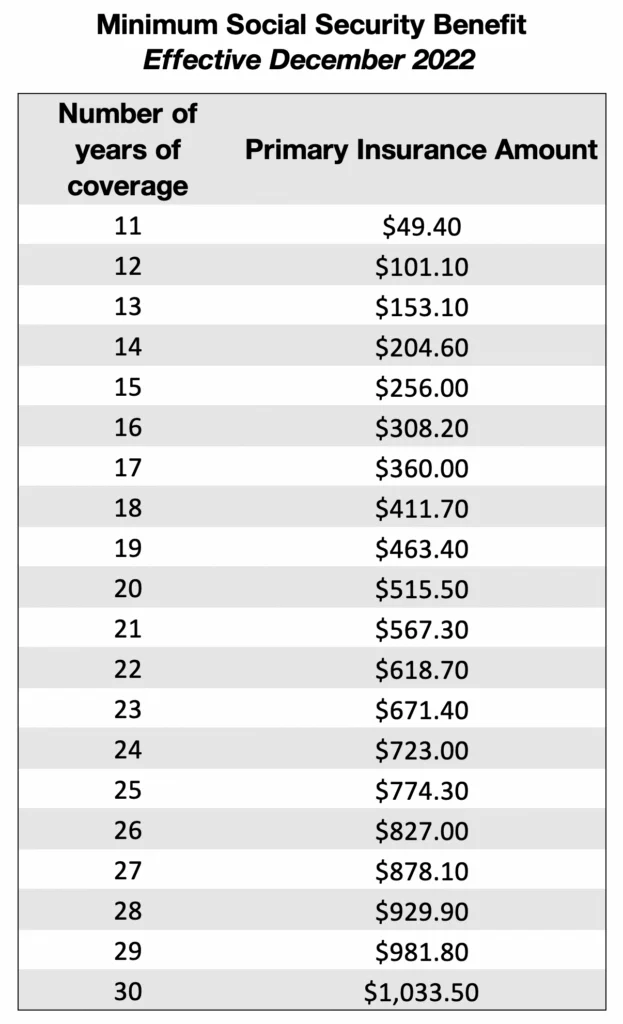
Before you can even qualify for a benefit, you must earn “credits.” In 2024, you receive one credit for every $1,730 in earnings, up to a maximum of four credits per year. To be eligible for retirement benefits, most workers need 40 credits, which effectively means working for at least ten years. While these credits determine eligibility, they do not determine the size of your check; that is reserved for the 35-year earnings calculation.
The Timing Factor: When You Claim Matters
Perhaps the most critical decision you will make regarding your Social Security is when to claim it. While you can technically begin receiving benefits as early as age 62, doing so comes with a permanent reduction in your monthly payment.
Claiming Early at Age 62
The earliest eligibility age is 62. Many people choose this option because they need the cash flow or are concerned about their longevity. However, claiming at 62 results in a reduction of up to 30% compared to what you would have received at your Full Retirement Age. This reduction is permanent. If your PIA was calculated to be $2,000 at age 67, claiming at 62 would leave you with approximately $1,400 per month for the rest of your life.
Reaching Your Full Retirement Age (FRA)
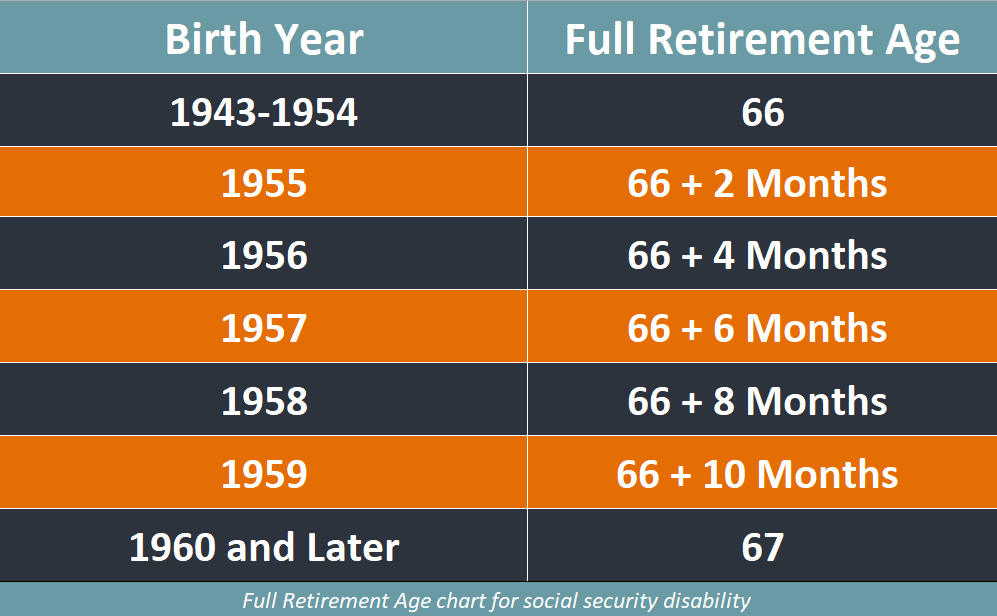
Your Full Retirement Age is the age at which you are entitled to 100% of your PIA. For those born between 1943 and 1954, the FRA is 66. For those born in 1960 or later, the FRA is 67. If you were born between 1955 and 1959, your FRA increases by two months for every year. Reaching your FRA is a significant milestone because it eliminates the “earnings test” (allowing you to work and earn as much as you want without benefit withholding) and serves as the baseline for all future increases.
The Power of Delayed Retirement Credits (Age 70)
For every year you delay claiming Social Security beyond your FRA—up until age 70—your benefit increases by approximately 8% per year. This is known as a Delayed Retirement Credit. This is one of the most effective ways to “guarantee” a high return on your financial planning. By waiting from age 67 to age 70, your monthly check would increase by 24%. For many retirees, this extra income acts as a powerful hedge against the risk of outliving their personal savings.
Factors That Can Increase or Decrease Your Benefit
While your earnings and age are the primary drivers, several other factors can shift the needle on your monthly Social Security check.
Cost-of-Living Adjustments (COLA) and Inflation
Social Security is one of the few retirement income sources that includes an automatic Cost-of-Living Adjustment (COLA). Each year, the SSA reviews the Consumer Price Index for Urban Wage Earners and Clerical Workers (CPI-W). If inflation has risen, benefits are adjusted upward to help retirees maintain their purchasing power. In years of high inflation, these adjustments can be substantial, such as the 8.7% increase seen in 2023. This feature is a vital component of long-term personal finance, as it protects the “real value” of your income over decades.
The Impact of Working While Receiving Benefits
If you claim Social Security before you reach your FRA and continue to work, your benefits may be temporarily reduced if your earnings exceed certain limits. In 2024, if you are under the FRA, the SSA deducts $1 from your benefit payments for every $2 you earn above $22,320. However, these withheld benefits are not “lost” forever. Once you reach your FRA, the SSA recalculates your benefit amount to give you credit for the months they withheld payment, effectively increasing your monthly check for your later years.
Spousal and Survivor Benefit Considerations
Social Security is designed to support families, not just individuals. If you are married, you may be eligible for a spousal benefit worth up to 50% of your spouse’s PIA, provided that amount is higher than your own earned benefit. Furthermore, survivor benefits allow a surviving spouse to inherit the higher of the two checks the couple was receiving. This makes the timing of the higher-earning spouse’s claim even more important, as it determines the baseline for the survivor’s long-term financial security.
Taxation and Social Security: What You Actually Take Home
Many retirees are surprised to learn that Social Security benefits are not always tax-free. Depending on your total income, a portion of your benefits may be subject to federal (and sometimes state) income taxes.
Combined Income Thresholds
The IRS looks at your “combined income” to determine taxability. Combined income is defined as your Adjusted Gross Income (AGI) + non-taxable interest + half of your Social Security benefits.
- If you are an individual and your combined income is between $25,000 and $34,000, you may pay income tax on up to 50% of your benefits. Above $34,000, up to 85% of your benefits may be taxable.
- For married couples filing jointly, the thresholds are $32,000 to $44,000 (up to 50% taxable) and above $44,000 (up to 85% taxable).
Understanding these thresholds is vital for tax-efficient withdrawal strategies from 401(k)s and IRAs.
State Taxes on Social Security
While the federal government taxes benefits based on the thresholds above, state laws vary wildly. As of 2024, the majority of states do not tax Social Security benefits at all. However, about a dozen states still impose some form of tax on these benefits, often with their own specific exemptions or income caps. When choosing where to retire, the tax treatment of your Social Security check should be a primary consideration in your cost-of-living analysis.
Tools and Strategies for Maximizing Your Monthly Check
Knowing “how much” you will get is the first step; the second is using that information to optimize your retirement.
Using the “my Social Security” Online Portal
The most accurate way to find out your projected benefit is to create a “my Social Security” account on the official SSA website (ssa.gov). This portal provides a personalized “Social Security Statement” that shows your verified earnings history and provides estimates for benefits at ages 62, FRA, and 70. It is highly recommended to check this statement annually to ensure your earnings were reported correctly, as an error in your 35-year history can lead to a permanently lower benefit.

Closing the Retirement Income Gap
Rarely is Social Security enough to cover all expenses in retirement. Financial experts generally suggest that Social Security replaces about 40% of an average worker’s pre-retirement income. To maintain your lifestyle, you will likely need to bridge the “gap” using personal savings, pension plans, or part-time income. By knowing your Social Security number today, you can more accurately calculate how much you need to save in your 401(k) or IRA to reach your target retirement lifestyle.
In conclusion, while the question “how much will my social security be” has a complex answer, the tools and formulas are transparent. By understanding the 35-year rule, the impact of claiming age, and the nuances of taxation, you can move from uncertainty to a position of informed financial strength. Social Security is a tool—one of the most powerful in your financial arsenal—and knowing how to use it will define the quality of your retirement years.
aViewFromTheCave is a participant in the Amazon Services LLC Associates Program, an affiliate advertising program designed to provide a means for sites to earn advertising fees by advertising and linking to Amazon.com. Amazon, the Amazon logo, AmazonSupply, and the AmazonSupply logo are trademarks of Amazon.com, Inc. or its affiliates. As an Amazon Associate we earn affiliate commissions from qualifying purchases.