
The question, “How much will my savings grow?” is fundamental to financial planning, a beacon guiding individuals toward their future aspirations. Whether you’re saving for a down payment, retirement, a child’s education, or simply building a safety net, understanding the potential trajectory of your accumulated wealth is crucial. It’s a question that goes beyond simple arithmetic; it delves into the dynamics of compound interest, the impact of time, the choice of savings vehicles, and the constant interplay of economic factors. This article aims to demystify the mechanics of savings growth, providing a comprehensive guide to understanding, calculating, and ultimately maximizing your financial potential. By grasping the principles outlined here, you can transform abstract figures into concrete plans, empowering yourself to make informed decisions that shape your financial future.

The Fundamental Drivers of Savings Growth
At the heart of every successful savings strategy lie several key components that dictate how quickly and substantially your money can multiply. These drivers, when understood and optimized, become powerful allies in your quest for financial prosperity.
The Magic of Compound Interest
Often hailed as the “eighth wonder of the world,” compound interest is the single most powerful force behind long-term wealth accumulation. In simple terms, compound interest is interest earned on interest. Instead of just earning interest on your initial principal, you also earn interest on the accumulated interest from previous periods. This creates an exponential growth curve, where your money starts working harder for you over time. Imagine investing $1,000 at a 5% annual interest rate. In the first year, you earn $50. In the second year, you earn 5% on $1,050 ($52.50), and so on. The longer your money compounds, the more dramatic the effect becomes, turning modest initial sums into substantial nest eggs. This principle underpins the growth of almost all investment and savings accounts designed for long-term horizons.
Initial Capital and Consistent Contributions
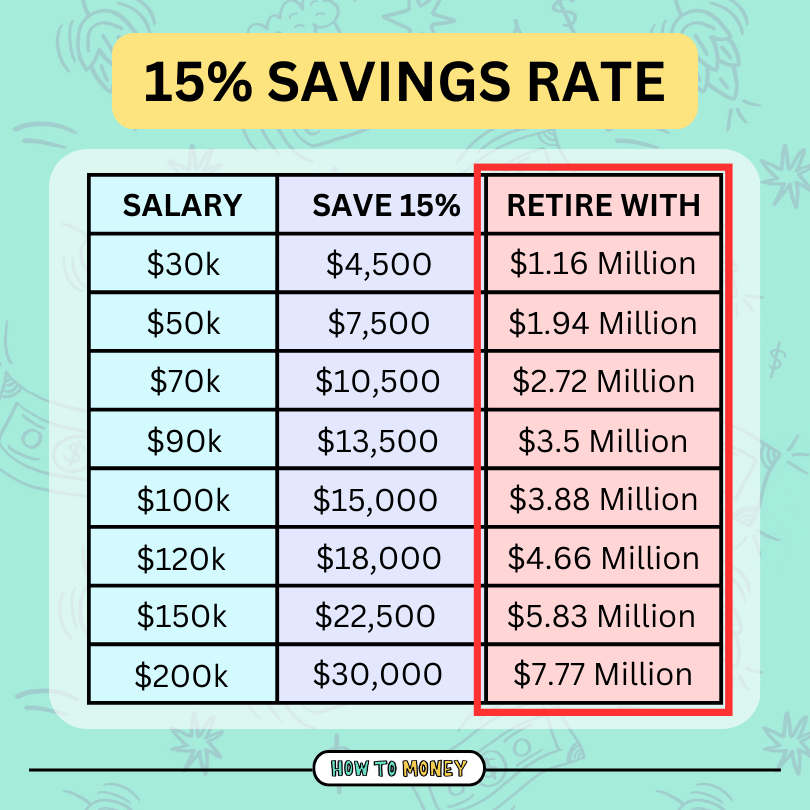
While compound interest works its magic, it needs fuel. The amount of initial capital you start with, alongside the regularity and size of your ongoing contributions, plays a critical role. A larger starting sum naturally provides a bigger base for interest to accrue upon. However, even with a modest start, consistent and disciplined contributions can quickly build momentum. Setting up automatic transfers from your checking account to your savings or investment accounts is an incredibly effective strategy. This “pay yourself first” approach ensures that you prioritize saving before other expenses, turning it into a non-negotiable habit. Small, regular additions, especially early on, allow more time for those contributions to benefit from compounding, making their impact disproportionately significant over the decades.
The Impact of Time (The Eighth Wonder of the World)
Time is arguably the most valuable asset in the equation of savings growth. The longer your money has to compound, the greater its potential for growth. This is due to the exponential nature of compounding; the growth isn’t linear but accelerates over time. A person who starts saving $200 a month at age 25 could accumulate significantly more by retirement than someone who starts saving $400 a month at age 35, assuming the same rate of return. The ten-year head start allows the earlier saver’s money to benefit from an additional decade of compounding, where the “interest on interest” effect is most potent. Delaying your savings journey means missing out on crucial years of this exponential growth, often requiring much larger contributions later to catch up.
Interest Rates and Rates of Return
The interest rate or rate of return is the percentage at which your savings grow annually. This rate is heavily influenced by the type of account or investment vehicle you choose, as well as prevailing economic conditions. A basic savings account might offer a modest interest rate (e.g., 0.5% – 1.5%), while a Certificate of Deposit (CD) might offer slightly more for a fixed term. Investments in the stock market, though carrying higher risk, historically offer higher average annual returns (e.g., 7% – 10% for diversified portfolios over long periods). The higher the rate of return, the faster your money will grow. Even a seemingly small difference in percentage points can translate into hundreds of thousands of dollars over several decades, thanks to compounding. It’s crucial to understand that higher potential returns often come with higher risk, necessitating a balance that aligns with your personal risk tolerance and financial goals.
Understanding Your Savings Vehicles and Their Growth Potential
The choice of where to keep your money profoundly impacts its growth potential. Different financial instruments offer varying levels of risk, liquidity, and, critically, returns. Understanding these distinctions is key to building an effective savings strategy.
Traditional Savings Accounts and Money Market Accounts
These are often the first port of call for emergency funds and short-term savings. Traditional savings accounts offer high liquidity, meaning you can access your money easily, and carry virtually no risk to your principal, as they are typically FDIC-insured. However, their growth potential is generally very low, with interest rates often barely keeping pace with, or even lagging behind, inflation. Money market accounts offer slightly better rates than basic savings accounts and may come with limited check-writing privileges, but they still prioritize safety and liquidity over aggressive growth. They are ideal for funds you might need quickly but not for wealth accumulation over the long term.
Certificates of Deposit (CDs)
CDs offer a slightly higher return than traditional savings accounts in exchange for locking your money away for a predetermined period (e.g., 3 months, 1 year, 5 years). The interest rate is fixed for the term, providing predictability. While they offer better rates than standard savings, they lack liquidity; withdrawing money before the term ends usually incurs a penalty. CDs are a good option for money you don’t need immediate access to and want to grow a little more than a savings account, without the volatility of the market. They are also FDIC-insured, ensuring the safety of your principal.
Investment Accounts (Stocks, Bonds, Mutual Funds, ETFs)
For substantial long-term growth, investment accounts are typically the most effective. These accounts hold assets like:
- Stocks: Representing ownership in a company, stocks offer the potential for significant capital appreciation and dividends, but also carry the highest risk due to market volatility.
- Bonds: Essentially loans to governments or corporations, bonds are generally less volatile than stocks and provide regular interest payments, making them suitable for diversification and income.
- Mutual Funds and Exchange-Traded Funds (ETFs): These are professionally managed portfolios that hold a diversified basket of stocks, bonds, or other assets. They allow investors to gain broad market exposure and diversification with a single investment, often at lower costs than individual stocks, and are excellent vehicles for long-term growth.
The growth potential in investment accounts is considerably higher than in cash accounts, but it comes with market risk. Your capital is not guaranteed, and values can fluctuate. Diversification across different asset classes and geographies is crucial to manage this risk effectively.
Retirement Accounts (401(k)s, IRAs)
These specialized investment accounts are designed for long-term retirement savings and offer significant tax advantages, further enhancing their growth potential.
- 401(k)s: Employer-sponsored plans that allow pre-tax contributions to grow tax-deferred until retirement. Many employers also offer matching contributions, which is essentially free money and a powerful booster for your savings.
- Individual Retirement Accounts (IRAs): Personal retirement accounts available to anyone. Traditional IRAs offer tax-deductible contributions and tax-deferred growth, similar to 401(k)s. Roth IRAs, on the other hand, involve after-tax contributions, but qualified withdrawals in retirement are entirely tax-free.
The tax advantages, coupled with the long time horizon, make retirement accounts incredibly powerful engines for savings growth. They are often invested in a mix of stocks, bonds, and mutual funds, leveraging the market’s long-term upward trend.

Calculating Your Potential Savings Growth
While understanding the drivers and vehicles is essential, being able to project your savings growth numerically provides clarity and motivation. Several tools and formulas can help you estimate your future wealth.
The Compound Interest Formula Explained
The fundamental formula for calculating compound interest is:
A = P (1 + r/n)^(nt)
Where:
- A = the future value of the investment/loan, including interest
- P = the principal investment amount (the initial deposit or lump sum)
- r = the annual interest rate (as a decimal)
- n = the number of times that interest is compounded per year
- t = the number of years the money is invested or borrowed for
For example, if you invest $10,000 at an annual interest rate of 5% compounded annually for 10 years:
A = $10,000 (1 + 0.05/1)^(1*10) = $10,000 (1.05)^10 = $16,288.95.
This formula provides a precise calculation, but for most people, a general understanding and the use of online tools are sufficient.
The Rule of 72
For a quick, mental estimate of how long it will take for an investment to double in value, the Rule of 72 is invaluable. Simply divide 72 by the annual rate of return.
For example, if your investment yields a 6% annual return, it will take approximately 72 / 6 = 12 years to double. If the return is 8%, it will take 72 / 8 = 9 years. This rule is a powerful demonstration of the impact of higher returns and the passage of time.
Online Calculators and Financial Tools
For more detailed and personalized projections, particularly those involving regular contributions over time, online savings and compound interest calculators are indispensable. Websites of financial institutions, investment platforms, and personal finance portals often provide free, user-friendly tools. You can input your initial balance, regular contributions, expected rate of return, and time horizon to see detailed projections, including charts and tables showing year-by-year growth. These tools can also help you play with different scenarios, such as increasing your monthly contributions or finding a higher-yielding investment, to visualize their impact.
The Role of Inflation
While your nominal savings balance may grow, it’s crucial to consider the impact of inflation. Inflation is the rate at which the general level of prices for goods and services is rising, and consequently, the purchasing power of currency is falling. If your savings are growing at 2% annually, but inflation is also 2%, your “real” growth (your actual increase in purchasing power) is zero. To truly grow your wealth, your investments must yield a return that exceeds the rate of inflation. This is why low-interest savings accounts often struggle to maintain your purchasing power over the long term, highlighting the need for higher-yielding investments for long-term financial goals.
Strategies to Maximize Your Savings Growth
Understanding the mechanics is only half the battle; implementing effective strategies to boost your savings growth is where the real work—and reward—lies.
Automate Your Savings
One of the simplest yet most effective strategies is to automate your savings. Set up recurring transfers from your checking account to your savings or investment accounts on payday. This removes the temptation to spend the money first and ensures consistency. Even small, regular transfers add up significantly over time, becoming the bedrock of your compounding journey. Treat these transfers as a non-negotiable bill, ensuring you always “pay yourself first.”
Optimize Your Interest Rates and Returns
Don’t settle for the default low rates offered by traditional banks. Periodically shop around for higher-yield savings accounts, money market accounts, or CDs, especially from online banks that often offer more competitive rates. For long-term goals, critically evaluate your investment portfolio. Are you diversified appropriately? Are your investments aligned with your risk tolerance and goals? Consider consulting a financial advisor to ensure your investments are optimized for maximum growth within your comfort zone. Small increases in your rate of return can have a profound impact over decades.
Minimize Fees and Taxes
Fees and taxes can silently erode your returns, often without you noticing. Be diligent about understanding the fees associated with your investment accounts, mutual funds, and other financial products. High expense ratios in mutual funds or excessive trading fees can significantly cut into your growth. Similarly, consider tax-efficient strategies. Utilizing tax-advantaged accounts like 401(k)s, IRAs, and Health Savings Accounts (HSAs) allows your money to grow tax-deferred or even tax-free, substantially boosting your net returns over the long haul. Understanding capital gains taxes and dividend taxes, and employing strategies like tax-loss harvesting, can also help preserve more of your investment gains.
Reinvesting Returns
To fully harness the power of compounding, always reinvest your returns. This means that any interest, dividends, or capital gains your investments generate should be put back into the investment, rather than withdrawn. Reinvesting automatically increases your principal, which then earns more interest or returns, creating a virtuous cycle of accelerated growth. Many investment platforms allow you to set up automatic reinvestment of dividends, ensuring your money is continuously working for you.
Periodic Review and Adjustment
Your financial situation, goals, and market conditions are not static. It’s vital to periodically review your savings and investment strategy, ideally once a year. Assess whether your current allocations still align with your risk tolerance and long-term objectives. Are you on track to meet your goals? Are there new financial products or opportunities that could benefit you? Is your emergency fund sufficient? Adjusting your contributions, rebalancing your portfolio, or exploring new investment avenues ensures your strategy remains relevant and optimized for continued growth.
Understanding how much your savings will grow is not merely an academic exercise; it is an empowering journey that transforms financial uncertainty into strategic planning. By embracing the power of compound interest, making consistent contributions, selecting appropriate financial vehicles, and diligently optimizing your strategy, you can confidently project and achieve your financial goals. The path to substantial wealth is built on knowledge, discipline, and the incredible, often underestimated, power of time. Start today, stay consistent, and watch your savings blossom into the future you envision.
aViewFromTheCave is a participant in the Amazon Services LLC Associates Program, an affiliate advertising program designed to provide a means for sites to earn advertising fees by advertising and linking to Amazon.com. Amazon, the Amazon logo, AmazonSupply, and the AmazonSupply logo are trademarks of Amazon.com, Inc. or its affiliates. As an Amazon Associate we earn affiliate commissions from qualifying purchases.