
When considering a major purchase—whether it is a first home, a new vehicle, or a personal loan for debt consolidation—the primary question that occupies a borrower’s mind is: “How much will my monthly payment be?” This single figure is the most significant factor in determining whether an investment is sustainable or if it will lead to financial strain.
Understanding the mechanics of monthly payments is not just about looking at a number on a screen; it is about deconstructing the components of interest, principal, and terms to gain full control over your personal finances. In this guide, we will explore the variables that dictate your monthly obligations and the strategies you can use to optimize your cash flow.
1. Understanding the Core Components: What’s in a Monthly Payment?
A monthly payment is rarely a single, monolithic charge. Instead, it is typically a composite of several different financial factors. For most amortized loans, such as mortgages or auto loans, your payment is divided into four primary areas, often referred to in the mortgage world as PITI.
The Principal: The Foundation of the Debt
The principal is the actual amount of money you borrowed. If you take out a $30,000 car loan, that $30,000 is your principal. Every month, a portion of your payment goes toward reducing this balance. In the early stages of a long-term loan, the amount of principal paid each month is surprisingly small, but it grows as the loan matures.
Interest: The Cost of Borrowing
Interest is the profit the lender makes for the risk of lending you money. It is calculated as a percentage of the remaining principal. Because the principal is highest at the beginning of the loan, your interest payments are also highest during the first few months or years. Understanding how interest is calculated—whether it is simple interest or compound interest—is vital to predicting your long-term costs.
Taxes and Insurance (The Escrow Factor)
For homeowners, the monthly payment often includes more than just the bank’s cut. Lenders frequently require an escrow account to cover property taxes and homeowners insurance. These costs are estimated for the year and divided by 12. Because tax rates and insurance premiums fluctuate, your monthly payment may change annually even if you have a fixed-rate mortgage.
Private Mortgage Insurance (PMI) and Fees
If your down payment is less than 20%, you may be required to pay Private Mortgage Insurance (PMI). Additionally, some loans include monthly service fees or homeowners association (HOA) dues if they are rolled into the financing agreement. These “hidden” costs can significantly inflate a monthly payment beyond the initial quote.
2. The Mathematical Framework: How Monthly Payments are Calculated
While many people rely on online calculators, understanding the underlying math provides a clearer picture of how your money is moving. Most fixed-rate loans use an amortization formula to ensure the payment remains the same over the life of the loan.
The Standard Amortization Formula
The formula used to determine a fixed monthly payment (M) is:
M = P [ i(1 + i)^n ] / [ (1 + i)^n – 1 ]
Where:
- P = Principal loan amount
- i = Monthly interest rate (annual rate divided by 12)
- n = Number of months (loan term)
This formula ensures that by the end of the term, the balance hits zero. If you increase the interest rate (i), the numerator grows, raising your payment. If you increase the term (n), the denominator grows faster than the numerator, lowering the monthly payment but increasing the total interest paid over time.
The Impact of Compounding Frequency
Not all loans calculate interest the same way. Some credit cards calculate interest daily, while most mortgages do so monthly. The more frequently interest compounds, the higher the effective annual rate. When asking “how much will my monthly payment be,” it is essential to ask the lender how the interest is applied to the balance.
Leveraging Financial Tools for Accuracy
While manual calculation is possible, using a professional-grade financial calculator or an Excel spreadsheet allows for “what-if” scenarios. By adjusting the interest rate by even 0.5%, you can see a dramatic shift in your monthly obligation. In the digital age, these tools are indispensable for visualizing the debt-to-income impact before signing a contract.

3. Strategic Factors That Influence Your Monthly Outflow
Two people could borrow the exact same amount of money but end up with drastically different monthly payments. This is because lenders personalize the “cost of money” based on your financial profile and the structure of the deal.
The Power of Your Credit Score
Your credit score is the primary lever lenders use to set your interest rate. A borrower with a 780 score may qualify for a 5% interest rate, while someone with a 620 score might be offered 9%. On a $400,000 mortgage, this difference can amount to hundreds of dollars every month. Improving your credit score before applying for a loan is the most effective way to lower your monthly payment.
Loan Term Length: The Balancing Act
The duration of the loan (the “term”) creates an inverse relationship between monthly affordability and total cost. A 15-year mortgage will have a significantly higher monthly payment than a 30-year mortgage, but it will save the borrower tens of thousands of dollars in interest. Conversely, “stretching” a car loan to 72 or 84 months makes the monthly payment look attractive but often results in the borrower being “upside down”—owing more than the asset is worth.
Down Payments and Initial Equity
The more money you put down upfront, the less you need to borrow. This reduces the principal (P in the formula) and consequently the interest charged on that principal. Furthermore, a substantial down payment can eliminate the need for PMI and may even convince a lender to offer a lower interest rate, as the loan is seen as lower risk.
4. Practical Strategies for Managing and Reducing Monthly Payments
Once you know what your payment will be, the next step is determining if it fits within your budget and how you might reduce it over time.
Refinancing and Loan Modification
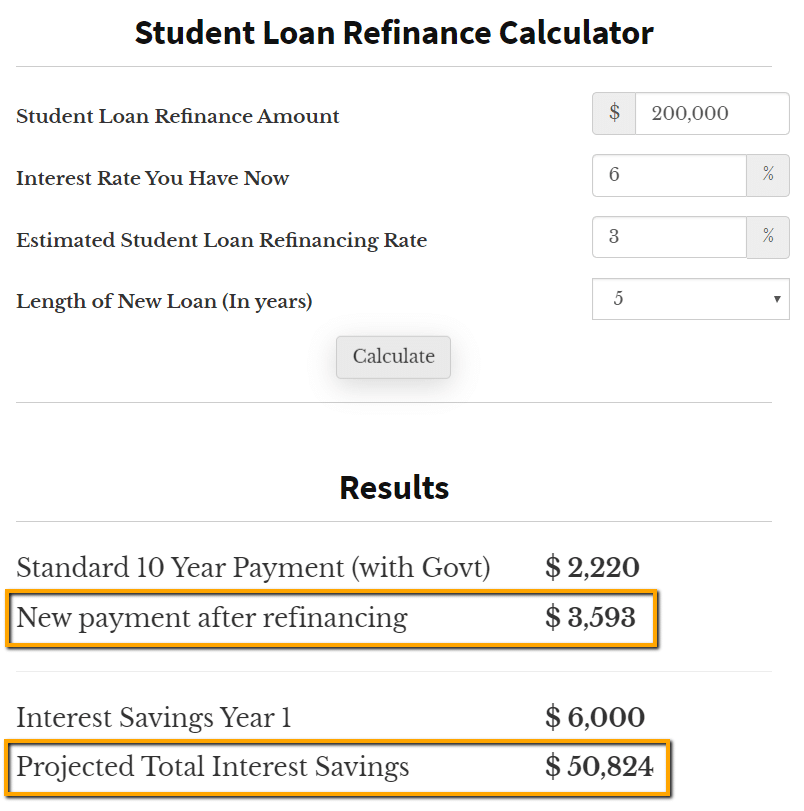
If market interest rates drop or your credit score improves significantly, refinancing can be a powerful tool. By replacing your current high-interest loan with a new one at a lower rate, you can immediately reduce your monthly outflow. However, it is crucial to calculate the “break-even point”—the time it takes for the monthly savings to cover the closing costs of the new loan.
Debt Consolidation and the “Snowball” vs. “Avalanche”
If you are struggling with multiple monthly payments across different credit cards and loans, consolidation might be the answer. By rolling high-interest debt into a single, lower-interest personal loan, you simplify your finances and usually reduce the total monthly payment. Once consolidated, you can use the “Avalanche” method (paying off the highest interest first) or the “Snowball” method (paying off the smallest balance first) to eliminate the debt entirely.
The Benefit of Extra Principal Payments
One of the most effective ways to “short-circuit” the amortization schedule is to pay more than the minimum. Even an extra $100 a month applied directly to the principal can shave years off a mortgage and reduce the amount of interest that compounds in future months. While this doesn’t lower your current required monthly payment, it increases your net worth and moves you toward a “zero payment” reality faster.
5. The Psychological and Budgetary Impact of Monthly Obligations
Financial health is not just about math; it is about the “burn rate” of your household income. Knowing your monthly payment is the first step in calculating your Debt-to-Income (DTI) ratio.
Maintaining a Healthy Debt-to-Income (DTI) Ratio
Lenders generally prefer a DTI ratio of 36% or lower, meaning your total monthly debt payments should not exceed 36% of your gross monthly income. If your projected monthly payment pushes you above this threshold, you are at a higher risk of financial instability. It is often better to settle for a less expensive home or car than to live “paycheck to paycheck” because of an inflated monthly obligation.
Opportunity Cost: What Are You Giving Up?
Every dollar committed to a monthly loan payment is a dollar that cannot be invested in the stock market, a retirement fund, or a side hustle. When asking “how much will my monthly payment be,” you must also ask, “What is the opportunity cost of this payment?” Over 30 years, an extra $500 monthly payment doesn’t just cost $180,000 in cash; it costs the hundreds of thousands of dollars that money could have earned in a compound interest investment account.

Conclusion: Empowerment Through Financial Literacy
The question “how much will my monthly payment be” is the gateway to a larger conversation about wealth management. By understanding how principal, interest, terms, and taxes interact, you move from being a passive borrower to an active financial strategist.
Whether you are negotiating with a dealer or planning for a mortgage, always look beyond the monthly number. Analyze the total cost of the loan, the impact of your credit score, and the long-term flexibility of your budget. In the world of personal finance, knowledge is the best currency, and understanding your payments is the first step toward true financial freedom.
aViewFromTheCave is a participant in the Amazon Services LLC Associates Program, an affiliate advertising program designed to provide a means for sites to earn advertising fees by advertising and linking to Amazon.com. Amazon, the Amazon logo, AmazonSupply, and the AmazonSupply logo are trademarks of Amazon.com, Inc. or its affiliates. As an Amazon Associate we earn affiliate commissions from qualifying purchases.