
Understanding your potential Social Security benefits is a cornerstone of effective retirement planning. For many Americans, these benefits represent a significant, if not primary, source of income in their golden years. However, the exact amount an individual will receive is far from a one-size-fits-all figure, influenced by a complex interplay of personal work history, age at claiming, and broader economic factors. Delving into the mechanics of how these benefits are calculated can empower you to make informed decisions that could significantly impact your financial future.
Understanding the Basics: How Social Security Works
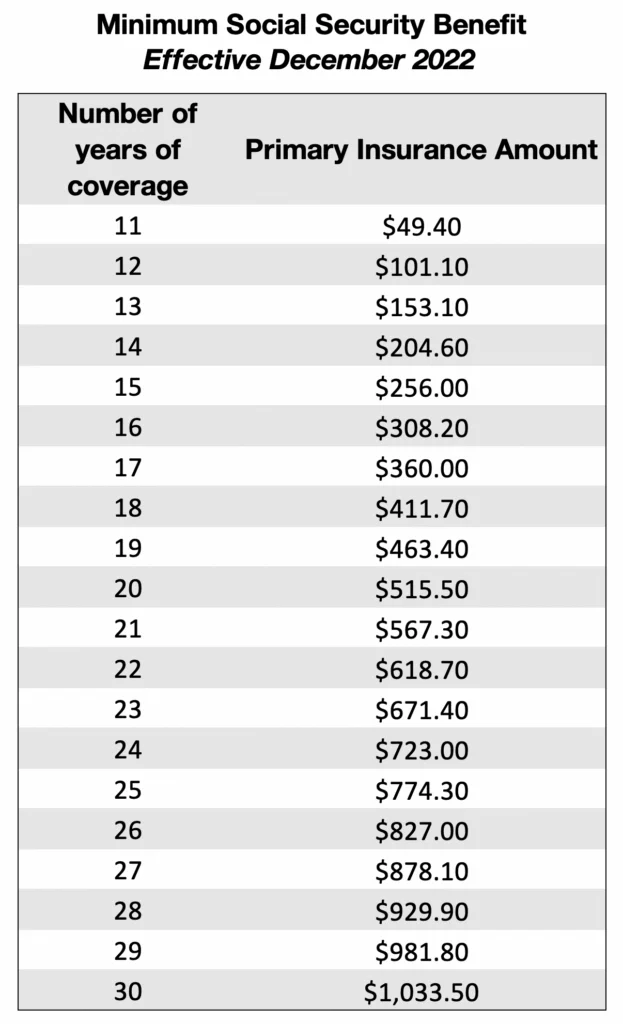
At its core, Social Security operates as a pay-as-you-go system, meaning current workers’ contributions fund the benefits of today’s retirees and other beneficiaries. Your future benefits are primarily based on your earnings over your working life. The Social Security Administration (SSA) uses a specific formula to determine your Primary Insurance Amount (PIA), which is the benefit you would receive if you start collecting at your Full Retirement Age (FRA).

Primary Insurance Amount (PIA)
The PIA is the foundation of your Social Security benefit. It’s the amount payable at your Full Retirement Age (FRA). To calculate your PIA, the SSA takes an average of your highest 35 years of indexed earnings. “Indexed earnings” means your past wages are adjusted to reflect changes in the national average wage level over time, ensuring that earlier earnings have comparable value to more recent ones. The SSA then applies a progressive formula to these indexed earnings, using “bend points” that provide a higher percentage replacement for lower earners than for high earners. This ensures the system provides a safety net for those with lower lifetime earnings.
Calculating Your Average Indexed Monthly Earnings (AIME)
The first step in determining your PIA is to calculate your Average Indexed Monthly Earnings (AIME). The SSA reviews your entire earnings history and identifies your 35 highest-earning years, after indexing. If you have fewer than 35 years of earnings, the missing years are counted as zero, which can significantly lower your AIME and, consequently, your benefit amount. The total indexed earnings from those 35 years are then summed and divided by 420 (the number of months in 35 years) to arrive at your AIME. It’s this AIME that is fed into the PIA formula.
The Role of Work Credits
To be eligible for Social Security retirement benefits, you generally need to have accumulated 40 “work credits.” You can earn up to four work credits each year. In 2024, you earn one work credit for every $1,730 in earnings, meaning you need to earn $6,920 to get the maximum four credits for the year. Most people achieve 40 credits over a 10-year working career. These credits don’t determine the amount of your benefit, but rather your eligibility for benefits. Without sufficient work credits, you cannot claim Social Security retirement benefits based on your own earnings record.
Factors Influencing Your Benefit Amount
Beyond your earnings history, several critical factors directly influence the precise monthly sum you’ll receive from Social Security. Understanding these variables is key to estimating and potentially optimizing your benefits.
Your Earnings History
As established, your lifetime earnings history is the most significant factor. The higher your average indexed monthly earnings over your 35 highest-earning years, the higher your PIA will be. This highlights the importance of working consistently and earning as much as you can throughout your career, especially in those highest-earning years. Gaps in employment or periods of lower earnings can reduce your overall average, impacting your future benefit.
Your Full Retirement Age (FRA)
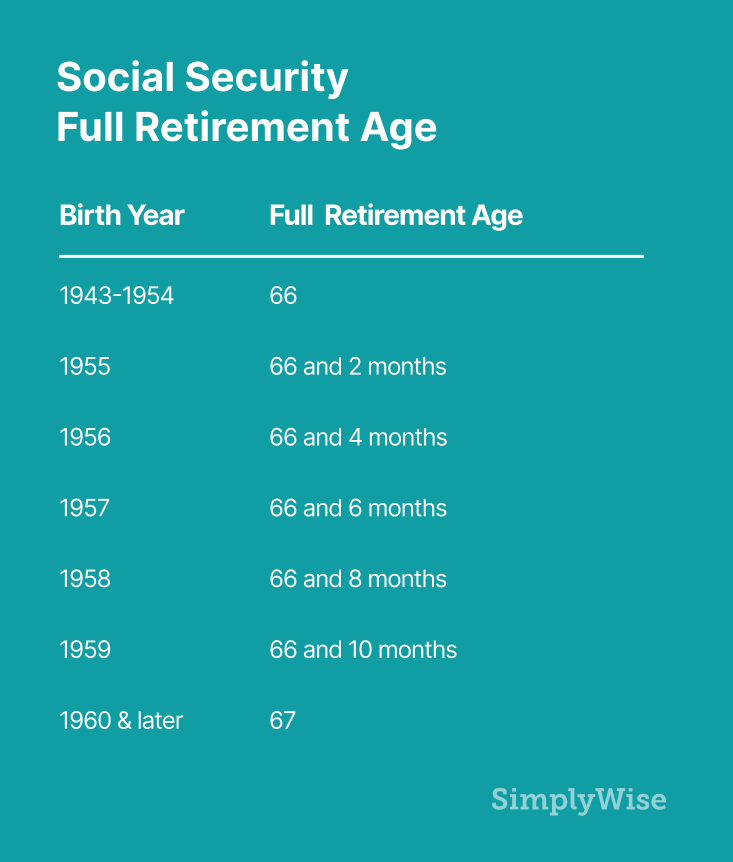
Your Full Retirement Age (FRA) is the age at which you are entitled to receive 100% of your PIA. This age is determined by your birth year:
-
Born in 1937 or earlier: FRA is 65
-
Born between 1943 and 1954: FRA is 66
-
Born in 1960 or later: FRA is 67
If you claim benefits before your FRA, your monthly payment will be permanently reduced. If you claim after your FRA, up to age 70, your monthly payment will be permanently increased.
When You Choose to Claim
This is arguably the most impactful decision you’ll make regarding your benefits. You can start receiving retirement benefits as early as age 62, but doing so results in a significant and permanent reduction in your monthly payment. For example, if your FRA is 67, claiming at age 62 could reduce your monthly benefit by up to 30%. Conversely, if you delay claiming beyond your FRA, you can earn Delayed Retirement Credits (DRCs). These credits increase your benefit by a certain percentage for each month you delay, up to age 70. The annual increase is 8% per year for those born in 1943 or later. This means delaying from age 67 to 70 could result in a 24% increase in your monthly benefit.
Cost-of-Living Adjustments (COLAs)
Social Security benefits are subject to annual Cost-of-Living Adjustments (COLAs), which are designed to help benefits keep pace with inflation. COLAs are determined based on the Consumer Price Index for Urban Wage Earners and Clerical Workers (CPI-W). If the CPI-W increases from the third quarter of the previous year to the third quarter of the current year, benefits will receive an adjustment. These adjustments are typically announced in October and take effect in December for benefits paid in January of the following year. While COLAs don’t directly influence your initial benefit calculation, they ensure the purchasing power of your benefits doesn’t erode significantly over time.
Strategies for Maximizing Your Benefits
Maximizing your Social Security benefits isn’t about finding loopholes but strategically planning your work and claiming decisions based on the system’s rules. Small adjustments can lead to thousands of dollars in additional lifetime income.
Working Longer
Continuing to work, especially if you haven’t reached 35 years of substantial earnings, can significantly boost your AIME. Each additional year you work, if it’s one of your highest-earning years, can replace a lower-earning year (or a zero-earning year) in your top 35, thereby increasing your average. Even if you already have 35 high-earning years, continuing to work at a higher salary can still increase your average if your new earnings replace lower-earning years from earlier in your career.
Delaying Your Claim
As noted, delaying your claim past your Full Retirement Age (FRA) can substantially increase your monthly benefit through Delayed Retirement Credits (DRCs). This strategy is particularly powerful for those who are in good health, have other retirement savings to draw from in the interim, or wish to provide a higher survivor benefit for a spouse. The 8% annual increase for each year you delay between FRA and age 70 is a guaranteed, inflation-adjusted return that is hard to beat elsewhere.
Coordinating Spousal or Survivor Benefits
If you are married, divorced (under certain conditions), or widowed, you may be eligible for spousal or survivor benefits based on your current or former spouse’s earnings record. These rules are complex and offer various claiming strategies:
-
Spousal Benefits: A spouse can generally claim up to 50% of their partner’s PIA. If they have their own earnings record, they can choose to claim based on their own record or their spouse’s, whichever is higher.
-
Survivor Benefits: A widow or widower can claim up to 100% of their deceased spouse’s benefit (including any DRCs earned). They may also be able to switch to their own higher benefit later if it grows.
-
Divorced Spouse Benefits: You may be eligible for benefits on a former spouse’s record if the marriage lasted at least 10 years, you are currently unmarried, and are at least 62.
Strategic coordination between spouses can optimize combined household benefits. Consulting with a financial advisor specializing in Social Security can be invaluable here.
Understanding the Earnings Test
If you claim Social Security benefits before your Full Retirement Age (FRA) and continue to work, your benefits may be reduced if your earnings exceed certain limits. This is known as the earnings test.
-
Before FRA: For those under FRA, Social Security will deduct $1 from your benefits for every $2 you earn above the annual limit (e.g., $22,320 in 2024).
-
Year you reach FRA: In the year you reach FRA, the deduction rate is $1 for every $3 earned above a higher annual limit (e.g., $59,520 in 2024), but only earnings before the month you reach FRA count towards the limit.
-
At or after FRA: Once you reach your FRA, the earnings test no longer applies, and you can earn any amount without your Social Security benefits being reduced.
It’s important to note that any benefits withheld due to the earnings test are not lost forever; your monthly benefit will be recalculated at your FRA to account for the withheld amounts, resulting in a higher monthly payment moving forward.
Estimating Your Future Benefits
While the precise figures can only be determined by the SSA, several tools and resources allow you to get a highly accurate estimate of your future Social Security benefits. Proactive estimation is crucial for retirement planning.
Using the Social Security Administration (SSA) Website
The most authoritative source for your benefit estimate is the official Social Security Administration website (ssa.gov). By creating a “my Social Security” account, you can access your personalized Social Security Statement, review your earnings history, and get detailed estimates of your future benefits at various claiming ages (62, FRA, and 70). The online calculator uses your actual earnings record, making it the most accurate projection available.
Reviewing Your Social Security Statement
The SSA stopped mailing physical statements to all workers annually but continues to make them available online. Your Social Security Statement details your earnings history, provides estimates for retirement, disability, and survivor benefits, and offers valuable information about how to qualify for benefits. Regularly reviewing this statement helps you ensure your earnings record is accurate; any discrepancies should be reported to the SSA promptly.
Financial Planning Tools and Advisors
Beyond the SSA’s tools, various independent financial planning software and retirement calculators can help you integrate your estimated Social Security benefits into a broader retirement income plan. Financial advisors, particularly those specializing in retirement planning, can offer personalized guidance. They can help you understand the implications of different claiming strategies, coordinate benefits with a spouse, and integrate Social Security into your overall financial picture, including other investments and income sources. They can also provide insights into how potential future changes to the Social Security system might affect your plans.
Beyond the Monthly Check: Taxation and Healthcare
While the primary focus is often on the gross monthly benefit amount, it’s essential to consider two other significant factors that impact your net benefit and overall financial well-being in retirement: the taxation of benefits and the interplay with Medicare.
Taxation of Benefits
Many retirees are surprised to learn that a portion of their Social Security benefits may be subject to federal income tax. Whether your benefits are taxable depends on your “combined income,” which is defined as your adjusted gross income (AGI) plus non-taxable interest plus one-half of your Social Security benefits.
-
For single filers: If your combined income is between $25,000 and $34,000, up to 50% of your benefits may be taxable. If your combined income is above $34,000, up to 85% of your benefits may be taxable.
-
For married couples filing jointly: If your combined income is between $32,000 and $44,000, up to 50% of your benefits may be taxable. If your combined income is above $44,000, up to 85% of your benefits may be taxable.
Some states also tax Social Security benefits, though most do not. It’s crucial to factor in potential taxation when estimating your net retirement income.
Medicare and Social Security
Medicare, the federal health insurance program for people 65 or older, is closely linked to Social Security. If you are receiving Social Security benefits at age 65, you will automatically be enrolled in Medicare Parts A (hospital insurance) and B (medical insurance). The premiums for Medicare Part B are typically deducted directly from your monthly Social Security benefit. The amount deducted can vary based on your income, with higher-income beneficiaries paying a higher premium (Income-Related Monthly Adjustment Amount, or IRMAA). Understanding these deductions is vital for accurately projecting your net monthly Social Security income and your overall healthcare costs in retirement.
aViewFromTheCave is a participant in the Amazon Services LLC Associates Program, an affiliate advertising program designed to provide a means for sites to earn advertising fees by advertising and linking to Amazon.com. Amazon, the Amazon logo, AmazonSupply, and the AmazonSupply logo are trademarks of Amazon.com, Inc. or its affiliates. As an Amazon Associate we earn affiliate commissions from qualifying purchases.