
The question of how much money one needs for retirement is one of the most critical financial queries individuals face, yet it remains one of the most complex to answer definitively. Unlike a fixed price tag, your retirement “number” is a deeply personal figure, shaped by a confluence of variables unique to your life, aspirations, and financial situation. It’s a journey, not a destination, requiring regular assessment and adjustment rather than a one-time calculation. This article will demystify the process, exploring the key factors, common methodologies, and actionable strategies to help you arrive at a realistic and achievable retirement savings goal.

The Elusive “Magic Number”: Why It’s Hard to Pin Down
Many people dream of a single, definitive figure that represents their retirement savings goal. While financial calculators can provide estimates, the truth is that your “magic number” is dynamic, evolving with your life stages, economic conditions, and personal choices. Understanding this inherent variability is the first step toward effective retirement planning.
Understanding the Individual Nature of Retirement
Retirement is not a monolithic experience. For some, it means complete cessation of work, dedicating time to hobbies, travel, or family. For others, it might involve a “soft retirement” — shifting to part-time work, consulting, or pursuing a passion project that generates some income. The lifestyle you envision will directly influence your financial needs. Someone planning to circumnavigate the globe will naturally require a significantly larger nest egg than someone content with a quiet life at home. Your health status, relationship status, and even the number of dependents you might support in retirement (e.g., adult children, grandchildren) all play a role in this personalized equation.
The Impact of Time: Inflation and Longevity
Two powerful forces that often get underestimated are inflation and longevity. Inflation erodes purchasing power over time. A dollar today will buy less in 20 or 30 years. If your retirement is decades away, even a modest 2-3% annual inflation rate can drastically reduce the real value of your savings if not accounted for. Consider that healthcare costs, in particular, tend to inflate at a rate higher than general inflation, posing a significant challenge for retirees.
Concurrently, people are living longer. Advances in medicine and healthier lifestyles mean that a 65-year-old today might reasonably expect to live into their late 80s or even 90s. While this is wonderful news for quality of life, it means your retirement savings need to stretch over a longer period, potentially 20, 25, or even 30+ years. This increased longevity demands a larger initial sum and a robust investment strategy capable of sustaining withdrawals over an extended timeframe.
Beyond Basic Needs: Desired Lifestyle in Retirement
When projecting retirement expenses, it’s easy to focus solely on essentials like housing, food, and utilities. However, a fulfilling retirement often includes discretionary spending. Will you travel? Pursue expensive hobbies? Eat out frequently? Support charitable causes? These “wants” are crucial for maintaining a high quality of life and must be factored into your projected budget. Neglecting them can lead to a retirement experience that feels restrictive rather than liberating. Think about the legacy you wish to leave, too – whether it’s supporting family or philanthropic endeavors, these aspirations have financial implications.
Core Principles for Estimating Your Retirement Nest Egg
While the exact number is personal, several widely accepted financial principles and rules of thumb can provide a solid framework for estimating your retirement needs. These serve as excellent starting points for your calculations.
The 70-80% Income Replacement Rule
A common guideline suggests that you’ll need approximately 70-80% of your pre-retirement annual income to maintain your lifestyle in retirement. The logic here is that certain expenses tend to decrease or disappear (e.g., commuting costs, work-related clothing, saving for retirement itself, mortgage might be paid off), while others might increase (e.g., healthcare, travel, leisure). This rule provides a quick estimate for your annual retirement spending. For example, if you earn $100,000 annually before retirement, you might aim for $70,000-$80,000 in annual retirement income.
The 4% Rule: A Common Withdrawal Strategy
Once you have an idea of your annual retirement spending, the “4% rule” is a popular strategy to determine the total size of your nest egg. It suggests that you can safely withdraw 4% of your initial retirement portfolio value in the first year of retirement, adjusting subsequent withdrawals for inflation, without running out of money over a 30-year retirement period.
To use this rule, simply multiply your estimated annual retirement expenses by 25. So, if you need $80,000 per year in retirement income, you’d aim for a portfolio of $2,000,000 ($80,000 x 25). While widely cited, it’s important to remember that the 4% rule is based on historical market returns and may need adjustment based on current market conditions, your risk tolerance, and the expected length of your retirement. Some advisors now suggest a more conservative 3.5% withdrawal rate, especially for longer retirements or periods of lower expected market returns.
Factoring in Major Expenses: Healthcare and Housing
Beyond the general income replacement, specific large expenses warrant special consideration. Healthcare costs in retirement are a major concern. Even with Medicare (in the U.S.) or other national healthcare systems, out-of-pocket expenses, prescription drugs, dental, vision, and long-term care can be substantial. It’s prudent to set aside a significant portion of your retirement budget specifically for healthcare.
Housing is another critical factor. Will your mortgage be paid off? Do you plan to downsize, relocate to a lower-cost area, or move into an assisted living facility later in life? These decisions have enormous financial implications. Eliminating mortgage payments before retirement can significantly reduce your monthly cash flow needs and, consequently, the size of your required nest egg.
Key Variables That Shape Your Retirement Goal
Beyond general rules, several personal and external variables will profoundly influence your specific retirement savings target. Understanding these allows for a more tailored and accurate plan.
Your Current Age and Retirement Timeline
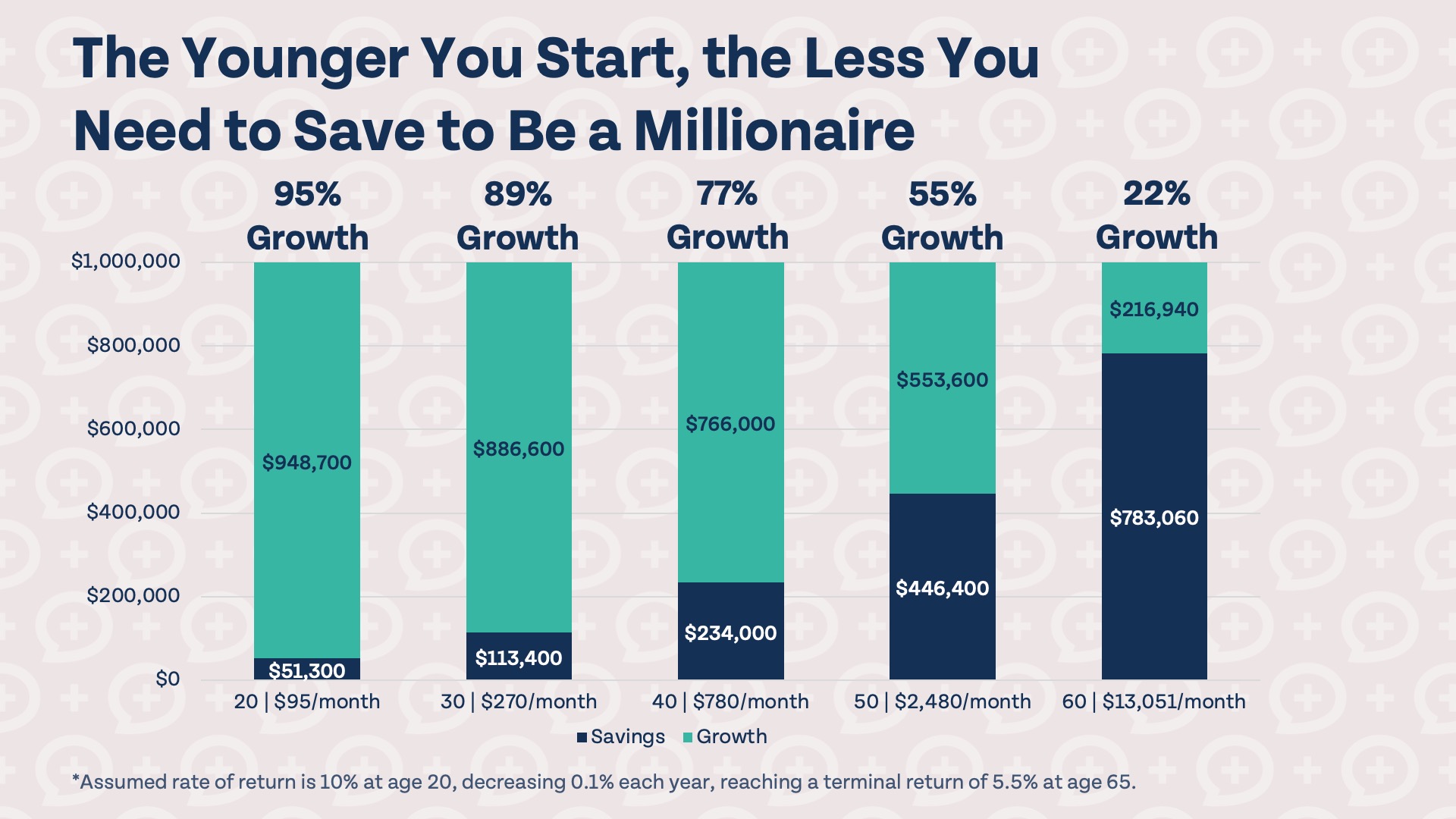
The younger you are when you start saving, the less you generally need to contribute each month, thanks to the power of compound interest. A 25-year-old has 40 years for their money to grow, while a 50-year-old has only 15. The compounding effect means that early contributions are often the most valuable. Conversely, a shorter timeline means you need to save more aggressively to catch up.
Expected Investment Returns and Risk Tolerance
The rate at which your investments grow is a critical component of your retirement calculation. Higher average annual returns mean your money compounds faster, requiring less principal saved. However, higher potential returns usually come with higher risk. Your risk tolerance – how comfortable you are with market fluctuations – will dictate your investment portfolio’s asset allocation (e.g., stocks vs. bonds). A conservative investor might project lower average returns, thus requiring a larger initial savings amount, while an aggressive investor might project higher returns. It’s crucial to strike a balance between realistic return expectations and your comfort level with risk.
Sources of Retirement Income Beyond Savings (Social Security, Pensions)
Your personal savings are just one piece of the retirement income puzzle. Many individuals will also rely on Social Security benefits (in the U.S.) or government pensions. For some, corporate pensions are still a reality. These guaranteed income streams can significantly reduce the amount you need to generate from your personal investments. It’s important to estimate these expected income sources and subtract them from your total annual retirement income needs before calculating your personal savings target. Online calculators and government agencies can help you estimate future Social Security benefits.
The Cost of Living Where You Plan to Retire
Where you choose to retire makes a monumental difference. Retiring in a high-cost-of-living urban center will require a much larger sum than retiring in a rural area or a country with a lower cost of living. Even within the same country, state and local taxes, housing costs, and services can vary dramatically. Researching the cost of living in your desired retirement location is essential for an accurate projection.
Practical Steps to Calculate Your Personalized Retirement Figure
Armed with an understanding of the variables and principles, you can now begin to build your own retirement roadmap.
Assess Your Current Spending and Project Future Needs
Start by tracking your current expenses for a few months to get a clear picture of where your money goes. Then, project how these expenses might change in retirement. Categorize them into “essential” (housing, food, utilities, healthcare) and “discretionary” (travel, hobbies, dining out). Consider which expenses will disappear (e.g., mortgage, commuting, saving for retirement) and which might increase (e.g., healthcare, leisure activities). This detailed budgeting exercise will give you a far more accurate annual spending target than a general percentage rule.
Utilize Online Retirement Calculators
Many reputable financial institutions and websites offer free online retirement calculators. These tools allow you to input your age, current savings, desired retirement age, projected annual expenses, and expected investment returns. They can then estimate your “magic number” and tell you if you’re on track or how much more you need to save monthly. While these are estimates, they provide an excellent starting point and allow you to model different scenarios.
Consider Stress Testing Your Plan
A robust retirement plan isn’t just optimistic; it’s resilient. Once you have an initial number, “stress test” it. What if inflation is higher than expected? What if market returns are lower? What if you live longer than you anticipate? Running these “what-if” scenarios can help you build in a buffer and create a more robust plan. This might involve setting a slightly higher savings goal or planning for a more conservative withdrawal rate.
Strategies to Reach Your Retirement Savings Target
Identifying your retirement number is only half the battle; the other half is implementing a strategy to get there.
Start Early and Be Consistent
This cannot be overstressed. Time is your greatest asset in retirement savings. Start contributing as early as possible, even small amounts, and increase your contributions over time as your income grows. Automate your savings by setting up regular transfers from your checking to your retirement accounts. Consistency, even more than the initial amount, is key.
Maximize Tax-Advantaged Accounts (401(k)s, IRAs)
Utilize employer-sponsored plans like 401(k)s, 403(b)s, or TSPs, especially if your employer offers a matching contribution—that’s essentially free money! Also, contribute to Individual Retirement Accounts (IRAs), such as Traditional or Roth IRAs, depending on your income and tax situation. These accounts offer significant tax benefits that can accelerate your savings growth. Understand their contribution limits and aim to max them out annually if possible.
Diversify Your Investments
Don’t put all your eggs in one basket. Diversify your investment portfolio across different asset classes (stocks, bonds, real estate, etc.) and within those classes (e.g., different industries, market caps, geographies for stocks). This helps mitigate risk and can lead to more consistent returns over the long term. Rebalance your portfolio periodically to ensure it aligns with your risk tolerance and goals as you approach retirement.

Seek Professional Financial Advice
For a truly personalized and comprehensive plan, consider consulting a qualified financial advisor. A fee-only fiduciary advisor can help you assess your unique situation, create a detailed financial plan, project your needs, optimize your investment strategy, navigate tax implications, and adjust your plan as life changes. They can provide invaluable guidance and peace of mind, ensuring your path to retirement is well-charted and achievable.
In conclusion, determining “how much you will need for retirement” is a nuanced process that requires self-reflection, diligent planning, and consistent effort. By understanding the variables, utilizing established principles, and implementing sound strategies, you can confidently build a financial future that supports the retirement lifestyle you envision and deserve.
aViewFromTheCave is a participant in the Amazon Services LLC Associates Program, an affiliate advertising program designed to provide a means for sites to earn advertising fees by advertising and linking to Amazon.com. Amazon, the Amazon logo, AmazonSupply, and the AmazonSupply logo are trademarks of Amazon.com, Inc. or its affiliates. As an Amazon Associate we earn affiliate commissions from qualifying purchases.