
For millions of Americans, Social Security benefits represent a cornerstone of their financial security in retirement, during disability, or for their surviving family members. Understanding how these benefits are calculated and what factors influence your specific payout is not just an academic exercise; it’s a critical component of sound financial planning. The question, “How much will I get in Social Security benefits?” is complex, influenced by a tapestry of personal work history, age at claiming, and broader economic factors. While the system might seem daunting, deciphering its mechanisms can empower you to make informed decisions that significantly impact your future financial well-being. This article aims to demystify the Social Security benefits calculation, providing a comprehensive guide to understanding your potential entitlements.
Understanding the Fundamentals of Social Security Benefits
Before diving into the specifics of calculation, it’s essential to grasp the fundamental principles upon which Social Security operates. This foundational knowledge will clarify why certain factors hold such weight in determining your benefit amount.
What is Social Security and Why Does it Matter?
Social Security is a social insurance program administered by the U.S. government, primarily funded through payroll taxes. Its core purpose is to provide a safety net, offering income to retirees, individuals with disabilities, and survivors of deceased workers. For many, it serves as a guaranteed income stream, complementing personal savings and pensions. It’s often referred to as a “three-legged stool” of retirement planning, alongside personal savings (like 401(k)s and IRAs) and employer-sponsored pensions. Its significance cannot be overstated, particularly as traditional pension plans become less common, making Social Security an even more vital source of guaranteed income in later life. Beyond retirement, its disability and survivor benefits offer crucial protection against unforeseen life events, making it a comprehensive program designed to support families through various challenges.
The Basic Formula: AIME and PIA
The bedrock of your Social Security retirement benefit is derived from your earnings history. The Social Security Administration (SSA) uses a formula that calculates your “Average Indexed Monthly Earnings” (AAIME) over your career. This isn’t just a simple average; your past earnings are “indexed” to account for changes in the average wage level in the economy over time. This indexing process ensures that your past earnings are brought up to a more current value, reflecting their purchasing power relative to today’s economy.
Once your AIME is determined, the SSA applies a progressive formula to calculate your “Primary Insurance Amount” (PIA). Your PIA is the monthly benefit you would receive if you start collecting benefits exactly at your Full Retirement Age (FRA). The formula uses “bend points”—specific dollar amounts that divide your AIME into segments, each taxed at a different percentage (90%, 32%, and 15%). This progressive structure means that lower-income workers receive a higher percentage of their average indexed earnings back in benefits compared to higher-income workers, reflecting the program’s social adequacy goals. For example, in 2024, the first $1,174 of AIME is multiplied by 90%, the amount between $1,174 and $7,078 is multiplied by 32%, and any amount over $7,078 is multiplied by 15%. Understanding these components is crucial for comprehending how your earnings translate into a specific benefit amount.
Key Factors Influencing Your Benefit Amount
While AIME and PIA form the foundation, several other critical factors can significantly alter the final amount you receive each month. These factors are often within your control, making strategic planning essential.
Your Earnings History: The Foundation of Your Benefits
Your lifetime earnings record is the most significant determinant of your Social Security benefits. The SSA considers your highest 35 years of indexed earnings when calculating your AIME. This means that years with low or no earnings can substantially reduce your overall average and, consequently, your PIA. If you work fewer than 35 years, the SSA will factor in zero earnings for the missing years, which can notably depress your average. Conversely, working more than 35 years means that your lowest-earning years will be replaced by higher-earning ones, potentially boosting your benefit.
It is paramount to regularly review your Social Security Statement, which you can access by creating an account on the SSA website (ssa.gov). This statement provides a detailed record of your annual earnings as reported to the SSA and an estimate of your future benefits. Errors in your earnings record, such as unreported income or incorrect amounts, can negatively impact your benefits. Correcting these errors promptly is vital, as they can be challenging to rectify many years later. Your earnings history is the bedrock upon which all other calculations rest, making its accuracy and completeness indispensable.
Your Full Retirement Age (FRA): A Crucial Milestone
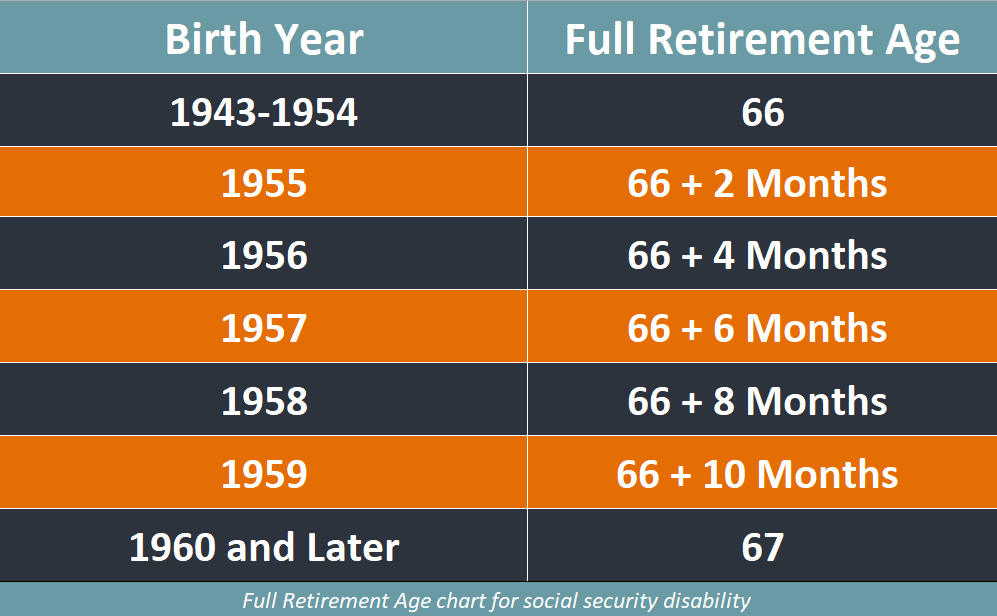
Your Full Retirement Age (FRA) is the age at which you are entitled to receive 100% of your Primary Insurance Amount (PIA). The FRA is not universal; it varies based on your birth year. For those born in 1943 through 1954, FRA is 66. For those born between 1955 and 1959, it gradually increases by a few months each year. For anyone born in 1960 or later, your FRA is 67. Understanding your specific FRA is critical because it acts as the baseline for determining whether your benefits will be increased or decreased based on when you choose to claim them. Claiming before your FRA results in a permanently reduced benefit, while delaying past your FRA leads to increased benefits. This age represents a pivotal milestone in your retirement planning, directly linking your claiming strategy to your potential monthly payout.
When You Choose to Claim: Early vs. Delayed Benefits
The timing of when you apply for Social Security benefits is one of the most powerful levers you have to influence your monthly payout. This decision can lead to a difference of thousands of dollars over your lifetime.
-
Claiming Early (as early as 62): You can start receiving Social Security benefits as early as age 62, but doing so comes with a significant and permanent reduction in your monthly benefit. For example, if your FRA is 67, claiming at age 62 would result in a benefit that is approximately 30% lower than your PIA. This reduction is permanent, meaning you will continue to receive the reduced amount for the rest of your life. While claiming early provides an income stream sooner, it also means a lower guaranteed income for potentially decades. This option might be suitable for individuals facing health challenges, job loss, or those who simply need the income immediately and have other substantial retirement assets.
-
Claiming at FRA: If you wait to claim benefits until your Full Retirement Age (FRA), you will receive 100% of your calculated Primary Insurance Amount (PIA). This is the standard benefit amount, reflecting the full entitlement based on your earnings history. Claiming at FRA avoids any permanent reductions for early claiming and provides a solid baseline for your retirement income.
-
Claiming Later (up to age 70): Perhaps the most impactful strategy for maximizing benefits, delaying your claim past your FRA can significantly increase your monthly payment. For each year you delay claiming benefits past your FRA, up to age 70, you earn “Delayed Retirement Credits” (DRCs). These credits permanently increase your benefit amount by 8% per year. For someone with an FRA of 67, delaying until age 70 means a 24% increase (3 years x 8% per year) over their PIA. This strategy can result in substantially higher monthly checks, which can be particularly advantageous for those with longer life expectancies or those who have other income sources to draw from in the interim. After age 70, there are no further increases for delaying, so there is no financial incentive to wait beyond this point.
Navigating Common Scenarios and Maximizing Your Benefits
Beyond the core factors, several specific scenarios and program features can affect your benefit amount and overall financial picture. Understanding these can help you optimize your Social Security strategy.

The Impact of Working While Receiving Benefits
If you continue to work while receiving Social Security benefits before you reach your Full Retirement Age (FRA), your benefits may be temporarily reduced if your earnings exceed certain annual limits. For 2024, if you are under FRA, the SSA deducts $1 from your benefits for every $2 you earn above $22,320. In the year you reach FRA, the earnings limit is much higher ($59,520 in 2024), and the SSA deducts $1 for every $3 you earn above this limit, up to the month you reach FRA.
Once you reach your FRA, there are no longer any earnings limits. You can work as much as you want without your Social Security benefits being reduced. It’s important to note that any benefits withheld due to earnings limits are not lost permanently. When you reach your FRA, the SSA recalculates your benefit amount to account for the months benefits were withheld, effectively increasing your future monthly payments. Additionally, continuing to work can replace lower-earning years in your 35-year average, potentially increasing your PIA.
Spousal, Survivor, and Dependent Benefits
Social Security is not just for the individual worker; it extends its protective umbrella to family members as well. These auxiliary benefits can be a crucial part of a household’s financial plan.
- Spousal Benefits: If you are married, divorced, or widowed, you may be eligible for spousal benefits based on your current or ex-spouse’s work record. A spouse can receive up to 50% of their partner’s PIA if they claim at their own FRA. If they claim early, their spousal benefit will be reduced. A key strategy known as “file and suspend” used to allow one spouse to claim benefits while the other delayed for higher benefits, but this has largely been phased out for most current retirees.
- Survivor Benefits: When a Social Security beneficiary passes away, certain family members (a surviving spouse, divorced spouse, or dependent children) may be eligible for survivor benefits. A surviving spouse can receive up to 100% of the deceased worker’s PIA if they claim at their own FRA. The amount depends on the survivor’s age and whether they are caring for dependent children.
- Dependent Benefits: In some cases, dependent children (under 18, or 19 if still in high school, or any age if disabled before age 22) can receive benefits based on a parent’s work record.
These benefits can significantly augment a family’s total income, especially after the loss of a primary wage earner, providing essential financial stability during challenging times.
Understanding Cost-of-Living Adjustments (COLAs)
To help Social Security benefits maintain their purchasing power against inflation, the SSA implements annual Cost-of-Living Adjustments (COLAs). Each year, typically announced in October, the COLA determines how much benefits will increase for the following year. The adjustment is based on the Consumer Price Index for Urban Wage Earners and Clerical Workers (CPI-W). If the CPI-W increases, benefits will rise by a corresponding percentage. While not always predictable, COLAs are a vital feature that helps protect beneficiaries from the erosion of their fixed income over time due to rising prices, ensuring that the real value of their benefits remains relatively stable.
Practical Steps to Estimate and Plan for Your Social Security
Understanding the intricacies of Social Security is one thing; putting that knowledge into action for your personal financial planning is another. Here are practical steps you can take to estimate and plan for your benefits.
Reviewing Your Social Security Statement Annually
The single most important action you can take is to create an account at my Social Security (ssa.gov/myaccount) and review your Social Security Statement annually. This online portal provides immediate access to your earnings record, which is crucial for verifying that all your wages have been correctly reported. Discrepancies, no matter how minor, should be addressed with the SSA promptly, as errors can lead to lower benefits.
Beyond your earnings record, your statement offers personalized estimates of your future benefits at different claiming ages (62, FRA, and 70), as well as estimates for disability and survivor benefits. These estimates are invaluable for budgeting and forecasting your retirement income. Regularly checking this statement ensures accuracy and provides a clear picture of your potential Social Security income, allowing you to plan accordingly.
Utilizing Online Calculators and Resources
The SSA website (ssa.gov) offers a suite of free and user-friendly online calculators and tools. These resources can help you:
- Estimate your benefits under various claiming scenarios.
- Determine your Full Retirement Age.
- Understand the impact of different claiming strategies (early, FRA, delayed).
- Calculate potential spousal or survivor benefits.
Beyond the official SSA tools, many reputable financial planning websites also offer robust Social Security calculators that allow for more complex scenario planning. These tools can help you visualize how changes in your earnings, claiming age, or life circumstances might affect your monthly payout, enabling more strategic decision-making.
Integrating Social Security into Your Broader Retirement Plan
While Social Security is a crucial source of retirement income, it is rarely sufficient to cover all retirement expenses for most people. Financial experts often advise viewing it as one leg of a “three-legged stool” for retirement security, alongside personal savings (like 401(k)s, IRAs, and other investments) and any pensions or other guaranteed income sources.
When developing your overall retirement plan, consider:
- Your estimated Social Security benefits as a baseline income.
- Your anticipated retirement expenses.
- Your other income sources and savings.
Consulting with a qualified financial advisor can be immensely beneficial. An advisor can help you integrate your Social Security claiming strategy with your other assets, tax planning, and overall financial goals to create a comprehensive and optimized retirement plan. They can help you model different scenarios and choose the claiming strategy that best aligns with your longevity expectations, marital status, and desired lifestyle in retirement.
Conclusion
The question “How much will I get in Social Security benefits?” leads to a detailed exploration of your unique financial history, life choices, and the program’s complex rules. Your lifetime earnings, Full Retirement Age, and the age at which you choose to claim benefits are the most significant determinants of your monthly payout. While Social Security provides a vital safety net and a foundational income stream for millions, understanding its mechanics empowers you to make strategic decisions that can significantly enhance your financial security in retirement. By regularly reviewing your Social Security statement, utilizing online estimation tools, and integrating your Social Security strategy into your broader financial plan, you can confidently navigate the path to a secure and well-planned retirement. Remember, proactive engagement with your Social Security benefits is not just about receiving a check; it’s about optimizing a core component of your lifelong financial well-being.
aViewFromTheCave is a participant in the Amazon Services LLC Associates Program, an affiliate advertising program designed to provide a means for sites to earn advertising fees by advertising and linking to Amazon.com. Amazon, the Amazon logo, AmazonSupply, and the AmazonSupply logo are trademarks of Amazon.com, Inc. or its affiliates. As an Amazon Associate we earn affiliate commissions from qualifying purchases.