
Entering the real estate market is an exhilarating milestone, but before you start browsing listings or attending open houses, you must confront the most critical question in personal finance: “How much will I get approved for a home loan?”
Understanding your borrowing capacity is not just about a single number; it is a complex calculation involving your income, your debts, the current economic climate, and the specific risk assessment models used by financial institutions. While online calculators offer a rough estimate, a professional mortgage approval requires a deep dive into your financial profile. This guide explores the mechanics of mortgage approval to help you determine exactly where you stand.
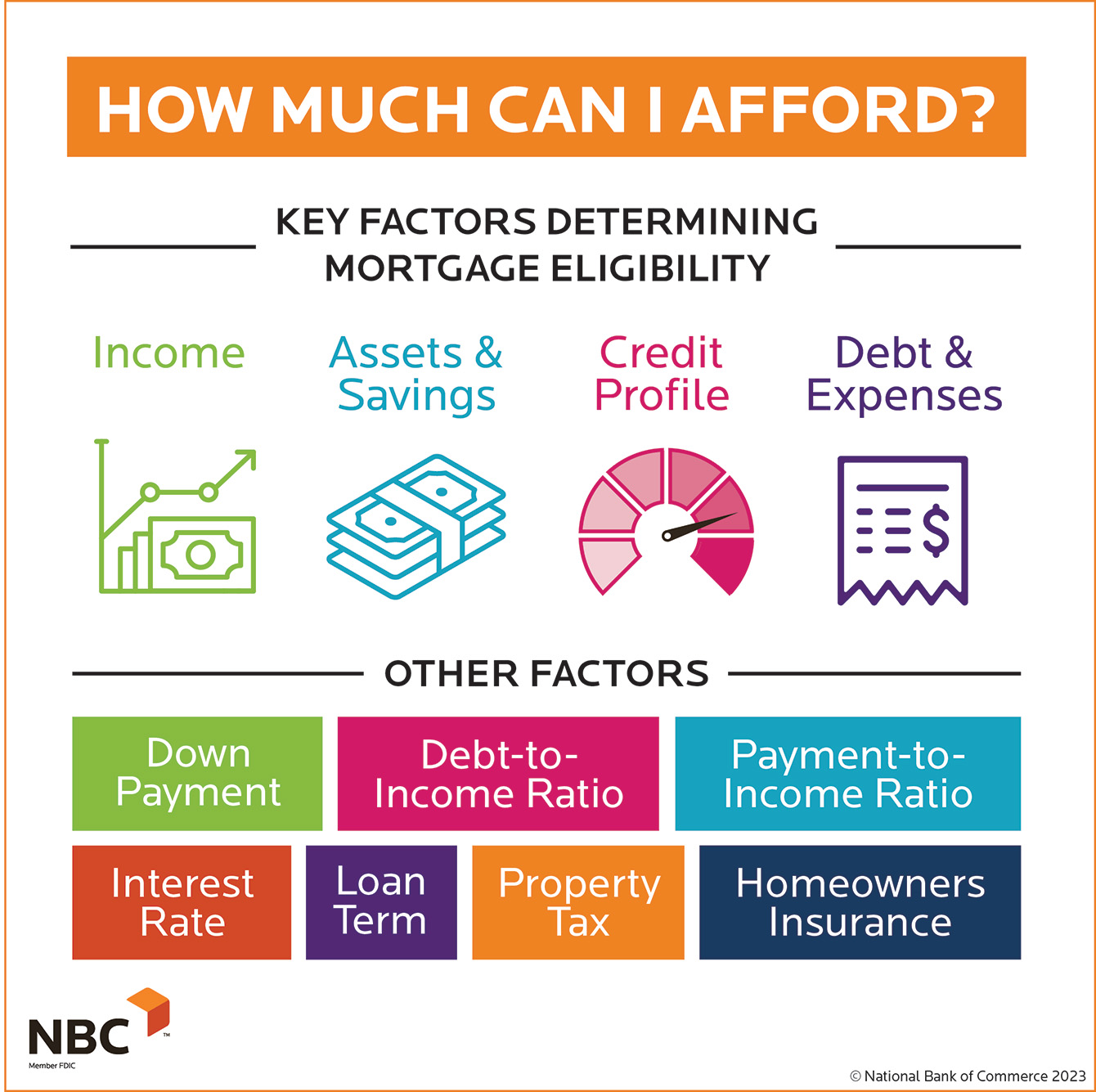
Decoding the Debt-to-Income (DTI) Ratio: The Lender’s Golden Rule
The primary metric every lender uses to determine your loan eligibility is the Debt-to-Income (DTI) ratio. This percentage represents the portion of your gross monthly income that goes toward paying debts. Lenders use this to ensure you have enough “breathing room” to manage a mortgage payment without financial distress.
Front-End vs. Back-End Ratios
Lenders typically look at two types of DTI ratios. The “front-end” ratio, also known as the mortgage-to-income ratio, calculates what percentage of your gross income will go toward housing expenses alone (Principal, Interest, Taxes, and Insurance, or PITI). Generally, lenders prefer this to stay below 28%.
The “back-end” ratio is more comprehensive. It includes your projected mortgage payment plus all other monthly debt obligations, such as car loans, student loans, and credit card minimums. For a standard conventional loan, most lenders look for a back-end ratio of 36% or less, though some programs allow up to 43% or even 50% in specific circumstances.
How Lenders Calculate Your “Borrowing Ceiling”
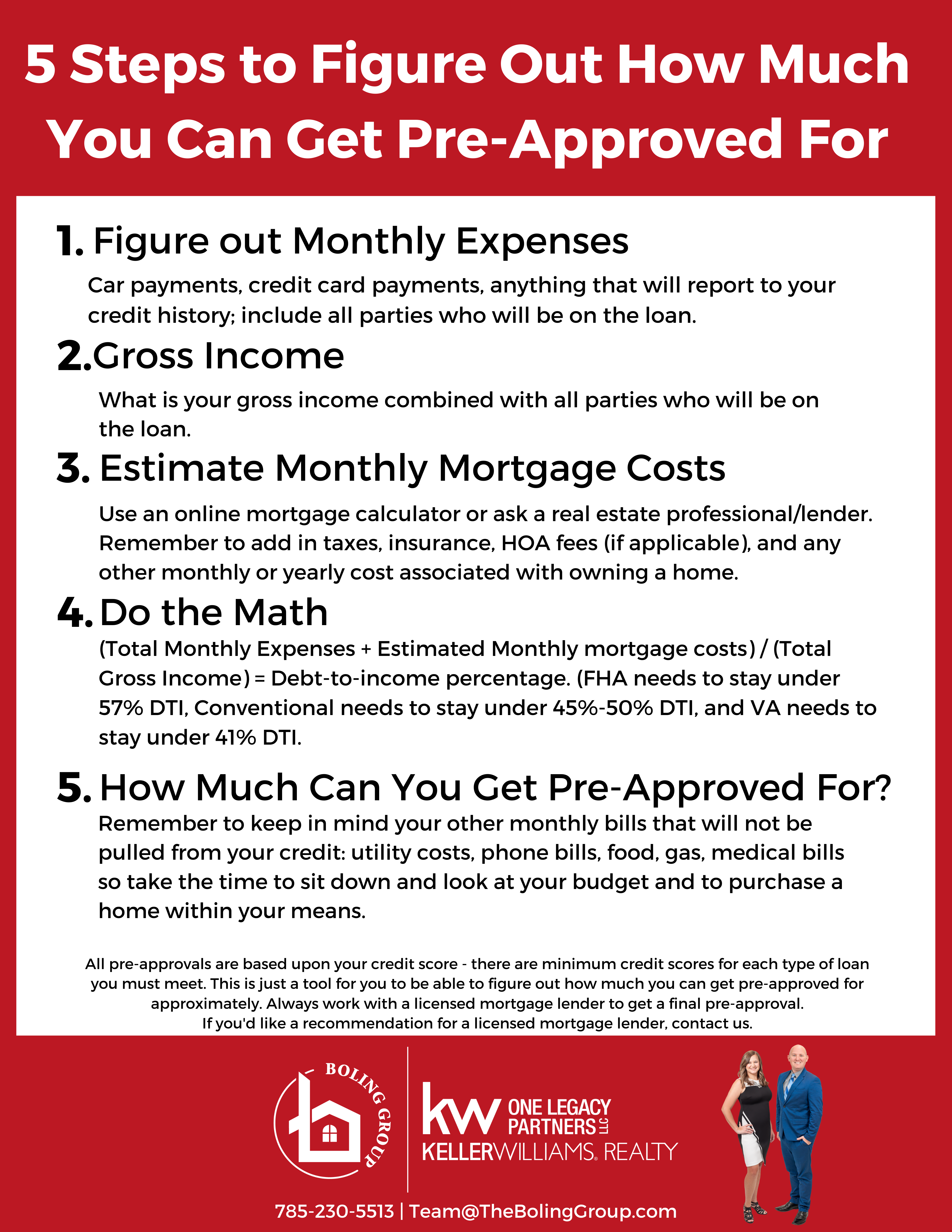
To find your maximum loan amount, a lender will work backward from your DTI. For example, if you earn $10,000 per month and the lender allows a 43% DTI, your total monthly debt payments cannot exceed $4,300. If you already have $800 in existing debt (car/student loans), the lender will cap your maximum mortgage payment at $3,500. This $3,500 must cover not just the loan, but property taxes and homeowners’ insurance as well.
The Role of Credit Scores and Financial Health in Loan Limits
While your income dictates what you can afford on paper, your credit score determines the “cost” of that money. Your creditworthiness is a reflection of your reliability as a borrower, and it significantly influences the interest rate you are offered, which in turn dictates the total loan amount you can support.
Credit Score Benchmarks and Interest Rate Impact
A higher credit score unlocks lower interest rates. Even a 0.5% difference in your mortgage rate can change your borrowing power by tens of thousands of dollars. For instance, a borrower with a 760 score may qualify for a lower rate that keeps their monthly payment within the DTI limit for a $500,000 home. A borrower with a 620 score might be offered a much higher rate, meaning that same $3,500 monthly payment only covers a $420,000 loan.
To maximize your approval amount, it is essential to review your credit report for errors and ensure your utilization remains low in the months leading up to your application.
The Impact of Loan-to-Value (LTV) Ratios
The LTV ratio is the relationship between the loan amount and the appraised value of the property. If you have a 20% down payment, your LTV is 80%. Lenders view lower LTVs as lower risk. If you are pushing the upper limits of your DTI, having a substantial down payment can sometimes sway a lender to approve a higher total loan amount because the “equity cushion” protects the bank in case of a market downturn.
Income Stability and Employment History
Lenders do not just care about how much you make; they care about how reliably you make it. When assessing your file, underwriters look for a consistent two-year history of stable income.

Verifying Consistent Earnings
For W-2 employees, this process is relatively straightforward, involving pay stubs and W-2 forms. However, if your income relies heavily on bonuses, commissions, or overtime, lenders will typically average these earnings over the last 24 months. If your bonus income has decreased year-over-year, they may only use the lower, more recent figure, which could reduce your total approval amount.
Self-Employed vs. W-2 Borrowers
Self-employed individuals often face more scrutiny. Lenders look at “taxable income” rather than “gross revenue.” Because many entrepreneurs use legal tax deductions to lower their taxable income, they may inadvertently lower their borrowing power. If you are planning to buy a home, it is often wise to consult with a financial advisor a year or two in advance to balance tax strategies with the need to show sufficient income for a mortgage approval.
Current Interest Rates and Global Economic Indicators
Your borrowing power is not static; it fluctuates based on the broader economy. Because mortgage approval is based on a monthly payment amount, the prevailing interest rate environment is the single largest external factor in determining your loan limit.
Fixed vs. Variable Rates and Stress Testing
In a rising interest rate environment, your “purchasing power” erodes. For every 1% increase in interest rates, your buying power generally decreases by about 10%. If you were approved for a $400,000 loan when rates were at 4%, and rates jump to 6%, your approved amount might drop to $320,000 to keep the monthly payment identical.
Lenders may also perform a “stress test” on adjustable-rate mortgages (ARMs), calculating whether you could still afford the loan if the rate hit its maximum allowable cap. This can sometimes result in a lower approval amount for an ARM compared to a fixed-rate product.
How the Federal Reserve Influences Your Approval Limit
While the Federal Reserve does not set mortgage rates directly, its movements regarding the federal funds rate influence the bond market and 10-year Treasury yields, which mortgage rates track closely. When the Fed pivots toward a “tighter” monetary policy to fight inflation, borrowing becomes more expensive, and the maximum loan amount you can qualify for will likely shrink.
Strategic Moves to Maximize Your Approval Amount
If your initial pre-qualification falls short of the price range you are targeting, there are several levers you can pull within your personal finances to boost your borrowing capacity.
Reducing Existing Debt (The DTI Fix)
Since the DTI ratio is a fraction, you can improve it by either increasing the numerator (income) or decreasing the denominator (debt). Paying off a car loan or a high-interest credit card balance can have a massive impact. Eliminating a $400 monthly car payment could potentially increase your home loan approval by $50,000 to $70,000, depending on current interest rates.
Increasing the Down Payment and Managing PMI
A larger down payment reduces the principal amount you need to borrow, but it also helps you avoid Private Mortgage Insurance (PMI). PMI is an added monthly cost required for most conventional loans with less than 20% down. By reaching the 20% threshold, you eliminate that monthly fee, allowing that portion of your budget to go toward the actual loan principal instead, thereby increasing your total approval ceiling.
The Power of the Co-Borrower
Adding a co-borrower—such as a spouse or a partner—allows the lender to consider two incomes instead of one. However, be aware that lenders usually use the lower of the two borrowers’ middle credit scores when determining the interest rate. If one partner has a high income but a very low credit score, they might increase the total amount you can borrow but also increase the cost of that debt.
Conclusion: The Path to a Firm “Yes”
Determining “how much you will get approved for” is the foundational step of the home-buying journey. It requires a transparent look at your DTI, a commitment to maintaining a high credit score, and an understanding of how external economic shifts impact your personal bottom line.
While online tools provide a starting point, the most accurate way to find your limit is through a formal “Pre-Approval.” Unlike a “Pre-Qualification,” which is based on unverified data, a Pre-Approval involves a lender verifying your documentation and running your profile through an automated underwriting system. By mastering these financial variables, you can approach the housing market with confidence, knowing exactly what you can afford and ensuring that your future home remains a source of wealth rather than a financial burden.
aViewFromTheCave is a participant in the Amazon Services LLC Associates Program, an affiliate advertising program designed to provide a means for sites to earn advertising fees by advertising and linking to Amazon.com. Amazon, the Amazon logo, AmazonSupply, and the AmazonSupply logo are trademarks of Amazon.com, Inc. or its affiliates. As an Amazon Associate we earn affiliate commissions from qualifying purchases.