
Understanding your potential Social Security benefits is a cornerstone of effective retirement planning. For many, Social Security represents a significant, often guaranteed, income stream in their later years. However, the exact amount you’ll receive isn’t a fixed figure; it’s the result of a complex calculation that considers your earnings history, the age at which you claim benefits, and several other factors. Deciphering this can seem daunting, but by breaking down the key components, you can gain clarity and even influence your ultimate benefit amount.
The Foundation of Your Social Security Benefit
Social Security is more than just a government program; it’s a social insurance system designed to provide financial protection to millions of Americans. Before delving into calculations, it’s crucial to understand its fundamental structure.
What is Social Security?
Established in 1935, Social Security provides old-age, survivors, and disability insurance (OASDI). It is a pay-as-you-go system, meaning current workers’ contributions primarily fund the benefits of current retirees, survivors, and disabled individuals. Its core purpose is to replace a portion of pre-retirement income, particularly for low and moderate earners, and to offer a safety net against life’s uncertainties. It’s a progressive benefit system, meaning lower-income workers receive a higher percentage of their pre-retirement earnings back in benefits compared to high-income workers.
How Contributions Are Made
Your contributions to Social Security are primarily made through payroll taxes, commonly known as FICA (Federal Insurance Contributions Act) taxes. If you are an employee, your employer withholds 6.2% of your gross wages for Social Security (up to an annual earnings limit) and contributes an additional 6.2% on your behalf, for a total of 12.4%. Medicare taxes (1.45% from employee and 1.45% from employer, with no earnings limit) are also part of FICA. If you are self-employed, you are responsible for paying both the employee and employer portions, totaling 12.4% for Social Security and 2.9% for Medicare, known as the Self-Employment Tax. These contributions are recorded under your Social Security number and form the basis of your future benefits.
Eligibility Requirements
To qualify for Social Security retirement benefits, you must accumulate a certain number of “work credits.” You can earn up to four credits each year. In 2024, you earn one credit for every $1,730 in earnings, up to the maximum of four credits for earning $6,920 or more. Most people need 40 credits, equivalent to 10 years of work, to be eligible for retirement benefits. Once you’ve earned 40 credits, you are “fully insured” and eligible to receive benefits.
Decoding Your Primary Insurance Amount (PIA)
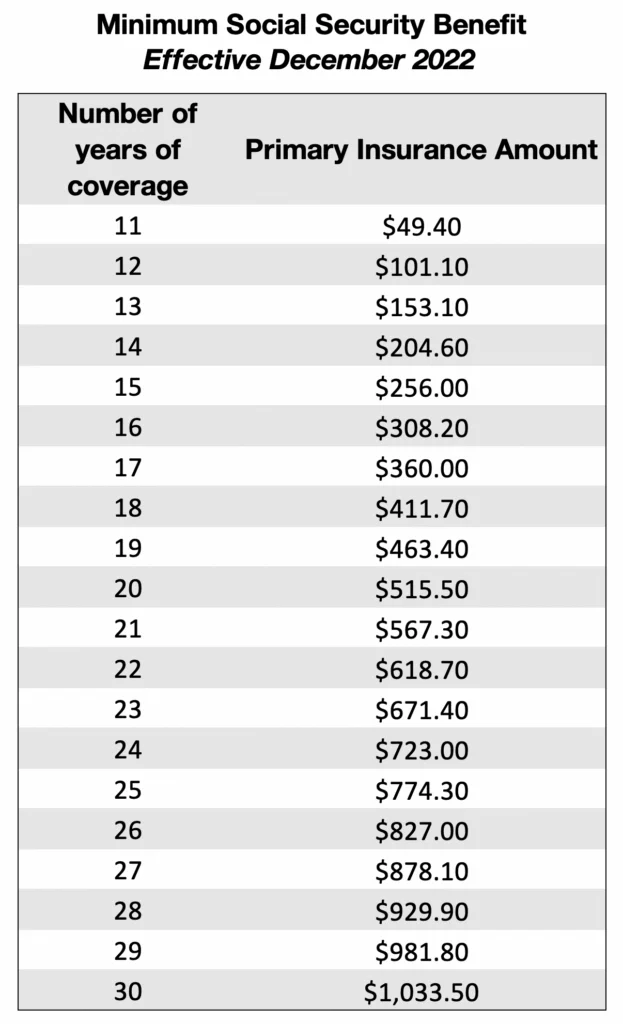
Your Primary Insurance Amount (PIA) is the monthly benefit you are entitled to receive if you start collecting benefits exactly at your Full Retirement Age (FRA). This amount is the foundation upon which all other benefit calculations are made, whether you claim early or delay.
Averaged Indexed Monthly Earnings (AIME)
The calculation of your PIA begins with determining your Averaged Indexed Monthly Earnings (AIME). The Social Security Administration (SSA) reviews your entire earnings history and considers your 35 highest-earning years. Earnings from past years are “indexed” to account for changes in general wage levels over time, bringing them to a common benchmark closer to current wage levels. This indexing ensures that your past earnings are fairly represented in today’s economic context. If you have fewer than 35 years of earnings, the missing years are counted as zero, which can significantly lower your AIME. Once your indexed earnings from your top 35 years are summed, that total is divided by 420 (35 years x 12 months) to arrive at your AIME.
Bend Points
After your AIME is calculated, the SSA applies a progressive formula using “bend points” to determine your PIA. Bend points are specific dollar amounts in the AIME formula that change annually. For benefits becoming payable in 2024, the formula is:
-
90% of the first $1,174 of your AIME.
-
32% of your AIME over $1,174 up to $7,078.
-
15% of your AIME over $7,078.
This progressive structure means that lower earners receive a higher percentage of their average indexed earnings back as benefits compared to higher earners. For example, someone with an AIME of $1,000 would receive 90% of that, or $900. Someone with an AIME of $8,000 would receive 90% of the first segment, 32% of the second segment, and 15% of the third. This ensures the program provides a more substantial safety net for those with lower lifetime earnings.
Impact of Earnings Record
Your earnings record is the most significant factor determining your PIA. Consistently high earnings over 35 or more years will result in a higher AIME and, consequently, a higher PIA. Conversely, periods of unemployment, low earnings, or working fewer than 35 years can substantially reduce your average, leading to a lower benefit. It is critical to regularly review your Social Security Statement to ensure your earnings record is accurate, as errors can directly impact your future benefits.
Age, When You Claim, and the Benefit Rollercoaster
While your earnings record establishes your PIA, the age at which you choose to start receiving benefits is arguably the most powerful lever you have in influencing your final monthly payment.
Full Retirement Age (FRA)
Your Full Retirement Age (FRA) is the age at which you are entitled to receive 100% of your PIA. This age is determined by your birth year. For those born between 1943 and 1954, FRA is 66. It gradually increases by a few months for those born between 1955 and 1959, reaching 67 for everyone born in 1960 or later. Understanding your specific FRA is fundamental, as it serves as the benchmark for benefit adjustments.
Claiming Early (Age 62)
You can begin receiving Social Security retirement benefits as early as age 62. However, claiming before your FRA results in a permanent reduction of your monthly benefit. This reduction is substantial: if your FRA is 67, claiming at age 62 means a permanent reduction of about 30% of your PIA. The benefit is reduced by 5/9 of 1% for each month before FRA, up to 36 months, and then 5/12 of 1% for each month beyond 36 months. For example, claiming at age 62 with an FRA of 67 means you would receive only 70% of your PIA. This reduction is actuarially designed to pay out roughly the same total amount over an average lifespan, regardless of when you start.

Delaying Benefits (Up to Age 70)
Conversely, delaying your benefits past your FRA can significantly increase your monthly payment. For each year you delay claiming benefits past your FRA, up to age 70, you earn delayed retirement credits (DRCs). These credits permanently increase your monthly benefit by 8% per year. So, if your FRA is 67 and you delay claiming until age 70, your monthly benefit will be 124% of your PIA (100% + (3 years x 8%)). This increase can be a powerful tool for boosting your retirement income, especially if you have other sources of income to cover expenses in the interim.
Spousal and Survivor Benefits
It’s also important to consider how your claiming decision impacts potential spousal or survivor benefits. A spouse may be eligible for up to 50% of your PIA, and a surviving spouse may receive up to 100% of your benefit. If you claim early, it reduces not only your benefit but also the maximum potential benefit your spouse could receive based on your record. Coordinating claiming strategies with a spouse can be crucial for optimizing household benefits over the long term.
Practical Tools and Strategies for Estimation and Maximization
Estimating your future Social Security benefits is not just guesswork. The SSA provides powerful tools and resources, and strategic planning can help you maximize what you receive.
Your Social Security Statement
The single most important document for understanding your benefits is your Social Security Statement. You can access it online by creating a “my Social Security” account at SSA.gov. This statement provides:
-
Your estimated monthly retirement benefits at age 62, your FRA, and age 70.
-
Your estimated disability and survivor benefits.
-
A detailed record of your earnings history, which you should review for accuracy.
-
Information about Medicare.
Reviewing this statement annually ensures your earnings are correctly recorded and helps you track your benefit projections.
Online Calculators
The SSA website offers several online calculators to help you estimate your benefits under different scenarios. The Retirement Estimator, for instance, allows you to input various “what if” scenarios, such as continuing to work at different salary levels or claiming at different ages, to see how these choices impact your future benefits. Third-party financial planning tools also often integrate Social Security benefit estimators, allowing for a comprehensive view of your retirement income.
Working Longer and Earning More
Since your benefit is based on your 35 highest-earning indexed years, working longer, especially if your current income is higher than some of your early career earnings, can replace lower-earning years with higher ones, thereby increasing your AIME and ultimately your PIA. Similarly, increasing your earnings throughout your career directly contributes to a higher AIME. These are direct, albeit long-term, strategies for boosting your Social Security payout.
Strategic Claiming
The decision of when to claim benefits is highly personal and depends on several factors:
-
Life Expectancy: If you anticipate a long life, delaying benefits often makes financial sense due to the higher monthly payments.
-
Health: Poor health or a family history of early mortality might favor claiming earlier to ensure you receive benefits for more years.
-
Other Income Sources: If you have substantial retirement savings (401k, IRA, pensions) or plan to continue working, you might have the flexibility to delay claiming Social Security to maximize those higher future payments.
-
Dependents: Consider how your claiming decision affects spousal or child benefits.
A thorough analysis, perhaps with a financial advisor, can help you determine the optimal claiming age for your unique circumstances.
Coordinating with Your Spouse
For married couples, coordinating Social Security claiming strategies can significantly increase the total lifetime benefits received by the household. This often involves one spouse claiming early while the other delays, or the higher-earning spouse delaying to maximize their benefit, which will then become the survivor benefit for the remaining spouse. Understanding options like “file and suspend” (though largely phased out) or restricted applications (for those born before Jan 2, 1954) can be complex, making professional guidance valuable.
Integrating Social Security into Your Retirement Blueprint
Social Security is a critical piece of the retirement puzzle, but rarely the entire solution. Integrating it thoughtfully into your broader financial plan ensures a more secure future.
Social Security as a Pillar, Not the Entire Foundation
While Social Security provides a foundational income stream, it is generally not designed to replace 100% of your pre-retirement income. For most individuals, it replaces about 40% of their average earnings. Therefore, it should be viewed as one pillar of your retirement income, alongside personal savings, investments (like 401ks, IRAs, brokerage accounts), and potentially pensions. A diversified retirement strategy that doesn’t solely rely on Social Security is essential for financial independence.
Taxation of Benefits
Be aware that your Social Security benefits may be subject to federal income tax. If your “combined income” (adjusted gross income + nontaxable interest + half of your Social Security benefits) exceeds certain thresholds, a portion of your benefits becomes taxable:
-
Up to 50% of benefits may be taxed if combined income is between $25,000 and $34,000 for individuals, or $32,000 and $44,000 for married couples filing jointly.
-
Up to 85% of benefits may be taxed if combined income exceeds $34,000 for individuals or $44,000 for married couples filing jointly.
Some states also tax Social Security benefits, so it’s important to understand your local tax laws.
Cost of Living Adjustments (COLAs)
One of the valuable features of Social Security is its annual Cost of Living Adjustment (COLA). COLAs are applied to benefits to help them keep pace with inflation. Each year, the SSA reviews the Consumer Price Index for Urban Wage Earners and Clerical Workers (CPI-W) to determine if an adjustment is warranted. While COLAs can vary from year to year, they are designed to preserve the purchasing power of your benefits over time, which is a crucial consideration in long-term financial planning.

Monitoring Your Statement
Finally, make it a habit to regularly check your Social Security Statement. This isn’t just about estimating future benefits; it’s also about verifying the accuracy of your earnings record. Discrepancies can lead to lower benefits, and it’s easier to correct errors closer to when they occurred. Your annual statement provides a snapshot of your journey toward retirement income security and helps ensure that the government has a correct accounting of your contributions.
By taking a proactive approach to understanding and strategically managing your Social Security benefits, you can make informed decisions that significantly enhance your financial well-being in retirement.
aViewFromTheCave is a participant in the Amazon Services LLC Associates Program, an affiliate advertising program designed to provide a means for sites to earn advertising fees by advertising and linking to Amazon.com. Amazon, the Amazon logo, AmazonSupply, and the AmazonSupply logo are trademarks of Amazon.com, Inc. or its affiliates. As an Amazon Associate we earn affiliate commissions from qualifying purchases.