
The question “how much was the dollar worth?” might seem straightforward, yet its answer is anything but simple. Unlike a fixed unit of measure, the value of a dollar is a dynamic, multi-faceted concept, constantly influenced by a complex interplay of economic forces, historical contexts, and global dynamics. For individuals planning their finances, businesses strategizing investments, or economists analyzing market trends, understanding the dollar’s past and present purchasing power is paramount. This article delves into the intricate mechanisms that determine the dollar’s worth, tracing its historical evolution, exploring various methods of measurement, and dissecting the far-reaching implications of its fluctuating value. From the everyday impact on your grocery bill to its role in international trade, the dollar’s value permeates nearly every aspect of economic life, making its comprehension a fundamental component of financial literacy and strategic decision-making.

The Foundations of Dollar Value: What Determines Worth?
At its core, the worth of a dollar can be understood as its purchasing power – how many goods and services it can buy. However, this seemingly simple definition masks a sophisticated web of factors that continuously shape and redefine that power. The value isn’t arbitrary; it’s a reflection of market confidence, economic health, and policy choices, all interacting in a globalized financial landscape.
Inflation and Purchasing Power
Perhaps the most intuitive measure of the dollar’s worth to the average person is its purchasing power over time, largely dictated by inflation. Inflation is the rate at which the general level of prices for goods and services is rising, and subsequently, the purchasing power of currency is falling. If a dollar bought a loaf of bread for $1 in 1970, and that same loaf costs $3 today, the dollar’s purchasing power for bread has significantly diminished. Sustained inflation erodes the value of savings and makes future planning more challenging. Conversely, deflation – a rare but economically detrimental phenomenon – means prices are falling, and the dollar can buy more, though it often signals broader economic contraction and can deter spending and investment. Central banks, like the U.S. Federal Reserve, actively manage monetary policy to target a stable rate of inflation, aiming for economic growth without excessive price increases that would destabilize the dollar’s value.
Economic Indicators and Market Forces
Beyond inflation, the dollar’s value is also a barometer of the broader economic health of the United States, as reflected in various key economic indicators. A robust economy, characterized by strong Gross Domestic Product (GDP) growth, low unemployment rates, and positive consumer confidence, tends to bolster the dollar’s value. These indicators signal stability and opportunity, attracting foreign investment and increasing demand for dollar-denominated assets. Conversely, periods of economic contraction, high unemployment, or political uncertainty can weaken the dollar as investors seek safer havens or more promising returns elsewhere. Supply and demand dynamics also play a crucial role: when global demand for U.S. goods, services, or financial assets (like Treasury bonds) is high, the demand for dollars to purchase them increases, driving up its value.
Government Policy and Central Bank Actions
Monetary and fiscal policies are powerful levers in influencing the dollar’s worth. The U.S. Federal Reserve’s monetary policy decisions, such as adjusting interest rates, are particularly impactful. Higher interest rates can make dollar-denominated investments more attractive, drawing capital from abroad and strengthening the dollar. Conversely, lowering interest rates can reduce the dollar’s appeal. Quantitative easing or tightening measures, which involve the central bank buying or selling government bonds, also directly affect the money supply and, consequently, the dollar’s value. Fiscal policy, encompassing government spending and taxation, also plays a role. Large government deficits, for instance, can sometimes put downward pressure on the dollar if they signal future inflation or increased borrowing, while prudent fiscal management can reinforce confidence.
A Historical Perspective: Key Eras of Dollar Valuation
Understanding the dollar’s current worth requires a journey through its historical evolution, a path marked by significant shifts in how its value was defined and managed. From commodity-backed currency to a floating exchange rate, each era has left an indelible mark on its purchasing power and international standing.
The Gold Standard Era: Stability and Constraints
For much of its history, the U.S. dollar’s value was directly tied to a specific quantity of gold, a system known as the gold standard. From 1879 until 1971 (with various modifications), the dollar was convertible into gold at a fixed rate. This system provided a sense of stability and predictability, as the amount of money in circulation was constrained by the available gold reserves. Proponents argued it prevented governments from excessively printing money and causing inflation. However, it also limited the government’s ability to respond to economic crises (like recessions) by expanding the money supply and made the domestic economy vulnerable to global gold discoveries or shortages. The gold standard ultimately proved too inflexible for a rapidly globalizing economy, culminating in its final abandonment.
Post-Bretton Woods: Floating Exchange Rates and Volatility
The most significant shift in the dollar’s valuation came after 1971, when President Nixon formally severed its direct link to gold, ending the Bretton Woods system. This move ushered in an era of floating exchange rates, where the dollar’s value against other major currencies is determined by market forces of supply and demand, rather than a fixed peg. This era brought both greater flexibility for monetary policy and increased volatility. The dollar’s international worth began to fluctuate more freely, influenced by interest rate differentials, economic growth rates, geopolitical events, and investor sentiment across the globe. This period saw the rise of the U.S. dollar as the world’s primary reserve currency, a status that confers significant advantages but also binds its value to global economic stability.
The Digital Age: Globalization and Modern Challenges
The last few decades have seen the dollar navigate the complexities of accelerating globalization and the rise of digital finance. The sheer volume of international trade and capital flows means the dollar’s value is now more intertwined than ever with the economic health and policy decisions of other major economies. The emergence of new economic powers and their currencies, coupled with the nascent development of digital currencies and blockchain technologies, presents both new challenges and opportunities for the dollar’s future role and value. While still dominant, its worth in this dynamic landscape is constantly being re-evaluated against a broader array of global competitors and technological innovations.
Measuring the Dollar’s Value: Indices and Benchmarks
Given its multi-faceted nature, assessing “how much the dollar was worth” requires looking at different metrics, each offering a unique perspective on its purchasing power and international standing. No single measure tells the whole story, but collectively, they provide a comprehensive picture.
The Consumer Price Index (CPI): A Domestic Yardstick
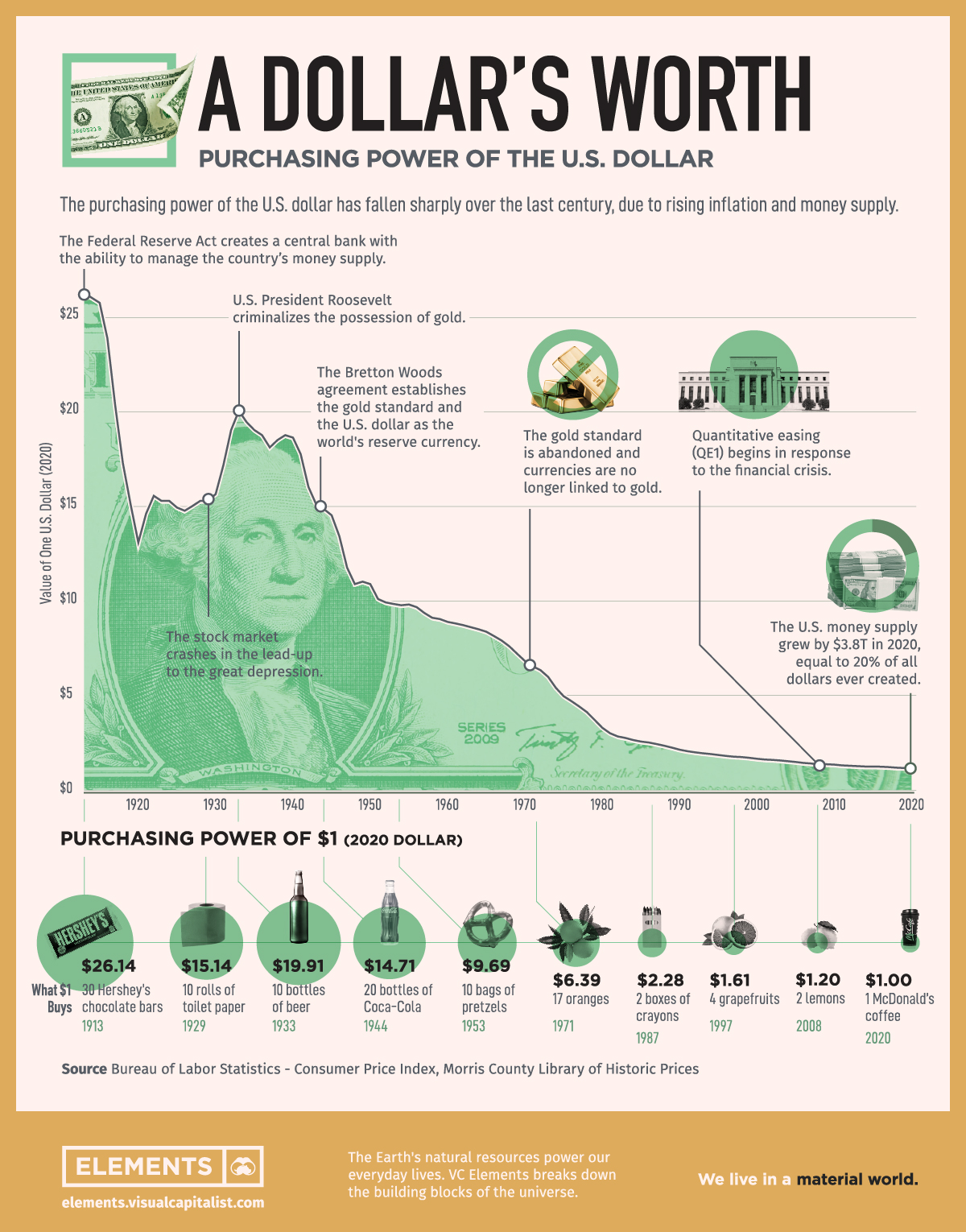
For understanding the dollar’s worth in terms of domestic purchasing power, the Consumer Price Index (CPI) is the go-to metric. Published monthly by the U.S. Bureau of Labor Statistics, the CPI measures the average change over time in the prices paid by urban consumers for a market basket of consumer goods and services. By tracking the CPI, economists and individuals can determine the inflation rate, and thus, how much less (or more) a dollar can buy today compared to a previous period. For example, if the CPI was 100 in a base year and is 130 today, it means that what cost $100 then now costs $130, and the dollar’s purchasing power has decreased by roughly 23% ($100/$130).
The US Dollar Index (DXY): International Strength
When discussing the dollar’s value on the international stage, the US Dollar Index (DXY) is a frequently cited benchmark. The DXY is a geometrically weighted average of the dollar’s value against a basket of six major world currencies: the Euro, Japanese Yen, British Pound, Canadian Dollar, Swedish Krona, and Swiss Franc. A rising DXY indicates the dollar is strengthening against this basket of currencies, meaning it can buy more foreign currency and, consequently, more foreign goods and services. Conversely, a falling DXY suggests the dollar is weakening. The DXY is a critical tool for businesses engaged in international trade, investors with global portfolios, and policymakers monitoring the dollar’s competitiveness.
Exchange Rates: Bilateral Comparisons
For a more granular view of the dollar’s international worth, specific exchange rates are invaluable. An exchange rate indicates how many units of one currency can be exchanged for one unit of another. For instance, the EUR/USD exchange rate tells you how many U.S. dollars one Euro can buy. These bilateral rates are influenced by interest rate differentials, economic growth disparities, trade balances, and geopolitical events between the two respective countries. Tracking these rates is essential for tourists, international businesses making payments or repatriating profits, and currency traders looking to profit from short-term fluctuations. A strong dollar relative to the Yuan, for example, makes Chinese goods cheaper for U.S. consumers but makes American exports more expensive for Chinese buyers.
The Impact of a Fluctuating Dollar: Who Wins, Who Loses?
The dynamic nature of the dollar’s value ensures that its fluctuations have profound and varied impacts across different segments of the economy and society. A strong dollar might be celebrated by some, while others might view it with apprehension, and vice-versa for a weak dollar.
For Consumers: Everyday Spending and Savings
For the average consumer, a strong dollar can translate into cheaper imported goods, from electronics to apparel, as foreign products become less expensive in dollar terms. International travel also becomes more affordable, as a dollar can buy more foreign currency. However, a strong dollar can also indirectly depress wages in export-oriented industries if those businesses struggle to compete globally. Conversely, a weak dollar makes imports more expensive, potentially raising prices for consumers, but it can make domestic tourism more attractive and boost the competitiveness of U.S. exports, potentially stimulating job growth in those sectors. The primary concern for consumers, however, often reverts to domestic purchasing power as measured by inflation: a dollar that buys less at the local grocery store is a dollar that has lost its worth to them.
For Businesses: Trade, Profits, and Investment
Businesses are acutely sensitive to the dollar’s value, especially those involved in international trade. U.S. exporters generally prefer a weaker dollar, as it makes their products more competitively priced in foreign markets, leading to increased sales and profits. Conversely, a strong dollar makes U.S. exports more expensive, potentially hurting sales. Importers, on the other hand, benefit from a strong dollar, as they can purchase foreign goods at a lower dollar cost, potentially increasing their profit margins or allowing them to offer lower prices to consumers. Multinational corporations face additional complexities, as currency fluctuations impact the translation of foreign earnings into U.S. dollars. A strong dollar can diminish the value of overseas profits when converted back home, while a weak dollar can inflate them. These currency risks are a major consideration in corporate financial strategy and hedging.
For Investors: Asset Performance and Diversification
Investors must also consider the dollar’s value when constructing their portfolios. A strong dollar can negatively impact the dollar-denominated returns of U.S. companies with significant international operations, as foreign earnings are worth less when converted. For investors holding foreign assets, a strong dollar can erode the value of those assets when converted back to dollars, even if the underlying asset performed well in its local currency. Conversely, a weak dollar can boost the dollar-denominated returns of international investments and U.S. multinational companies. The dollar’s value also influences the attractiveness of U.S. Treasury bonds and other dollar-denominated fixed-income assets; higher interest rates often accompany a stronger dollar, making these investments more appealing to global capital. Diversification across different currencies and asset classes is a common strategy to mitigate currency risk.
Navigating the Future: Understanding the Dollar’s Ongoing Evolution
The question of “how much was the dollar worth” is ultimately a retrospective one, but its underlying principles are critical for anticipating its future value. The dollar’s evolution is ongoing, shaped by a confluence of geopolitical shifts, technological advancements, and domestic policy decisions, demanding continuous attention from individuals and institutions alike.
Geopolitical Factors and Global Demand
The dollar’s status as the world’s primary reserve currency and its dominant role in international trade and finance means its value is highly susceptible to geopolitical events and shifts in global demand. Major international conflicts, trade wars, or significant policy changes in large economies can trigger capital flows that either strengthen or weaken the dollar. As emerging economies grow and their currencies gain prominence, there could be a gradual diversification away from the dollar in global reserves, though its deep liquidity and institutional stability make any rapid dethronement unlikely. Understanding global political stability and economic interdependencies is key to predicting the dollar’s international trajectory.
Technological Disruption and Digital Currencies
The advent of digital currencies, including cryptocurrencies and the potential for central bank digital currencies (CBDCs), introduces a new dimension to the dollar’s future worth. While Bitcoin and other decentralized cryptocurrencies are highly volatile and largely speculative, the development of a digital dollar by the Federal Reserve could potentially streamline payments, reduce transaction costs, and enhance financial inclusion. However, it also raises questions about privacy, cybersecurity, and the potential impact on traditional banking systems. How these digital innovations evolve and integrate into the existing financial framework will undoubtedly influence the perception and practical utility of the dollar, potentially redefining its worth in a digital-first global economy.

Personal Strategies for Financial Resilience
For individuals, navigating the dollar’s fluctuating worth means adopting strategies that build financial resilience. This includes maintaining a diversified investment portfolio that considers both domestic and international assets, hedging against inflation through investments like real estate or inflation-indexed bonds, and continuously educating oneself on economic trends. Understanding the impact of inflation on savings and planning for retirement with a realistic view of future purchasing power are crucial. Ultimately, while you cannot control the dollar’s value, you can control your financial responses to its changes, protecting and growing your wealth regardless of its ebb and flow.
In conclusion, the question “how much was the dollar worth” reveals a profound economic narrative. It’s a story of constant flux, influenced by central bank policies, global market sentiment, domestic economic performance, and historical precedents. The dollar’s worth is not a static figure but a dynamic reflection of its purchasing power over time and its strength against other currencies. For anyone navigating the modern financial landscape, comprehending these intricate dynamics is not just an academic exercise but a practical necessity for informed decision-making, ensuring financial security, and strategically positioning oneself in an ever-evolving global economy.
aViewFromTheCave is a participant in the Amazon Services LLC Associates Program, an affiliate advertising program designed to provide a means for sites to earn advertising fees by advertising and linking to Amazon.com. Amazon, the Amazon logo, AmazonSupply, and the AmazonSupply logo are trademarks of Amazon.com, Inc. or its affiliates. As an Amazon Associate we earn affiliate commissions from qualifying purchases.