
The question of Bitcoin’s initial value is not merely a historical curiosity; it’s a cornerstone for understanding the cryptocurrency’s meteoric rise and the speculative nature of nascent financial innovations. When Bitcoin emerged from the digital ether, it wasn’t greeted by ticker tapes and institutional investors. Instead, it was a fringe experiment, an idea brought to life by an anonymous developer, Satoshi Nakamoto, and embraced by a small cohort of cryptography enthusiasts and early adopters. Its initial price wasn’t set by market forces in the way we understand them today, but rather organically, through the first, almost whimsical, transactions among a handful of pioneers. This journey from obscurity to a multi-trillion-dollar asset class offers invaluable insights into investing, risk, and the profound impact of disruptive technology on global finance.
The story of Bitcoin’s inception is intertwined with a vision of a decentralized digital currency, free from the control of governments and traditional financial institutions. This vision, laid out in Nakamoto’s whitepaper, “Bitcoin: A Peer-to-Peer Electronic Cash System,” sparked a revolution, but like all revolutions, its early days were marked by uncertainty, technical hurdles, and a profound lack of perceived monetary value. To truly grasp “how much Bitcoin was when it started,” we must delve into its very genesis, tracing its evolution from lines of code to a globally recognized asset. This exploration is crucial for anyone looking to understand the fundamental drivers behind Bitcoin’s unprecedented trajectory and to draw lessons applicable to today’s rapidly evolving financial landscape.
The Genesis of a Digital Revolution: Bitcoin’s Early Days
Bitcoin’s birth wasn’t marked by a stock exchange listing or a multi-million-dollar IPO. It began far more humbly, originating from an idea articulated in a whitepaper and brought to life through software. The project officially launched on January 3, 2009, when Satoshi Nakamoto mined the genesis block – Block 0 – ushering in a new era of digital currency. At this moment, Bitcoin had no monetary value in the traditional sense. It was a novel concept, an unproven technology, and its worth was purely theoretical, confined to the abstract realm of cryptographic principles and economic theory.
Satoshi Nakamoto’s Vision
Satoshi Nakamoto’s motivation stemmed from a distrust of central banks and traditional financial systems, particularly in the wake of the 2008 global financial crisis. The abstract he wrote for the whitepaper clearly stated the goal: “A purely peer-to-peer version of electronic cash would allow online payments to be sent directly from one party to another without going through a financial institution.” This vision was radical, proposing a system where transactions were secured by cryptography, verified by a distributed network, and recorded on an immutable public ledger called the blockchain. The inherent scarcity, capped at 21 million Bitcoins, and the decentralized issuance through “mining” were fundamental to Nakamoto’s design, aiming to prevent inflation and censorship. This foundational vision, while not assigning an immediate price, laid the groundwork for the future financial value of Bitcoin by defining its core economic properties.
The Whitepaper and Initial Release
The “Bitcoin: A Peer-to-Peer Electronic Cash System” whitepaper was published in October 2008, setting out the technical specifications and philosophical underpinnings of the proposed digital currency. Following the release of the software client in January 2009, Bitcoin units (BTC) were created by a process called mining. Early miners, largely comprising Nakamoto and a handful of cypherpunks, were essentially running software on their home computers, solving complex computational puzzles to verify blocks of transactions and, in return, receiving newly minted Bitcoins. The reward for mining the genesis block was 50 BTC, a bounty that, at the time, was valued at absolutely zero in fiat terms. There was no exchange, no market, and no mechanism to convert these digital tokens into dollars, euros, or any other currency. The initial “cost” of Bitcoin was the electricity consumed by the mining hardware and the intellectual curiosity of the early adopters. This period represents the purest form of Bitcoin’s initial state: a technological innovation with immense potential, but without an established financial identity.
Pinpointing Bitcoin’s Initial Valuation: A Price Tag of Pennies (or Less)
While Bitcoin started with a theoretical value of zero, its journey towards monetary recognition began with extremely low, often informal, valuations. It wasn’t until early enthusiasts began exchanging it for goods and services that a rudimentary sense of its market price emerged. These initial exchanges were less about investment and more about demonstrating the currency’s utility and proving its viability as a medium of exchange.
The First Transaction: Pizza for 10,000 BTC
Perhaps the most famous story illustrating Bitcoin’s initial negligible value is the “Bitcoin Pizza Day.” On May 22, 2010, Laszlo Hanyecz, a programmer from Florida, famously purchased two pizzas for 10,000 Bitcoins. At the time, the pizzas were worth around $25-$30. This transaction effectively set Bitcoin’s first real-world, albeit informal, exchange rate: 1 Bitcoin was worth approximately $0.0025 to $0.003. This single event served as a monumental milestone, proving that Bitcoin could indeed function as a medium of exchange for tangible goods, transitioning it from a purely theoretical concept to a practical, albeit fledgling, currency. The fact that those 10,000 Bitcoins would eventually be worth hundreds of millions of dollars (and at times, over half a billion) highlights the truly astronomical growth that followed its humble beginnings.
Mining for Virtually Nothing
In Bitcoin’s earliest years (2009-2010), mining was an accessible endeavor. Individuals could use standard CPU processors to mine Bitcoins, with the difficulty adjusted to ensure a steady rate of new coins. The reward per block started at 50 BTC. Considering that the market price was effectively non-existent, or merely a fraction of a cent, the financial incentive for mining was minimal. Miners were primarily motivated by curiosity, ideological alignment with decentralization, or simply a desire to participate in a novel technological experiment. The “cost” of acquiring Bitcoin through mining during this period was overwhelmingly dominated by the negligible electricity costs and the opportunity cost of computing power, rather than any significant capital investment. Acquiring hundreds, or even thousands, of Bitcoins was relatively easy for those who understood the technology and were willing to dedicate their computing resources. This ease of acquisition in the early days contributed to the concentrated holdings of some early adopters who later became Bitcoin multi-millionaires or billionaires.
The First Exchanges and Price Discovery
As more individuals became interested in Bitcoin, the need for a more structured exchange mechanism grew. The first proper Bitcoin exchange, “New Liberty Standard,” launched in October 2009. It initially offered an exchange rate of 1 USD to 1,309.03 BTC, valuing one Bitcoin at approximately $0.00076. This rate was derived from the cost of electricity used to mine the coins. In February 2010, another exchange, “BitcoinMarket.com,” emerged, offering a direct market for trading BTC against USD. These platforms were rudimentary, often suffering from liquidity issues and security vulnerabilities, but they were crucial for establishing Bitcoin’s first true market prices.
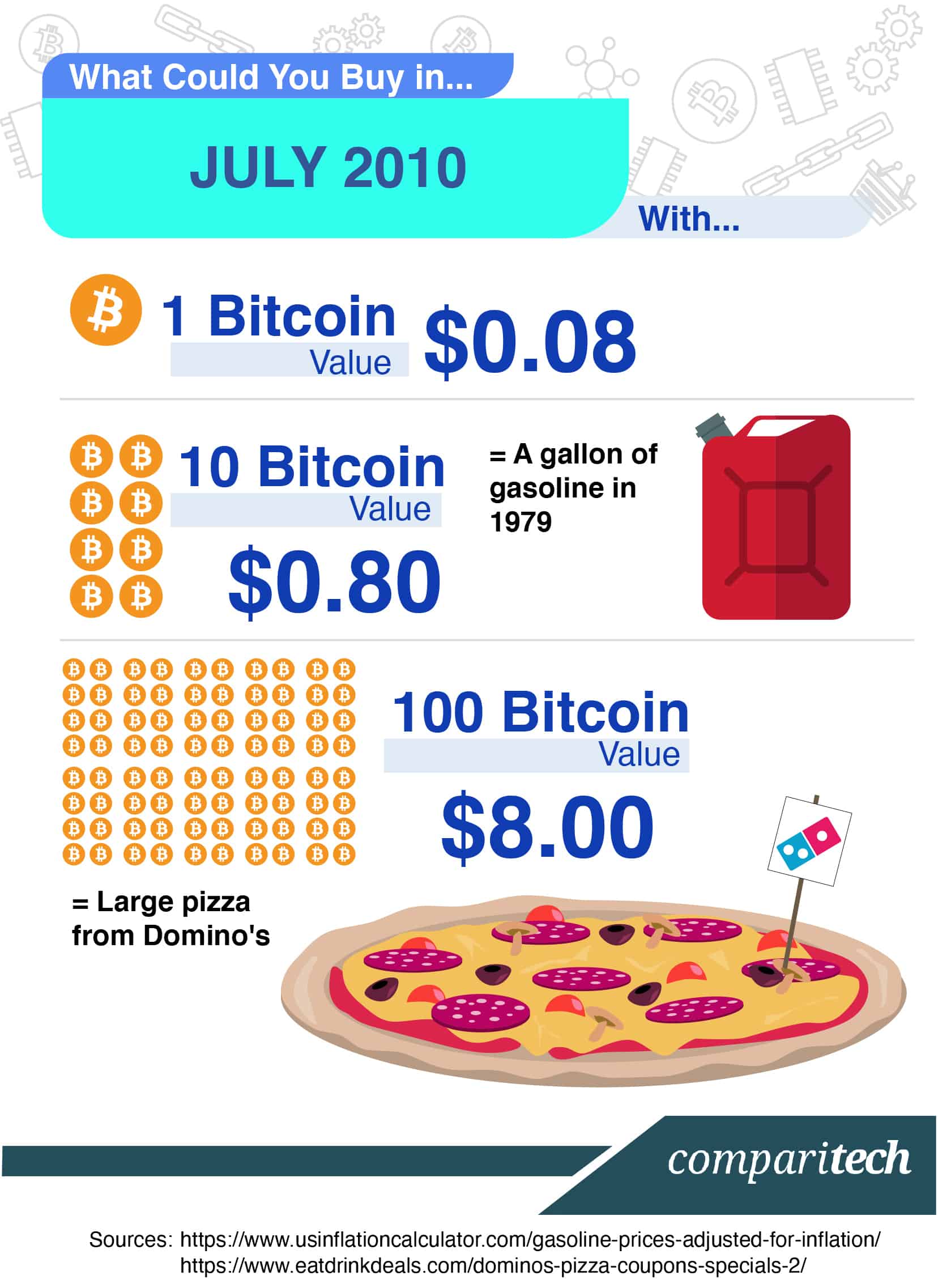
The price discovery process was slow and volatile. Bitcoin moved from fractions of a cent to a few cents, largely driven by the enthusiasm of a small, niche community. By July 2010, Bitcoin’s price had risen to about $0.08 per coin, then surged to $0.50 per coin later that year, indicating a growing, albeit still speculative, interest. This period was characterized by dramatic swings and a constant search for an equilibrium value as the fledgling market tried to determine what this new digital asset was actually worth.
The Unfolding Ascent: Bitcoin’s Early Growth Trajectory
After its initial, near-valueless existence, Bitcoin began a slow but significant ascent. This phase was characterized by increased awareness within tech and libertarian circles, leading to more active trading and, consequently, greater price volatility. The narrative shifted from pure experimentation to a nascent understanding of Bitcoin’s potential as both a currency and an investment vehicle.
Early Speculation and Volatility
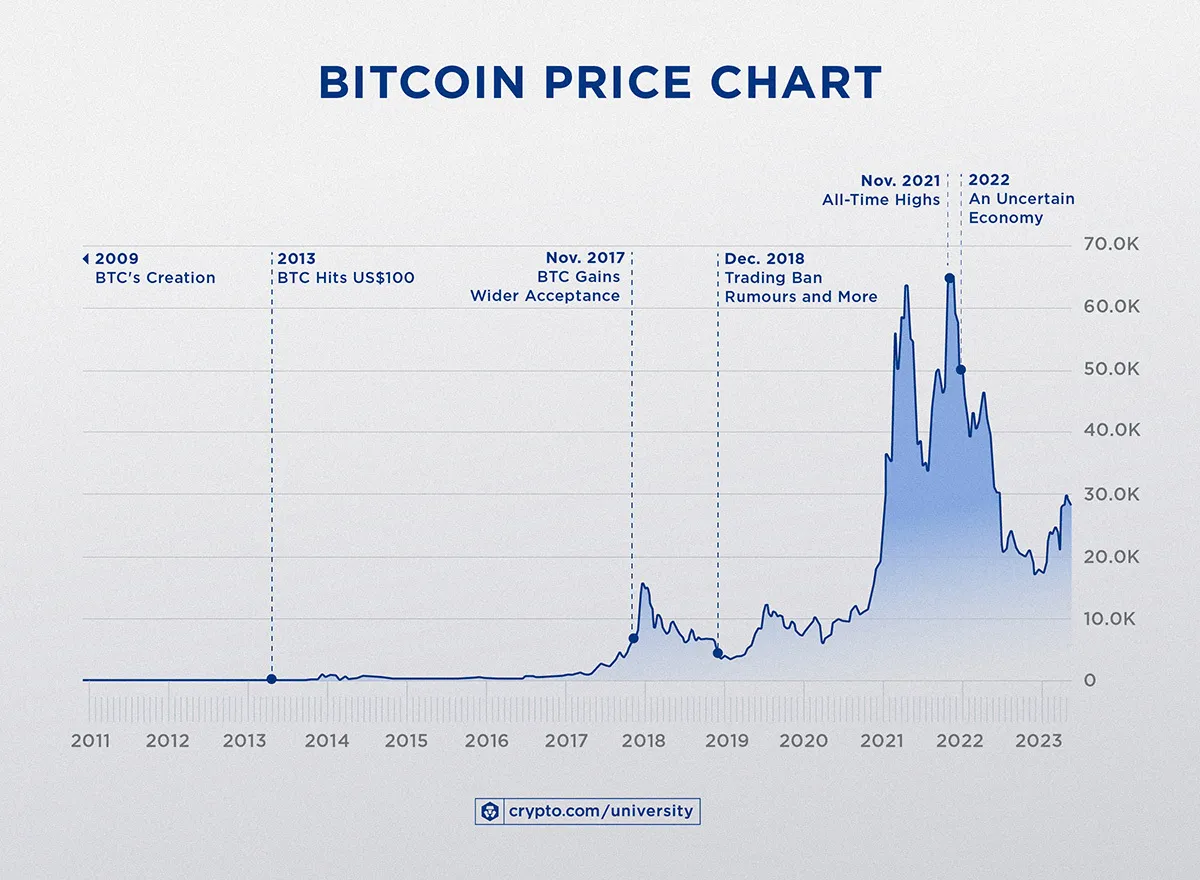
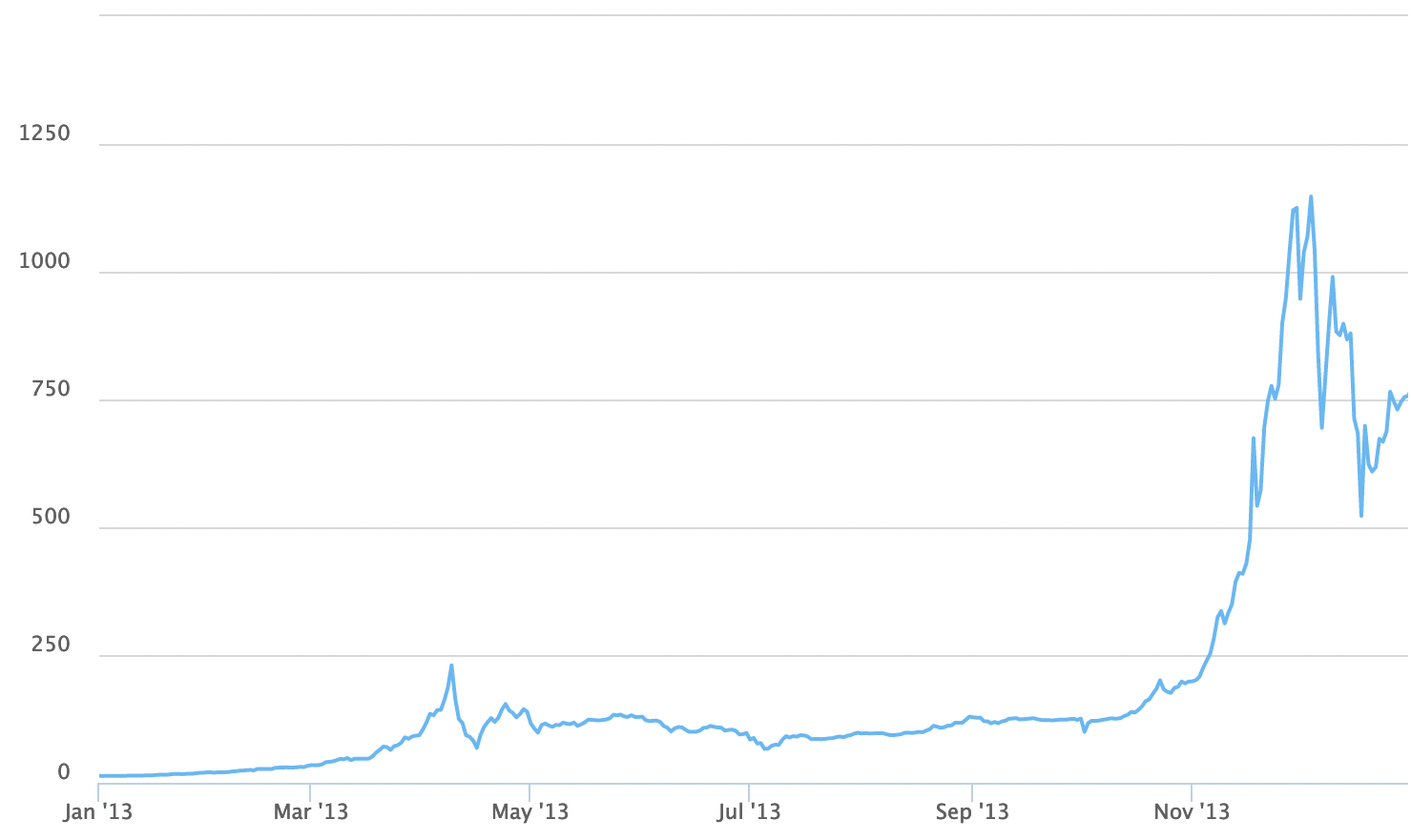
Once Bitcoin started to acquire a monetary value, however small, it inevitably attracted speculators. The earliest price increases were often dramatic, sometimes doubling or tripling in value within days, only to experience sharp corrections shortly thereafter. For instance, in 2010, Bitcoin’s value climbed from less than a cent to over $0.30. By early 2011, it reached parity with the US dollar, and by mid-2011, it briefly touched $31 before plummeting back down. This extreme volatility was a direct result of low liquidity, a small market cap, and the enthusiastic, yet often irrational, behavior of early adopters. There were no institutional safeguards, no sophisticated trading algorithms, and little regulatory oversight. The market was a wild west, driven by news, forum chatter, and the unbridled excitement surrounding a revolutionary concept. Investors during this period needed iron stomachs and a high tolerance for risk, understanding that their holdings could be worth a fraction of their value overnight.
Mainstream Attention Begins to Stir
As Bitcoin’s price began to climb, albeit erratically, it started to catch the eye of a broader audience beyond its initial niche. Tech blogs, financial news outlets, and even some mainstream media began to report on this mysterious digital currency. While much of the early coverage was skeptical or focused on its novelty, the sheer novelty of a “decentralized currency” was enough to pique curiosity. The stories of early miners becoming accidental millionaires, or the infamous pizza transaction, fueled a narrative that captured imaginations. This increased visibility, though often accompanied by a lack of understanding, was crucial for expanding Bitcoin’s user base and liquidity. More people became aware of its existence, leading to more individuals considering investing in it, thereby contributing to its price appreciation. The shift from an obscure project to a recognized (though often misunderstood) phenomenon was a pivotal stage in its early growth.
The Mt. Gox Era and Market Formation
A significant turning point in Bitcoin’s early market formation was the rise of Mt. Gox. Initially an online exchange for Magic: The Gathering cards, Mt. Gox pivoted to Bitcoin trading in 2010 and quickly became the dominant exchange. For several years, Mt. Gox handled an overwhelming majority of all Bitcoin transactions globally. This centralization, while eventually proving to be its downfall, provided much-needed liquidity and a reliable price discovery mechanism for the nascent asset. The presence of a dominant exchange meant that buying and selling Bitcoin became more accessible, allowing its price to be quoted globally. It became the de facto barometer for Bitcoin’s value, driving its price from mere cents into the dollars, and eventually into the hundreds of dollars. The Mt. Gox era was characterized by rapid price increases, numerous “bubble and burst” cycles, and the gradual establishment of Bitcoin as a tradable asset, albeit one operating in a largely unregulated and high-risk environment. Its ultimate collapse in 2014, due to a massive hack and mismanagement, served as a stark lesson in the risks of centralization within a decentralized ecosystem, but by then, Bitcoin had already firmly established its market presence.
Beyond Price: The Underlying Value Proposition
While the dollar value of Bitcoin’s early days is a fascinating historical footnote, understanding its enduring appeal requires looking beyond the immediate price tag. The true value of Bitcoin, even when it cost virtually nothing, lay in its innovative technology and the principles it embodied. These foundational elements continue to drive its adoption and valuation today.
Decentralization and Scarcity as Drivers
At its core, Bitcoin offered something fundamentally different from traditional currencies: decentralization. It operated without a central authority, meaning no single government, bank, or corporation could control or manipulate it. This feature resonated deeply with individuals concerned about financial censorship, inflation, and the opaque nature of traditional banking. Coupled with a strictly limited supply of 21 million coins, Bitcoin presented a unique value proposition: a digital asset that was both uncensorable and deflationary by design. This inherent scarcity, programmed into its very code, contrasted sharply with fiat currencies, which can be printed at will, potentially eroding purchasing power. Even when Bitcoin was worth less than a cent, these fundamental properties represented a paradigm shift, promising a more robust and equitable monetary system. Investors today still value Bitcoin for these characteristics, viewing it as a hedge against inflation and a form of digital gold.
The Power of Network Effects
Like many transformative technologies, Bitcoin’s value proposition has been significantly amplified by network effects. In its early days, with only a handful of users, the network was small and its utility limited. However, as more miners joined to secure the network, more developers contributed to its code, more exchanges facilitated trading, and more merchants (albeit very few initially) accepted it, Bitcoin’s utility and resilience grew exponentially. Each new participant added value to the entire ecosystem, making Bitcoin more secure, more liquid, and more useful. This positive feedback loop meant that even a seemingly insignificant initial price could pave the way for massive future growth. The value wasn’t just in the individual coins but in the robust, global network that supported them. This principle of network effects is a powerful economic driver, demonstrating how a novel technology can gain immense value as its user base expands and its infrastructure matures.
A New Paradigm for Finance
Beyond being a mere digital currency, Bitcoin represented a new paradigm for finance itself. It introduced the world to blockchain technology, a distributed ledger that promised transparency, immutability, and security without intermediaries. This innovation had implications far beyond currency, hinting at a future where assets, contracts, and data could be managed with unprecedented efficiency and trust. Even in its nascent stages, Bitcoin was understood by its most ardent supporters as more than just “digital money”; it was a proof of concept for a new way of organizing and securing information and value. This philosophical and technological undercurrent provided a deep wellspring of long-term value, attracting not just speculators but visionaries who saw its potential to disrupt traditional financial structures and empower individuals globally. The “price” of Bitcoin at its start was almost irrelevant compared to the magnitude of the ideas it represented.
Lessons from the Early Bitcoin Era for Modern Investors
The journey of Bitcoin from a nearly valueless digital curiosity to a global financial powerhouse offers profound lessons for investors today, particularly in the context of emerging technologies and speculative markets. Understanding its origins provides context for its current volatility and future potential.
The Power of Long-Term Vision
One of the clearest lessons from Bitcoin’s early days is the immense power of a long-term vision. Those who acquired Bitcoin when it was worth pennies, or even fractions of a cent, and held onto it through its numerous boom-and-bust cycles, are the ones who reaped extraordinary rewards. Their conviction was not based on immediate profits but on a belief in the underlying technology and the decentralized financial system it promised. This highlights that truly disruptive innovations often take years, even decades, to fully mature and realize their potential. For modern investors, this underscores the importance of fundamental analysis, understanding the core value proposition of an asset, and being prepared to weather significant market fluctuations rather than being swayed by short-term price movements. Identifying nascent technologies with strong underlying principles and holding them with conviction can lead to substantial gains, but it requires patience and resilience.
Understanding Risk and Volatility
Bitcoin’s early history is a masterclass in market volatility and risk. Prices surged dramatically, then crashed just as quickly, wiping out fortunes for those who bought at the peaks. Early investors faced not only price risk but also technological risks (bugs, hacks), regulatory risks (uncertain legal status), and liquidity risks (difficulty in converting large amounts to fiat). This serves as a critical reminder that high potential returns almost always come hand-in-hand with high risk. For today’s investors considering new asset classes, whether cryptocurrencies, AI startups, or other disruptive ventures, it is paramount to understand the full spectrum of risks involved. This includes assessing project viability, market conditions, regulatory landscapes, and personal risk tolerance. Investing only what one can afford to lose is a maxim particularly relevant to assets with Bitcoin’s volatile history.
Diversification and Due Diligence
Even for those bullish on revolutionary technologies, the Bitcoin story subtly emphasizes the importance of diversification and rigorous due diligence. While Bitcoin eventually succeeded, countless other early crypto projects (and indeed, tech startups) failed to gain traction or collapsed due to various issues. Placing all capital into a single, unproven asset, no matter how promising, is an extremely high-risk strategy. The early Bitcoin investors who “got lucky” were often technologists with a deep understanding of the project, or individuals who invested very small, speculative amounts relative to their overall net worth. Modern investors should apply thorough due diligence to understand the technology, team, market opportunity, and competitive landscape of any potential investment. Furthermore, building a diversified portfolio, even within emerging asset classes, can help mitigate risks while still allowing exposure to high-growth opportunities. Bitcoin’s journey teaches that while moonshots exist, a disciplined and informed approach remains the bedrock of sound financial strategy.
aViewFromTheCave is a participant in the Amazon Services LLC Associates Program, an affiliate advertising program designed to provide a means for sites to earn advertising fees by advertising and linking to Amazon.com. Amazon, the Amazon logo, AmazonSupply, and the AmazonSupply logo are trademarks of Amazon.com, Inc. or its affiliates. As an Amazon Associate we earn affiliate commissions from qualifying purchases.