
In the rapidly evolving landscape of global finance, 2016 stands out as a watershed moment for Bitcoin. To the casual observer today, seeing Bitcoin trade in the tens of thousands of dollars, the price points of 2016 seem like a distant, almost mythical era of missed opportunity. However, understanding how much Bitcoin was in 2016 is about more than just looking at a price tag; it is about analyzing the financial conditions, the market sentiment, and the economic catalysts that transformed a niche digital experiment into a legitimate asset class.
For investors and personal finance enthusiasts, 2016 was the year Bitcoin moved from the fringes of the internet to the spreadsheets of forward-thinking portfolio managers. It was a year defined by a significant “halving” event, macroeconomic volatility, and a steady climb that laid the groundwork for the historic bull run of 2017.
The Financial Snapshot of Bitcoin in 2016: A Year of Steady Growth
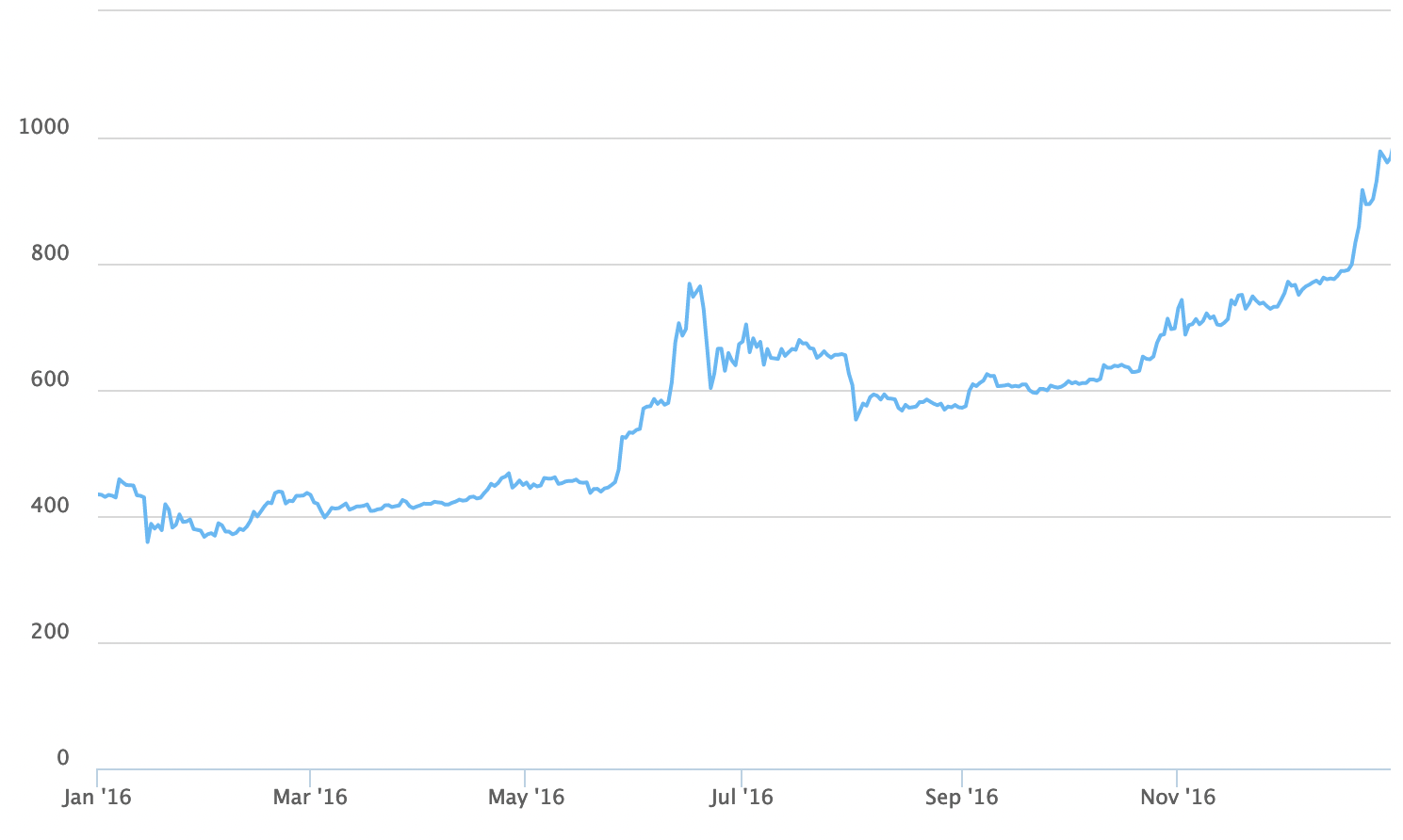
To understand the valuation of Bitcoin in 2016, one must look at the trajectory from January to December. Unlike the vertical spikes seen in later years, 2016 was characterized by a resilient, upward trend that rewarded patient investors.
Starting the Year Under $500
On January 1, 2016, Bitcoin opened at approximately $430. At the time, the total market capitalization of the entire cryptocurrency sector was a fraction of what a single mid-cap tech stock would be worth today. For the first quarter of the year, the price fluctuated between $380 and $450. In the context of personal finance, Bitcoin was still viewed by the mainstream as a highly speculative “lottery ticket” rather than a cornerstone of a diversified portfolio.
The Impact of the Second Halving Event
The most significant scheduled event in the Bitcoin calendar occurred in July 2016: the second “halving.” This is a protocol-level event where the reward for mining new blocks is cut in half, effectively reducing the daily supply of new coins. Historically, halvings have been precursors to significant price appreciation. In the months leading up to the July halving, the price began to climb, breaking the $600 and $700 barriers as investors priced in the upcoming supply shock. By the time the halving occurred, the price had stabilized around $650, signaling that the market was beginning to understand the deflationary mechanics of the asset.
Year-End Rally and the Break Toward $1,000
The final quarter of 2016 was where the momentum truly shifted. As global economic uncertainty increased, Bitcoin became an attractive alternative for those looking to hedge against traditional currency fluctuations. By December 2016, the price was surging. On December 31, Bitcoin closed the year at approximately $960—a more than 120% increase from its starting price in January. For those who had the foresight to allocate even a small percentage of their capital to Bitcoin at the start of the year, the returns significantly outperformed almost every other major asset class.
Key Economic Drivers Behind the 2016 Price Action
Price does not move in a vacuum. The rise of Bitcoin in 2016 was fueled by a unique confluence of institutional skepticism, retail curiosity, and global geopolitical shifts that forced many to rethink the definition of “money.”
Institutional Skepticism vs. Retail Interest
In 2016, the “Wall Street” narrative was largely dismissive. Major banking CEOs were still calling Bitcoin a “fraud” or a “bubble.” However, beneath this surface-level dismissal, the plumbing for institutional entry was being built. More robust exchanges were gaining regulatory licenses, and the first iterations of custodial services were being discussed. While the “big money” was hesitant, retail investors—particularly in regions with high inflation or capital controls—began to see Bitcoin as a viable tool for wealth preservation.
Global Economic Uncertainty and the “Safe Haven” Narrative
Two major geopolitical events in 2016 acted as catalysts for Bitcoin’s price growth: Brexit and the U.S. Presidential Election. When the United Kingdom voted to leave the European Union in June, the British Pound plummeted. Simultaneously, investors flocked to “safe haven” assets. While gold was the traditional choice, Bitcoin saw a notable spike in volume and price during the Brexit fallout. This reinforced the burgeoning narrative of “Digital Gold.” Similarly, the unexpected result of the U.S. election in November led to a brief period of market volatility, during which Bitcoin’s price remained remarkably resilient, further cementing its reputation as an uncorrelated asset.

The Role of Exchange Liquidity and Infrastructure
The financial viability of an asset depends heavily on how easily it can be bought and sold. In 2016, the infrastructure surrounding Bitcoin matured significantly. Exchanges like Coinbase, Kraken, and Bitstamp improved their user interfaces and security protocols, making it easier for non-technical individuals to move fiat currency into the crypto ecosystem. As liquidity increased, the “bid-ask spreads” narrowed, making Bitcoin a more efficient vehicle for moving value across borders—a key utility that drove its fundamental valuation.
Comparing 2016 Returns to Traditional Asset Classes
To truly appreciate “how much” Bitcoin was worth in 2016, one must compare its performance to the broader financial market. In the world of investing, everything is relative to the opportunity cost of not being in another asset.
Bitcoin vs. Gold and the S&P 500
In 2016, the S&P 500 returned approximately 9.5%, a solid year by historical standards. Gold, often compared to Bitcoin, ended the year up about 8.5%. While these are respectable returns for a traditional retirement account, Bitcoin’s 120%+ return made it the undisputed champion of the 2016 fiscal year. For an investor with a $10,000 portfolio, a 1% allocation to Bitcoin ($100) at the start of 2016 would have yielded more profit than the remaining 99% of a portfolio tied to gold.
The Risk-Reward Profile of Early Crypto Investing
It is important to acknowledge that the high returns of 2016 came with high volatility. During the year, Bitcoin experienced several “drawdowns” of 10% to 20% within a single week. From a money management perspective, 2016 taught investors about the importance of “position sizing.” Because the asset was so volatile, one did not need to risk their entire life savings to see meaningful gains. A small, disciplined investment was enough to change a person’s financial trajectory.
Lessons for Modern Investors: What 2016 Teaches Us About Cycles
Looking back at the 2016 price of Bitcoin offers more than just nostalgia; it provides a blueprint for understanding market cycles and the psychology of investing in emerging technologies.
Identifying Local Bottoms and Long-Term Trends
Many investors in early 2016 were hesitant to buy at $400 because they remembered the price being $100 a year prior. They felt they had “missed the boat.” This psychological barrier is a recurring theme in finance. The lesson from 2016 is that in a structural bull market, today’s “expensive” price often becomes tomorrow’s “unbelievable bargain.” Understanding the difference between a temporary price spike and a long-term shift in adoption is the key to successful wealth building.
The Psychological Barrier of “Expensive” Bitcoin
As Bitcoin approached $1,000 in December 2016, many retail investors pulled out, fearing a massive crash at such a “round number.” While a correction did eventually happen, those who focused purely on the price tag missed the underlying growth in network hash rate, wallet creation, and merchant adoption. In personal finance, focusing on the value of the network rather than just the price of the unit is what separates successful long-term holders from short-term speculators.
The Importance of a Long-Term Time Horizon
The most successful investors of 2016 were not the day traders, but those who viewed their purchase through a multi-year lens. Bitcoin’s journey from $430 to $960 was not a straight line; it was a jagged path filled with FUD (Fear, Uncertainty, and Doubt). However, those who maintained a “HODL” (Hold On for Dear Life) strategy throughout the year were positioned perfectly for the 2017 explosion that followed.
Conclusion: The Legacy of $900 Bitcoin
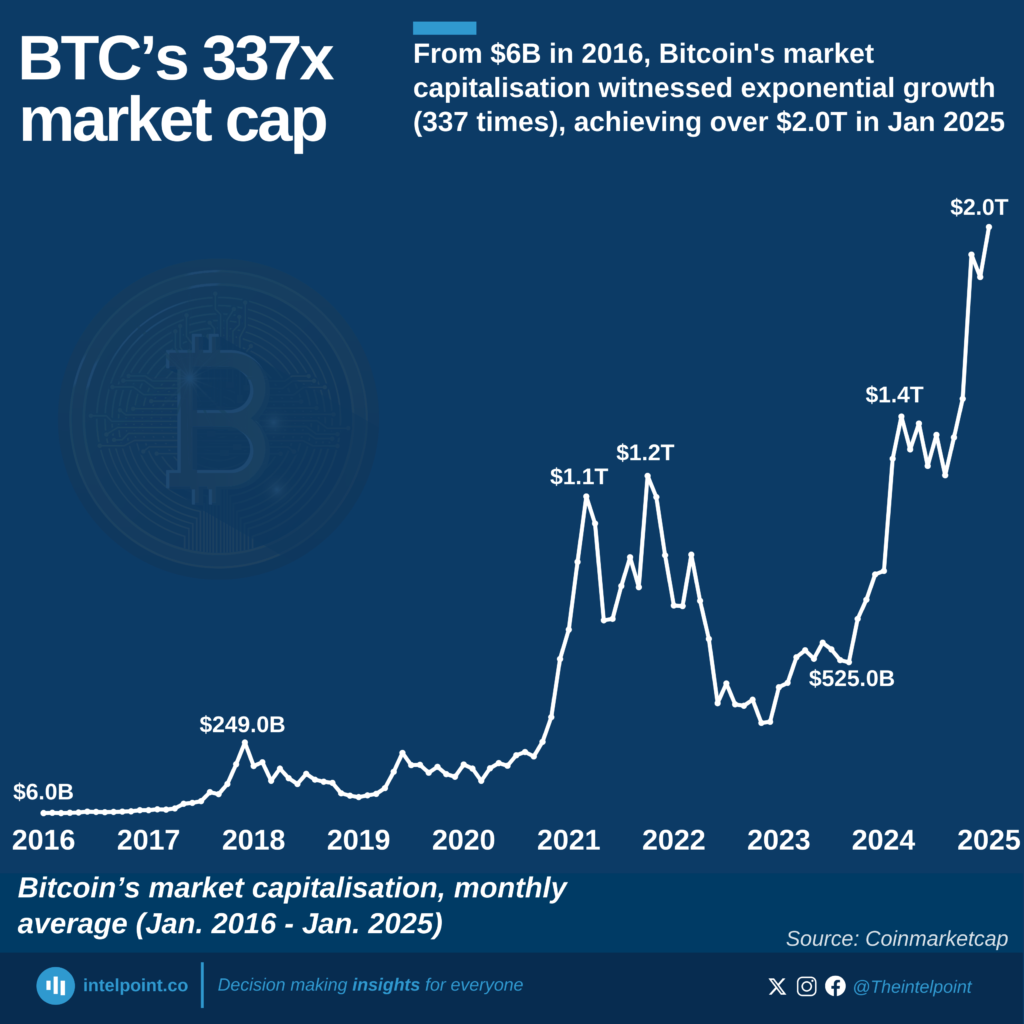
In hindsight, 2016 was the final year that Bitcoin could be considered “cheap” by almost any metric. It was the year the asset proved it could survive a halving, weather geopolitical storms, and outcompete every traditional financial instrument on the planet.
For today’s investor, the history of 2016 serves as a reminder that financial opportunity is often found in the gap between public perception and emerging reality. While we may never see Bitcoin at $400 again, the principles that drove its growth in 2016—scarcity, decentralization, and the search for an alternative to inflationary fiat—remain as relevant today as they were then. Understanding the price of Bitcoin in 2016 is not just a lesson in history; it is a lesson in the enduring power of asymmetric risk and the rewards of financial patience.
aViewFromTheCave is a participant in the Amazon Services LLC Associates Program, an affiliate advertising program designed to provide a means for sites to earn advertising fees by advertising and linking to Amazon.com. Amazon, the Amazon logo, AmazonSupply, and the AmazonSupply logo are trademarks of Amazon.com, Inc. or its affiliates. As an Amazon Associate we earn affiliate commissions from qualifying purchases.