
The history of finance is punctuated by moments of quiet revolution—small shifts in the way humanity perceives value that eventually lead to global transformations. In the world of modern investing, no date is more significant than January 3, 2009. On this day, the “Genesis Block” of the Bitcoin network was mined. For many looking back at this milestone, the primary question is often one of pure financial curiosity: “How much was Bitcoin worth in 2009?”
To understand the answer is to understand the birth of a new asset class. In 2009, Bitcoin did not have a price tag in the traditional sense. It was a digital experiment with a market value of exactly zero dollars for the vast majority of its first year. Yet, that period of “zero value” laid the groundwork for what would become the best-performing financial asset of the following decade.

The Zero-Dollar Era: Understanding Bitcoin’s Financial Status in 2009
In the current landscape of high-frequency trading and 24/7 crypto exchanges, it is difficult to imagine a world where a financial asset has no price. However, throughout 2009, Bitcoin existed purely as a technical curiosity among a small group of “cypherpunks” and cryptography enthusiasts. There were no exchanges, no digital wallets with sleek interfaces, and certainly no institutional buyers.
The Genesis Block and the Absence of Exchanges
When Satoshi Nakamoto mined the first block, the rewards were 50 BTC. At that time, there was no mechanism to trade these coins for U.S. Dollars or any other fiat currency. The concept of “price” requires a marketplace where supply meets demand. In 2009, there was no market. The value was purely theoretical, based on the cost of the electricity used to run the computers mining the network. For the first nine months of the year, the value of Bitcoin remained at $0.00.
The “Worthless” Token: Why Market Value Didn’t Exist
During this period, Bitcoin lacked the liquidity that defines modern financial instruments. It was not listed on any stock exchange or forex platform. To “buy” Bitcoin in early 2009, you didn’t spend money; you spent computing power. Investors today often view this as a missed opportunity, but at the time, there was no guarantee that these digital tokens would ever be exchangeable for real-world goods or services. The absence of market value was a reflection of the extreme risk and the unproven nature of the blockchain protocol.
From Concept to Currency: The Financial Evolution of Decentralization
The transition from a value of zero to a quantifiable price occurred late in 2009. This shift was a pivotal moment in financial history, marking the first time a decentralized, digital-only entity was assigned a value against a sovereign currency.
Proof of Work as the New Gold Standard
In October 2009, a website called “New Liberty Standard” established the first exchange rate for Bitcoin. The calculation wasn’t based on speculative demand but on the cost of production. They calculated the exchange rate by looking at the amount of electricity required for a computer to mine a single Bitcoin. This created an initial valuation of 1,309 BTC to $1 USD. This meant that in late 2009, a single Bitcoin was worth approximately $0.00076.
The First Peer-to-Peer Transactional Framework
This initial valuation was a landmark in the evolution of money. It moved Bitcoin from the realm of “software code” into the realm of “financial commodity.” By establishing a cost of production, Bitcoin began to mirror the economics of gold mining. This “Proof of Work” system ensured that the currency had an inherent economic cost, preventing the infinite “printing” that characterizes central bank fiat currencies. For the early adopters, this was the first evidence that Bitcoin could serve as a medium of exchange.
The Economic Vision of Satoshi Nakamoto

To truly grasp the significance of Bitcoin’s 2009 valuation, one must look at the financial climate of that era. The world was in the midst of the Great Recession. Major banks were failing, and governments were engaging in unprecedented levels of quantitative easing (money printing).
Hedging Against Central Bank Inflation
Satoshi Nakamoto famously embedded a headline from The Times into the Genesis Block: “The Times 03/Jan/2009 Chancellor on brink of second bailout for banks.” This was not just a timestamp; it was a financial manifesto. The goal was to create a monetary system that was independent of central bank intervention. In 2009, Bitcoin’s “value” was not found in its price, but in its promise of a fixed supply. While the dollar was being devalued through bailouts, Bitcoin was being born with an immutable cap.
Scarcity and the 21 Million Cap
One of the most attractive features for modern investors is Bitcoin’s hard cap of 21 million units. In 2009, this scarcity was a radical economic concept. Most currencies are inflationary by design, meaning their purchasing power decreases over time. Bitcoin introduced the concept of digital scarcity. In its first year, the only way to acquire it was to mine it, and the scheduled “halving” events ensured that the supply would become tighter over time. This economic design is what ultimately drove the price from the fractions of a cent seen in late 2009 to the thousands of dollars seen today.
Calculating the Opportunity Cost: 2009 vs. Today
When modern investors look back at the $0.00076 price point of late 2009, the “what if” factor is staggering. This comparison is more than just a fun mathematical exercise; it is a lesson in the power of early-stage investing in disruptive technologies.
The Mathematical Growth of a New Asset Class
If an investor had spent just $100 on Bitcoin at the New Liberty Standard rate in 2009, they would have acquired approximately 130,900 BTC. At contemporary prices (assuming a price of $60,000 per BTC), that $100 investment would be worth over $7.8 billion today. This represents a percentage increase that is virtually unparalleled in the history of finance. It serves as a stark reminder that the highest rewards in the financial world are reserved for those who provide liquidity to an asset when its future is most uncertain.
Lessons in Long-Term Financial Patience
The 2009 valuation teaches investors about the “HODL” philosophy—the idea of holding an asset through extreme volatility for long-term gains. Many of those who “owned” Bitcoin in 2009 lost their private keys, discarded their hard drives, or sold as soon as the price hit $1.00. The financial journey from 2009 to the present highlights that wealth is often generated not just by being “early,” but by having the conviction to withstand the market’s psychological pressures over decades.
The Legacy of the 2009 Valuation in Modern Portfolios
Today, Bitcoin is no longer a hobbyist experiment; it is a staple of institutional portfolios, held by publicly traded companies and offered through Spot ETFs on major stock exchanges. However, the DNA of the 2009 era still influences how it is treated as a financial tool.
Risk Management and Volatility
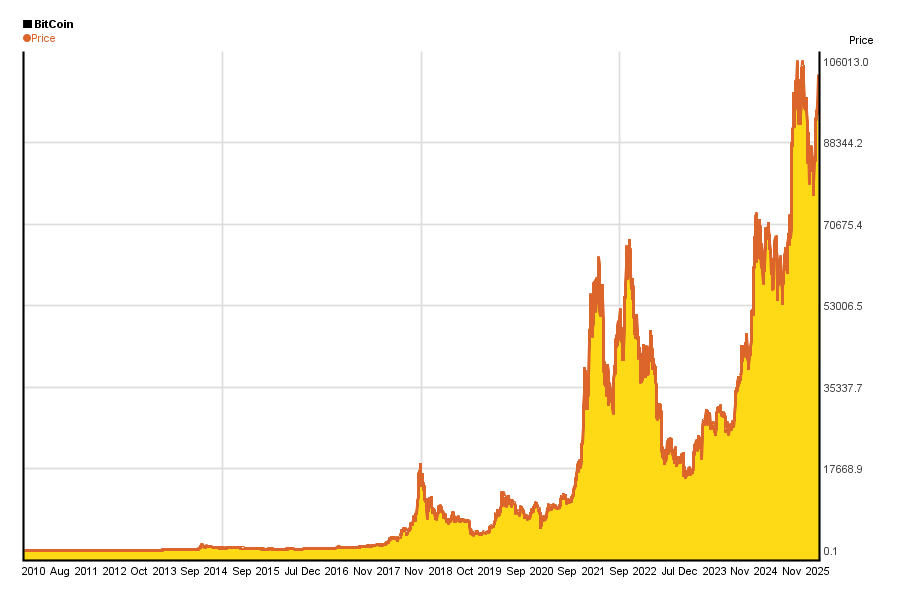
The fact that Bitcoin could go from $0.00 to $60,000+ in fifteen years is proof of its extreme volatility. For modern money managers, Bitcoin represents a “high-risk, high-reward” component of a diversified portfolio. The 2009 origin story reminds us that because Bitcoin isn’t backed by a government or a physical commodity like oil, its price is driven entirely by market sentiment, adoption rates, and its utility as a store of value.
Bitcoin’s Role in a Diversified Financial Strategy
As we move further away from 2009, Bitcoin is increasingly viewed as “Digital Gold.” Investors use it as a hedge against the inflation of fiat currencies, much like Satoshi Nakamoto intended during the 2008 financial crisis. While you can no longer buy 1,300 Bitcoins for a single dollar, the underlying economic principles remain the same: a decentralized, borderless, and scarce asset that operates outside the traditional banking system.
In conclusion, the price of Bitcoin in 2009—effectively zero for most of the year and less than a tenth of a cent by the end—is a testament to the power of financial innovation. It began as a valueless string of code and evolved into a global reserve asset. For the modern investor, the lesson of 2009 is not just about the price that was missed, but about the importance of recognizing the economic shifts that redefine how the world understands money. Whether Bitcoin continues its trajectory or stabilizes, its 2009 inception remains the most significant “zero-to-one” moment in the history of private finance.
aViewFromTheCave is a participant in the Amazon Services LLC Associates Program, an affiliate advertising program designed to provide a means for sites to earn advertising fees by advertising and linking to Amazon.com. Amazon, the Amazon logo, AmazonSupply, and the AmazonSupply logo are trademarks of Amazon.com, Inc. or its affiliates. As an Amazon Associate we earn affiliate commissions from qualifying purchases.