
In the annals of financial history, few assets have captured the imagination and delivered the astronomical returns seen with Bitcoin. Yet, if one were to travel back to 2008 and inquire about its value, the answer would be both simple and profoundly misleading: it was essentially worth nothing. Bitcoin, the revolutionary digital currency, was merely a concept outlined in a white paper that year, a theoretical solution to the flaws of traditional finance, born amidst the global financial crisis. Its journey from an obscure cryptographic proposal to a global trillion-dollar asset class is a compelling narrative that offers invaluable lessons for investors, economists, and anyone interested in the future of money.

This article delves into the precise valuation of Bitcoin in its nascent year, exploring the economic environment of its creation, its gradual transition from a purely digital curiosity to a traded commodity, and the profound investment implications derived from its astonishing trajectory. Understanding Bitcoin’s genesis in 2008 isn’t just a historical exercise; it’s a deep dive into the essence of risk, reward, innovation, and the fundamental shifts occurring in how we perceive and manage wealth.
The Dawn of Digital Currency: Bitcoin’s Genesis in 2008
The year 2008 was marked by unprecedented financial turmoil. The subprime mortgage crisis had triggered a cascade of failures across major financial institutions, leading to bank bailouts, a credit crunch, and a widespread loss of trust in the conventional banking system. It was against this backdrop of economic uncertainty and disillusionment that a new paradigm for money quietly emerged.
Satoshi Nakamoto’s Vision: A White Paper and a Dream
On October 31, 2008, an individual or group using the pseudonym Satoshi Nakamoto published a nine-page white paper titled “Bitcoin: A Peer-to-Peer Electronic Cash System.” This document was a radical proposition: a decentralized digital currency that would operate without the need for central banks or financial intermediaries. It promised a system where transactions could be conducted directly between parties, secured by cryptography, and recorded on a public ledger called a blockchain.
From a monetary perspective, Nakamoto’s proposal was groundbreaking. It addressed issues of trust, censorship, and the inflationary policies of central banks that many felt contributed to the 2008 crisis. The white paper outlined a fixed supply of 21 million Bitcoins, designed to be deflationary by nature, in stark contrast to the unlimited fiat currency supply. For investors and financial thinkers, this fundamental design choice was a critical differentiator, hinting at a potential store of value unlike any other digital asset before it.
The Incubation Period: Before Any Monetary Value
Crucially, in 2008, Bitcoin was an idea, not a marketable asset. The software client for Bitcoin was not released until January 2009. Therefore, there was no market, no exchanges, and no mechanism to assign a monetary value to Bitcoin in 2008. It was impossible to buy, sell, or trade Bitcoin for any fiat currency like USD, EUR, or GBP. Its value, in practical terms, was zero.
This period was its incubation phase. Early adopters, primarily cryptographers and computer enthusiasts, were drawn to the intellectual curiosity and the ideological underpinnings of Nakamoto’s vision. They were not driven by investment potential, but by the technical elegance and the promise of a sovereign digital currency. For these pioneers, Bitcoin held a conceptual value, a testament to a new way of thinking about finance and governance, but it had no tangible financial worth. This distinction is vital for understanding its later explosive growth, as it underscores the speculative nature of nascent assets and the often-unforeseeable trajectory of disruptive technologies.
From Concept to Commodity: Bitcoin’s First Steps Towards Valuation
The journey from a theoretical concept to a traded commodity is often long and uncertain. For Bitcoin, this transition began shortly after its official launch, illustrating how supply and demand, even on a micro-scale, begin to shape the value of a novel financial instrument.
The Zero-Dollar Valuation: Why Bitcoin Had No Price in 2008
Reiterating the point, in 2008, Bitcoin literally had no market price because it wasn’t yet operational. There were no mining rewards to be claimed, no transactions to be processed, and no peer-to-peer exchanges facilitating its transfer for real-world goods or services. Its “price” was, by definition, an undefined variable. This is a critical distinction from assets that might trade at a very low price; Bitcoin wasn’t trading at all.
This ‘worthless’ starting point highlights a fundamental aspect of asset valuation: a price emerges when there is a supply and demand dynamic in an accessible marketplace. In 2008, Bitcoin was in a pre-market state, a digital blueprint awaiting activation. From an investment perspective, this means that anyone “investing” in Bitcoin in 2008 would have been engaging in pure speculation on a future product, not an existing asset.
The First Real-World Transactions: Setting the Precedent
The first significant real-world transaction involving Bitcoin occurred on May 22, 2010. Laszlo Hanyecz, a programmer, famously paid 10,000 Bitcoins for two pizzas. At the time, this transaction valued one Bitcoin at approximately $0.0025. This event is widely celebrated as Bitcoin Pizza Day and marks the first tangible evidence of Bitcoin being used as a medium of exchange, thus assigning it an actual, albeit minuscule, monetary value.
This initial valuation, driven by a simple bartering exchange, was a pivotal moment. It demonstrated that Bitcoin could indeed function as “electronic cash,” giving it utility beyond theoretical interest. For financial analysts, this marked the true birth of Bitcoin as an economic entity, moving it from the realm of computer science into the nascent world of digital finance. It provided the first benchmark, however small, against which future price movements could be measured, sparking the imagination of those who saw its potential as a disruptor to traditional monetary systems.
Early Mining: Acquiring “Worthless” Digital Gold
In the early days, acquiring Bitcoin was a relatively simple task, primarily through mining. Mining involved using computational power to solve complex mathematical puzzles, which verified transactions on the blockchain and, in return, rewarded the miner with new Bitcoins. In 2009, a standard home computer could easily mine Bitcoins, often yielding 50 BTC per block.
Those who mined Bitcoin in 2009 and the early 2010s were essentially acquiring an asset that had no established market value. They were expending electricity and computational resources for something that, at the time, many considered a digital novelty. The cost basis for these early Bitcoins was incredibly low, often just the marginal cost of electricity. This period represents the purest form of early adoption, driven by technological interest rather than financial speculation. These “early birds” became the accidental beneficiaries of one of the greatest wealth transfers in history when Bitcoin’s value began its ascent years later. Their foresight, or perhaps pure luck, in recognizing the potential of a decentralized currency before it had a price, is a testament to the high-risk, high-reward nature of investing in truly nascent technologies.
The Unforeseen Investment: What If You Knew Then What We Know Now?
The phenomenal growth of Bitcoin from zero value to tens of thousands of dollars per coin has become the stuff of legend. This trajectory offers profound lessons in investment psychology, risk management, and the power of long-term vision.
The Power of Foresight: Missed Opportunities and Future Lessons
The “what if” scenario surrounding Bitcoin in 2008 is a powerful thought experiment for any investor. If one had recognized Bitcoin’s potential in 2008 and found a way to acquire a substantial amount (say, through mining in 2009), the returns would have been life-altering. An investment of mere dollars (if such a mechanism existed) or the effort of basic mining would today be worth millions, or even billions, at Bitcoin’s peak valuations.
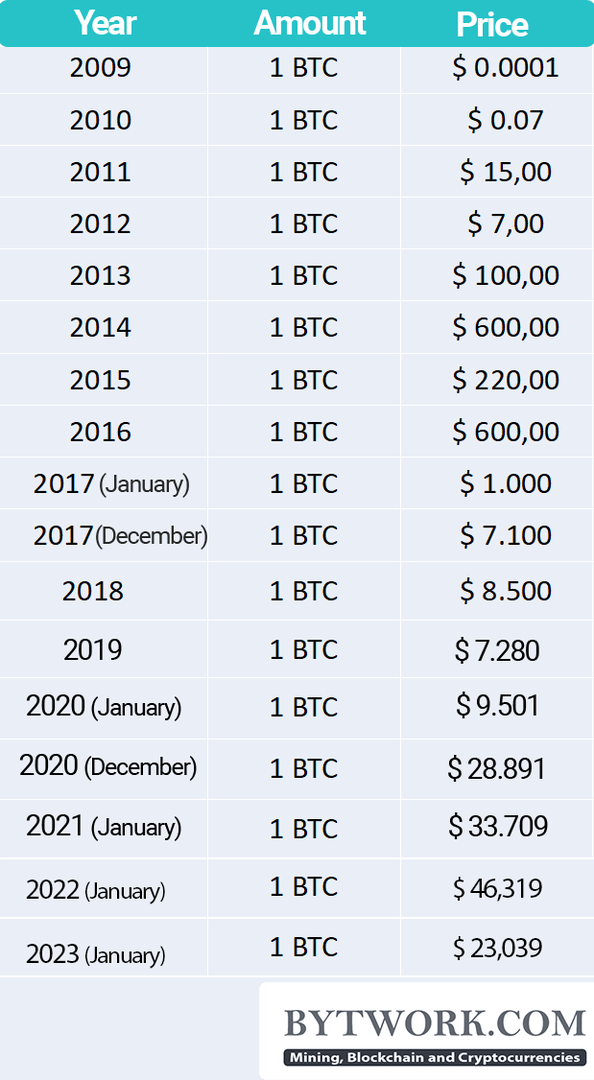
This stark reality highlights the immense challenge of identifying truly disruptive assets in their embryonic stages. They often appear to be niche curiosities, lacking immediate utility or widespread understanding. The lesson for future investors is not to lament missed opportunities but to cultivate an open mind towards emerging technologies and unconventional investment avenues. The next “Bitcoin” may not be a cryptocurrency, but a biotech breakthrough, a new energy source, or an AI application. The core principle remains: early conviction in potentially transformative assets can lead to exponential financial rewards, but it also carries significant risk.
Risk vs. Reward: The Early Adopter’s Dilemma
The early days of Bitcoin epitomize the extreme end of the risk-reward spectrum. Investing in something with no intrinsic value, no regulatory oversight, and no clear path to adoption required immense speculative courage. Most financial advisors would have unequivocally cautioned against such an endeavor. Yet, it was precisely this high level of risk that paved the way for unprecedented returns.
For the modern investor, Bitcoin’s journey underscores the importance of understanding one’s risk tolerance. While the potential rewards were staggering, the vast majority of new ventures, especially in unregulated digital spaces, fail. Bitcoin’s success was far from guaranteed; it faced numerous challenges, including security breaches, regulatory crackdowns, and market volatility. This historical context emphasizes that while innovation creates wealth, distinguishing between genuine disruption and fleeting fads is crucial, and a diversified portfolio strategy remains key to mitigating exposure to highly speculative assets.
The Long-Term HODL Strategy: A Case Study in Patience
The term “HODL” (often interpreted as “Hold On for Dear Life”) originated in the Bitcoin community and perfectly encapsulates the most successful investment strategy for this asset. Many of the early miners and adopters who held onto their Bitcoins through countless booms and busts became millionaires, even billionaires. Those who sold prematurely during minor dips or market corrections often missed out on the larger parabolic gains.
Bitcoin’s history is a powerful testament to the value of long-term investing, particularly in highly volatile, high-growth assets. It illustrates that market timing is notoriously difficult, and often, the most effective strategy is to invest in conviction and endure the inevitable market fluctuations. For personal finance, HODLing Bitcoin became a practical example of delayed gratification and the compounding effect of long-term capital appreciation, assuming the asset itself proved fundamentally sound over time. It reinforces the idea that true wealth creation often requires patience, discipline, and a strong belief in the underlying value proposition of an investment, weathering the storms of short-term market sentiment.
Understanding Bitcoin’s Economic Trajectory and Future Implications
Bitcoin’s evolution from a zero-value concept to a significant global asset has redefined aspects of investment and finance. Its unique characteristics pose both opportunities and challenges for the broader economic landscape.
The Volatility Paradox: Navigating a Nascent Asset Class
Bitcoin’s price history is characterized by extreme volatility, with dramatic price swings of 20% or more in a single day not uncommon, especially in its early years. This volatility paradoxically makes it both a high-risk investment and an attractive asset for those seeking outsized returns. For traditional investors accustomed to more stable markets, Bitcoin’s price action can be unsettling.
However, understanding this volatility requires acknowledging Bitcoin’s relative youth and its position as a new asset class. Unlike mature markets with deep liquidity and established regulatory frameworks, Bitcoin’s market is still developing. Its price is influenced by a myriad of factors, including macroeconomic trends, regulatory news, technological developments, institutional adoption, and even social media sentiment. Financial analysis of Bitcoin often involves both traditional technical and fundamental analysis, but also a new set of metrics unique to the crypto space, such as network hash rate, on-chain data, and developer activity. Navigating this paradox requires a robust understanding of market dynamics and a willingness to accept significant price fluctuations as part of the investment journey.
Diversification and Digital Assets: A Modern Portfolio Imperative
The emergence of Bitcoin and the broader cryptocurrency market has prompted a re-evaluation of portfolio diversification strategies. Once dismissed as fringe assets, digital currencies are increasingly being considered as a legitimate component of a diversified investment portfolio, especially by institutional investors and high-net-worth individuals. Bitcoin’s low correlation with traditional asset classes like stocks and bonds has made it an appealing hedge against inflation and a potential diversifier to reduce overall portfolio risk.
However, financial advisors stress that allocation to highly volatile assets like Bitcoin should be carefully managed, typically as a small percentage of a total portfolio – often 1-5%. The goal is to capture potential upside without exposing the portfolio to undue risk. The discussion around digital assets has moved from whether they should be included to how they should be included, with questions regarding appropriate sizing, rebalancing strategies, and the integration of crypto into broader wealth management frameworks. This marks a significant shift in mainstream finance, acknowledging the growing importance of digital assets in the global economy.
Regulatory Landscapes and Market Maturation
The future economic trajectory of Bitcoin is intrinsically linked to its evolving regulatory landscape. Governments and financial authorities globally are grappling with how to classify, regulate, and integrate cryptocurrencies into existing financial systems. Clarity on taxation, consumer protection, anti-money laundering (AML), and know-your-customer (KYC) regulations significantly impacts institutional adoption and market stability.
As the market matures, greater regulatory clarity is expected to reduce some of the inherent volatility and attract more mainstream capital. This ongoing maturation process will likely see Bitcoin transition from a purely speculative asset to a more integrated component of the global financial infrastructure. For investors, monitoring regulatory developments is paramount, as policy decisions can have profound implications for Bitcoin’s value, accessibility, and long-term viability as a recognized asset class.
Key Takeaways for Today’s Investor from Bitcoin’s Origin Story
Bitcoin’s journey from a revolutionary white paper in 2008 to a global financial powerhouse offers invaluable insights for contemporary investors. Its history serves as a powerful case study in innovation, risk, and the profound impact of long-term vision.
The Importance of Fundamental Research
Bitcoin’s success wasn’t merely accidental; it was built on a foundational white paper outlining a robust and innovative solution to existing financial problems. For today’s investor, this underscores the critical importance of conducting thorough fundamental research. Before investing in any asset, especially novel ones, understanding its underlying technology, economic model, use cases, and competitive landscape is paramount. Just as early adopters grasped the potential of Nakamoto’s peer-to-peer cash system, successful investors today must delve beyond hype and understand the intrinsic value proposition of their chosen investments.
Embracing Innovation with Caution
Bitcoin represents the epitome of disruptive innovation. It challenged conventional wisdom and created an entirely new asset class. Investors should maintain an open mind towards emerging technologies and innovative financial instruments. However, this embrace must be coupled with caution. For every Bitcoin, there are countless failed ventures. A balanced approach involves allocating a small, calculated portion of one’s portfolio to high-risk, high-reward innovations, accepting that capital deployed in such areas could be entirely lost. This strategy allows investors to participate in potentially transformative trends without jeopardizing their entire financial well-being.

Long-Term Vision in a Fast-Paced Market
Finally, Bitcoin’s story is a powerful testament to the rewards of long-term vision and patience. While the market is often swayed by short-term news cycles and rapid price movements, truly significant wealth is often built over years, even decades. The investors who HODLed Bitcoin through its various cycles, despite significant volatility, ultimately reaped the greatest rewards. In today’s fast-paced, information-saturated financial markets, cultivating a long-term perspective and resisting the urge to react to every fluctuation remains a cornerstone of sound investment strategy, proving that sometimes, the most profitable action is inaction.
In conclusion, while Bitcoin had no monetary value in 2008, its inception that year laid the groundwork for a financial revolution. Its journey offers timeless lessons on identifying disruptive potential, managing risk, and the enduring power of long-term financial conviction in the face of uncertainty. For the modern investor, understanding this history is not just about nostalgia; it’s about preparing for the next wave of financial innovation.
aViewFromTheCave is a participant in the Amazon Services LLC Associates Program, an affiliate advertising program designed to provide a means for sites to earn advertising fees by advertising and linking to Amazon.com. Amazon, the Amazon logo, AmazonSupply, and the AmazonSupply logo are trademarks of Amazon.com, Inc. or its affiliates. As an Amazon Associate we earn affiliate commissions from qualifying purchases.