
The prospect of claiming Social Security benefits at the earliest possible age of 62 holds a strong allure for many. For some, it represents an opportunity to retire earlier, escape a demanding job, or supplement income during a transitional phase. For others, it’s a necessary step to bridge a financial gap. However, the decision to claim Social Security at 62 is not without significant financial implications, primarily a permanent reduction in your monthly benefit amount compared to waiting until your full retirement age (FRA). Understanding these trade-offs is crucial for making an informed decision that aligns with your long-term financial goals.
This article will delve into the intricacies of claiming Social Security at age 62, helping you understand how your benefits are calculated, the financial impact of early claiming, and the key considerations to weigh before making this pivotal choice. We’ll explore the factors that influence your benefit amount, how to estimate what you might receive, and strategies to help you decide if claiming early is the right move for your personal financial situation.
Understanding Early Retirement and Social Security
Social Security is a cornerstone of retirement planning for millions of Americans, providing a vital source of income in later life. However, the system is designed with a specific “Full Retirement Age” (FRA) in mind, and claiming benefits before this age results in a permanently reduced payout.
The Full Retirement Age (FRA) Explained
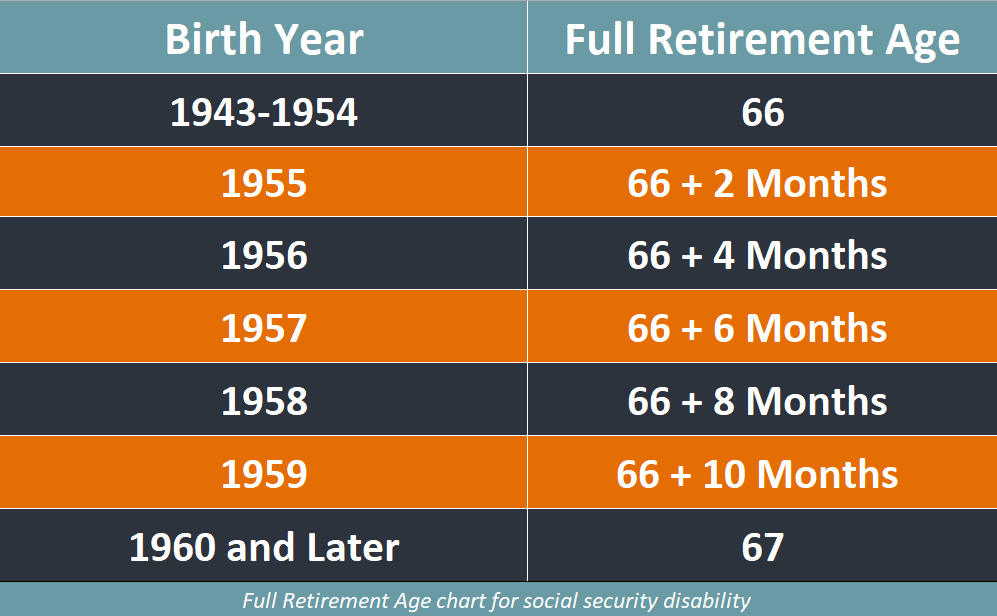
Your Full Retirement Age (FRA), sometimes referred to as your normal retirement age, is the age at which you are entitled to receive 100% of your primary insurance amount (PIA). Your PIA is the benefit amount calculated based on your lifetime earnings. For individuals born between 1943 and 1954, the FRA is 66. For those born between 1955 and 1959, it gradually increases by a few months each year. For anyone born in 1960 or later, your FRA is 67.
The Social Security Administration (SSA) encourages individuals to wait until their FRA, or even beyond, to claim benefits, as this maximizes their monthly payout. Each year you delay past your FRA, up to age 70, results in an increase in your benefit amount, known as delayed retirement credits.
Why Claiming Early Means Reduced Benefits
When you choose to claim Social Security benefits at age 62, you are doing so 3 to 5 years before your FRA, depending on your birth year. This early claiming results in a permanent reduction in your monthly benefit amount. The reduction is calculated based on the number of months you claim before your FRA.
Specifically, your benefit is reduced by:
- 5/9 of 1% for each of the first 36 months you claim early.
- 5/12 of 1% for each month beyond 36 months.
For someone with an FRA of 67, claiming at age 62 means claiming 60 months early. This translates to a permanent reduction of approximately 30% of your primary insurance amount. If your FRA is 66, claiming at 62 (48 months early) results in a reduction of about 25%. This reduction is permanent and will apply for the rest of your life, impacting not just your own benefits but potentially spousal or survivor benefits as well.
Factors Influencing Your Benefit Amount
Several key factors determine the exact amount of Social Security benefit you will receive:
- Your Earnings Record: Social Security benefits are based on your average indexed monthly earnings (AIME) over your 35 highest-earning years. If you don’t have 35 years of earnings, the SSA will factor in zero for the missing years, which can significantly lower your average.
- Your Birth Year: As mentioned, your birth year determines your Full Retirement Age (FRA), which in turn dictates the percentage reduction if you claim early.
- Your Claiming Age: The specific age you begin receiving benefits (e.g., 62, 63, 65, FRA, or 70) directly impacts the monthly amount you receive, due to the early claiming reductions or delayed retirement credits.
- Cost-of-Living Adjustments (COLAs): Once you start receiving benefits, your monthly payment will be subject to annual Cost-of-Living Adjustments, designed to help benefits keep pace with inflation.
Calculating Your Estimated Social Security Benefit
Understanding the factors is one thing, but getting a concrete estimate of what you will receive is the next crucial step. The good news is that the Social Security Administration provides several tools to help you do just that.
The Role of Your Earnings Record
Your Social Security benefit is directly tied to your lifetime earnings. The SSA uses a formula that indexes your earnings to account for changes in average wages over time, calculating your average indexed monthly earnings (AIME). From your AIME, your primary insurance amount (PIA) is determined. The PIA is the benefit you would receive if you started benefits at your full retirement age.
It’s important to ensure your earnings record with the SSA is accurate. Mistakes can happen, and missing or incorrect earnings could lead to a lower benefit amount. Regularly reviewing your earnings history is a wise financial habit.
Accessing Your Social Security Statement
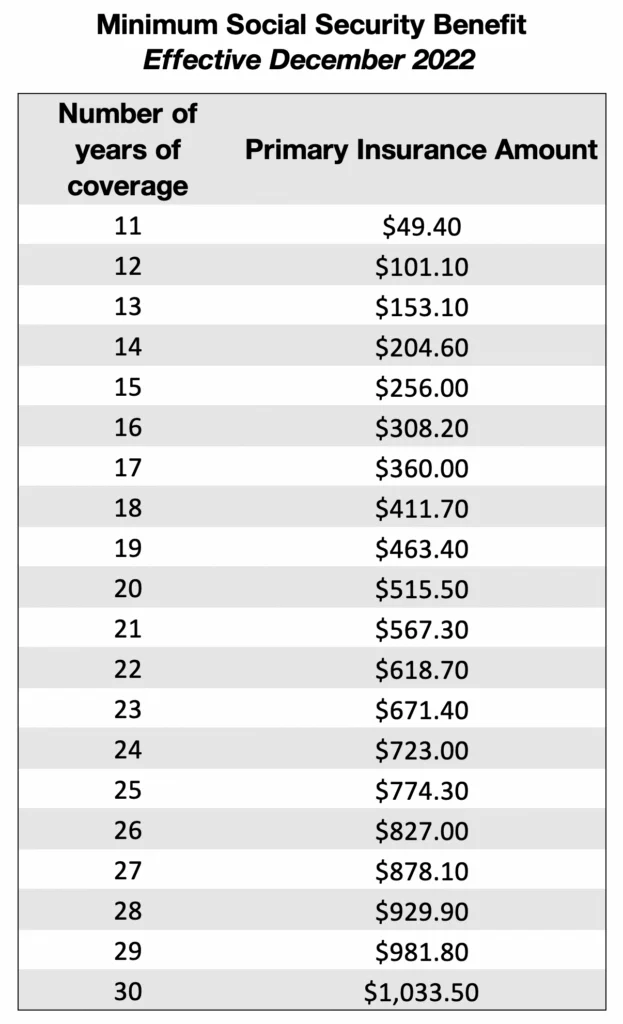
The easiest and most reliable way to get a personalized estimate of your Social Security benefits is through your official Social Security Statement. This statement provides:
- Your complete earnings record: A year-by-year breakdown of your reported earnings.
- Estimated benefits at different ages: It shows what your monthly benefit would be if you claim at age 62, at your full retirement age, and at age 70.
- Estimates for disability and survivor benefits: Important for comprehensive financial planning.
You can access your Social Security Statement by creating an account online at the SSA’s official website, ssa.gov. This secure portal allows you to review your earnings, get personalized estimates, and even apply for benefits.
Tools and Calculators for Projections
Beyond your personalized statement, the SSA website offers various online calculators that allow you to model different scenarios. These include:
- Retirement Estimator: This tool lets you input different future earnings scenarios or retirement dates to see how they impact your benefits.
- Benefit Calculators (various types): These can help you project benefits for spouses, survivors, or understand the impact of the earnings test.
Using these tools can give you a clearer picture of “how much SS will I get at 62” under various assumptions, empowering you to make a data-driven decision. Financial planning software and independent financial advisors may also offer more sophisticated projection tools that integrate Social Security benefits with your other retirement assets.
The Financial Implications of Claiming at 62
While the immediate appeal of early benefits is clear, the long-term financial consequences of claiming at age 62 are substantial and deserve careful consideration.
The Permanent Reduction: What it Means for Your Lifetime Income
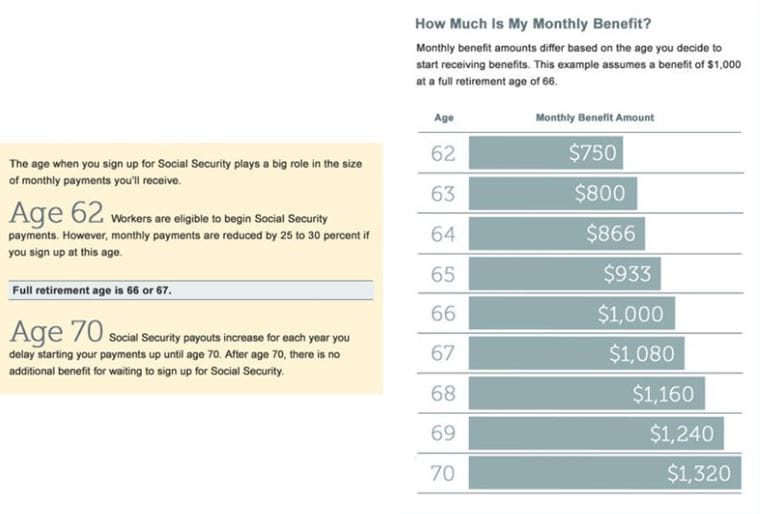
As established, claiming at 62 means accepting a permanently reduced monthly benefit. For someone with an FRA of 67, this reduction is 30%. Let’s put this into perspective:
- If your Primary Insurance Amount (PIA) at age 67 would be $2,000 per month, claiming at 62 would reduce that to $1,400 per month ($2,000 * 0.70).
- Over 20 years of retirement (from 62 to 82), this difference amounts to $144,000 in lost income ($600/month * 12 months/year * 20 years).
- If you live longer, the cumulative difference becomes even more significant.
This permanent reduction is a critical factor for individuals who anticipate a long life expectancy, as it means less guaranteed income for potentially decades of retirement. It impacts your baseline income and your ability to cover essential living expenses in your later years.
Impact on Spousal and Survivor Benefits
The decision to claim early doesn’t just affect your own benefits; it can also impact the benefits available to your spouse or survivors.
- Spousal Benefits: If your spouse claims benefits based on your record, their maximum benefit will be 50% of your full retirement age amount. However, if you claim early, the benefit they receive based on your record will be reduced if they also claim before their own FRA. More importantly, if your spouse would receive a survivor benefit after your death, their benefit would be based on your reduced amount if you had claimed early.
- Survivor Benefits: If you pass away, your eligible survivors (e.g., spouse, minor children) may be entitled to survivor benefits. If you claimed Social Security early, the maximum survivor benefit payable to your spouse will be based on your reduced benefit amount, not your higher FRA amount. This means your early claiming decision could inadvertently reduce the financial security of your loved ones.
Navigating the Earnings Test if You’re Still Working
One often-overlooked implication of claiming Social Security benefits at age 62 is the “earnings test.” If you claim benefits before your Full Retirement Age and continue to work, your benefits may be temporarily reduced or withheld if your earnings exceed certain annual limits.
- Annual Earnings Limit: For 2024, if you are under your FRA for the entire year, the SSA deducts $1 from your benefits for every $2 you earn above $22,320.
- Year of Full Retirement Age: In the year you reach your FRA, a different earnings limit applies. The SSA deducts $1 from your benefits for every $3 you earn above a higher limit ($59,520 for 2024) until the month you reach your FRA. Once you reach your FRA, the earnings test no longer applies, and you can earn as much as you want without affecting your benefits.
It’s crucial to understand that any benefits withheld due to the earnings test are not permanently lost. When you reach your FRA, your monthly benefit will be recalculated to give you credit for the months of benefits that were withheld, potentially resulting in a slightly higher future payment. However, the immediate impact is a reduction in your current cash flow. This means that if you plan to work significant hours after claiming at 62, the net benefit received could be much lower than anticipated.
Strategies and Considerations Before Claiming Early
The decision to claim Social Security at 62 is a complex one, heavily influenced by personal circumstances, health, and financial readiness. It requires a holistic view of your retirement plan.
Assessing Your Financial Readiness and Other Income Sources
Before pulling the trigger on early Social Security benefits, take stock of your complete financial picture:
- Retirement Savings: How robust are your 401(k), IRA, and other investment accounts? Can they comfortably support your expenses until you reach FRA, or potentially for a longer period if you delay Social Security?
- Other Income Streams: Do you have pensions, rental income, or part-time work that can supplement your income?
- Expenses: Have you created a realistic retirement budget? Can you maintain your desired lifestyle with a reduced Social Security benefit and your other income sources?
- Health and Longevity: Your health and family history of longevity can influence whether a reduced benefit for a longer period is a better strategy than a higher benefit for a shorter period. If you anticipate a shorter lifespan due to health issues, claiming earlier might make more sense. Conversely, if you expect to live a long life, maximizing your monthly benefit through delayed claiming could provide more financial security in your later years.
The Break-Even Point Analysis
A common analytical tool for Social Security decisions is the “break-even point.” This calculates the age at which the cumulative amount of money you would have received by claiming early equals the cumulative amount you would have received by waiting for a higher benefit.
For example, if you claim at 62 with a $1,400 benefit instead of waiting until 67 for a $2,000 benefit:
- You receive $1,400 for 60 months (ages 62-67), totaling $84,000.
- From age 67 onwards, you would be receiving $600 less per month ($2,000 – $1,400) than if you had waited.
- The break-even point would be when the cumulative “extra” money received from 62-67 is offset by the cumulative “lost” money from 67 onward.
- In this scenario, it would take approximately 11.67 years ($84,000 / $600 per month / 12 months per year) from your FRA (age 67) for the higher benefit to “catch up.” This means you would “break even” around age 78 or 79. If you live past this age, waiting until FRA would have resulted in more total lifetime income.
This analysis is not the sole factor, but it provides a clear financial perspective on the trade-offs.
Coordinating with Other Retirement Accounts (401k, IRA)
Your Social Security claiming strategy should be integrated with your overall retirement income strategy.
- Bridge the Gap: Some individuals choose to claim Social Security at 62 to allow their 401(k)s and IRAs to continue growing for a few more years, potentially reaching their FRA or age 70 with a much larger portfolio balance. They use their investment accounts to “bridge the gap” until they claim Social Security at a higher amount.
- Tax Efficiency: Consider the tax implications of withdrawing from traditional retirement accounts versus receiving Social Security benefits. A portion of Social Security benefits can be taxable, depending on your combined income. Strategic timing can help manage your tax bracket in early retirement.
- Required Minimum Distributions (RMDs): If you delay Social Security, you might eventually face Required Minimum Distributions from your traditional IRAs and 401(k)s starting at age 73 (or 75 for those born 1960 or later). These RMDs, combined with Social Security, could push you into higher tax brackets.
Making an Informed Decision for Your Future
The choice of when to claim Social Security is deeply personal and has long-lasting financial implications. There is no universally “right” answer; it depends on your unique circumstances, financial health, and life goals.
Seeking Professional Financial Advice
Given the complexity and the significant financial impact, consulting with a qualified financial advisor is highly recommended. A financial professional can help you:
- Analyze your complete financial situation: They can look at your savings, investments, debts, and other income streams.
- Run personalized projections: They can use sophisticated software to model various Social Security claiming strategies alongside your other assets, factoring in inflation, taxes, and life expectancy.
- Understand the impact on your spouse and heirs: They can explain how your claiming decision affects spousal and survivor benefits.
- Identify potential pitfalls and opportunities: They can highlight risks you might not have considered and suggest strategies to optimize your retirement income.
A good advisor won’t tell you what to do, but will empower you with the knowledge and context to make the best decision for your circumstances.
Regular Review and Adjustment of Your Retirement Plan
Your retirement plan, including your Social Security claiming strategy, should not be a static document. Life happens: health changes, market conditions shift, and family needs evolve. It’s wise to:
- Review your plan annually: Revisit your financial goals, expenses, and investment performance.
- Re-evaluate your Social Security decision: If your circumstances change, your optimal claiming strategy might also change. For instance, an unexpected health issue might make claiming early more appealing, while a sudden windfall might allow you to delay.
- Stay informed: Keep up-to-date with any changes in Social Security rules or economic conditions that could affect your benefits.
Ultimately, claiming Social Security at 62 offers immediate income but comes at the cost of a permanently reduced monthly benefit and potential impacts on future spousal/survivor benefits and earnings limits. By thoroughly understanding these trade-offs, estimating your potential benefits, and integrating this decision into a comprehensive financial plan, you can make a confident choice that supports your desired lifestyle throughout retirement.
aViewFromTheCave is a participant in the Amazon Services LLC Associates Program, an affiliate advertising program designed to provide a means for sites to earn advertising fees by advertising and linking to Amazon.com. Amazon, the Amazon logo, AmazonSupply, and the AmazonSupply logo are trademarks of Amazon.com, Inc. or its affiliates. As an Amazon Associate we earn affiliate commissions from qualifying purchases.