
For millions of Americans, Social Security represents a cornerstone of their financial security in retirement, providing a vital income stream that helps cover living expenses, healthcare, and leisure activities. Yet, despite its widespread importance, understanding precisely how your individual Social Security benefit is calculated can feel like navigating a complex maze. The amount you ultimately receive is not a one-size-fits-all figure; it’s a deeply personalized sum influenced by decades of work, strategic decisions, and the unique circumstances of your life.
This article aims to demystify the intricacies of Social Security benefit calculations, providing a clear and comprehensive guide to the key factors that determine your future income. We’ll break down the fundamental components, explore the impact of crucial claiming decisions, and highlight essential resources that empower you to estimate and optimize your benefits. By understanding these mechanisms, you can approach retirement with greater confidence and make informed choices that maximize your financial well-being.
Understanding the Pillars of Social Security Benefits
At its core, your Social Security benefit is a reflection of your lifetime earnings. The Social Security Administration (SSA) uses a specific formula to translate your work history into a monthly payment, ensuring that the system is both progressive and sustainable.
The Earnings Record: Your Work History is Key
The foundation of your Social Security benefit is your earnings record. Every year you work and pay Social Security taxes, the SSA records your earnings. Crucially, the SSA doesn’t just look at your entire career; it specifically focuses on your highest 35 years of earnings. If you have fewer than 35 years of earnings, the missing years are counted as zeros, which can significantly lower your overall benefit. This emphasizes the importance of a consistent work history.
It’s vital for every worker to regularly review their Social Security earnings statement, which you can access online. Errors in your earnings record, such as unreported income or incorrect amounts, can directly translate to a lower benefit. Identifying and correcting these discrepancies early can protect your future financial security, ensuring that every dollar you’ve contributed is accurately accounted for.
Averaging Your Earnings: The AIME Calculation
Once your highest 35 years of earnings are identified, the SSA adjusts these earnings to account for changes in average wages over time. This process is called “indexing.” Indexing ensures that earlier years of earnings are brought up to a comparable level with more recent earnings, reflecting the general increase in wages across the economy. Without indexing, a dollar earned in the 1980s would be weighted far less than a dollar earned today, unfairly diminishing the contribution of earlier work.
After indexing, these 35 years of adjusted earnings are summed up and then divided by 420 (the number of months in 35 years) to arrive at your Average Indexed Monthly Earnings (AIME). The AIME is a critical intermediate step, representing your average monthly earnings over your career, adjusted for inflation-like wage growth. It serves as the direct input into the final calculation of your benefit amount.
The Primary Insurance Amount (PIA): Your Full Retirement Age Benefit
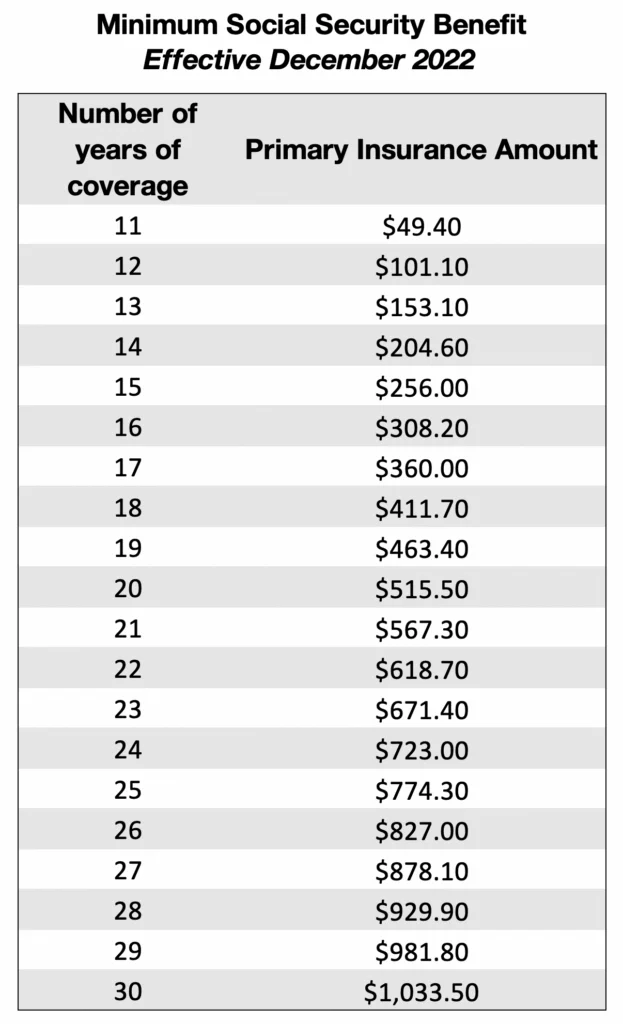
Your Primary Insurance Amount (PIA) is the monthly benefit you are entitled to receive if you begin claiming Social Security benefits exactly at your Full Retirement Age (FRA). The PIA is derived from your AIME using a progressive formula involving “bend points.” This means that lower earners receive a higher percentage of their average indexed earnings than higher earners, providing a safety net for those with more modest incomes.
For example, for someone reaching age 62 in 2024, the PIA is calculated by applying three different percentages to specific segments of their AIME. A relatively high percentage (e.g., 90%) is applied to the first segment of AIME, a lower percentage (e.g., 32%) to the next segment, and an even lower percentage (e.g., 15%) to any AIME above that. These “bend points” are indexed annually to reflect changes in the national average wage index. The sum of these three calculations results in your PIA, representing the full value of your earned benefit before any adjustments for early or delayed claiming.
Navigating Your Full Retirement Age (FRA)
While your PIA represents your “full” benefit, the age at which you choose to claim Social Security significantly impacts the final amount you receive each month. This decision revolves around your Full Retirement Age (FRA).
What is Your Full Retirement Age?
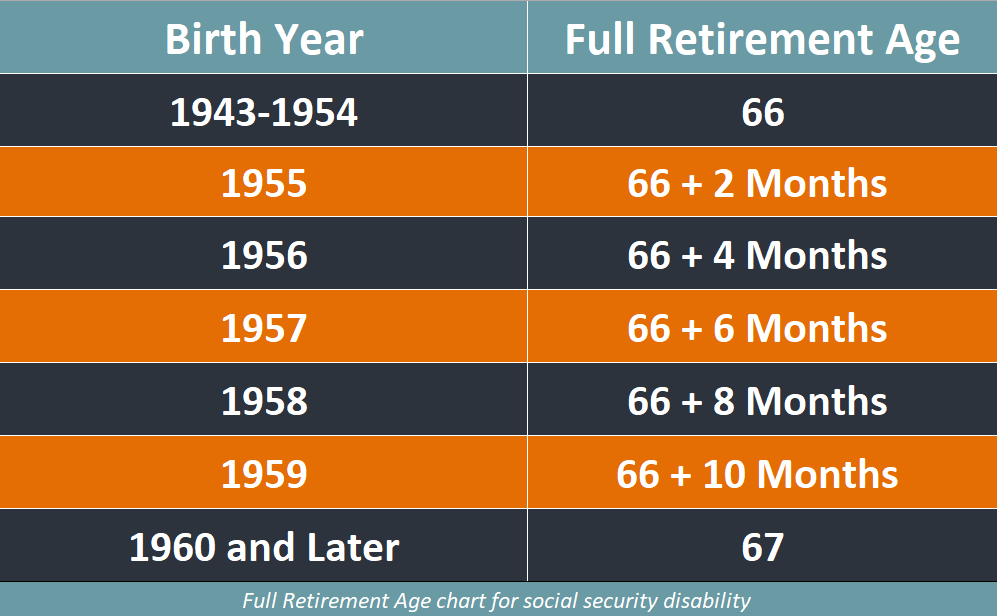
Your Full Retirement Age (FRA) is the age at which you are eligible to receive 100% of your Primary Insurance Amount (PIA). This age is not universal; it depends on your birth year. For those born in 1937 or earlier, FRA was 65. For individuals born between 1943 and 1954, FRA is 66. For those born in 1960 or later, FRA is 67. For birth years in between, FRA gradually increases by a few months per year. For example, if you were born in 1957, your FRA is 66 and 6 months.
Understanding your specific FRA is paramount because it serves as the benchmark against which all other claiming ages are measured. Claiming before your FRA results in a permanent reduction, while delaying past your FRA leads to a permanent increase in your monthly benefit.
Claiming Early: The Permanent Reduction
The earliest age you can begin receiving Social Security retirement benefits is 62. However, if you choose to claim at age 62, or any age before your FRA, your monthly benefit will be permanently reduced. The reduction amount depends on how many months you are away from your FRA.
For example, if your FRA is 67 and you claim at age 62, you are claiming 60 months early. The reduction is calculated in two tiers: 5/9 of 1% for each of the first 36 months early, and 5/12 of 1% for each additional month. For someone with an FRA of 67, claiming at 62 results in a roughly 30% permanent reduction in their monthly benefit. This means if your PIA was $2,000, claiming at 62 would reduce it to approximately $1,400 per month for the rest of your life. This significant and permanent reduction is a crucial factor to consider, particularly for those with longer life expectancies.
Claiming Late: The Power of Delayed Retirement Credits (DRCs)
Conversely, if you delay claiming Social Security benefits past your Full Retirement Age (FRA), you can earn Delayed Retirement Credits (DRCs). These credits permanently increase your monthly benefit for every month you delay, up until age 70. The annual increase for delaying is substantial, typically 8% per year.
For someone with an FRA of 67, delaying until age 70 means an additional three years (36 months) of DRCs. This can result in a total increase of 24% (3 years * 8% per year) above your PIA. So, if your PIA was $2,000, delaying until age 70 would boost your monthly benefit to $2,480. This 24% increase represents a powerful incentive for those who are financially able to defer claiming, providing a significantly higher guaranteed income stream for the remainder of their retirement. After age 70, no further DRCs are earned, so there’s no financial benefit to delaying past that point.
Factors That Can Alter Your Benefit Amount
While your earnings record and claiming age are primary determinants, several other factors can influence the final amount of Social Security benefits you and your family receive.
Spousal and Survivor Benefits
Social Security is not just for individual workers; it also provides crucial benefits for spouses and survivors. If you are married, divorced (under certain conditions), or widowed, you may be eligible for benefits based on your spouse’s or former spouse’s earnings record. A spouse can claim up to 50% of their partner’s PIA if they claim at their own FRA, provided that amount is higher than their own earned benefit. For widows and widowers, survivor benefits can be as high as 100% of the deceased spouse’s PIA, depending on their age at claiming. These provisions are designed to protect families and ensure a basic level of financial support for dependents.
Working While Receiving Benefits
If you claim Social Security benefits before your Full Retirement Age (FRA) and continue to work, your benefits may be subject to an earnings test. If your earnings exceed a certain annual limit (which is adjusted annually), a portion of your benefits will be temporarily withheld. For every $2 you earn over the limit, $1 in benefits will be withheld. In the year you reach your FRA, a different earnings limit applies, and $1 in benefits is withheld for every $3 you earn above a higher limit until the month you reach FRA.
Once you reach your FRA, the earnings test no longer applies. You can earn any amount of income without your Social Security benefits being reduced. Any benefits withheld due to the earnings test are not lost; they are factored back into your benefit calculation at your FRA, leading to a slight increase in your monthly payments going forward.
Taxation of Social Security Benefits
It’s a common misconception that Social Security benefits are entirely tax-free. In reality, a portion of your benefits may be subject to federal income tax if your “combined income” exceeds certain thresholds. Combined income is calculated as your Adjusted Gross Income (AGI) plus any tax-exempt interest income plus 50% of your Social Security benefits.
For single filers, if your combined income is between $25,000 and $34,000, up to 50% of your benefits may be taxable. If it exceeds $34,000, up to 85% may be taxable. For those filing jointly, the thresholds are $32,000 and $44,000, respectively. Some states also tax Social Security benefits, though most do not. It’s important to factor potential taxation into your retirement income planning.
Cost-of-Living Adjustments (COLAs)
To help maintain the purchasing power of your Social Security benefits in the face of inflation, the SSA provides Cost-of-Living Adjustments (COLAs) almost every year. These adjustments are typically announced in October and take effect in December, influencing benefits paid starting in January of the following year. COLAs are determined by changes in the Consumer Price Index for Urban Wage Earners and Clerical Workers (CPI-W). While COLAs ensure your benefits keep pace with rising costs to some extent, they don’t always perfectly match individual inflation experiences, especially concerning healthcare costs.
Essential Tools and Resources for Estimation
Estimating your Social Security benefits doesn’t require complex calculations on your part. The SSA provides excellent tools to help you understand your projected benefits.
The Social Security Administration (SSA) Website
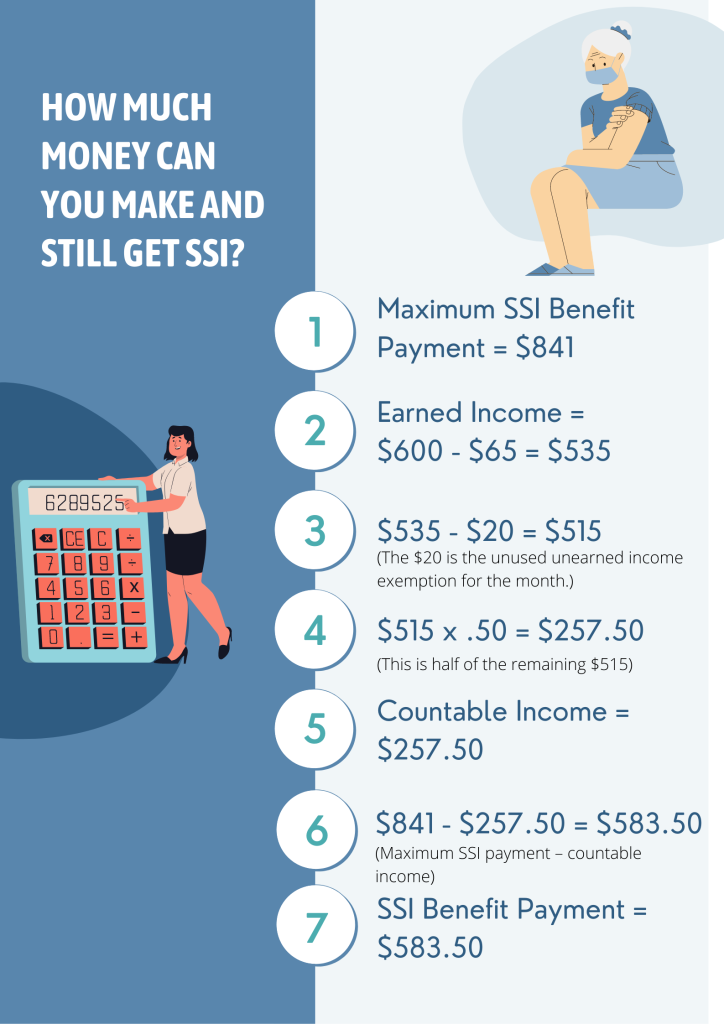
The most authoritative and accurate resource for estimating your Social Security benefits is the official Social Security Administration website, SSA.gov. Here, you can create a “my Social Security” account. This personal account allows you to:
-
View your Social Security Statement: This statement provides a detailed record of your earnings history and personalized estimates of your future benefits at different claiming ages (62, your FRA, and 70).
-
Check your earnings record: Ensure that all your earnings have been accurately reported to the SSA.
-
Use online calculators: The SSA offers various calculators to help you explore different claiming scenarios, including those for spouses and survivors.
Establishing and regularly reviewing your “my Social Security” account is one of the most proactive steps you can take to understand and plan for your retirement income.
Online Calculators and Financial Planners
While the SSA website is the primary resource, several reputable third-party online calculators can offer additional insights, sometimes with more flexibility in modeling different scenarios. These tools can be useful for comparing various claiming strategies or integrating Social Security benefits into a broader retirement plan.
However, for truly personalized and holistic advice, consulting with a qualified financial advisor is highly recommended. A financial planner can help you integrate your Social Security benefits into your overall retirement income strategy, considering your other assets, liabilities, tax situation, and individual goals. They can also help navigate complex decisions, such as coordinating spousal benefits or addressing unique family circumstances.
Conclusion
Determining “how much Social Security benefits will I receive” is a multifaceted process, but it’s far from insurmountable. By understanding the core components – your lifetime earnings, the Average Indexed Monthly Earnings (AIME), and your Primary Insurance Amount (PIA) – along with the profound impact of your claiming age, you can gain clarity and control over a critical part of your retirement income.
Whether you choose to claim early, at your Full Retirement Age, or delay until 70, each decision carries significant financial implications. Furthermore, factors like spousal benefits, continuing to work, and potential taxation can all play a role in your final net benefit. By actively utilizing resources like your “my Social Security” account and seeking professional guidance when needed, you empower yourself to make informed choices that optimize your benefits, ensuring a more secure and predictable financial future in retirement. Proactive planning today is the key to unlocking the full potential of your Social Security benefits tomorrow.
aViewFromTheCave is a participant in the Amazon Services LLC Associates Program, an affiliate advertising program designed to provide a means for sites to earn advertising fees by advertising and linking to Amazon.com. Amazon, the Amazon logo, AmazonSupply, and the AmazonSupply logo are trademarks of Amazon.com, Inc. or its affiliates. As an Amazon Associate we earn affiliate commissions from qualifying purchases.