
In the modern financial landscape, the ability to accept digital payments is no longer a luxury—it is a fundamental requirement for business viability. Square has positioned itself as a titan in the payment processing industry, primarily by demystifying the often-convoluted world of merchant services. For many small to mid-sized business owners, the primary question when adopting this fintech ecosystem is: “How much does Square charge per transaction?”
The answer, while straightforward on the surface, involves a nuanced understanding of how different payment methods, software tiers, and business models interact with Square’s fee structure. To manage a business’s finances effectively, one must look beyond the base percentages and understand the total cost of capital moving through these digital pipes.
The Core Transaction Fee Structure
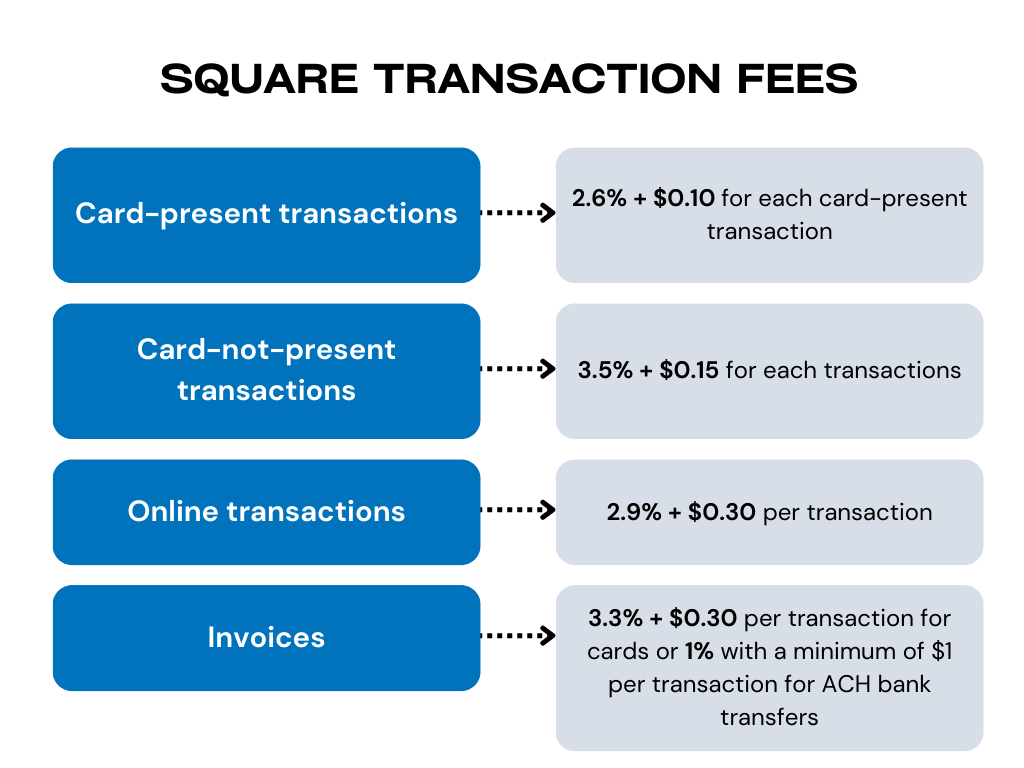
Square’s primary appeal lies in its flat-rate pricing model. Unlike traditional merchant service providers that often use “interchange-plus” pricing—which can fluctuate based on the type of card used (rewards, corporate, or debit)—Square simplifies the experience by charging a consistent rate regardless of the card brand.
Card-Present Transactions: The In-Person Standard
For the majority of brick-and-mortar businesses, the bulk of transactions occur in person. These are categorized as “card-present” transactions, where a customer physically swipes, dips (EMV chip), or taps (NFC/Contactless) their card or mobile device at a Square Point of Sale (POS).
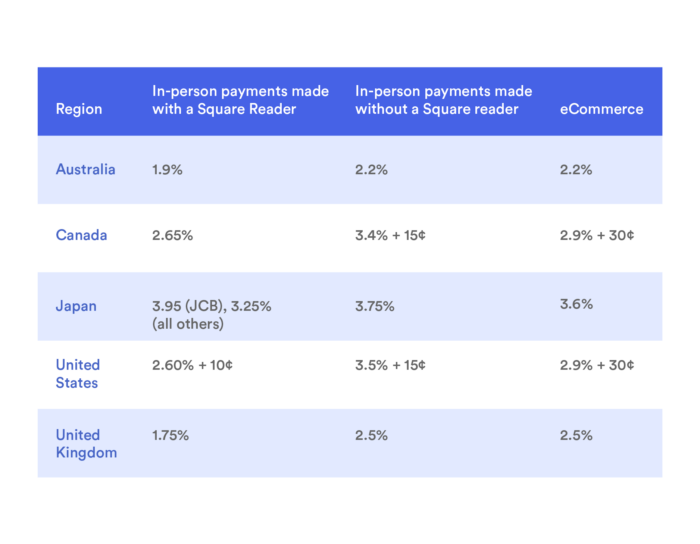
As of the current standard, Square charges 2.6% + 10 cents per transaction for these interactions. This rate applies to all major credit cards, including Visa, Mastercard, American Express, and Discover. From a financial planning perspective, the “plus 10 cents” is a critical variable. For a business selling high-volume, low-cost items—such as a coffee shop selling $3 lattes—the 10-cent flat fee represents a larger percentage of the total margin than it would for a boutique selling $200 jackets.
Card-Not-Present Transactions: Online and Invoiced
When the card is not physically present at the time of the transaction, the risk of fraud increases. To account for this risk, payment processors, including Square, increase their rates.
Transactions processed through Square Online, Square Online Checkout, or the Square eCommerce API typically carry a fee of 2.9% + 30 cents. This is the industry standard for online payments, mirrored by competitors like Stripe and PayPal. Furthermore, if you use Square Invoices to bill clients, the rate is also 2.9% + 30 cents. However, if a customer chooses to keep their card on file for recurring billing, the fee increases to 3.5% + 15 cents, reflecting the increased security protocols and administrative handling of stored credentials.
Keyed-In and Manual Entry: The High-Risk Premium
The most expensive way to process a payment through Square is via manual entry. This occurs when a business owner types the credit card numbers directly into the Square app or a computer without using a reader. Because these transactions lack the security features of a chip or a tap, they are highly susceptible to disputes and fraud.
Square charges 3.5% + 15 cents for keyed-in transactions. From a business finance standpoint, relying on manual entry is a drain on profitability. Business owners should view this method as a last resort, as the nearly 1% jump in fees over standard in-person rates can significantly erode net income over a fiscal year.
Variable Costs Across Specialized Software
Square is no longer just a little white plastic reader; it has evolved into a suite of sophisticated software solutions tailored to specific industries. Depending on the software your business uses, the transaction fees may shift to accommodate specialized features.
Square for Restaurants
The restaurant industry operates on razor-thin margins, and Square offers a specialized “Square for Restaurants” POS. While the Free plan utilizes the standard 2.6% + 10 cents rate, the “Plus” plan (which costs a monthly subscription fee) offers a slightly reduced rate of 2.5% + 10 cents for in-person payments. For high-volume establishments doing hundreds of thousands of dollars in annual sales, that 0.1% difference, combined with the more robust inventory and table management features, often justifies the monthly software cost.
Square for Retail
Similar to the restaurant sector, Square for Retail offers a tiered approach. The Free version maintains the standard rates, but the Retail Plus plan drops the in-person transaction fee to 2.5% + 10 cents. This plan is designed for businesses that need to manage deep inventories across multiple locations. When auditing business expenses, a retail owner must calculate whether the savings on transaction fees will eventually offset the monthly subscription cost of the Plus plan.
Square Appointments
Service-based businesses—such as hair salons, consultants, and contractors—often use Square Appointments to manage their calendars. If you are an individual practitioner using the free version, you pay the standard 2.6% + 10 cents. However, if you scale to a team and use the paid tiers, the transaction fee remains competitive while adding layers of scheduling complexity. One unique financial aspect here is the “No-Show Protection” feature, where Square allows you to charge a fee if a client misses an appointment; these are processed at the higher keyed-in or card-on-file rates.
Additional Financial Considerations and Hidden Costs
To truly understand the “cost per transaction,” a business owner must look at the ancillary fees that impact the total cost of doing business. Square is famous for having no “hidden” monthly fees on its basic plans, but there are specific financial triggers to watch for.
Hardware Investment and Amortization
While not a “per-transaction” fee in the literal sense, the cost of hardware is a capital expenditure that must be amortized over the transactions it processes. A simple Square Reader for magstripe is often free or very cheap, but a Square Register can cost hundreds of dollars. When a business is starting, these upfront costs must be factored into the initial “break-even” analysis of the payment ecosystem.
Instant Transfer Fees
One of Square’s most popular features is the ability to access funds immediately. Standard transfers to a linked bank account are free but take one to two business days. If a business faces a cash flow crunch and needs its funds immediately, Square offers an “Instant Transfer” for a 1.75% fee of the total transfer amount.
From a personal or business finance perspective, relying on instant transfers is an expensive habit. A business processing $10,000 a month would pay $175 just to get their money 24 hours earlier. Proper cash flow management and maintaining a liquid reserve can eliminate this unnecessary expense.
Chargeback Management and Refund Policies
Square does not charge a specific “chargeback fee” when a customer disputes a transaction, which is a significant advantage over many traditional processors who charge $15 to $25 per dispute. However, it is vital to note that when a business issues a refund, Square does not return the original processing fee.
If you sell a $1,000 item and the customer returns it, you lose the ~$26.10 you paid in transaction fees. This makes high-return industries (like online apparel) particularly sensitive to Square’s pricing model. Businesses must account for “unrecovered processing fees” as a line item in their loss-prevention budget.
Comparing Square to the Broader Fintech Market
Understanding Square’s fees requires context within the broader financial industry. Square uses a “Flat-Rate” model, which is fundamentally different from the “Interchange-Plus” or “Tiered” models used by legacy banks.
Flat-Rate vs. Interchange-Plus Pricing
In an interchange-plus model, the merchant pays the raw cost of the card network (Interchange) plus a small markup (e.g., 0.20% + 10 cents). For businesses with very high transaction volumes—typically over $250,000 per year—interchange-plus is almost always cheaper because debit cards carry much lower interchange fees than premium credit cards.
Square’s flat-rate model effectively “averages out” the costs. You pay the same for a low-cost debit card as you do for a high-cost Amex rewards card. For small businesses, this predictability is a financial boon, as it makes monthly forecasting simple. However, as a business scales, the convenience of the flat rate may eventually become a “convenience tax” that exceeds the cost of a more complex merchant account.
Square vs. Traditional Merchant Services
Traditional banks often lure businesses with lower percentages but then stack on monthly statement fees, PCI compliance fees, gateway fees, and minimum volume penalties. Square’s “pay-as-you-go” philosophy eliminates these fixed costs. If your business is seasonal—such as a holiday pop-up shop—Square is financially superior because you pay $0 during the months you aren’t operating.
Maximizing Profitability: Strategic Management of Payment Fees
For a business to thrive, the owner must be proactive in managing their financial tools. To optimize the cost of using Square, several strategies should be employed.
Calculating Your Effective Rate
The “Effective Rate” is the most honest metric in business finance. To find it, take your total fees paid in a month and divide them by your total sales volume. If you see your effective rate creeping up toward 3.5% or 4%, it indicates that you are likely keying in too many transactions or relying too heavily on instant transfers. Monitoring this number monthly allows you to identify inefficiencies in how your staff handles payments.
When to Negotiate Custom Rates
Square is often perceived as having non-negotiable pricing, but this is only true for smaller accounts. Once a business crosses the threshold of $250,000 in annual credit card sales, they become eligible for custom pricing. At this stage, it is essential to contact Square’s sales team to negotiate a lower rate. A reduction of even 0.2% can save thousands of dollars annually, which can be reinvested into marketing, inventory, or payroll.
In conclusion, while Square’s base rates of 2.6% + 10 cents (in-person) and 2.9% + 30 cents (online) are the headlines, the true cost of the platform depends on how a business integrates into the ecosystem. By understanding the nuances of card-present versus card-not-present rates, managing software subscriptions, and avoiding high-fee behaviors like manual entry and instant transfers, business owners can leverage Square as a powerful financial tool that balances simplicity with scalability. Transparent pricing is Square’s hallmark, but strategic oversight is the merchant’s responsibility.
aViewFromTheCave is a participant in the Amazon Services LLC Associates Program, an affiliate advertising program designed to provide a means for sites to earn advertising fees by advertising and linking to Amazon.com. Amazon, the Amazon logo, AmazonSupply, and the AmazonSupply logo are trademarks of Amazon.com, Inc. or its affiliates. As an Amazon Associate we earn affiliate commissions from qualifying purchases.