
For millions of Americans, Social Security represents a cornerstone of their retirement security. It’s a vital income stream that helps cover living expenses, healthcare costs, and offers a measure of financial stability in later life. Yet, for many, the system remains shrouded in complexity, leading to uncertainty about how much they can truly expect to receive. Understanding your potential Social Security benefits is not just an administrative task; it’s a critical component of effective retirement planning, influencing everything from when you decide to stop working to how much you need to save independently.
This article aims to demystify the process, breaking down the key factors that determine your Social Security benefit amount. We’ll explore how your work history contributes, the pivotal role of your claiming age, and how you can leverage available resources to get a clear picture of your future income. By the end, you’ll be equipped with the knowledge to make informed decisions and integrate Social Security effectively into your broader financial strategy.
The Foundational Pillars of Social Security Eligibility and Calculation
Before delving into the specific numbers, it’s essential to grasp the fundamental mechanics that govern Social Security benefits. Your past actions and decisions directly shape the benefits you’re entitled to in the future.
Earning Your Stripes: Work Credits Explained
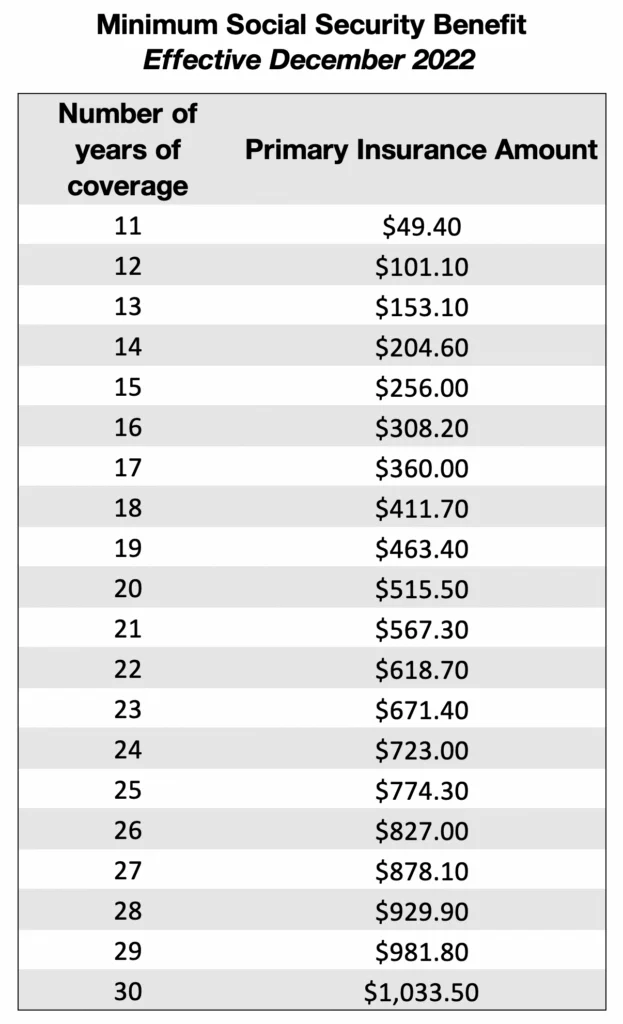
Social Security is an earned benefit, meaning you must have worked and paid Social Security taxes for a specified period to qualify. This qualification is measured in “work credits” or “quarters of coverage.” In 2024, you earn one work credit for every $1,730 in earnings, up to a maximum of four credits per year. To be eligible for most types of retirement benefits, you generally need 40 work credits, which translates to 10 years of work.
It’s important to note that these credits don’t need to be consecutive. They accumulate over your working life. While 40 credits are the standard for retirement benefits, some other benefits (like disability or survivor benefits for younger individuals) may require fewer. Regularly checking your earnings record ensures your credits are accurately recorded, a crucial step toward securing your future benefits.
Your Earnings History: The Bedrock of Your Benefit Amount
Once you meet the eligibility criteria, the exact amount of your benefit is primarily determined by your lifetime earnings. The Social Security Administration (SSA) calculates your Average Indexed Monthly Earnings (AIME) based on your 35 highest-earning years. “Indexed” means your past earnings are adjusted for changes in the national average wage level over time, bringing their value closer to what they would be in today’s dollars. This indexing ensures that the value of your early career earnings isn’t eroded by inflation.
If you have fewer than 35 years of earnings, zero-income years will be factored into the calculation, which can significantly lower your AIME and, consequently, your benefit amount. This highlights the importance of consistent employment and robust earnings throughout your career. Every dollar you earn, up to the annual Social Security earnings limit, contributes to your future benefits.
Understanding Your Primary Insurance Amount (PIA)
Your AIME is then used to calculate your Primary Insurance Amount (PIA). The PIA is the monthly benefit you would receive if you claim benefits exactly at your Full Retirement Age (FRA). The calculation of PIA is progressive, meaning it replaces a higher percentage of earnings for low-income workers than for high-income workers. This is achieved through what are called “bending points” – specific dollar amounts at which the percentage of your AIME used in the PIA calculation changes.
For instance, a certain percentage (e.g., 90%) of your AIME up to the first bending point is counted, then a lower percentage (e.g., 32%) for the AIME between the first and second bending points, and an even lower percentage (e.g., 15%) for the AIME above the second bending point. This progressive formula is designed to provide a safety net, ensuring that those with lower lifetime earnings still receive a meaningful benefit. Your PIA is the starting point from which all other benefit adjustments (for claiming early or late) are made.
The Pivotal Decision: When to Claim Your Social Security Benefits
Perhaps the most impactful decision you’ll make regarding your Social Security is when to start receiving benefits. This choice can significantly alter your total lifetime income from the program.
Unpacking Your Full Retirement Age (FRA)
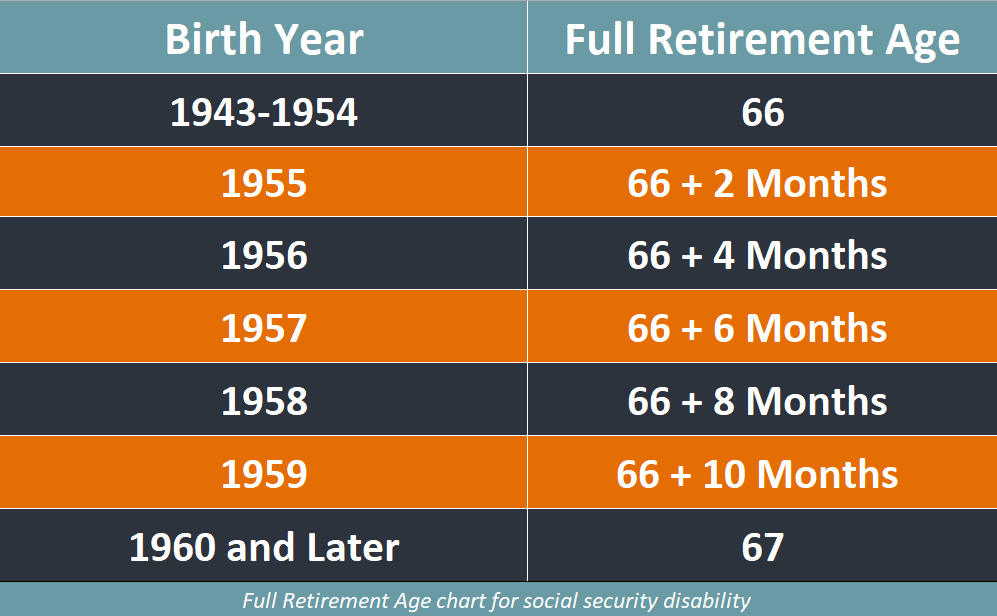
Your Full Retirement Age (FRA) is the age at which you are entitled to 100% of your Primary Insurance Amount (PIA). For those born in 1943 through 1954, FRA is 66. For those born between 1955 and 1959, FRA gradually increases by a few months each year, until it reaches 67 for everyone born in 1960 or later. Knowing your specific FRA is crucial, as it serves as the benchmark for calculating benefit adjustments.
Claiming before your FRA results in reduced benefits, while delaying past your FRA leads to increased benefits. This age is not arbitrary; it’s the age the SSA considers you “fully retired” for benefit purposes, regardless of when you actually stop working.
The Impact of Claiming Early: Reduced Benefits
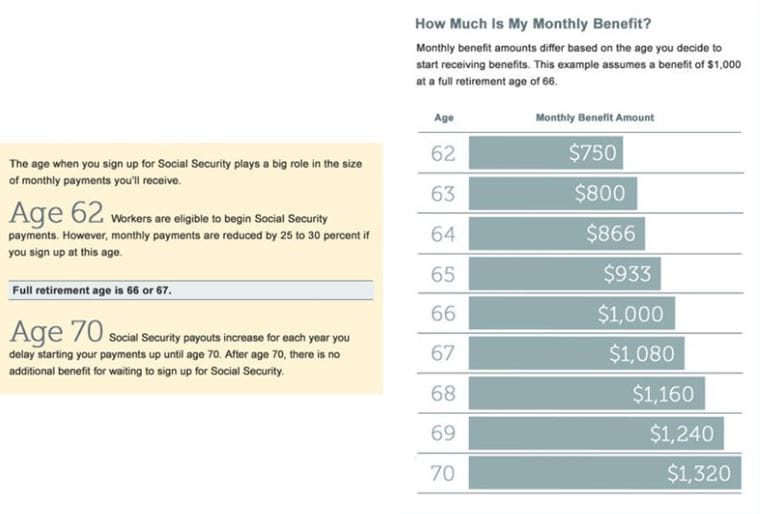
You can begin collecting Social Security benefits as early as age 62. However, choosing to claim early comes with a significant trade-off: your monthly benefit will be permanently reduced. The reduction rate depends on how many months you claim before your FRA. For instance, if your FRA is 67, claiming at age 62 would result in a permanent reduction of about 30% of your PIA. This reduction is approximately 6.67% for each year you claim early for the first three years, and then 5% for each year beyond that.
While receiving benefits earlier might be appealing for immediate cash flow, it means you’ll receive a smaller check for the rest of your life. This decision is often influenced by health status, other retirement income sources, and immediate financial needs. It’s a calculation that weighs instant gratification against long-term financial stability.
Maximizing Benefits: Delaying Beyond Your FRA
Conversely, delaying your claim past your FRA can substantially boost your monthly benefit. For each year you delay claiming beyond your FRA, up to age 70, you earn Delayed Retirement Credits (DRCs). These credits increase your annual benefit by 8% per year. So, if your FRA is 67, and you delay claiming until age 70, your monthly benefit could be 24% higher than your PIA (3 years x 8% per year). There is no additional benefit to delaying past age 70, so it’s generally recommended to claim by this age.
The decision to delay involves a careful analysis of your longevity expectations, your need for income, and your overall financial picture. For those in good health with other retirement savings, delaying Social Security can be a powerful strategy to secure a higher, inflation-adjusted income stream for life. The “break-even point” – the age at which the cumulative total of your higher delayed payments surpasses the cumulative total of earlier, smaller payments – is a key consideration in this strategy.
Leveraging Resources to Estimate and Understand Your Benefits
Fortunately, you don’t have to navigate these complex calculations on your own. The Social Security Administration provides robust tools and resources to help you understand your potential benefits.
Your Social Security Statement: A Personalized Snapshot
The most personalized and valuable resource is your Social Security Statement. This statement provides a detailed summary of your earnings history and personalized estimates of your future benefits at different claiming ages (age 62, your Full Retirement Age, and age 70). It also includes estimates for disability and survivor benefits, offering a comprehensive view of the financial safety nets Social Security provides.
You can easily access your statement online by creating a “my Social Security” account at ssa.gov. Regularly reviewing your statement is crucial to ensure your earnings record is accurate. Errors in your reported earnings, if left uncorrected, could lead to a lower benefit than you are entitled to. It’s much easier to correct these discrepancies while you are still working.
Online Calculators and Tools from the SSA
Beyond your personalized statement, the SSA offers several online calculators and tools to help you plan. The “Retirement Estimator” allows you to plug in different scenarios—such as changing your future earnings or retirement age—to see how these adjustments affect your benefit estimates. More detailed calculators can help you analyze spousal benefits, survivor benefits, and even the impact of working while receiving benefits.
These interactive tools empower you to model various claiming strategies and understand the financial implications of each. They can be particularly useful for couples trying to optimize their combined benefits, or for individuals contemplating a phased retirement. By experimenting with different assumptions, you gain valuable insights into how your choices translate into actual dollar amounts.
When Professional Advice Becomes Essential
While the SSA’s resources are invaluable, certain situations can be highly complex and may warrant professional guidance. This is particularly true for individuals with unique circumstances such as divorce, government pensions that might affect benefit eligibility (Windfall Elimination Provision or Government Pension Offset), or those managing significant wealth.
A qualified financial advisor specializing in retirement planning can help integrate your Social Security strategy into your broader financial plan. They can assist in optimizing claiming strategies for couples, provide insights into tax implications, and help you understand how Social Security fits alongside your other income streams, such as 401(k)s, IRAs, and pensions. Their expertise can ensure you’re making the most financially advantageous decisions for your unique situation.
Strategic Considerations for Optimizing Your Social Security Income
Understanding the basics is the first step; strategic planning is how you maximize this critical income source. Several factors can influence your net Social Security income and should be factored into your decision-making.
Navigating Spousal and Survivor Benefits
Social Security is not just for individual workers; it also provides benefits for spouses, ex-spouses, and survivors. A spouse may be eligible for benefits up to 50% of their partner’s Primary Insurance Amount, provided they are at least age 62 and their own benefit is less than their spousal benefit. For survivor benefits, a widow or widower can receive up to 100% of the deceased worker’s benefit.
For married couples, coordinating claiming strategies can be highly beneficial. For example, one spouse might claim early to provide immediate income while the higher-earning spouse delays until age 70 to maximize their benefit, which will then translate into a higher potential survivor benefit. Divorced individuals, under certain conditions, can also claim benefits based on their ex-spouse’s work record without affecting the ex-spouse’s benefits or their current spouse’s benefits. These rules offer significant opportunities for optimization, making careful planning paramount.
Working While Receiving Benefits: The Earnings Test
If you claim Social Security benefits before your Full Retirement Age and continue to work, your benefits may be temporarily reduced or withheld if your earnings exceed certain annual limits. This is known as the “earnings test.” For instance, in 2024, if you are under FRA, $1 in benefits will be withheld for every $2 you earn above $22,320. In the year you reach FRA, the reduction is less severe ($1 for every $3 above a higher limit), and this test only applies to earnings before the month you reach FRA.
Crucially, once you reach your Full Retirement Age, the earnings test no longer applies, and you can earn as much as you like without any reduction to your Social Security benefits. Furthermore, any benefits that were withheld due to the earnings test are not lost; your monthly benefit will be recalculated at your FRA to account for the withheld amounts, resulting in a higher monthly payment for the remainder of your life. This provides an incentive for those who continue to work to delay claiming until FRA.
The Tax Implications of Your Social Security Benefits
It’s a common misconception that Social Security benefits are entirely tax-free. For many retirees, a portion of their benefits may be subject to federal income tax. Whether your benefits are taxed, and to what extent, depends on your “provisional income,” which includes your adjusted gross income, tax-exempt interest, and 50% of your Social Security benefits.
If your provisional income is between $25,000 and $34,000 for an individual (or $32,000 and $44,000 for married filing jointly), up to 50% of your benefits may be taxable. If your provisional income exceeds these higher thresholds, up to 85% of your benefits may be taxable. Additionally, some states also tax Social Security benefits, adding another layer of complexity. Understanding these tax implications is vital for accurately budgeting your retirement income and developing a tax-efficient withdrawal strategy for your other retirement accounts.
Integrating Social Security into Your Holistic Retirement Plan
Ultimately, Social Security is one piece of a larger retirement puzzle. It should be viewed as a foundational income stream, often referred to as one leg of the “three-legged stool” of retirement planning—alongside pensions (if applicable) and personal savings/investments. Relying solely on Social Security for retirement is often insufficient, as benefits typically replace only about 40% of an average worker’s pre-retirement income.
Therefore, actively saving through 401(k)s, IRAs, and other investment vehicles remains paramount. Your Social Security benefits can provide a reliable base to cover essential living expenses, allowing your personal savings to fund discretionary spending, travel, or unexpected costs. A well-constructed retirement plan considers how Social Security integrates with all your other assets, aiming to create a sustainable and comfortable financial future.
Conclusion
Understanding “how much Social Security you will receive” is more than just knowing a number; it’s about making informed decisions that will impact your financial well-being for decades. From comprehending the impact of your earnings history and work credits to strategically choosing your claiming age, every step in the process offers an opportunity to optimize your benefits.
The Social Security Administration provides a wealth of resources—your personalized statement, online calculators, and detailed guides—to empower you in this journey. By actively engaging with these tools, reviewing your earnings record, and considering how your benefits fit into your overall retirement strategy, you can transform uncertainty into clarity. Proactive planning is the key to maximizing this invaluable benefit, ensuring that Social Security serves its intended purpose as a vital source of security and stability in your retirement years. Take control of your financial future today by gaining a deeper insight into your Social Security benefits.
aViewFromTheCave is a participant in the Amazon Services LLC Associates Program, an affiliate advertising program designed to provide a means for sites to earn advertising fees by advertising and linking to Amazon.com. Amazon, the Amazon logo, AmazonSupply, and the AmazonSupply logo are trademarks of Amazon.com, Inc. or its affiliates. As an Amazon Associate we earn affiliate commissions from qualifying purchases.