
For the modern professional, retirement planning is often a complex puzzle of diversified portfolios, real estate holdings, and tax-advantaged accounts. However, one of the most significant and often misunderstood components of this financial foundation is Social Security. Far from being a simple monthly stipend, the amount you receive from the Social Security Administration (SSA) is the result of a precise mathematical formula based on decades of work history, the timing of your claim, and current economic variables.
Understanding exactly how much Social Security you will get is not just about satisfying curiosity; it is a critical step in building a sustainable long-term financial strategy. In this guide, we will break down the mechanics of benefit calculation, the impact of claiming ages, and the external factors that can influence your net payout.
1. The Mechanics of the Calculation: How the SSA Determines Your Benefit
To understand your future payout, you must first understand that Social Security is designed as a “progressive” system. It aims to replace a higher percentage of income for lower-earners than for higher-earners, though the raw dollar amount is higher for those who earned more throughout their careers.
Average Indexed Monthly Earnings (AIME)
The calculation begins with your work history. The SSA looks at your entire career and selects your 35 highest-earning years. If you worked fewer than 35 years, the remaining years are averaged in as zeros, which can significantly drag down your benefit amount. These earnings are “indexed” to account for changes in average wages over time, ensuring that $30,000 earned in 1990 is weighted appropriately against $100,000 earned today. The result of this calculation is your Average Indexed Monthly Earnings (AIME).
The Primary Insurance Amount (PIA) and Bend Points
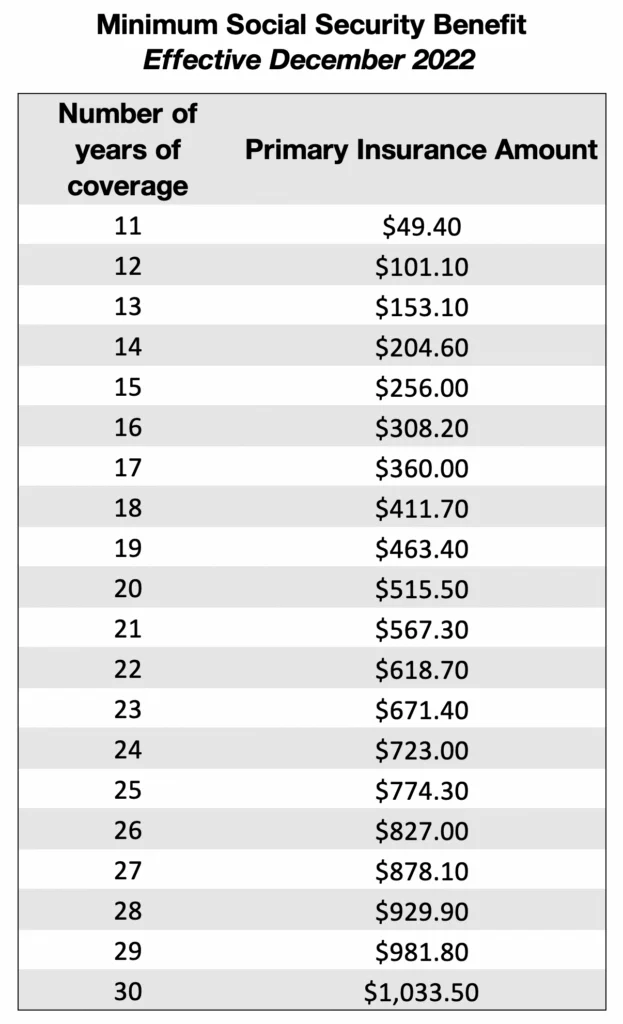
Once the AIME is established, the SSA applies a formula to determine your Primary Insurance Amount (PIA). This is the base amount you would receive if you retired exactly at your Full Retirement Age (FRA). The formula uses “bend points”—specific dollar thresholds that change annually.
For 2024, the formula takes 90% of the first portion of your AIME, 32% of the middle portion, and 15% of the earnings above the final bend point. This tiered approach is why high-income earners see a lower “replacement rate” compared to their peak salary than mid-to-low-income earners. Knowing your PIA is the first step in answering “how much will I get,” as every other factor scales up or down from this number.
2. Timing Is Everything: The Impact of Claiming Age
While your work history sets the “base” amount, your decision on when to start receiving benefits is perhaps the most significant variable under your control. The Social Security system offers a window of opportunity from age 62 to age 70.
Full Retirement Age (FRA)
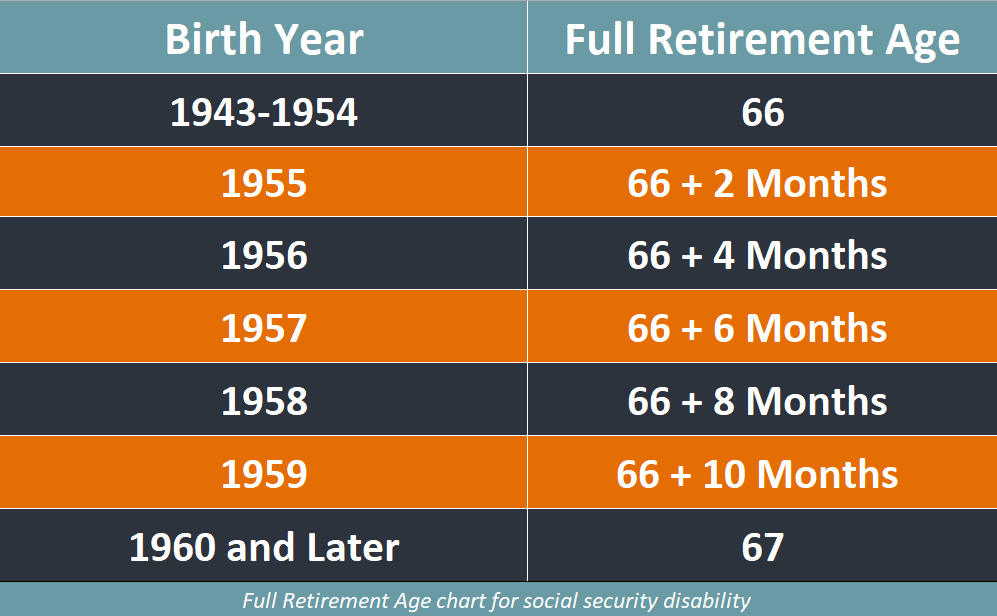
Your Full Retirement Age is the point at which you are entitled to 100% of your calculated PIA. For anyone born in 1960 or later, the FRA is 67. If you were born earlier, it may be 66 and a specific number of months. Claiming exactly at this age ensures you receive the “standard” amount without any permanent reductions or increases.
The Cost of Filing Early (Age 62)
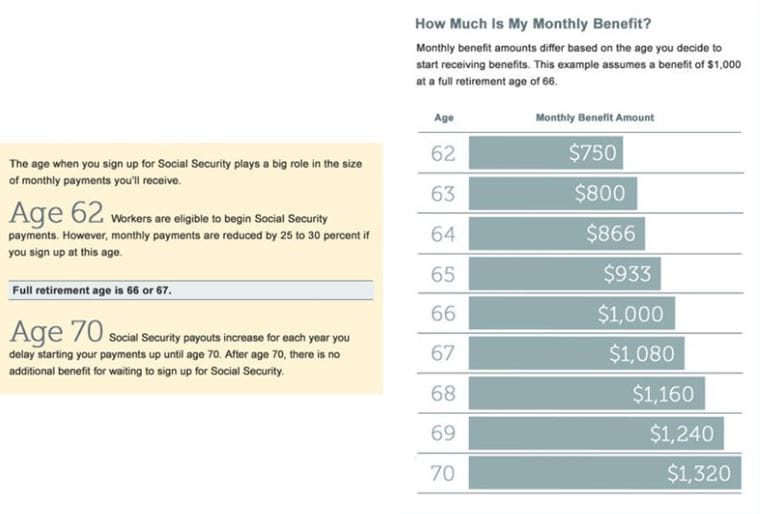
You can choose to take Social Security as early as age 62, but there is a permanent financial trade-off. Filing at 62 results in a reduction of roughly 30% compared to filing at an FRA of 67. This reduction is calculated month-by-month. While this provides immediate cash flow, it significantly lowers the “floor” of your guaranteed lifetime income. For many, filing early is a necessity due to health or unemployment, but from a wealth-maximization perspective, it is often a costly move.
The Power of Delayed Retirement Credits (Age 70)
On the other end of the spectrum is the strategy of delay. For every year you wait beyond your FRA up until age 70, your benefit increases by approximately 8% annually. This is a guaranteed, inflation-adjusted return that is virtually impossible to find in the private market. If your FRA is 67 and you wait until 70, your monthly check will be 124% of your PIA. For those with high life expectancy or those who plan to continue working, waiting until 70 is often the most effective way to maximize the “how much” in the Social Security equation.
3. External Factors: COLA, Taxes, and Spousal Benefits
The gross amount shown on your Social Security statement is rarely the exact amount that lands in your bank account. Several external financial factors can adjust your net income.
Cost-of-Living Adjustments (COLA)
Social Security is one of the few retirement income sources that includes a built-in hedge against inflation. Every year, the SSA evaluates the Consumer Price Index for Urban Wage Earners and Clerical Workers (CPI-W). If inflation has risen, a Cost-of-Living Adjustment (COLA) is applied to your benefits. This ensures that your purchasing power remains relatively stable even as the price of goods and services increases.
The Impact of Taxation on Benefits
Many retirees are surprised to find that their Social Security benefits are taxable. If your “provisional income” (your adjusted gross income + tax-exempt interest + 50% of your Social Security benefits) exceeds certain thresholds, you may owe federal income tax on up to 85% of your benefits.
- For individuals, thresholds start at $25,000.
- For joint filers, thresholds start at $32,000.
Understanding these tax brackets is vital for accurate cash flow forecasting, as a “high” benefit can be reduced by a significant tax liability if you have other substantial income sources like 401(k) distributions or rental income.
Spousal and Survivor Considerations
The question “how much do I get” often extends to a household. Even if one spouse has a limited work history, they may be eligible for a spousal benefit worth up to 50% of the higher-earning spouse’s PIA. Furthermore, survivor benefits allow a widowed spouse to inherit the higher of the two checks. Coordinating these claims can drastically increase the total lifetime wealth a couple receives from the system.
4. Digital Tools and Forecasting Your Financial Future
In the digital age, guessing your Social Security benefit is unnecessary. The SSA provides robust tools to help you visualize your future income based on real-time data from your earnings record.
The “my Social Security” Account
The most accurate way to answer “how much will I get” is to create a “my Social Security” account on the official SSA.gov website. This portal provides a personalized “Social Security Statement” that lists your year-by-year earnings history and provides estimates for your benefits at ages 62, FRA, and 70. It also accounts for disability and survivor benefits, offering a holistic view of your safety net.
Gap Analysis and Financial Planning
Once you have your estimated Social Security number, you must perform a “gap analysis.” This involves taking your projected retirement expenses and subtracting your Social Security benefit. The remaining “gap” is the amount that must be covered by your private savings, such as an IRA, 401(k), or brokerage account.
Integrating Social Security into a comprehensive financial plan allows you to determine your “safe withdrawal rate” from your other investments. For example, if Social Security covers 40% of your needs, your portfolio only needs to work hard enough to cover the remaining 60%, potentially allowing for a more conservative investment allocation as you age.
Conclusion: Empowering Your Retirement Strategy
“How much Social Security do I get?” is a question with a multi-layered answer. It is a figure rooted in your past work, shaped by your future choices, and adjusted by the current economy. By understanding the 35-year averaging rule, the 8% annual growth for delaying benefits, and the tax implications of your provisional income, you move from passive recipient to active strategist.
Social Security was never intended to be the sole source of retirement income, but it remains the most reliable. Whether you are in the peak of your career or approaching the finish line, taking the time to calculate, forecast, and optimize these benefits is a hallmark of sound personal finance. With the right knowledge and a clear view of the SSA’s formulas, you can ensure that this foundational piece of your financial puzzle fits perfectly into your vision for the future.
aViewFromTheCave is a participant in the Amazon Services LLC Associates Program, an affiliate advertising program designed to provide a means for sites to earn advertising fees by advertising and linking to Amazon.com. Amazon, the Amazon logo, AmazonSupply, and the AmazonSupply logo are trademarks of Amazon.com, Inc. or its affiliates. As an Amazon Associate we earn affiliate commissions from qualifying purchases.