
In the journey towards financial security and freedom, one of the most fundamental questions individuals grapple with is: “How much of my paycheck should I save?” It’s a question without a universal answer, yet it underpins every successful financial plan. Saving money isn’t just about accumulating wealth; it’s about building a buffer against life’s uncertainties, funding future aspirations, and ultimately, gaining control over your financial destiny. In a world of increasing economic volatility and pervasive consumerism, cultivating a robust saving habit is more critical than ever. This guide will delve into various strategies, rules of thumb, and considerations to help you determine an appropriate savings rate tailored to your unique circumstances and goals.
Understanding the Core Principles of Saving
Before diving into specific percentages, it’s crucial to grasp the foundational principles that guide effective saving. Your ability to save is influenced by your income, expenses, and, most importantly, your financial objectives.
The 50/30/20 Rule: A Popular Guideline
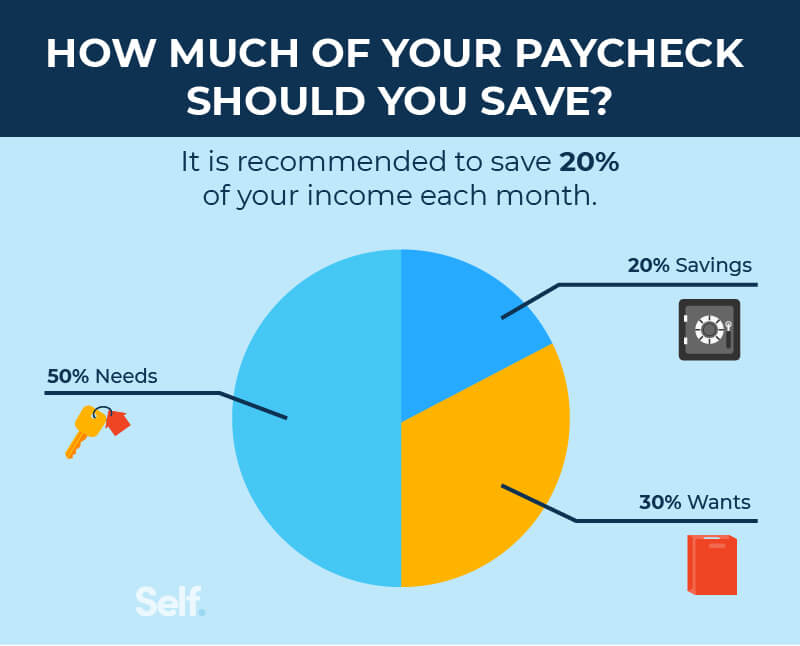
One of the most widely cited and accessible frameworks for budgeting and saving is the 50/30/20 rule. Developed by Senator Elizabeth Warren and her daughter Amelia Warren Tyagi, this rule simplifies complex financial planning into three core categories:
- 50% for Needs: This portion of your after-tax income should cover essential living expenses. This includes housing (rent or mortgage), utilities, groceries, transportation, insurance premiums, and minimum debt payments. These are non-negotiable costs required for survival and maintaining your basic lifestyle.
- 30% for Wants: This category encompasses all discretionary spending that enhances your quality of life but isn’t strictly necessary. Examples include dining out, entertainment, subscriptions, hobbies, travel, shopping for non-essentials, and upgraded gadgets. This portion allows for enjoyment and personal fulfillment without derailing your financial progress.
- 20% for Savings & Debt Repayment: This crucial segment is dedicated to building your financial future. It includes contributions to an emergency fund, retirement accounts (401k, IRA), investment accounts, and any extra payments towards high-interest debt (like credit cards or personal loans) beyond the minimums.
The beauty of the 50/30/20 rule lies in its simplicity and flexibility. While it provides an excellent starting point, it’s a guideline, not a rigid law. Your personal circumstances might necessitate adjusting these percentages, especially if you live in a high cost-of-living area or are aggressively paying down debt.
Beyond the Rules: Why Your Personal Context Matters
While rules of thumb are helpful, they don’t account for individual nuances. Your ideal savings rate is deeply personal and should evolve with your life stages and financial situation. Several factors influence this:
- Income Level: Higher incomes often allow for higher savings rates, but lifestyle creep can quickly erode this advantage. Conversely, lower incomes might make meeting the 20% savings target challenging, requiring careful budgeting and potentially seeking additional income streams.
- Cost of Living: Living in an expensive city means a larger portion of your income will likely go towards “needs,” making it harder to stick to the 50% guideline.
- Age and Life Stage: A young professional starting their career might prioritize an emergency fund, while someone nearing retirement might aggressively contribute to their retirement accounts. Individuals with children or dependents will have different financial pressures than single individuals.
- Existing Debt: High-interest debt can be a significant drain on your finances. Sometimes, aggressively paying down credit card debt might take precedence over maximizing savings, as the interest saved can be a higher return than many investment opportunities.
- Financial Goals: The urgency and scale of your goals—whether it’s buying a house, saving for a child’s education, or early retirement—will dictate a more aggressive or conservative savings approach.
Setting Clear Financial Goals and Prioritizing Your Savings
Effective saving isn’t about aimlessly stashing money; it’s about purposefully directing funds towards specific objectives. Defining your financial goals is the compass that guides your savings strategy.
Short-Term vs. Long-Term Goals
Categorizing your goals helps in allocating your savings appropriately:
- Short-Term Goals (1-3 years): These often include building or replenishing an emergency fund (typically 3-6 months’ worth of living expenses), saving for a down payment on a car, a major vacation, or a significant purchase. Funds for these goals should generally be kept in easily accessible, low-risk accounts like high-yield savings accounts.
- Mid-Term Goals (3-10 years): This category might include saving for a down payment on a home, a child’s education, or starting a business. For these goals, a balanced approach might involve a mix of savings accounts and conservative investments.
- Long-Term Goals (10+ years): Retirement planning is the quintessential long-term goal. Other examples include significant wealth accumulation or legacy planning. These funds are best suited for investment vehicles like 401(k)s, IRAs, and brokerage accounts, where the power of compound interest can work its magic over decades.
Making your goals SMART (Specific, Measurable, Achievable, Relevant, Time-bound) will significantly increase your chances of success. For instance, instead of “save more money,” aim for “save $10,000 for a down payment on a house by December 2027.”
The Power of an Emergency Fund
Before even thinking about long-term investments, establishing a robust emergency fund is paramount. This financial safety net acts as a buffer against unexpected expenses such as job loss, medical emergencies, or car repairs, preventing you from falling into debt. Most financial experts recommend having at least three to six months’ worth of essential living expenses saved in an easily accessible, liquid account (like a high-yield savings account). Some even advocate for up to 12 months, especially for those with less stable incomes or significant dependents. Prioritizing this fund provides immense peace of mind and is the bedrock of a healthy financial life.
Retirement Planning: The Non-Negotiable
Retirement might seem a distant future, but it’s arguably the most critical long-term savings goal. The earlier you start, the more powerful compound interest becomes, allowing your money to grow exponentially over time. Aim to contribute consistently to retirement accounts such as:
- Employer-Sponsored Plans (401(k), 403(b), etc.): If your employer offers a matching contribution, contributing at least enough to get the full match is often referred to as “free money” and should be a top priority.
- Individual Retirement Accounts (IRAs): Traditional or Roth IRAs offer tax advantages and greater control over investment choices.
- Health Savings Accounts (HSAs): If you have a high-deductible health plan, an HSA offers a triple tax advantage: tax-deductible contributions, tax-free growth, and tax-free withdrawals for qualified medical expenses. It can also function as a retirement account once you reach age 65.
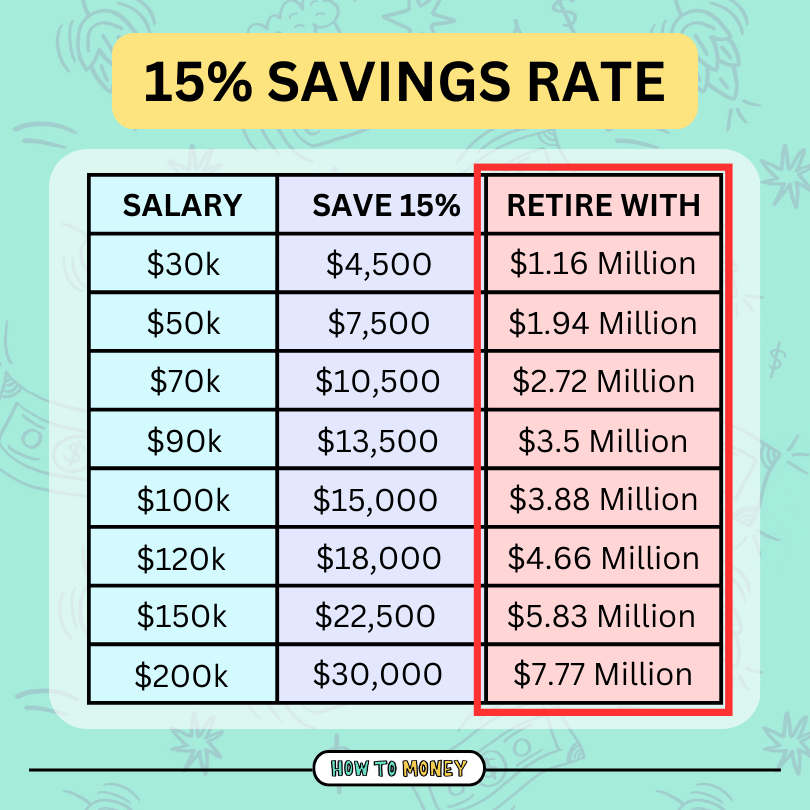
A common target for retirement savings is to save 10-15% (or even more) of your gross income, especially if you start later in life.
Practical Strategies to Optimize Your Savings Rate
Knowing how much to save is one thing; actually doing it is another. Implementing smart strategies can make saving feel less like a chore and more like an automated process.
Automate Your Savings
One of the most effective strategies is to “pay yourself first” by automating your savings. Set up automatic transfers from your checking account to your savings and investment accounts on payday. Treat these transfers like any other bill—non-negotiable. Whether it’s $50 or $500, consistency is key. Automation removes the temptation to spend the money and ensures your savings grow steadily without conscious effort.
Budgeting for Success
A budget is not about restriction; it’s about control and awareness. It provides a clear picture of where your money is going, allowing you to identify areas where you can cut back and reallocate funds towards savings.
- Track Your Income and Expenses: Use spreadsheets, budgeting apps (like Mint, YNAB, or Personal Capital), or even pen and paper to meticulously record every dollar in and out.
- Identify Spending Leaks: You might be surprised how much you spend on seemingly small things like daily coffees, subscriptions you don’t use, or impulse purchases. Cutting back on these “wants” can free up significant funds for savings.
- Zero-Based Budgeting: Every dollar is assigned a job, whether it’s for needs, wants, savings, or debt repayment. This ensures no money is left unaccounted for.
Smart Spending and Earning More
Beyond traditional budgeting, look for opportunities to optimize both sides of your financial equation:
- Review and Reduce Expenses: Regularly audit your subscriptions, negotiate bills (internet, insurance), meal plan to reduce grocery waste, and consider downsizing if housing costs are overwhelming your budget.
- Avoid Lifestyle Creep: As your income grows, resist the urge to immediately upgrade your lifestyle proportionally. Instead, funnel a significant portion of any raises or bonuses directly into savings and investments.
- Increase Your Income: Explore side hustles, negotiate for a higher salary, or invest in skills that command a better income. Even a modest increase in income, when channeled effectively, can dramatically accelerate your savings goals.
Navigating Common Challenges and Staying Motivated
The path to financial mastery is rarely linear. You’ll encounter obstacles, but understanding how to navigate them is key to long-term success.
Dealing with Debt
High-interest debt, such as credit card balances or personal loans, can feel like a financial anchor. While saving is important, addressing high-interest debt can sometimes be a more impactful financial move due to the high interest rates. Consider strategies like:
- Debt Avalanche: Pay off debts with the highest interest rates first.
- Debt Snowball: Pay off the smallest balance first for psychological momentum.
- Balance Transfer: Consolidate high-interest credit card debt onto a card with a lower introductory APR, if possible.
Often, a balanced approach is best: make minimum payments on all debts, then direct extra funds towards the highest-interest debt while still contributing a small amount to an emergency fund or retirement account (especially if there’s an employer match).
Adapting to Life Changes
Life is dynamic, and your financial plan needs to be too. Major life events—marriage, divorce, children, job loss, health crises, career changes—will necessitate re-evaluating your budget and savings goals. Be flexible, adjust your targets, and communicate openly with your partner or family about financial shifts. The emergency fund becomes especially vital during these periods of transition.
The Psychological Aspect of Saving
Saving isn’t just about numbers; it’s about behavior and mindset. Delayed gratification can be challenging, but celebrating small milestones can help maintain motivation. Visualize your financial goals—whether it’s seeing your emergency fund grow or imagining your dream retirement. Educate yourself continuously about personal finance to build confidence and make informed decisions. Surround yourself with supportive people who share similar financial aspirations.
Leveraging Financial Tools and Resources
In the digital age, a plethora of tools and resources are available to simplify and enhance your savings journey.
Utilizing Budgeting Apps and Software
Modern budgeting apps offer powerful features to track your spending, categorize transactions, set savings goals, and visualize your progress. Tools like Mint, YNAB (You Need A Budget), Personal Capital, and even integrated features within your bank’s mobile app can provide invaluable insights and automate aspects of your financial management. These apps can help you stay accountable and make data-driven decisions about your money.
Professional Financial Advice
For complex financial situations, significant investment decisions, or long-term planning, consulting a qualified financial advisor can be incredibly beneficial. A good advisor can help you:
- Develop a personalized financial plan.
- Optimize your investment portfolio.
- Plan for retirement, college, or other major life events.
- Navigate tax implications and estate planning.
- Provide unbiased guidance and keep you accountable.
Ensure you choose a fee-only fiduciary advisor who is legally bound to act in your best interest.
Conclusion
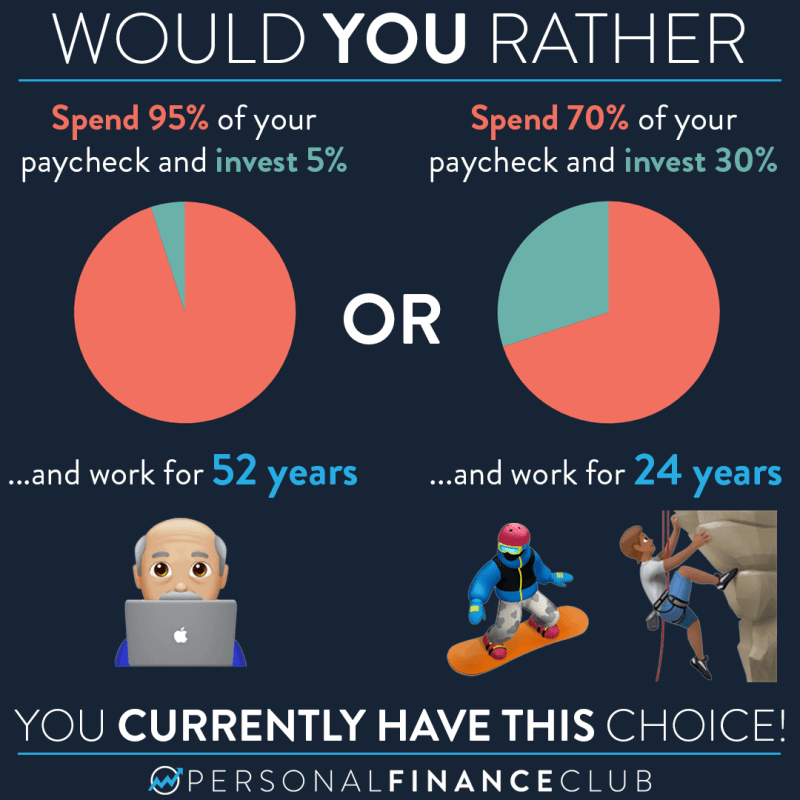
Determining “how much of your paycheck to save” is a foundational step toward financial well-being. There’s no single magic number; rather, it’s a dynamic calculation influenced by your income, expenses, debt, and aspirations. Whether you start with the 50/30/20 rule, aim for a specific percentage based on your goals, or simply begin by setting aside any amount consistently, the most crucial step is to start.
Prioritize building an emergency fund, contribute diligently to your retirement, and continuously refine your budget. Automate your savings, seek opportunities to increase your income, and adapt your plan as life unfolds. With discipline, consistency, and a clear vision of your financial future, you can build a robust savings habit that empowers you to achieve your dreams and navigate life with confidence and security. Financial freedom isn’t a destination; it’s a journey, and every dollar saved is a step forward.
aViewFromTheCave is a participant in the Amazon Services LLC Associates Program, an affiliate advertising program designed to provide a means for sites to earn advertising fees by advertising and linking to Amazon.com. Amazon, the Amazon logo, AmazonSupply, and the AmazonSupply logo are trademarks of Amazon.com, Inc. or its affiliates. As an Amazon Associate we earn affiliate commissions from qualifying purchases.