
Securing an auto loan is a pivotal step for many individuals seeking to purchase a vehicle. While the allure of a new car can be strong, understanding precisely how much an auto loan you can realistically obtain – and more importantly, how much you should obtain – is crucial for maintaining financial health. This article will delve into the multifaceted factors that determine your auto loan eligibility and the principal amount you can borrow, offering insights into how to approach this significant financial decision responsibly.
Understanding the Key Factors Influencing Your Loan Amount
When you apply for an auto loan, lenders undertake a comprehensive evaluation of your financial profile. Their primary goal is to assess your ability to repay the loan reliably. Several key factors weigh heavily in this assessment, directly impacting not only the loan amount you qualify for but also the interest rate you’ll be offered.
Your Credit Score and Credit History
Your credit score is arguably the most critical determinant of your loan eligibility and terms. A three-digit number, typically ranging from 300 to 850, it acts as a snapshot of your creditworthiness. Lenders use scores from agencies like FICO or VantageScore to gauge your history of borrowing and repayment.
- High Credit Score (e.g., 720+): Individuals with excellent credit typically qualify for larger loan amounts and, crucially, lower interest rates. This is because a strong credit history signals to lenders that you are a low-risk borrower, consistently making payments on time.
- Average Credit Score (e.g., 620-719): With an average score, you may still qualify for an auto loan, but the principal amount might be somewhat restricted, and the interest rate will likely be higher than for those with excellent credit.
- Low Credit Score (e.g., below 620): A lower score indicates a higher risk. While not impossible to get a loan, you might face stricter limits on the loan amount, significantly higher interest rates, and possibly require a larger down payment or a co-signer.
Before applying, it’s advisable to check your credit report from all three major bureaus (Experian, Equifax, TransUnion) for any errors and to understand your current standing. Addressing inaccuracies or improving your score can significantly enhance your borrowing power.
Your Income and Employment Stability
Lenders want assurance that you have a stable and sufficient income stream to comfortably manage monthly loan payments. They will typically ask for proof of income, which could include recent pay stubs, W-2 forms, or tax returns for self-employed individuals.
- Debt-to-Income (DTI) Ratio: A critical metric is your DTI ratio, which compares your total monthly debt payments (including the prospective auto loan) to your gross monthly income. Most lenders prefer a DTI ratio below 36%, though some may go higher depending on other factors. A lower DTI indicates more disposable income available for debt repayment.
- Employment History: A consistent employment history (e.g., two years or more at the same job or within the same industry) signals stability, which lenders view favorably. Frequent job changes might raise concerns about income consistency.
Your Existing Debts and Financial Obligations
Beyond your DTI ratio, lenders will look at the specifics of your existing debt load. High credit card balances, outstanding student loans, mortgage payments, or other personal loans can all reduce the amount of income you have available for a new car payment. Each existing financial obligation detracts from your capacity to take on additional debt, directly impacting the maximum auto loan amount you can secure. The goal is to ensure that your new car payment, combined with all other monthly debt obligations, does not push you into a financially precarious position.
The Down Payment You Can Afford
The amount of money you can put down upfront significantly influences the principal amount you need to borrow. A larger down payment reduces the loan amount, thereby lowering your monthly payments and the total interest paid over the life of the loan.
- Lower Loan-to-Value (LTV) Ratio: A substantial down payment results in a lower LTV ratio, which is attractive to lenders. It means you have more equity in the vehicle from day one, reducing the lender’s risk if the car’s value depreciates rapidly.
- Improved Terms: With a larger down payment, you might qualify for better interest rates and more flexible loan terms, even if other aspects of your financial profile are less than perfect. Many financial experts recommend a down payment of at least 10-20% for a used car and 20% or more for a new car.
Beyond Your Finances: Vehicle and Loan Specifics
While your personal finances form the bedrock of loan qualification, certain characteristics of the vehicle itself and the structure of the loan also play a significant role in determining how much you can borrow. Lenders are not just assessing your ability to pay; they are also assessing the risk associated with the asset being financed.
The Vehicle’s Value and Age
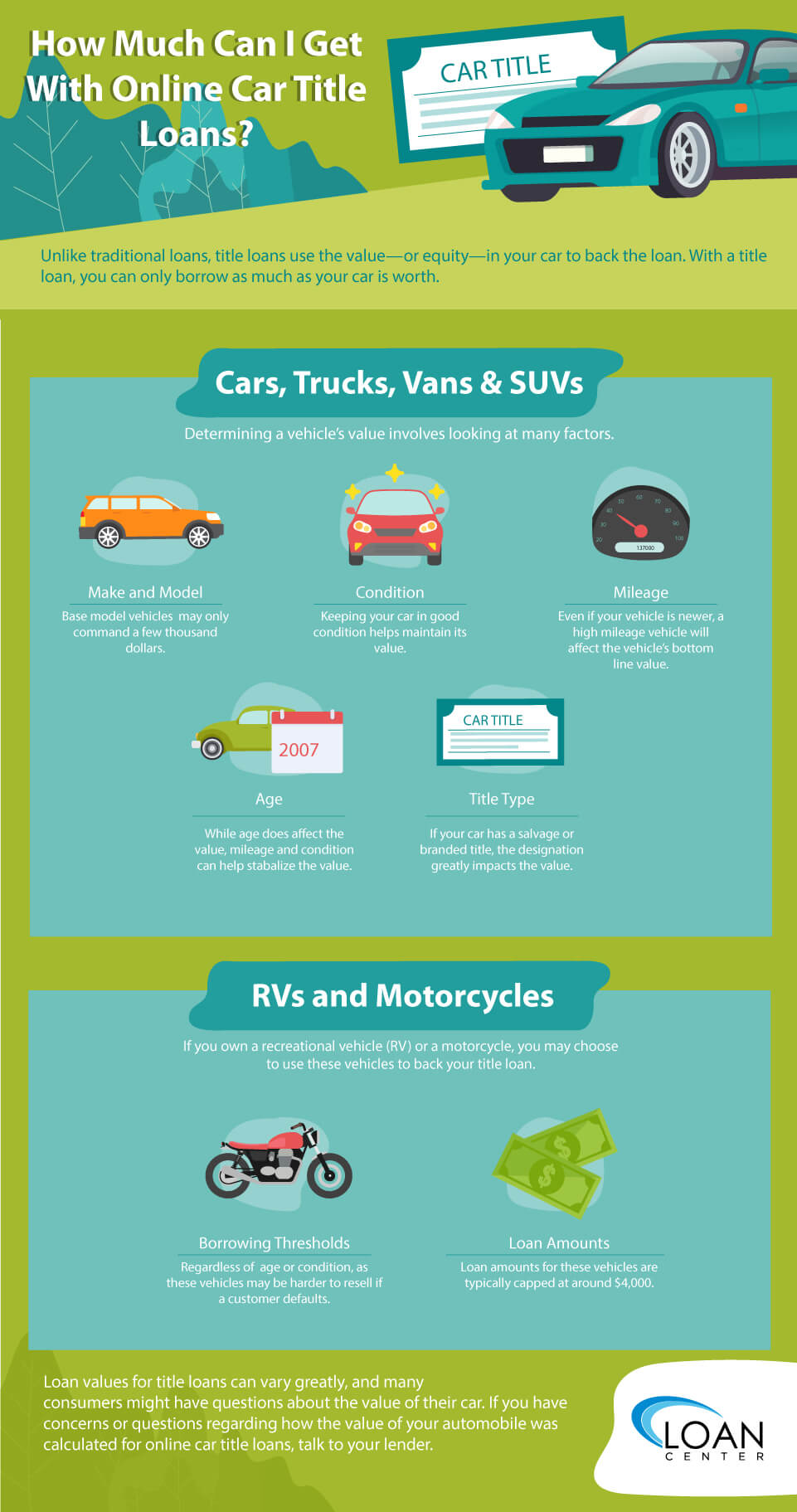
The car you intend to purchase directly influences the loan amount. Lenders are inherently cautious about financing a vehicle for more than its actual market value.
- Loan-to-Value (LTV) Ratio: Lenders typically have limits on the maximum LTV ratio they will approve. This means the loan amount cannot exceed a certain percentage of the car’s appraised value. If you’re buying a car for $20,000 and the lender’s maximum LTV is 100%, you can borrow up to $20,000. If it’s 80%, you’d only be able to borrow $16,000 and would need a $4,000 down payment.
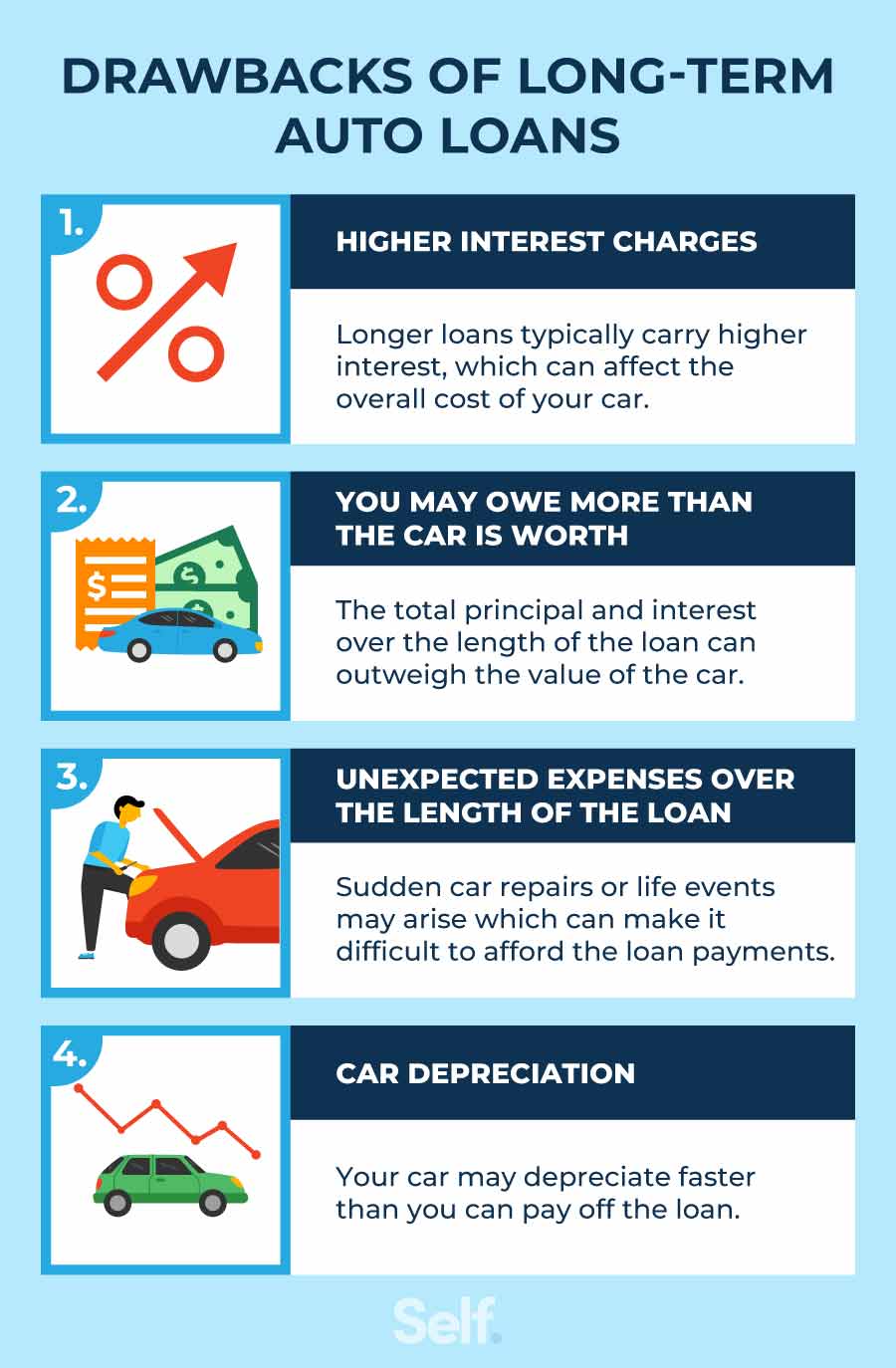
- New vs. Used Cars: New cars generally command higher loan amounts and may qualify for lower interest rates due to their predictable value and less wear and tear. Used cars, especially older models with high mileage, carry more risk for lenders due to potential mechanical issues and faster depreciation, often leading to stricter loan limits and higher interest rates. Some lenders may even refuse to finance vehicles beyond a certain age or mileage threshold.
Loan Term and Interest Rate
The length of your loan (the term) and the interest rate applied will directly impact your monthly payment, which in turn influences the total loan amount you can afford within your budget.
- Loan Term: Longer loan terms (e.g., 72 or 84 months) result in lower monthly payments, which might allow you to qualify for a larger principal amount. However, longer terms also mean you’ll pay significantly more in total interest over the life of the loan. Shorter terms (e.g., 36 or 48 months) have higher monthly payments but save you a substantial amount in interest. Lenders might be more comfortable lending larger sums for shorter terms due to reduced risk.
- Interest Rate (APR): The Annual Percentage Rate (APR) is the true cost of borrowing, encompassing the interest rate and certain fees. A lower APR directly translates to a lower overall cost and, consequently, a higher principal amount you can afford within a given monthly budget. Your credit score is the primary driver of your APR, but market conditions and the specific lender also play a role.
Lender Policies and Requirements
Different lenders – banks, credit unions, and dealership financing – have varying risk appetites and lending criteria. What one lender approves, another might not.
- Specific Requirements: Some lenders may have minimum income requirements, residency stipulations, or even restrictions on vehicle types or brands they finance.
- Pre-qualification vs. Pre-approval: Understanding the difference is key. Pre-qualification gives you an estimate without a hard credit pull. Pre-approval, on the other hand, involves a hard credit inquiry but provides you with a firm offer for a specific loan amount and interest rate, empowering you with stronger negotiating power at the dealership. Shopping around and getting pre-approved by multiple lenders within a short period (typically 14-45 days, depending on the credit scoring model) counts as a single inquiry for credit scoring purposes, allowing you to compare offers without further damaging your credit score.
Calculating Your Affordability: Practical Steps and Tools
Determining how much of an auto loan you can get is not just about what a lender will give you, but what you can responsibly afford. Adopting a proactive and analytical approach will ensure you make a financially sound decision.
Use an Auto Loan Calculator
Online auto loan calculators are indispensable tools for estimating your borrowing capacity. These calculators allow you to input different variables such as:
- Desired Loan Amount: See how changing the principal affects your monthly payment.
- Interest Rate (APR): Input an estimated rate based on your credit score.
- Loan Term: Experiment with shorter and longer terms.
- Down Payment: Observe the impact of various down payment amounts.
By playing with these figures, you can quickly identify a comfortable monthly payment range and work backward to determine the maximum loan amount that aligns with your budget. Remember to factor in potential sales tax, registration fees, and other upfront costs.
Assess Your Monthly Budget Holistically
The car payment is just one component of vehicle ownership. A comprehensive budget assessment must account for all associated costs:
- Car Payment: The principal and interest.
- Auto Insurance: Premiums can vary significantly based on the car’s make/model, your driving history, and location.
- Fuel Costs: Estimate based on your driving habits and the car’s fuel efficiency.
- Maintenance and Repairs: Set aside a monthly amount for routine servicing (oil changes, tire rotations) and unexpected repairs. Newer cars might have lower immediate maintenance, but all vehicles require it.
- Registration and Licensing Fees: Annual costs vary by state.
A common rule of thumb, sometimes referred to as the “20/4/10” rule, suggests: a minimum 20% down payment, a loan term no longer than four years, and total car expenses (payment, insurance, fuel) not exceeding 10% of your gross monthly income. While a guideline, it encourages responsible spending. Creating a detailed personal budget will provide the clearest picture of what you can truly afford without straining your finances.
Get Pre-Approved by Multiple Lenders
Before stepping foot in a dealership, take the critical step of getting pre-approved for an auto loan from several financial institutions, such as your bank, local credit unions, and online lenders.
- Empowered Negotiation: Pre-approval gives you a concrete loan offer, acting as leverage. You know your maximum loan amount and interest rate, allowing you to focus on negotiating the car’s price rather than being swayed by dealership financing offers that might be less favorable.
- Rate Comparison: By having multiple pre-approvals, you can compare interest rates, fees, and terms side-by-side. This competitive shopping can save you hundreds, if not thousands, of dollars over the life of the loan.
- Understanding Your Limits: Pre-approval firmly establishes how much a lender is willing to give you, providing a clear ceiling for your car search.
Strategies to Increase Your Loan Eligibility and Secure Better Terms
If your initial assessment indicates you might not qualify for the loan amount you desire or the terms aren’t favorable, there are proactive steps you can take to improve your position.
Improve Your Credit Score
This is paramount. Pay all bills on time, reduce high credit card balances (aim for utilization below 30%), avoid opening new credit accounts unnecessarily, and dispute any errors on your credit report. Even a moderate improvement can unlock better rates and higher principal limits.
Increase Your Down Payment
Saving more for a down payment is one of the most effective ways to reduce your loan amount and total interest paid. Consider delaying your purchase slightly to accumulate more funds or explore selling an existing vehicle to boost your down payment capital.
Reduce Existing Debt
Before applying for an auto loan, focus on paying down high-interest debts, especially credit card balances. Lowering your DTI ratio makes you a more attractive borrower and frees up more of your monthly income for a car payment.
Consider a Co-signer (Carefully)
If your credit is weak, a co-signer with excellent credit can significantly increase your chances of approval and secure better loan terms. However, this is a serious commitment; the co-signer is equally responsible for the debt, and their credit will be affected if you miss payments. Ensure both parties fully understand the implications.
Shop Around for Lenders
As mentioned, do not settle for the first loan offer. Credit unions often have competitive rates, and online lenders can provide quick quotes. Take the time to compare APRs, fees, and any prepayment penalties to find the best deal.
Conclusion
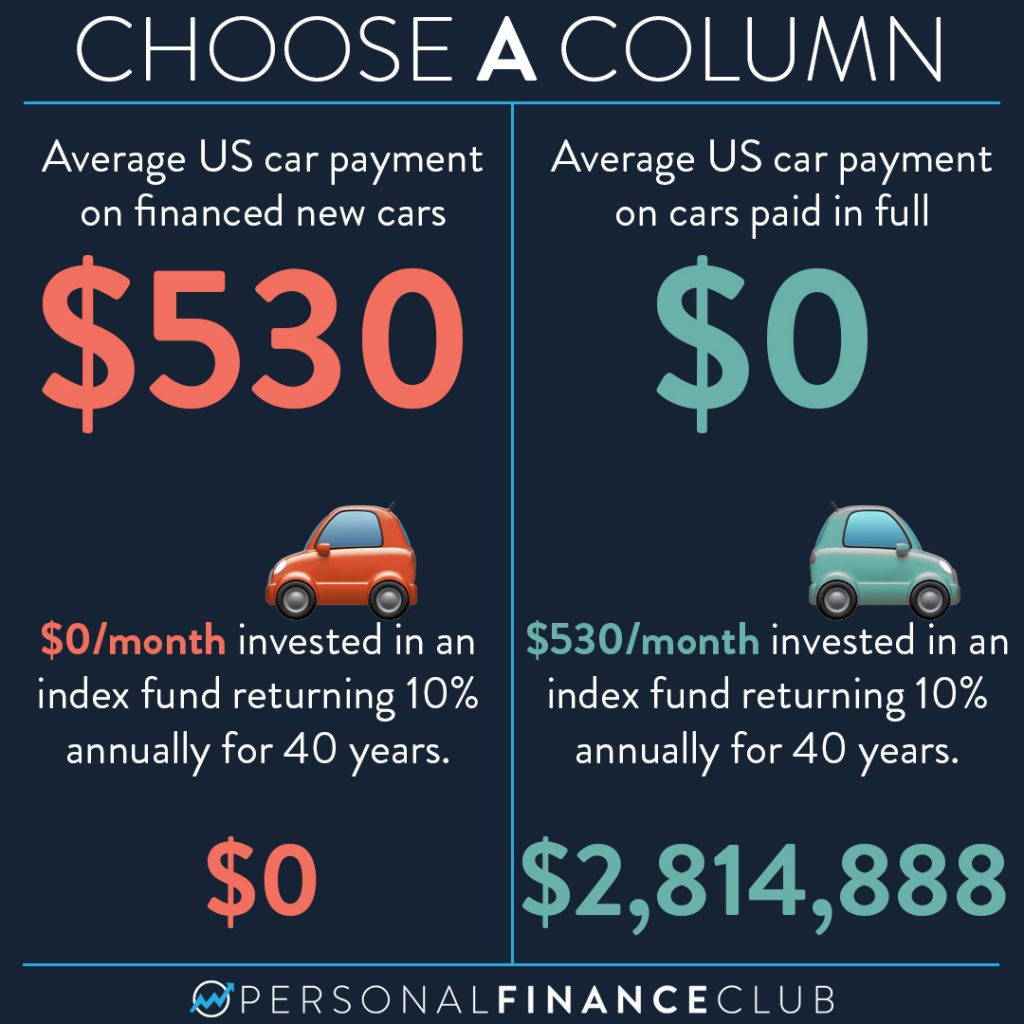
Understanding “how much of an auto loan can I get” requires a thorough self-assessment of your financial standing, an honest evaluation of your budget, and a strategic approach to finding the right lender. While lenders determine your maximum borrowing capacity based on credit, income, and existing debt, the ultimate decision on how much to borrow should stem from a realistic assessment of what you can comfortably afford, not just what’s offered. By focusing on improving your financial profile, making a substantial down payment, and meticulously shopping for the best loan terms, you can ensure your new vehicle acquisition is a financially sound decision that enhances, rather than burdens, your personal finances.
aViewFromTheCave is a participant in the Amazon Services LLC Associates Program, an affiliate advertising program designed to provide a means for sites to earn advertising fees by advertising and linking to Amazon.com. Amazon, the Amazon logo, AmazonSupply, and the AmazonSupply logo are trademarks of Amazon.com, Inc. or its affiliates. As an Amazon Associate we earn affiliate commissions from qualifying purchases.