
In the current digital landscape, the “subscription economy” has transformed how consumers interact with media. What was once a platform defined by free, user-generated content has evolved into a sophisticated dual-revenue model. For many, the central question remains: “How much is a YouTube subscription, and is it a sound financial investment?” As we navigate an era of “subscription fatigue,” understanding the pricing tiers, hidden costs, and the underlying value proposition of YouTube Premium is essential for any savvy consumer managing a personal budget.
This guide provides a comprehensive financial breakdown of YouTube Premium, evaluating its cost structure against competitors and analyzing whether the expense aligns with modern personal finance goals.
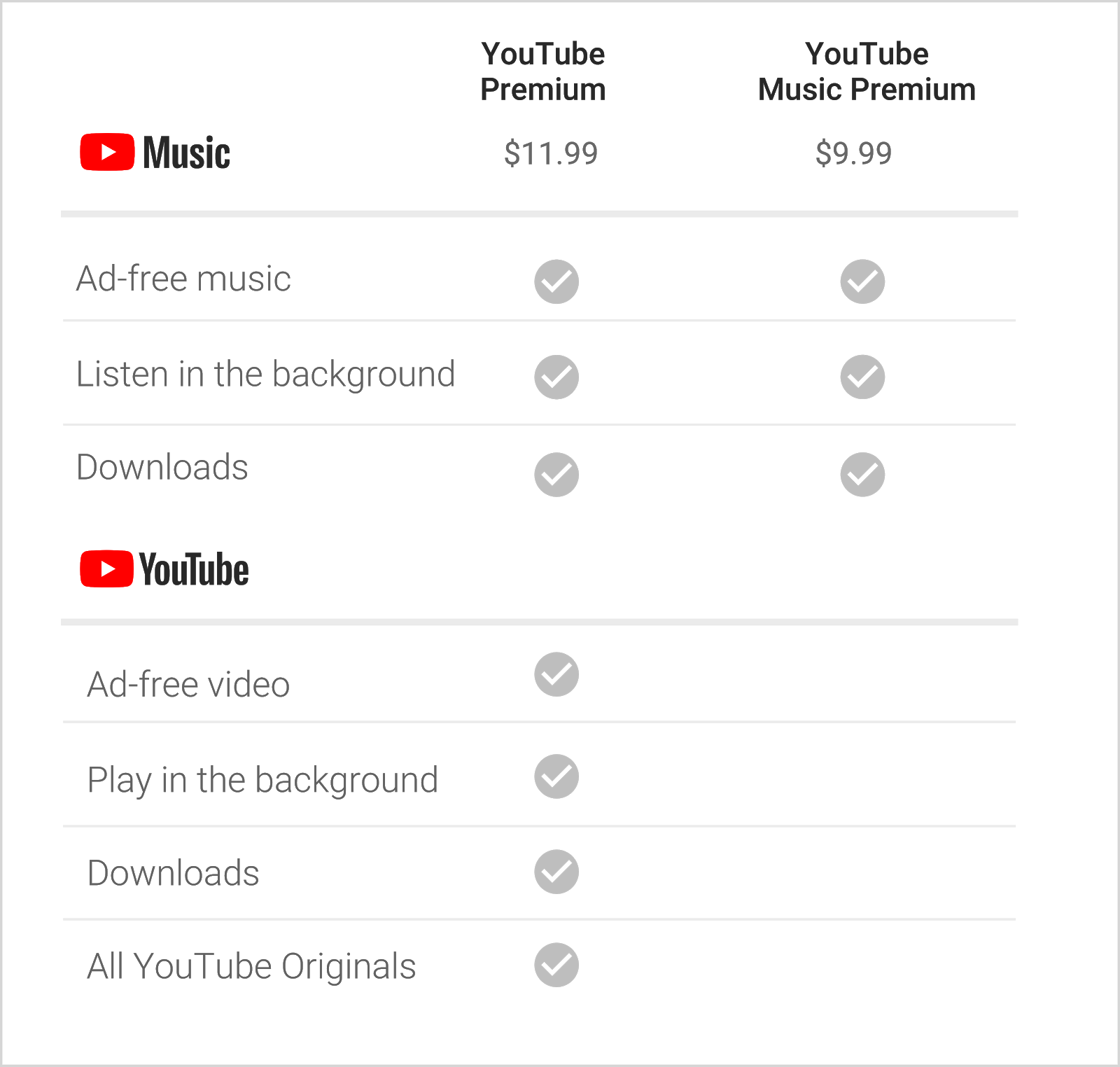
Decoding the Pricing Structure of YouTube Premium
When evaluating the cost of YouTube Premium, it is important to recognize that Google does not offer a “one size fits all” price point. The cost is segmented based on user demographics and household needs, allowing for strategic choices that can significantly impact your monthly cash flow.
Individual vs. Family Plans: Calculating the Per-User Cost
The standard Individual Plan is the most common entry point. As of current market rates in the United States, this plan typically costs $13.99 per month. While this provides a seamless ad-free experience for a single account, it is often the least cost-effective option for households.
For those living with roommates or family members, the Family Plan represents a significant opportunity for financial optimization. Priced at approximately $22.99 per month, this tier allows the primary account holder to add up to five additional family members (ages 13+) living in the same household. When maximized with six total users, the cost drops to roughly $3.83 per person. From a personal finance perspective, transitioning from multiple individual accounts to a single family plan can save a household over $700 annually.
The Student Discount: Eligibility and Savings
For those currently enrolled in higher education, YouTube offers a “Student Plan” that serves as a loss-leader to build brand loyalty among younger demographics. Priced at $7.99 per month, it offers the full suite of Premium features at nearly a 45% discount compared to the individual rate.
However, this is not a permanent financial fixture. YouTube requires annual verification through services like SheerID to ensure the user remains a full-time student. For students budgeting on a limited income or via student loans, this $6 monthly saving is a small but meaningful way to reduce recurring digital overhead.
Annual vs. Monthly Billing: How to Reduce Long-Term Expenses
One of the more overlooked financial strategies within the YouTube ecosystem is the Annual Plan. While YouTube heavily promotes its monthly recurring revenue (MRR) model, savvy users can opt for a 12-month upfront payment.
Typically, the annual individual subscription is priced at a discount compared to paying the monthly rate for a full year. By paying upfront, users can often “lock in” a rate that effectively gives them two months free. From a wealth-management perspective, if you have the liquidity to pay for a year in advance, the return on investment (ROI) via savings usually outperforms the interest you would earn leaving that small sum in a standard high-yield savings account.
Comparing Value: YouTube Premium vs. Other Streaming Services
To determine if the price of a YouTube subscription is justified, one must view it through the lens of opportunity cost and market alternatives. YouTube Premium is unique because it is a hybrid service: it is both a video platform and a high-end music streaming service.
YouTube Music vs. Spotify and Apple Music
A primary driver of the YouTube Premium price tag is the inclusion of YouTube Music Premium. Standalone music subscriptions like Spotify Premium or Apple Music generally cost $10.99 per month.
If a consumer is already paying for a music streaming service, the “effective cost” of the YouTube video benefits drops to just $3.00 per month ($13.99 minus the $10.99 they would have spent anyway). In this financial context, YouTube Premium is arguably one of the best values in the digital market. Consolidating your music and video subscriptions into one $13.99 payment is a classic move in “subscription auditing”—the practice of eliminating redundant services to streamline expenses.
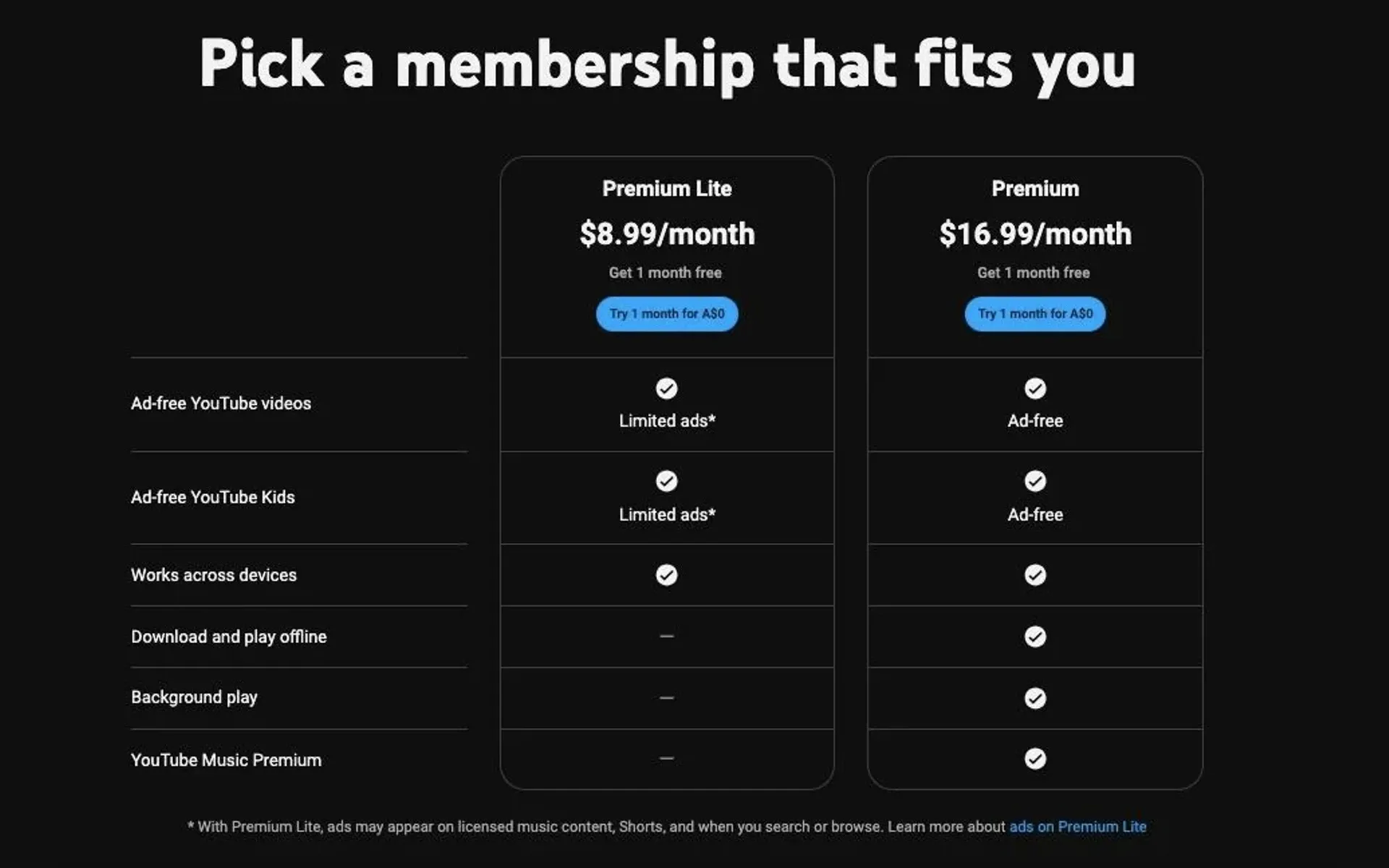
Ad-Free Experience: Assessing the Monetary Value of Your Time
The most prominent feature of YouTube Premium is the removal of advertisements. While this is often viewed as a “luxury” or “convenience,” a deeper financial analysis reveals it as a “time-saving” tool.
Consider the average heavy user who watches 60 minutes of YouTube content daily. On a free account, that user might encounter 5 to 10 minutes of unskippable ads per hour. Over the course of a month, that totals approximately 5 hours of advertisements. If you value your time at even a modest $20 per hour, those 5 hours represent $100 worth of your life spent watching marketing material. In this light, paying $13.99 to “buy back” five hours of your life is a high-yield trade-off.
Global Pricing Disparities: Why Geography Affects Your Wallet
The cost of a YouTube subscription is not uniform across the globe. Google utilizes “Purchasing Power Parity” (PPP) to set prices, meaning the cost of the service fluctuates based on the local economy and currency strength.
Regional Pricing Strategies and Currency Impacts
In markets like India, Turkey, or Argentina, the cost of YouTube Premium may be equivalent to just $1.00 to $3.00 USD per month. This is designed to make the service accessible to lower-income demographics. While some users attempt to exploit these price differences using Virtual Private Networks (VPNs), Google has increasingly cracked down on this practice by requiring payment methods issued in the country of purchase.
From a business finance perspective, this regional pricing highlights how tech giants manage global revenue. For the consumer, it serves as a reminder that the “value” of the dollar varies wildly depending on the digital borders you cross.
The Financial Implications of App Store Surcharges
A common mistake made by many consumers is signing up for YouTube Premium directly through the iOS YouTube app. Because Apple charges a 30% commission on in-app purchases (the “Apple Tax”), Google passes this cost onto the consumer.
An individual subscription that costs $13.99 on a web browser might cost $18.99 when purchased through the Apple App Store. This is a 35% markup for the exact same service. To optimize your personal finances, always subscribe via a desktop web browser or directly through the Google Play Store on Android to avoid these platform-specific surcharges. Over several years, this simple habit can save you hundreds of dollars in unnecessary fees.
Is the Investment Justified? A Cost-Benefit Analysis
Determining if “how much is a YouTube subscription” is the right question requires a shift to “what is the return?” Every line item in a budget should be scrutinized for its utility.
Evaluating Content Consumption Habits
For a casual viewer who watches one or two videos a week, the $13.99 price point is likely a poor financial decision. The cost-per-use is simply too high. However, for “power users”—those who use YouTube for professional development, educational tutorials, or as their primary source of entertainment—the math changes.
If you use the “Downloads” feature to save data on your mobile plan or the “Background Play” feature to listen to educational podcasts while working, you are extracting secondary financial value. Background play turns YouTube into a productivity tool, while downloads can help you stay within lower-cost limited data plans for your cellular service.

Maximizing the ROI of Your Digital Subscription
To get the most out of your YouTube subscription, you must treat it as a bundled financial tool. This means:
- Canceling competing music services: Stop paying for Spotify or Tidal if you have YouTube Music.
- Utilizing educational content: Use the ad-free environment to learn high-income skills (coding, digital marketing, or finance) without the distraction of consumerist marketing.
- Audit your household: Ensure you aren’t paying for multiple individual accounts when a Family Plan would suffice.
In conclusion, while the headline price of a YouTube subscription may seem like just another monthly bill, it represents a complex intersection of time-valuation, service consolidation, and global economic strategy. By understanding the tiers and avoiding platform surcharges, consumers can transform a standard entertainment expense into a calculated, value-driven investment in their digital ecosystem.
aViewFromTheCave is a participant in the Amazon Services LLC Associates Program, an affiliate advertising program designed to provide a means for sites to earn advertising fees by advertising and linking to Amazon.com. Amazon, the Amazon logo, AmazonSupply, and the AmazonSupply logo are trademarks of Amazon.com, Inc. or its affiliates. As an Amazon Associate we earn affiliate commissions from qualifying purchases.